South Asia
Malabar Muslim (Mappila)
Also: Mappila cuisine, Moplah cuisine, Malabar cuisine
The Arab-influenced coastal Muslim cuisine of northern Kerala — where the spice trade left biryani, pathiri bread, and a seafood repertoire that bridges the Arabian Sea and the Malabar jungle.
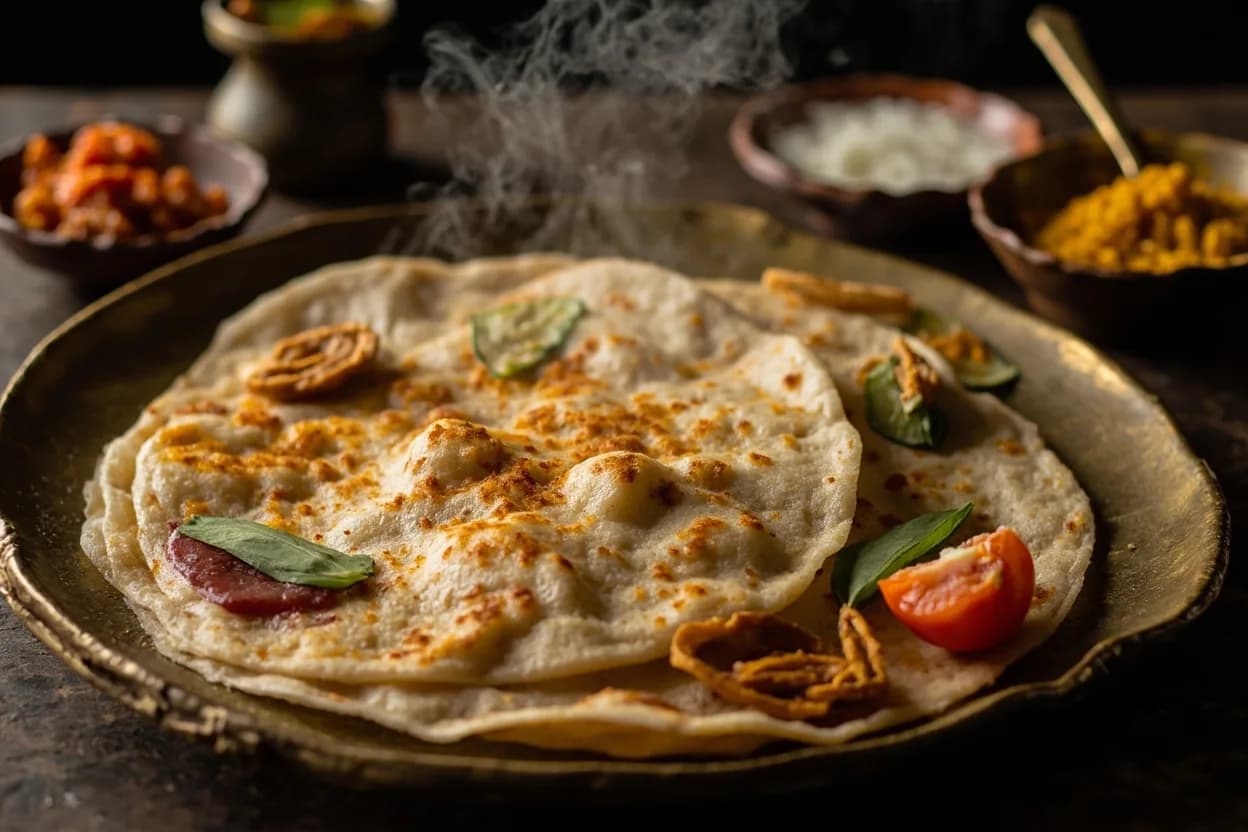
Mappila cuisine is the food tradition of the Mappilas — Kerala's Muslim community descended from Arab merchants who settled the Malabar Coast (present-day northern Kerala) from the 8th century onward and intermarried with local Hindu women. The result is a cuisine that layers Arab-Persian culinary logic (biryani, meat-stuffed breads, rose water-scented sweets) onto a Keralite coconut-spice base. It is richer, more meat-forward, and more fried than mainstream Kerala cooking, and features pathiri (thin rice-flour flatbreads) as a daily staple alongside rice.
The flavour base
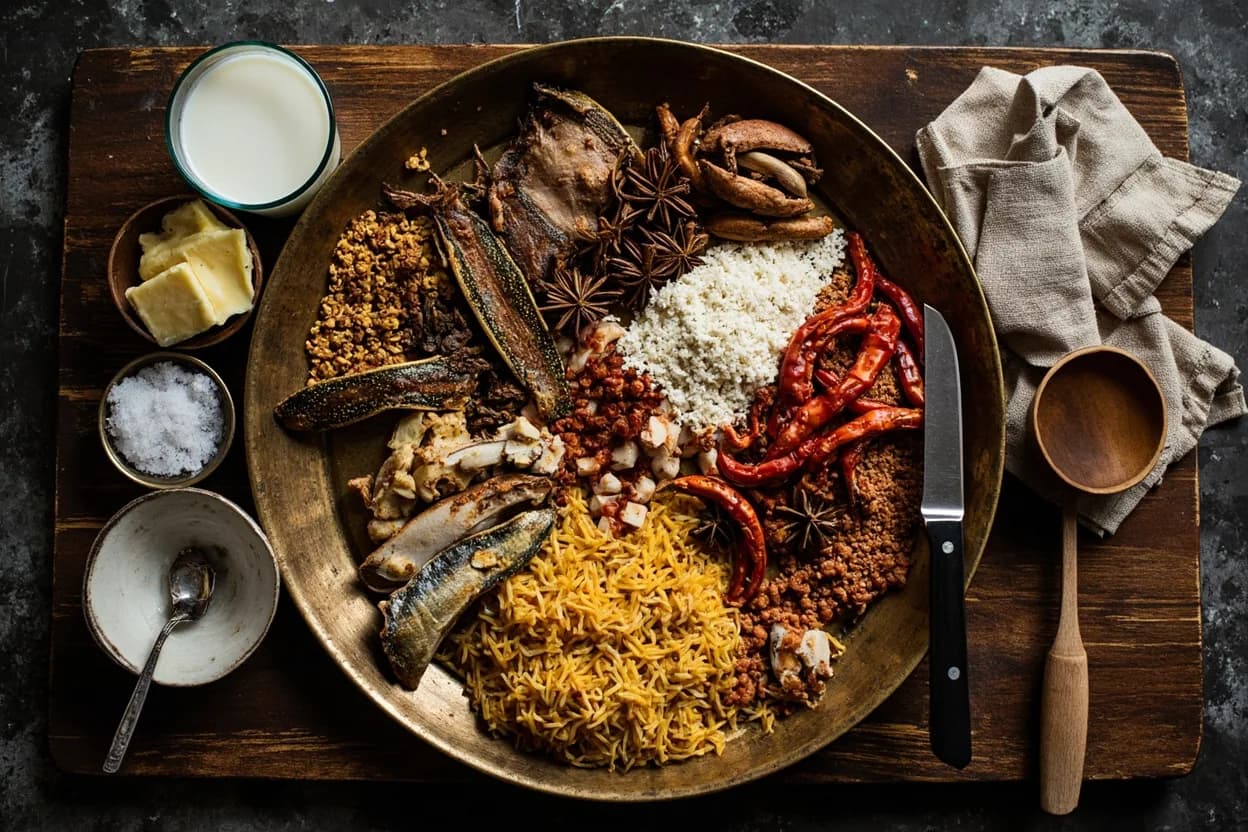
Coconut milk provides richness; whole spices (star anise, mace, fennel, cardamom) mark the Arab-Persian inheritance and give the cuisine its distinctive perfumed depth, distinct from the simpler mustard-curry leaf profile of Hindu Kerala cooking. Ghee replaces coconut oil for meat preparations. Tamarind and raw mango provide acidity in fish curries; vinegar appears in some Northern Malabar pickles.
Pantry staples
Key ingredients
Signature techniques
Signature dishes
Malabar Muslim (Mappila) on the table
At the table
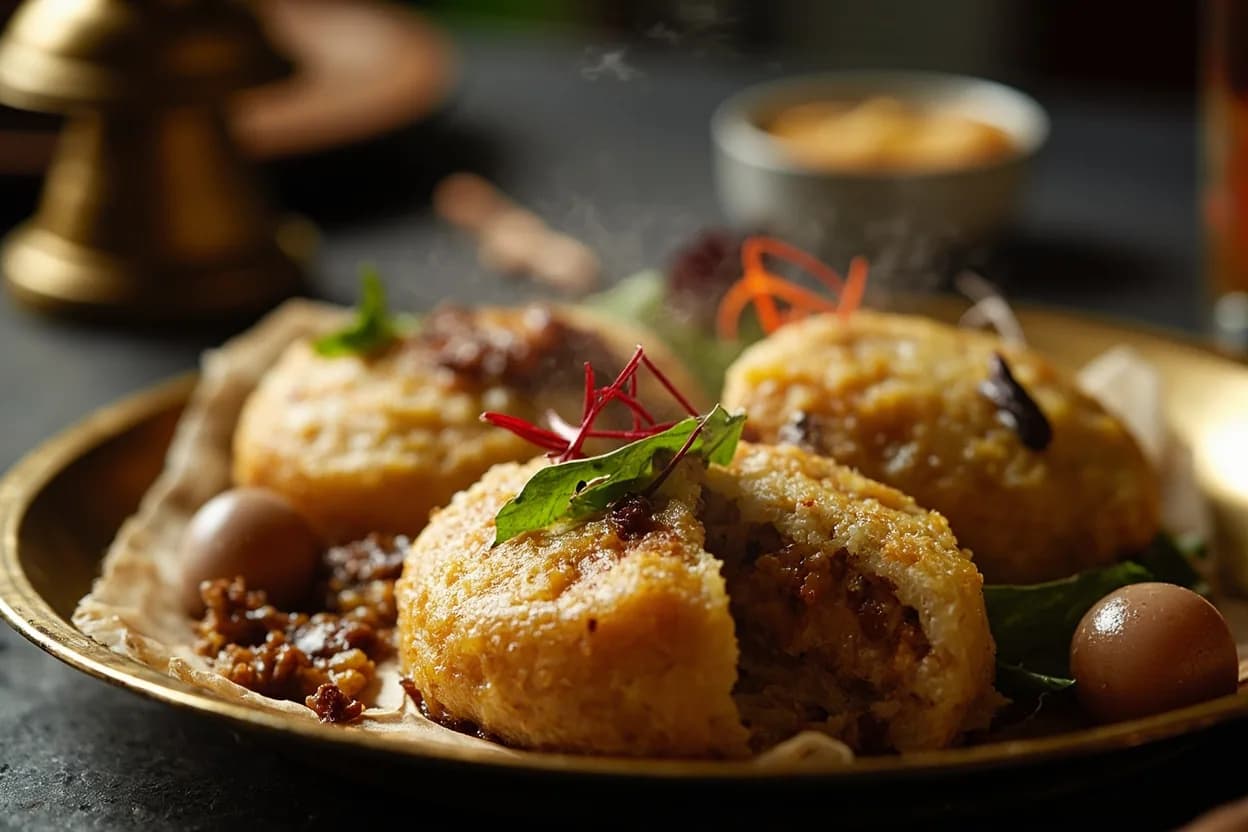
The daily Mappila table centers on pathiri with a meat or fish curry at lunch and dinner — rice is present but pathiri holds a place no other Kerala cuisine gives a bread. Biryani is festive and Friday-special; lavish spreads for weddings (nikah feasts) include six or more meat and fish preparations plus biryanis and sweets. Iftar during Ramadan triggers elaborate fried-and-sweet spreads: unniyappam, ari pori (puffed rice), halwa, and sweet parottas. Breakfast often features puttu or appam shared with the broader Kerala tradition.
History & context
Arab traders from Oman, Yemen, and Hadramawt established permanent settlements along the Malabar Coast — centered on Kozhikode (Calicut), the pepper-export capital of the medieval world — from at least the 8th century CE. Intermarriage with local Nair, Tiyya, and other communities produced the Mappila identity within a few generations; their food merged Arab-Persian flavor logic with Keralite ingredients. The Zamorin (Hindu ruler) of Calicut patronized and protected the Mappila merchant community, whose maritime networks controlled the global spice trade until the Portuguese arrived in 1498. Vasco da Gama's violent disruption of Mappila trade generated the centuries of resistance that runs through Mappila history. The cuisine survived colonialism intact and is now experiencing renewed documentation interest as part of broader South Asian culinary heritage projects.
Regional variations
- Kozhikode (Calicut) Mappila
The most Arab-influenced center; biryani tradition is most celebrated here; kallummakaya preparations are most elaborate.
- Malappuram district
Heavily agricultural hinterland; more coconut-based vegetable preparations alongside meat; ari unniyappam tradition strongest here.
- Kannur (Northern Malabar)
Closer to Tulu-speaking Karnataka border; uses more Byadagi chili and some Coorg-adjacent sourings; fish preparations are more assertive.
Related cuisines
- Kerala (Hindu Nair/Ezhava)
Shares the coconut-rice-fish base and many breakfast preparations (appam, puttu) but diverges sharply on meat use, bread tradition, and aromatic spice profile.
Both are Indian Muslim biryani traditions with Mughal/Persian influence, but Malabar biryani uses short-grain kaima rice and a coconut-ghee base rather than long-grain basmati.
- Yemeni-Hadhrami
Direct cultural ancestor; Hadhramawt seafarers carried the dum-biryani and meat-bread (mandi, malawah) traditions that were then tropicalized with Kerala coconut and spice.
Canonical recipes
The dishes that define Malabar Muslim (Mappila), documented in the Canon.
References
- 1.Mappila Cuisine: A Collection of Traditional Malabar Recipes — Ummi Abdulla
- 2.The Malabar Manual — William Logan (1887, historical reference)
- 3.Kerala: The Complete Cookbook — Lathika George
- 4.India: The Cookbook — Pushpesh Pant
Confidence: high
Notes
Kaima rice — the biryani variable
Malabar biryani's distinctiveness rests partly on kaima (also called jeerakasala or khyma) rice — a short-grain, intensely aromatic Kerala variety that absorbs the ghee-spice base differently from basmati. The resulting texture is stickier, the grain more separate in clumps rather than individually fluffy. Outsiders sometimes mistake the texture for undercooking; it is correct and intentional.
Mappila and the spice trade archive
Kozhikode's historical role as the Arab world's primary pepper entrepôt means that Mappila food is, in a literal sense, an edible archive of the medieval spice trade. The whole-spice profile (mace, fennel, star anise) that distinguishes it from Hindu Kerala cooking corresponds precisely to the spices Mappila merchants shipped to Oman and Egypt — they cooked with what they traded.