East Asia
Nagoya (Nagoya-meshi)
Also: Nagoya-meshi, Chukyo cuisine, Aichi food culture
Central Japan's proudly quirky comfort cuisine built on hatcho miso, eel over rice, and a coffee shop culture that invented morning toast as a dining institution.
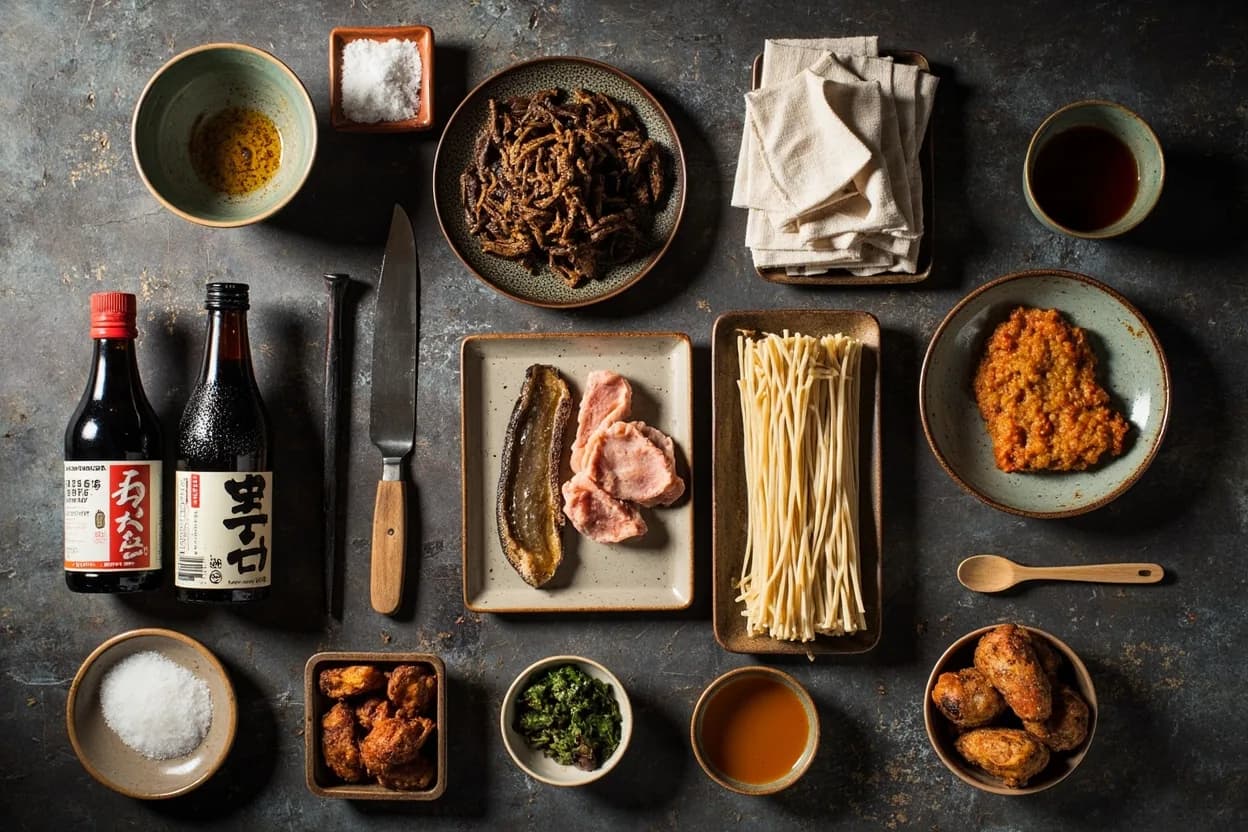
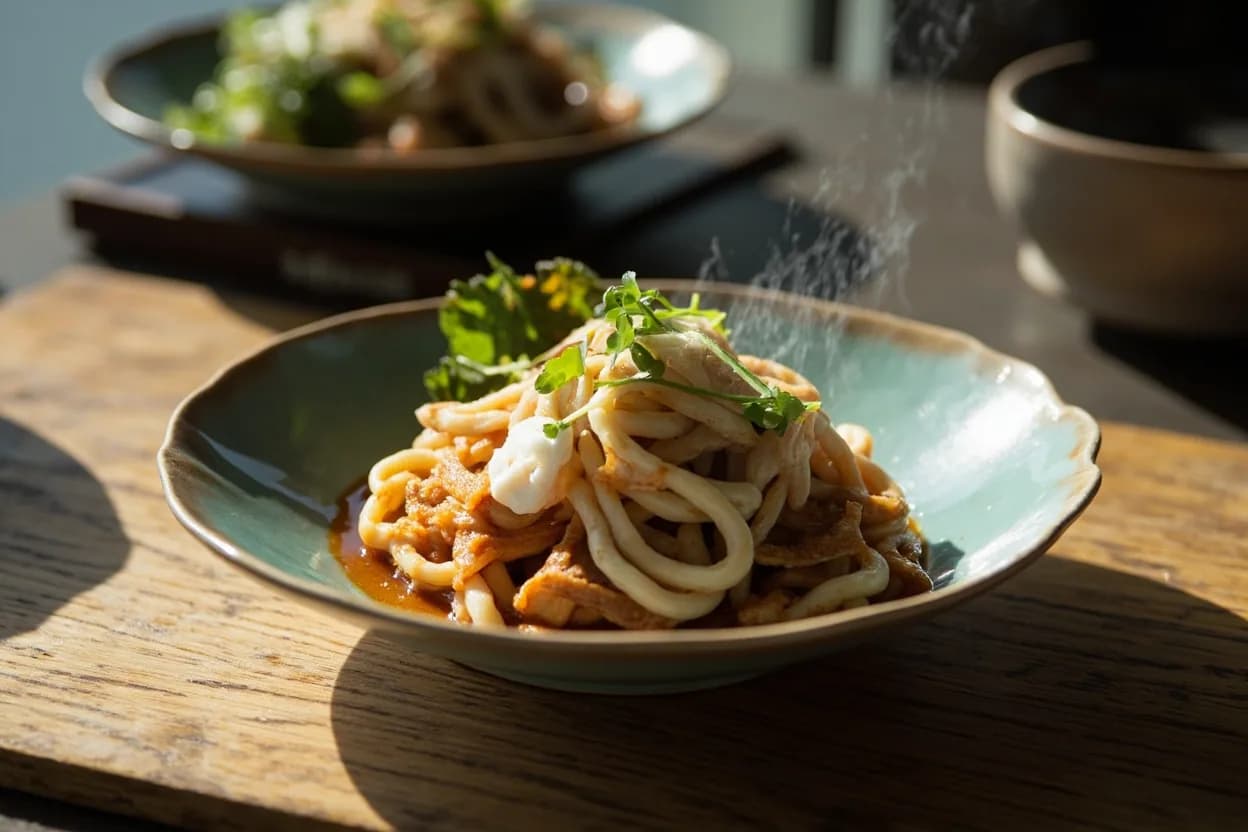
Nagoya-meshi (名古屋飯) refers to the distinctive food culture of Nagoya city and surrounding Aichi Prefecture in the Chukyo region of central Honshu. The cuisine is built on hatcho miso — a dense, deeply fermented red soybean miso aged in cedar casks — which appears in multiple signature dishes: miso katsu (fried pork over miso sauce), miso nikomi udon (udon simmered in miso broth), and miso oden. Beyond miso, Nagoya-meshi encompasses hitsumabushi (eel rice eaten three ways), kishimen flat noodles, tebasaki chicken wings, and a deeply ingrained morning coffee shop (morning service) culture featuring free toast with coffee — a tradition that spread nationally from Nagoya.
The flavour base
Hatcho miso — the backbone; richly fermented, dark, nearly chocolate-bitter — combined with mirin and sugar for a sweet-savory depth; soy-based tare for eel dishes
Pantry staples
Key ingredients
Signature techniques
Signature dishes
Nagoya (Nagoya-meshi) on the table

At the table
Nagoya has an unusually strong coffee shop (kissaten) breakfast culture: the 'morning service' provides free toast, boiled egg, and sometimes a small salad with any coffee order — a practice that elevated the 9am breakfast rush into a social institution. Lunch features miso katsu sets at Yabaton and similar chains. Dinner is izakaya-style with tebasaki, miso kushikatsu, and sake. Hitsumabushi is a celebratory or date-night meal. Kishimen and miso nikomi udon are everyday noodle meals.
History & context
Hatcho miso traces to the town of Hatcho (now within Okazaki city) in the late Muromachi period (15th–16th centuries), possibly earlier. The miso survived harsh transport and summer heat better than lighter varieties and became provisioner to warlords — most famously Tokugawa Ieyasu, who was born in Okazaki and credited hatcho miso for his longevity and military stamina. The eel tradition of Nagoya reflects the region's position between the Kiso, Tenryu, and Yahagi rivers, historically rich in unagi. The 'morning service' coffee shop culture is believed to have originated in Ichinomiya city (Aichi) in the 1950s and spread to Nagoya, becoming a defining feature of city life by the 1970s. Nagoya-meshi as a marketing identity was formalized in the early 2000s as a civic tourism push.
Regional variations
- Okazaki
The birthplace and capital of hatcho miso production; more conservative miso-forward cooking than Nagoya city.
- Ichinomiya / Bisai
Origin of the morning coffee service; kishimen noodle heartland.
- Atsuta / Nagoya city center
Hitsumabushi hub; the shrine town of Atsuta historically hosted the most prestigious eel restaurants.
- Chita Peninsula
Seafood inflection — miso-clam soup, miso-marinated fish; lighter than the urban center.
Related cuisines
Contrast: Kyoto uses white shiro miso; Nagoya favors the opposite extreme of dark hatcho — both define miso's range.
Tebasaki and miso kushikatsu are core izakaya dishes nationwide, exported from Nagoya.
Nagoya's morning toast culture sits at the same cultural intersection of Western food habits adapted to Japanese daily life.
References
- 1.The Soul of Japan: Miso — Atsuko Ikeda
- 2.Japanese Farm Food — Nancy Singleton Hachisu
- 3.Miso, Tempeh, Natto & Other Tasty Ferments — Kirsten K. Shockey & Christopher Shockey
- 4.Washoku: Recipes from the Japanese Home Kitchen — Elizabeth Andoh
Confidence: high
Notes
Hatcho miso vs. standard red miso
Hatcho miso is made exclusively from soybeans (no rice or barley added), pressed under stone weights, and aged 2–3 years — yielding a block so dense it can be cut with a knife. Its flavor is earthy, astringent, and almost chocolatey; diluting it with dashi reveals a complexity unmatched by faster-fermented misos. Genuine Hatcho miso carries a GI designation and can only be produced in Okazaki's Hatcho district.
The hitsumabushi ritual
Eating hitsumabushi in three acts — first plain to appreciate the eel, then with wasabi, nori, and green onion, then as ochazuke with hot dashi poured over — was likely formalized at the famous restaurant Atsuta Horaiken, which has served the dish since 1873.