Natural form
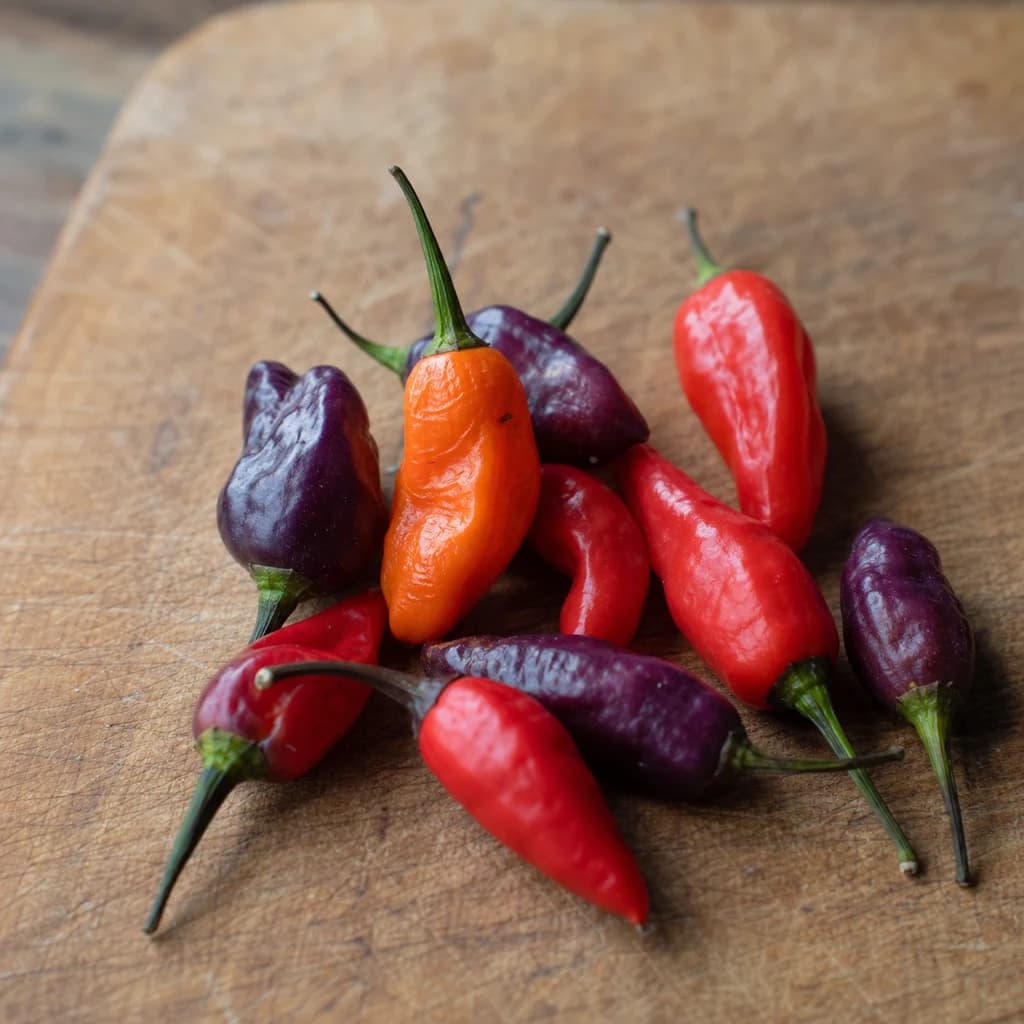
Ají limo chilies at peak ripeness, showing their characteristic multicolored range.
Shows the reader the whole fruit in its natural state, with the distinctive color variation from red to orange to purple that makes this chili identifiable.
Produce
Ají Limo
Small, very hot multicolored Peruvian chili used in ceviche and tiraditos.
Ají limo is a small, intensely hot Peruvian chili that ripens through shades of red, orange, and purple. It is a classic accent in ceviche, tiradito, and seafood dishes, adding sharp heat with a citrusy, floral edge. Often sliced thin and used sparingly because of its potency.
Ají Limo is Peru's quintessential hot pepper—small, intensely wrinkled, and brutally pungent with a distinctive citrus-fruity backbone that sets it apart from the broader Capsicum annuum family. Grown primarily in the coastal departments of Lima, Ica, and Ancash, it carries genetic distinctiveness from the more familiar ají amarillo and is considered indispensable in Lima's cevicherías. The pepper's wrinkled, bumpy skin is its most reliable identifier—the texture results from the fruit contracting as it matures on the plant, creating the pucker that distinguishes it from smoother Peruvian peppers. When used fresh, it delivers bright, sharp heat that blooms across the palate; when toasted and blended into paste, it deepens into a rich, smoky complexity that anchors classic sauces. The multicolored pods seen in markets—green, yellow, orange, red—represent harvest timing rather than distinct varieties, with red-ripe pods delivering the most intense heat and fullest flavor. Ají Limo is the defining heat element in Peru's raw seafood preparations, where its acidity and fruitiness cut through the richness of cured fish without overwhelming the delicate flesh. Commercial pastes exist but vary widely in quality; a quick toasted homemade paste transforms a dish.
- Measured in
- g
- Storage
- Fridge
Types & varieties
Fully ripe red variety; most common and hottest. Fully developed citrus-fruity aroma.
Yellow-ripened stage; slightly fruitier with pleasant acidity
Orange stage; balances ripeness sweetness with fresh acidity
Unripe green stage; less complex flavor but still meaningfully pungent
Fresh vs. Dried: When to Use Each Form
Fresh ají limo is the standard for ceviche, tiraditos, and fresh sauces where brightness and raw heat are desired. The fresh pepper's volatile aromatics are most vivid when the pepper is very fresh—look for firm pods with no soft spots. Dried ají limo is less common but excellent for long-cooked preparations: the drying concentrates sugars and deepens the fruity notes, creating a more rounded base for stews and braises. Commercial paste is convenient but quality varies considerably; check for a short ingredient list with no artificial preservatives.
- Fresh: bright, sharp heat; ideal for cold sauces and marinades
- Dried: deeper, smokier flavor; better for cooked sauces and braises
- Homemade paste: toast pods, blend with oil; keeps refrigerated 2 weeks
Handling and Safety
Capsaicin is fat-soluble and oil-based, so it penetrates skin readily and is not removed by water alone. This matters practically every time you handle the pepper. The pain from rubbing your eyes after cutting ají limo is severe and long-lasting. Disposable gloves are the correct tool—nitrile or latex, worn consistently throughout prep. If you skip gloves, wash hands thoroughly with dish soap twice, then oil your palms and wash again. Never touch a knife handle, cutting board, or utensil with capsaicin-contaminated hands before cleaning it.
- Always wear gloves when seeding and chopping
- Wash cutting boards with hot soapy water immediately after
- If capsaicin contacts skin, rub with vegetable oil then wash with dish soap
Common uses
Tips & pitfalls
- Wear disposable gloves when handling and seeding; capsaicin causes painful burning that lingers, especially near the eyes
- Toast dried pods briefly in a dry skillet over medium heat until fragrant and slightly darkened—this revives volatile aromatics before grinding
- The wrinkled, bumpy skin reliably distinguishes ají limo from smoother Peruvian peppers like ají amarillo
- Add early in cooking to mellow heat through integration; add at the end for brighter, sharper pungency that hits immediately
- Common mistake: confusing ají limo with ají amarillo—the latter is larger, smoother, and milder with earthier fruitiness, not citrus
- Toast and rehydrate dried peppers for maximum flavor development when making sauces and pastes
- A simple toasted-ají-limo paste (toasted pods blended with a touch of oil) keeps refrigerated for up to 2 weeks and is vastly superior to most commercial versions
- When substituting, start with less—no matter the replacement—and adjust after tasting; ají limo's heat is compact and concentrated
Nutrition
Energy
167 kJ · per 100 g
Where the calories come from
Protein
2g
4% DV
Carbs
9.5g
3% DV
Fat
0.2g
0% DV
Fiber
1.5g
5% DV
Sugars
5.1g
of which
Sodium
7mg
0% DV
Source · USDA FoodData Central · approx. Peppers, hot chili, green, raw
View on FDC →In the shops
Matched grocery products
No matched grocery products for Ají Limo yet.
Good to know
- Species
- Capsicum annuum
- Origin
- Peru, coastal regions (Lima, Ica, Ancash)
- Heat Level
- 30,000–50,000 Scoville Heat Units (very hot)
- Size & Shape
- 2–5 cm long, deeply wrinkled, irregular and puckered
- Colors
- Red (fully ripe), orange, yellow, green (unripe)
- Season
- Year-round in Peru; peak late summer in other regions
- Flavor
- Fruity, citrusy, intensely pungent with a clean burn
- Storage
- Refrigerate fresh pods in a paper bag up to 1 week; freeze whole or diced for several months
Substitutes
- Ají Amarillo — Most accessible Peruvian substitute; smoother texture, lower heat (15,000–30,000 SHU), earthier rather than citrusy fruitiness; use 1:1 but expect a milder, different result
- Bird's Eye Chili — Comparable heat and small size; lacks the citrus-fruity dimension entirely but acceptable in a pinch for the heat level
- Habanero — Similar heat range; more tropical-floral character rather than the citrus note; reduce quantity and expect different aromatics
- Scotch Bonnet — Comparable heat; sweeter and less citrusy; works in hot sauces and braises but shifts the Peruvian character significantly
Pairs with
Also called
Limo Chili Pepper · Aji Limo · Limo Chili
Appears in these dishes
Related
Tomato
Juicy, sun-sweet fruit for sauces, salads, and slow-cooked depth
Yellow Onion
The aromatic backbone of soups, sofritos, and braises
Garlic
Pungent cloves that perfume nearly every savory dish
Lemon
Bright, acidic citrus that wakes up almost any dish
Potato
Humble, hearty staple — roast, mash, fry, or boil
Carrot
Sweet, crunchy root — raw, roasted, or the base of a sofrito
Cucumber
Cool, crisp, and watery — for salads, pickles, and tzatziki

Lettuce
Crisp leaves for salads, wraps, and a fresh crunch