Natural form
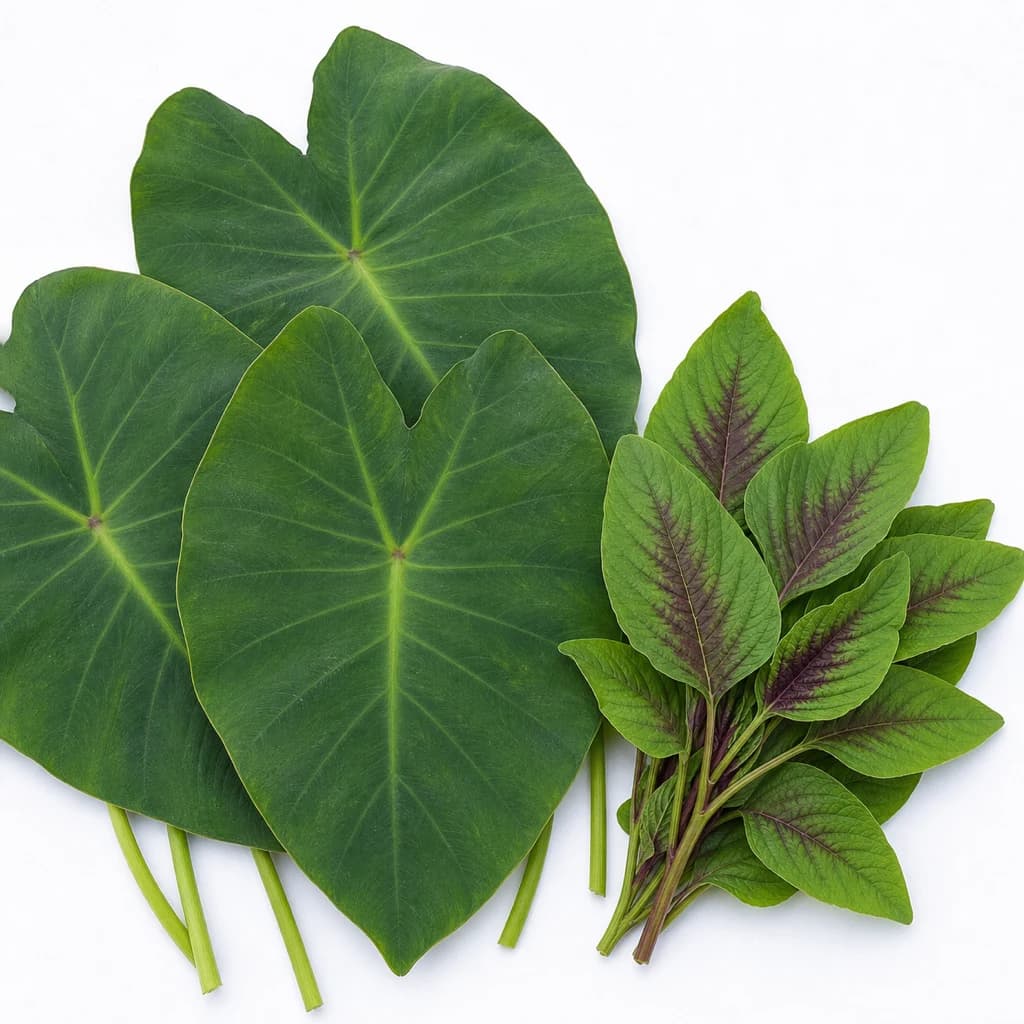
Fresh dasheen (taro) leaves and amaranth leaves, the two most common callaloo greens.
Shows readers the actual raw leaves used for callaloo so they can identify and source the ingredient.
Produce
Callaloo
Caribbean leafy green dish and the greens used for it, simmered with onion, garlic, and coconut.
Callaloo refers both to a beloved Caribbean dish and to the leafy greens used to make it, typically amaranth or dasheen (taro) leaves. The greens are simmered with onion, garlic, peppers, and often coconut milk or okra into a rich, soft side dish. The exact green varies by island, but the result is always a hearty, savory braise.
Callaloo is both a leafy green vegetable and a beloved Caribbean dish that sits at the intersection of African, Indian, and Indigenous culinary traditions. The greens—primarily from Amaranthus viridis, though varieties like taro (dasheen) leaves serve the same purpose in Jamaica—have tender, slightly lobed leaves that cook down dramatically, much like spinach but with a more robust, earthy character and a faint nuttiness that blooms when simmered in coconut milk. The dish itself is a slow-simmered preparation of these greens with aromatics, Scotch bonnet pepper, and often okra for body, served as a cornerstone side across Trinidad and Tobago, Haiti, Jamaica, and beyond. In Trinidad, it is the Sunday table's anchor, alongside rice and peas and fried plantain; in Haiti, the same plant becomes bouillon d:callalou, enriched with crab and considered a national treasure. Understanding callaloo means understanding a dish that functions as both nutritious foundation and cultural touchstone—nutrient-dense (rich in vitamins A and C, iron, calcium, and fiber) yet humble enough to anchor an everyday meal, sophisticated enough to represent a nation. When cooked properly, the greens retain gentle structure rather than dissolving into mush, the coconut milk provides richness without heaviness, and the Scotch bonnet lends warmth without overwhelming the delicate earthiness of the leaves. The dish also rewards patience: leftovers develop deeper flavor overnight and freeze well after blanching, making callaloo both a fresh-market specialty and a practical prep-ahead ingredient for anyone exploring Caribbean cooking.
- Measured in
- g
- Storage
- Fridge
Types & varieties
Most traditional variety in Trinidad and Tobago; deeply lobed dark green leaves with tender texture when young
Cultivated variety with larger leaves and more tender texture; leaves display various colors including red and gold
Used as callaloo in Jamaica; larger, more rounded leaves that must be cooked thoroughly to eliminate calcium oxalate crystals
Used in some Caribbean regions as a callaloo substitute; similar cooking method to dasheen with comparable thickening properties
Regional Distinctions
The word 'callaloo' encompasses different preparations across the Caribbean, and the terminology can be confusing outside the region. In Trinidad and Tobago, callaloo refers almost exclusively to the dish made from Amaranthus viridis (bush callaloo), simmered with okra and coconut milk, and it holds the status of national dish. In Jamaica, callaloo frequently means dasheen (taro leaf) callaloo, which requires longer cooking to break down calcium oxalate compounds that can cause irritation if undercooked. Haiti takes the dish in a seafood direction with bouillon d:callalou, where whole blue or land crab is added to the pot, shells cracked and all, infusing the broth with briny depth. Barbados and the Eastern Caribbean islands follow the Trinidad model more closely. When sourcing callaloo in markets outside the Caribbean, read labels carefully—'callaloo' in a frozen section may refer to any of these green preparations depending on the supplier's origin.
- Trinidad callaloo: bush amaranth with okra and coconut milk, mild and creamy
- Jamaican callaloo: dasheen (taro) leaves, earthier, requires longer cooking
- Haitian bouillon d:callalou: crab added, more brothy, considered a national treasure
- Frozen callaloo from Caribbean specialty stores is reliable and convenient for home cooks
Selection and Storage
Fresh callaloo should be purchased from a trusted source—either a Caribbean market or a supplier that stocks leaves kept cool and misted. Look for bright, vivid green leaves without yellowing, wilting, or holes that indicate age or pest damage. Young leaves at the top of the plant are most tender; larger lower leaves tend toward bitterness and toughness. Once home, do not store callaloo sealed in plastic, which accelerates spoilage. Instead, wrap loosely in paper towels, then place in a perforated bag or loosely closed container in the crisper drawer. Use within two to three days for best quality. For longer storage, blanch leaves in boiling water for one minute, shock in ice water, squeeze dry, and freeze in portioned freezer bags for up to four months. Thawed callaloo works well in all cooked applications but loses texture for raw uses.
- Choose bright, firm leaves; avoid yellowing or wilting
- Young upper leaves are most tender; lower leaves suit longer cooking
- Wrap in paper towels before refrigerating to absorb excess moisture
- Blanch and freeze for long-term storage; thaw and squeeze dry before cooking
Common uses
Tips & pitfalls
- Select young, tender leaves from the top of the plant; older lower leaves become tough and unpleasantly bitter
- Rinse leaves in multiple changes of water, swishing each leaf individually—sand is common in open-market produce and gritty callaloo is unpleasant
- Do not overcook callaloo; it should retain some structure and color rather than reducing to a brown, mushy mass
- Add okra at the start of cooking to thicken the dish naturally through its mucilaginous properties
- Handle Scotch bonnet peppers with care—prick the skin before adding whole, and wash hands thoroughly afterward to avoid burning eyes
- Coconut milk is not optional in traditional preparation; water or non-dairy alternatives produce a fundamentally different dish
- Gently knead the raw greens with a pinch of salt before cooking to help release excess water and mellow bitterness
- If using dasheen (taro) leaves, ensure at least 20 minutes of cooking to fully neutralize calcium oxalate compounds
- Leftover callaloo develops deeper flavor overnight and can be reheated or repurposed the next day
- Frozen callaloo is a reliable option when fresh is unavailable; blanch first, then freeze in portioned bags for up to four months
Nutrition
Energy
255 kJ · per 100 g
Where the calories come from
Protein
1.1g
2% DV
Carbs
14.7g
5% DV
Fat
0.5g
1% DV
Fiber
3g
11% DV
Sugars
9g
of which
Sodium
3mg
0% DV
Source · USDA FoodData Central · approx. Kiwifruit, green, raw
View on FDC →In the shops
Matched grocery products
No matched grocery products for Callaloo yet.
Good to know
- Common Names
- Callaloo, Calaloo, Calalou, Bush Callaloo, Chinese Spinach, Egyptian Spinach
- Scientific Name
- Amaranthus viridis (primary species used in Caribbean)
- Primary Origin
- Caribbean (Trinidad & Tobago, Jamaica, Barbados, Haiti, Dominica, Grenada)
- Plant Part Used
- Leaves and young tender stems; sometimes okra added as thickening agent
- Typical Preparation
- Sautéed with onion and garlic, simmered in coconut milk with Scotch bonnet; okra added for body
- Flavor Profile
- Mild and earthy, reminiscent of spinach with a hint of nuttiness from coconut milk
- Shelf Life
- 2–3 days refrigerated (wrap in paper towels); up to 4 months frozen after blanching
Substitutes
- Baby Spinach — Closest flavor match; milder and more delicate, suitable for quick cooking but lacks the robust earthiness of amaranth
- Swiss Chard — Comparable texture when cooked; slightly more bitter, stems can be treated like callaloo stems
- Collard Greens — Sturdy enough for long simmers; requires more cooking time to soften and benefits from overlapping flavor partners like smoked meat
- Water Spinach (Kang Kong) — Similar tender-crisp quality when raw; becomes silky when cooked; popular in Southeast Asian cuisines with compatible aromatics
- New Zealand Spinach (Kokihi) — Native alternative with similar earthy flavor; contains oxalates like dasheen and benefits from blanching before use
Pairs with
Also called
Spinach Greens · Dasheen Leaf · Callaloo Bush
Appears in these dishes
Related

Tomato
Juicy, sun-sweet fruit for sauces, salads, and slow-cooked depth

Yellow Onion
The aromatic backbone of soups, sofritos, and braises

Garlic
Pungent cloves that perfume nearly every savory dish

Lemon
Bright, acidic citrus that wakes up almost any dish

Potato
Humble, hearty staple — roast, mash, fry, or boil

Carrot
Sweet, crunchy root — raw, roasted, or the base of a sofrito

Cucumber
Cool, crisp, and watery — for salads, pickles, and tzatziki

Lettuce
Crisp leaves for salads, wraps, and a fresh crunch