Proteins
Chicatana Ant (Hormiga Chicatana)
Large winged flying ants from southern Mexico, toasted and ground into smoky salsas.
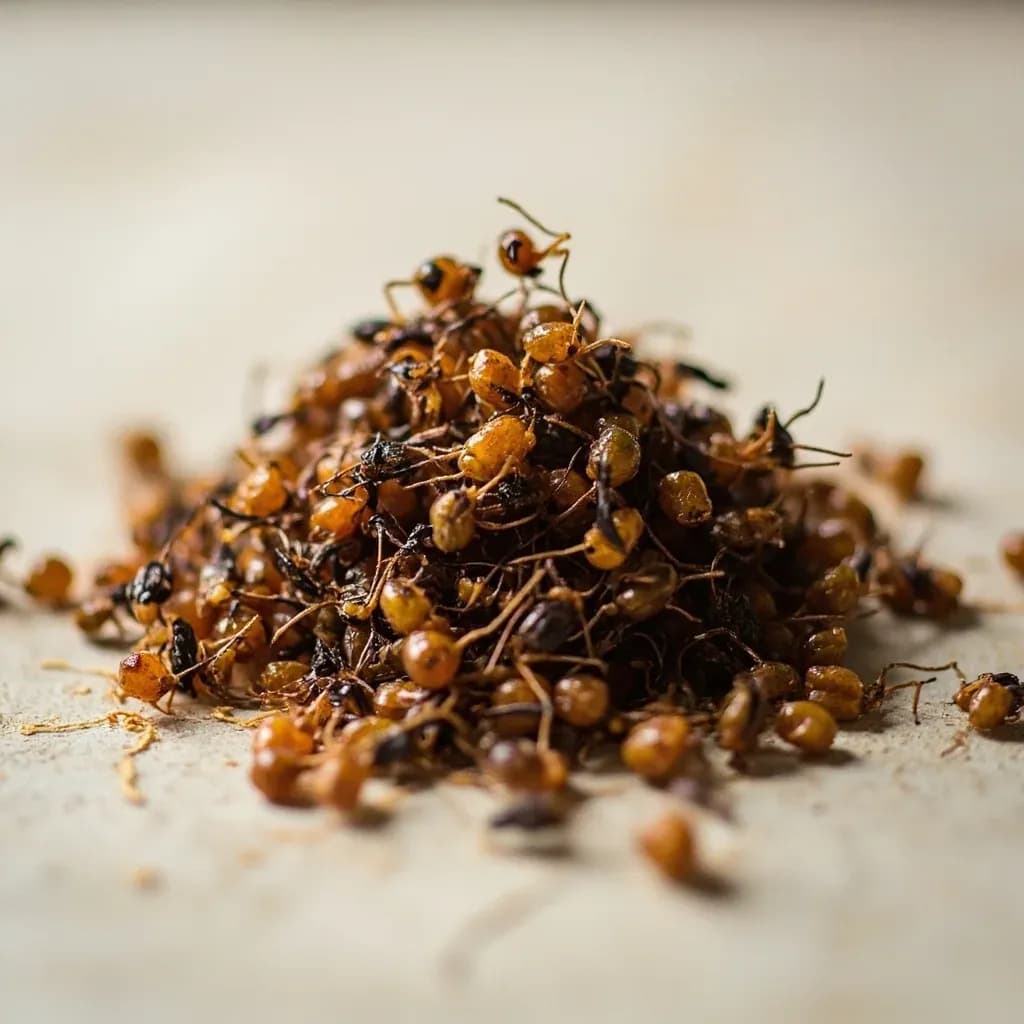
Chicatanas are large winged leafcutter ants gathered in southern Mexico after the first summer rains. They are toasted and ground with chile and garlic into a deeply savory, nutty salsa, or eaten whole as a delicacy. Seasonal and labor-intensive to collect, they are a prized traditional Oaxacan ingredient.
Chicatana ants are the winged reproductive alates of Atta mexicana and related leafcutter species, harvested in southern Mexico during the brief nuptial flight season triggered by summer rains. Unlike common pantry pests, these ants are plump, substantial insects with a complex flavor matrix that transforms dramatically through dry-roasting: raw chicatanas taste grassy and faintly sour, but when toasted on a clay comal over open flame they develop the intensely smoky, nutty, deeply savory character that defines Oaxacan cuisine. The processing matters critically—the toasting is not merely a preparatory step but the chemical event that creates the flavor. Ground chicatana is the foundation of traditional Salsa de Hormiga, one of Mexico's most revered regional salsas, and serves as a condiment, protein, and cultural symbol in equal measure. The ingredient's cultural weight is immense: pre-Hispanic civilizations valued these ants as a sacred protein source, and the annual harvest festival in San Juan Lachao, Oaxaca draws visitors from across the country, celebrating an ingredient that cannot be cultivated or forced—it emerges only when the rains, the colony, and the season align.
The word chicatana derives from Nahuatl, likely from "chicatlan," referring either to the ant hill or to the dramatic emergence of winged reproductives from underground nests. Harvesting is traditional women's and children's work, done in the early morning as the ants shed their wings and cluster on the ground near the nest entrance. What enters the kitchen are wingless, freshly shed ants ready for their transformation. The insects are never washed; they are simply picked through to remove debris and then dry-roasted in an act that requires constant attention. The toasting is finished when the ants turn golden-brown and release a concentrated aroma that perfumes the entire kitchen. This toasted product is then ground to varying consistencies depending on the dish: coarse for textural contrast, fine for silky salsas. The ground ants continue absorbing liquid after grinding, which is why traditional cooks make chicatana salsas in small batches meant to be consumed the same day.
In contemporary Oaxacan cooking, chicatana occupies a dual role as both condiment and garnish. The most traditional preparation is Salsa de Hormiga: ground toasted ants blended with tomatoes or tomatillos, chile de árbol, garlic, and sometimes avocado. This salsa appears on tlayudas, the large Oaxacan flatbreads spread with black beans, as a protein-rich finishing element. Beyond salsa, the ants appear in quesadillas, tlacoyos, and soups, always added near the end of cooking to preserve their texture and concentrated flavor. The ingredient's rarity and seasonality make it expensive when available—it commands a premium price that reflects both the labor of harvest and its cultural significance as a delicacy rather than mere survival food.
- Measured in
- g
- Storage
- Pantry
Allergens
Types & varieties
Darker variety with more intense, earthy flavor and deeper color
Reddish-brown variety with a slightly sweeter, milder character
Highland variety, smaller in size but prized for superior aromatic complexity
The Harvest and Its Constraints
Unlike cultivated ingredients, chicatana ants cannot be farmed or reliably predicted. The harvest depends on the timing of the first heavy rains, which trigger the nuptial flight when winged reproductives emerge from underground colonies to mate. This window lasts only a few days, and the ants must be collected quickly—before they fly away or are consumed by predators. The seasonality and unpredictability are central to the ingredient's value and expense. In Oaxaca markets during peak season, fresh toasted chicatanas command prices that reflect both scarcity and the skilled labor of harvest. Experienced collectors know which anthills produce the best-quality ants and monitor weather patterns to anticipate the flight. This is ingredient knowledge that connects the cook directly to ecological reality—understanding chicatana means understanding the landscapes, seasons, and communities of southern Mexico.
- Monitor local weather patterns: the first substantial rains trigger the nuptial flight
- Collect ants in early morning while they are still clustered near the nest entrance
- Quality depends on speed of collection after the wings shed—delays allow moisture loss and contamination
- Authentic product comes from small-scale wild harvesting, not commercial farming
Toasting: The Critical Transformation
The dry-roasting of chicatana ants is not incidental to their use—it is the moment that creates the ingredient. Raw chicatanas have a grassy, faintly acidic taste that most palates would find unremarkable. The toasting drives off moisture, browns the chitinous exoskeleton, and triggers the Maillard reaction on the insects' proteins and sugars, producing the characteristic smoky-nutty-savory depth. The traditional method uses a clay comal over wood fire, which imparts a subtle smokiness that an electric burner cannot replicate. The cook must stir constantly—these are small, irregularly shaped pieces that will scorch quickly if left unattended. The end point is unmistakable: golden-brown color, a concentrated roasted aroma, and the slight oiliness that indicates the fats inside the ants have been rendered. Over-toasting produces bitter, harsh notes; under-toasting leaves the ants chewy and underdeveloped. This technique requires full attention for three to five minutes.
- Use medium heat—high heat scorches before the interior toasts
- Stir continuously with a flat-edged tool to ensure even browning
- Toast until uniformly golden-brown; the aroma should be intensely fragrant, not merely warm
- Work in small batches to prevent overcrowding and uneven toasting
- Do not add oil or fat—dry heat only
Common uses
Tips & pitfalls
- Toast on a dry comal or cast-iron skillet over medium heat, stirring constantly, 3–5 minutes until fragrant and lightly browned—do not add oil
- Grind while still slightly warm for better texture; cold ants are difficult to break down evenly
- Start with a small amount—the flavor is concentrated and intensely smoky, and it amplifies in dishes
- Store away from strong-smelling foods; the ants absorb odors easily and will take on the flavor of nearby ingredients
- Do not rinse or wash fresh ants; clean by picking through to remove debris and stray wings
- When freezing, spread in a single layer on a sheet pan first, then transfer to bags—this prevents clumping into a solid mass
- The ants can be ground coarse for textural contrast or fine for silky salsas; a mortar and pestle gives more control than a blender
- Leftover ground chicatana keeps refrigerated in a sealed glass jar for up to 3 weeks; freeze for longer storage
- Ground chicatana continues absorbing liquid after grinding, so make Salsa de Hormiga in small batches meant to be consumed within a day or two
- Common mistake: adding ground chicatana too early in cooking, which dilutes its flavor and ruins its texture—always add in the final minutes or use as a finishing garnish
Nutrition
Nutrition
No USDA FoodData Central match for Chicatana Ant (Hormiga Chicatana) yet. We surface a per-100 g profile once a generic whole-food entry is matched and verified.
In the shops
Matched grocery products
No matched grocery products for Chicatana Ant (Hormiga Chicatana) yet.
Good to know
- Scientific Name
- Atta mexicana and related Atta species
- Origin
- Southern Mexico—primarily Oaxaca, Guerrero, and Chiapas
- Harvest Season
- Rainy season, typically May through July during the nuptial flight
- Form When Used
- Wingless alates collected after shedding wings, then dry-roasted and ground
- Processing Method
- Traditionally dry-roasted on a clay comal over wood fire until golden and fragrant
- Flavor Profile
- Smoky, earthy, nutty, intensely savory with pronounced umami depth
- Shelf Life
- 2–3 weeks refrigerated in airtight container; several months frozen
- Cultural Significance
- Pre-Hispanic food staple celebrated annually in festivals; the San Juan Lachao festival is the most renowned
Substitutes
- Escamoles (ant eggs) — Different texture and milder, more buttery flavor, but both are traditional Mexican entomological ingredients
- Toasted pepitas (pumpkin seeds) — Provides similar nutty, toasted flavor and pleasant crunch for non-authentic cooking
- Toasted pine nuts — Comparable nutty depth and rich mouthfeel, though culturally distant from the original
- Dried shrimp (camarones secos) — Offers similar intense umami and earthy character common in Oaxacan coastal-influenced cooking
Pairs with
Also called
Hormiga Chicatana · Flying Ants
Related

Egg
The kitchen's everything ingredient — bind, leaven, enrich, or fry

Chicken Breast
Lean, quick-cooking white meat for everyday dinners

Ground Beef
Versatile minced beef for burgers, ragù, tacos, and meatballs

Pork Loin
Lean, tender roasting cut that stays juicy with care

Salmon
Rich, rosy fish that roasts, grills, or cures beautifully

Egg White
Pure protein that whips to airy peaks for meringue and more

Egg Yolk
Rich, golden yolk for custards, mayonnaise, and pasta

Quail Egg
Tiny, speckled eggs for garnishing and elegant bites