Proteins
Escamoles
Edible ant larvae, a prized buttery Mexican delicacy called insect caviar.
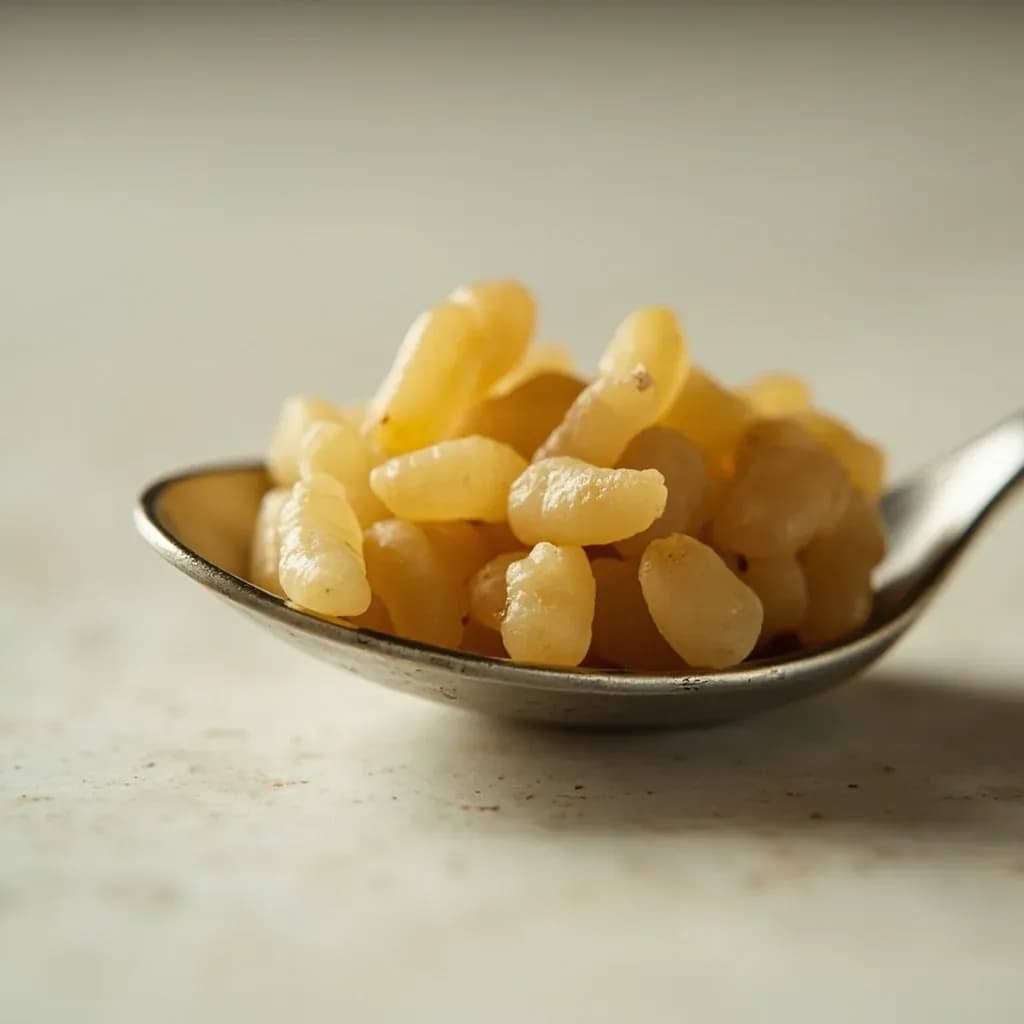
Escamoles are the larvae and pupae of ants harvested from agave roots, a pre-Hispanic Mexican delicacy nicknamed insect caviar. They are sautéed in butter with epazote and folded into tacos and omelets, where they have a soft, nutty, buttery taste. They are seasonal and labor-intensive to harvest, making them a luxury.
Escamoles are the edible larvae of the escamolero ant (Liometopum apiculatum), harvested from underground nests embedded in the root systems of agave plants in the central Mexican highlands. The larvae—third-instar, roughly the size of a grain of rice (1–3 mm)—are off-white to pale cream when fresh and turn golden when sautéed. They represent one of the most significant pre-Columbian protein sources still actively consumed in Mexico, prized for a flavor often described as buttery, nutty, and faintly tangy—more accurately compared to cottage cheese or sweet corn than to any fish product. The "insect caviar" marketing nickname, while useful for recognition, is misleading: escamoles are subtle and delicate, not bold or briny.
Harvesting escamoles is a highly labor-intensive process tied to both ecology and tradition. The four-to-six-week harvest window runs from late March through May, coinciding with agave flowering when the ants become most active. Nests are located in semi-arid scrubland at elevations of 1,500–2,500 meters and excavated by hand, typically at night or early morning. A mature nest yields only 500 g to 1 kg of larvae, and harvesters never fully deplete a nest—leaving the queen and remaining brood to ensure regeneration. Collection rights are often family-held knowledge passed through generations, making escamoles as much a cultural artifact as a culinary ingredient.
Fresh escamoles cook quickly and hold their shape well, shrinking very little during cooking—250 g fresh yields approximately two generous portions as a main. They require minimal handling: a hot pan with fat, a brief sauté of two to three minutes, and simple seasoning applied at the end. Their delicate flavor is easily overwhelmed, so traditional preparations pair them with brown butter, guajillo or puya chiles, queso fresco, and epazote rather than heavy tomato sauces. Sustainability concerns are real: habitat loss from agave farming for mezcal production and urbanization has reduced harvesting grounds, driving prices upward and limiting availability outside Mexico.
- Measured in
- g
- Storage
- Fridge
Types & varieties
The most common and highest-quality variety; pale cream colored, prized for their clean, buttery flavor.
Rarer; darker larvae from older colonies or different Liometopum species; slightly more pronounced earthy flavor.
The standard type; harvested from nests embedded in Agave salmiana root systems.
Not true escamoles; edible leaf-cutter ant queens from Oaxaca with a more intense, smoky flavor; a separate delicacy often grouped with escamoles in broader discussions.
Sourcing and Freshness
Freshness is the single most critical factor when working with escamoles. The insecty, earthy aroma intensifies as they age; fresh escamoles should smell clean and almost sweet. When purchasing, look for off-white to pale cream coloration—avoid any with discoloration or a strong ammonia-like smell. Refrigerate in a breathable container (burlap or perforated plastic) for up to 48 hours; for longer storage, freeze in a sealed container. If using frozen, thaw gently in the refrigerator overnight—never microwave, as the rapid heating will make them tough and mealy.
- Smell before buying: fresh escamoles are clean and faintly sweet; stale ones smell strongly of ammonia
- Refrigerate in breathable containers; they spoil faster in sealed plastic bags
- Frozen escamoles are acceptable but must thaw slowly in the refrigerator overnight
- Buy from reputable Mexican markets during peak season (March–May) for the best quality and price
The Harvesting Context
Escamoles represent a rare case of a pre-Columbian protein source that has never fallen out of culinary use. The tightly regulated harvesting traditions—never fully depleting a nest, leaving the queen intact—have sustained populations for centuries. Family-held harvesting rights and generational knowledge form an invisible infrastructure around the ingredient. However, rising demand, habitat loss from mezcal production, and urbanization have reduced available grounds, making escamoles increasingly expensive and difficult to source outside Mexico. When you encounter them, you are tasting a practice that predates European contact by millennia.
- Nests are never fully harvested; this tradition ensures regeneration and sustains populations
- Harvesting rights are often inherited family knowledge, not open-access
- Habitat loss from agave farming and urbanization has driven prices upward
- Seasonal availability (March–May) is strict—availability outside this window usually means frozen stock
Common uses
Tips & pitfalls
- Never overcook: Escamoles require only 2–3 minutes in a hot pan; they become mealy and lose their creamy interior if cooked beyond a light sauté in butter.
- Season at the end: Salt and acid (lime juice) should be added after cooking; they can toughen if seasoned too early.
- Clean meticulously: Pick through thoroughly to remove any debris, antennae, or fully formed adult ants, which are bitter.
- Use rendered lard or bacon fat alongside butter for traditional preparations—this deepens the nutty flavor and pays homage to pre-Hispanic cooking practices.
- If unavailable fresh, frozen is acceptable but thaw gently in the refrigerator overnight; do not microwave.
- When serving as a taco filling, keep accompaniments simple: warm tortillas, thin salsa, fresh cilantro, and white onion only—the delicate flavor is easily overwhelmed.
- Common mistake: Pairing with heavy tomato-based sauces; the acidity and intensity clash with the subtlety of escamoles. Tomatillo salsa verde is a far better choice.
Nutrition
Energy
598 kJ · per 100 g
Where the calories come from
Protein
12.6g
25% DV
Carbs
0.7g
0% DV
Fat
9.5g
12% DV
Fiber
0g
0% DV
Sugars
0.4g
of which
Sodium
142mg
6% DV
Source · USDA FoodData Central · approx. Egg, whole, raw, fresh
View on FDC →In the shops
Matched grocery products
No matched grocery products for Escamoles yet.
Good to know
- Species
- Liometopum apiculatum (escamolero ant)
- Type
- Edible ant larvae (third-instar), 1–3 mm grains
- Origin
- Central Mexican highlands; major harvests in Hidalgo, Puebla, and Tlaxcala at 1,500–2,500 m elevation
- Season
- Late March through May; 4–6 week window during agave flowering
- Flavor
- Buttery, nutty, faintly tangy; often compared to cottage cheese or sweet corn
- Texture
- Tender and creamy when fresh; golden when sautéed
- Yield
- Shrinks very little when cooked; 250 g fresh yields approximately 2 generous portions as a main
- Price
- Premium pricing ($30–50 USD per 250 g fresh in Mexico City markets); considered a luxury ingredient
Substitutes
- Caviar (tobiko or flying fish roe) — Provides textural similarity (pop and creaminess) and visual elegance for composed plates; no flavor similarity but works as a luxury garnish in refined preparations.
- Ricotta salata (crumbled) — Close textural match for taco or quesadilla use; mild enough not to compete with other fillings; no insect character, so purely a textural substitute.
- Huitlacoche (cut corn mushrooms) — Shares the earthy, buttery character and Mexican luxury ingredient status; different texture but compatible in similar preparations and similarly delicate.
- Cotechino or mortadella (finely crumbled) — Mimics the fatty, porky richness in a robust taco preparation; far from equivalent but provides body and fat when escamoles are truly unavailable.
Pairs with
Also called
Ant Larvae · Ant Eggs · Insect Caviar
Related

Egg
The kitchen's everything ingredient — bind, leaven, enrich, or fry

Chicken Breast
Lean, quick-cooking white meat for everyday dinners

Ground Beef
Versatile minced beef for burgers, ragù, tacos, and meatballs

Pork Loin
Lean, tender roasting cut that stays juicy with care

Salmon
Rich, rosy fish that roasts, grills, or cures beautifully

Egg White
Pure protein that whips to airy peaks for meringue and more

Egg Yolk
Rich, golden yolk for custards, mayonnaise, and pasta

Quail Egg
Tiny, speckled eggs for garnishing and elegant bites