Stored
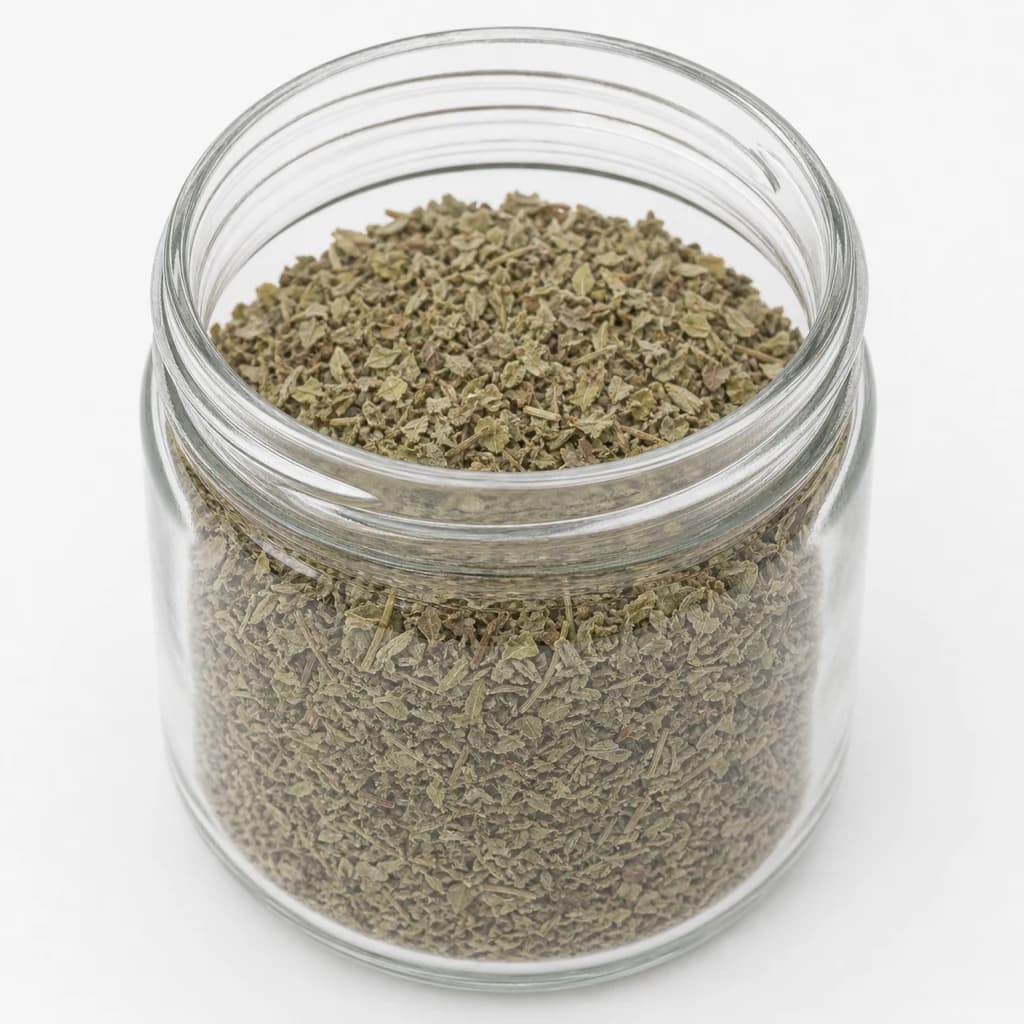
Dried oregano as sold: crumbled grey-green leaves in a glass jar, lid off.
Shows the everyday storage form readers encounter in their pantry — colour, texture, and leaf fragment size all visible.
Herbs
Dried Oregano
Pungent dried herb — a pizza and tomato-sauce essential
Even punchier than fresh, dried oregano is the classic seasoning for pizza, tomato sauces, and Greek dishes. Crush it between your fingers to release the oils. Keep it airtight.
Dried oregano is arguably better than fresh — drying concentrates and rounds its pungent, peppery, slightly bitter flavor, which is why it's the classic seasoning for pizza, tomato sauce, and Greek dishes. It's one of the few herbs cooks deliberately keep dried. Crush it between your fingers as you add it to release the oils. Mediterranean dried oregano is floral and peppery; Mexican dried oregano is a different plant, more citrusy and earthy, made for chili, salsa, and beans. A pantry essential that holds its punch through long cooking.
- Measured in
- g
- Storage
- Airtight
- Shelf life
- 540 days
Find it in
Types & varieties
Floral, peppery — for pizza, marinara, and Greek dishes.
Citrusy and earthy — for chili, salsa, and beans.
Often sold on the stem, intensely aromatic.
How to use
Crush dried oregano between your palms over the pot to release its volatile oils, then add it early to sauces, marinades, and rubs so the flavor melds. It's robust enough to take long simmering without fading.
- Crush before adding to wake the oils
- Match type to cuisine — Mediterranean vs Mexican
- Add early; it holds up to heat
Fresh vs dried
Many cooks prefer dried oregano outright — drying intensifies and rounds the flavor, making it the pizza and tomato-sauce standard. Fresh is brighter and sharper; for cooked Mediterranean dishes, dried is the classic.
Common uses
Tips & pitfalls
- Crush between your fingers to release the aromatic oils.
- Use Mediterranean oregano for pizza, Mexican for chili and salsa.
- It's robust — add early and let it simmer.
- A teaspoon transforms a tomato sauce into a pizza-parlor flavor.
- One of the few herbs that's arguably better dried than fresh.
Nutrition
Energy
1109 kJ · per 100 g
Where the calories come from
Protein
9g
18% DV
Carbs
68.9g
25% DV
Fat
4.3g
5% DV
Fiber
42.5g
152% DV
Sugars
4.1g
of which
Sodium
25mg
1% DV
Source · USDA FoodData Central · approx. Spices, oregano, dried
View on FDC →In the shops
Matched grocery products
 €1.00
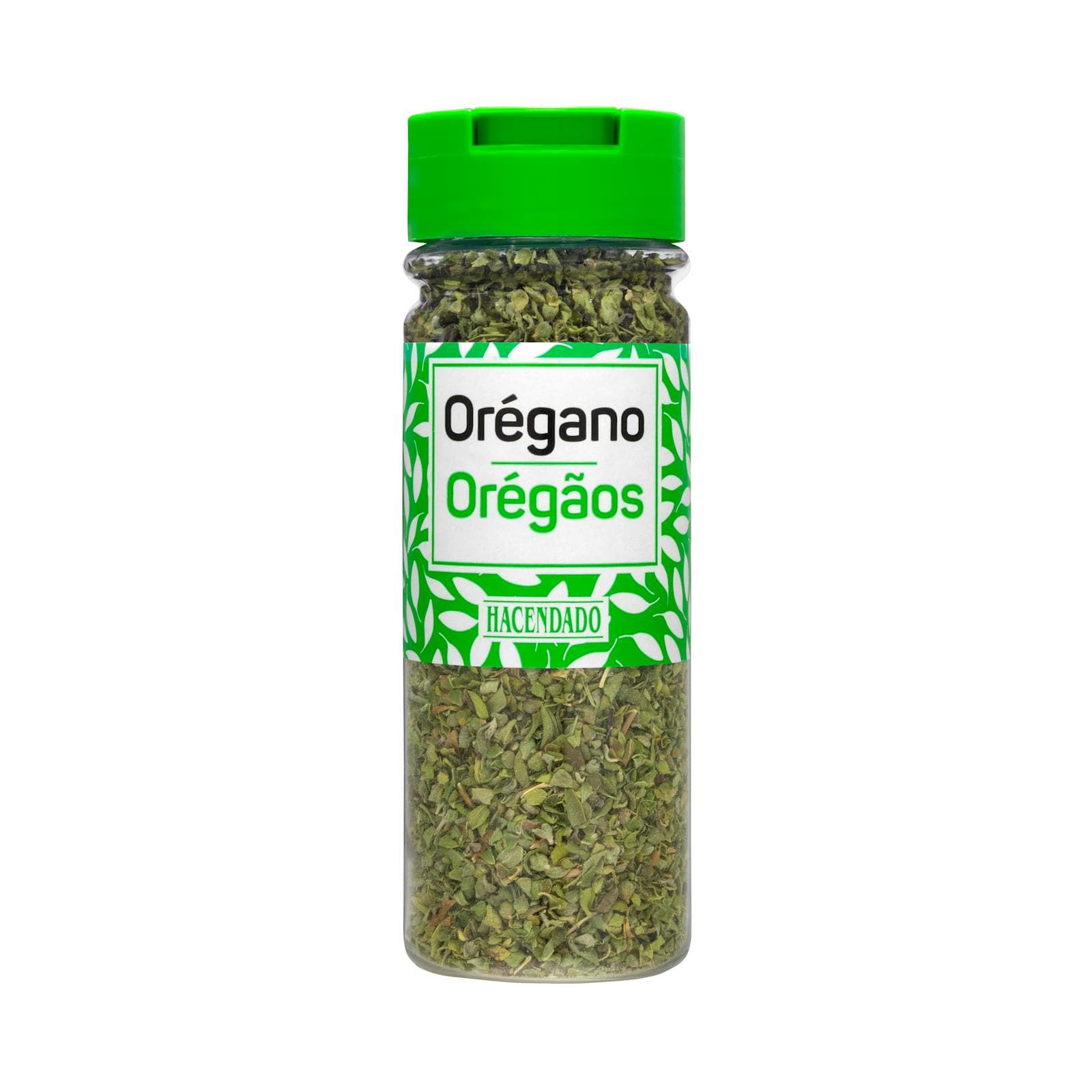
€1.00Oregano
Hacendado · 0.025 100 g · Mercadona
 €1.85
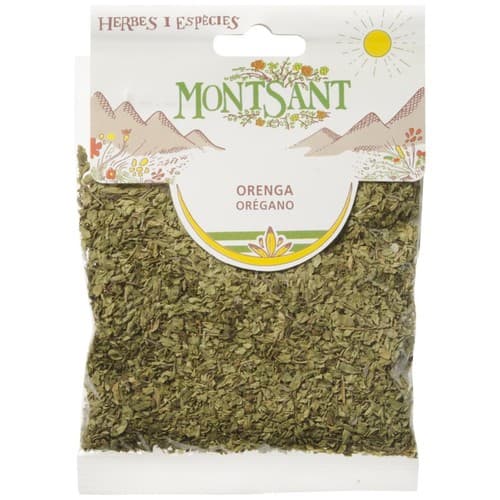
€1.85Montsant Oregano
MONTSANT · Bonpreu
Good to know
- Flavor
- Pungent, peppery, warm, lightly bitter — intense
- Form
- Dried, crumbled leaf (often preferred over fresh)
- Add when
- Early in cooked dishes; crush to release oils
- Cuisines
- Italian, Greek, Mexican, Turkish
- How to buy
- Fragrant when crushed; Mediterranean vs Mexican by use
- How to store
- Airtight and dark; potent up to a year or more
Appears in these dishes

Related

Basil
Sweet, fragrant leaves for pesto, pasta, and caprese

Parsley
Fresh, grassy herb for finishing nearly any savory dish

Cilantro
Bright, citrusy herb for salsas, curries, and tacos

Mint
Cool, fragrant herb for teas, salads, and desserts
Rosemary
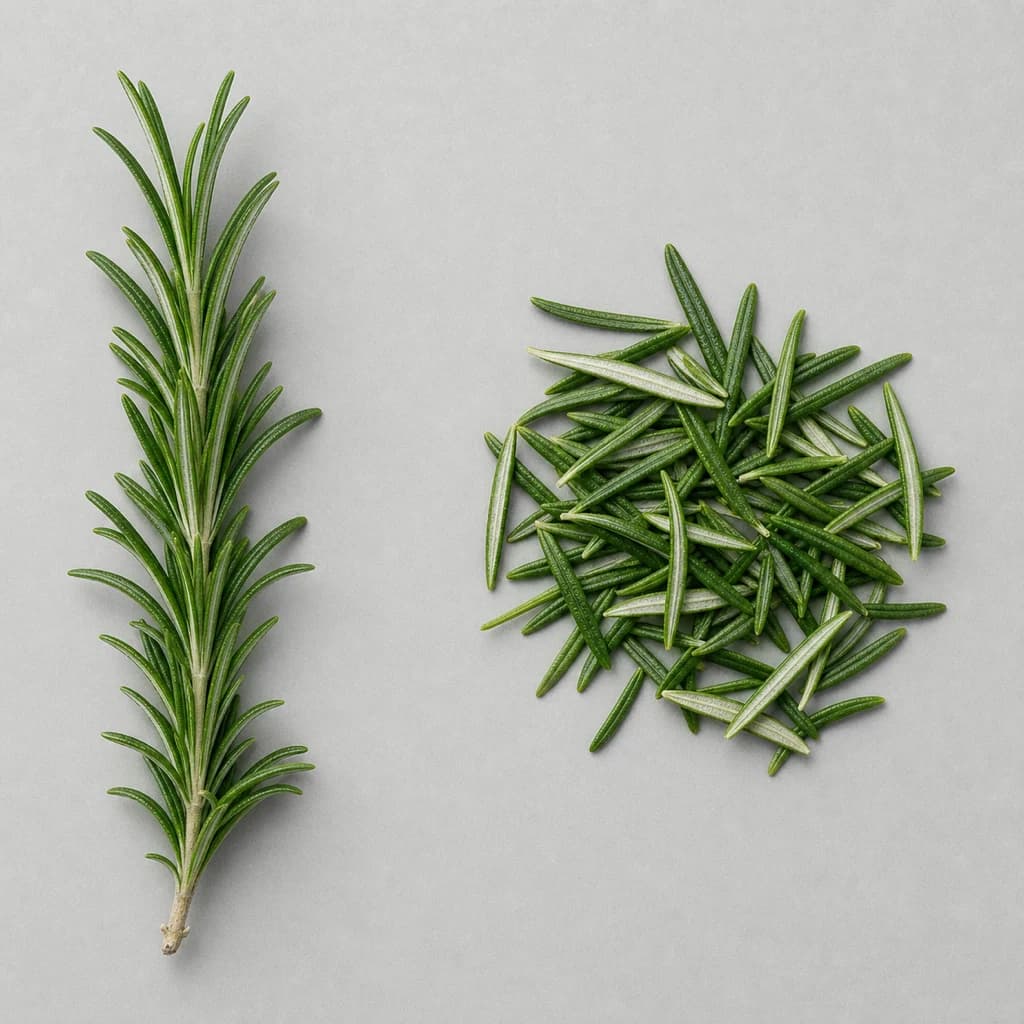
Piney, resinous herb for roasts, breads, and potatoes

Thyme
Earthy, floral herb for braises, roasts, and stocks

Sage
Savory, velvety herb for butter sauces and stuffings

Oregano
Pungent, peppery herb for tomato sauces and grilling