
Natural form
A block of firm tofu straight from packaging, showing its dense, pale ivory surface.
Establishes the baseline appearance — the intact block, surface texture, and color that readers will encounter at the store.
Proteins
Firm Tofu
Dense, pressed soybean curd that holds its shape — fried, grilled, braised, or stir-fried as a protein.
Firm tofu is soybean curd that has been pressed to remove most of its water, giving it a dense texture that holds its shape during cooking. It is cubed and fried, grilled, braised, or stir-fried, absorbing marinades and sauces while adding plant-based protein. Pressed and dried versions are even chewier and used in Chinese cold and stir-fried dishes.
Firm tofu is pressed soybean curd—a dense, protein-rich block created when soy milk is coagulated with mineral salts (nigari or gypsum) and the resulting curds are pressed to expel excess whey. The extended pressing time, compared to soft or silken varieties, produces a tight protein matrix that holds its shape under aggressive cooking methods. This density is what makes firm tofu uniquely versatile: it can be sliced into clean strips for grilling, cubed for deep-frying, or torn into chunky pieces for braising, and in each case it delivers satisfying texture rather than crumbling into mush.
The interplay between firmness and porosity is the key to cooking firm tofu well. While the exterior resists breaking apart, the interior develops a subtle honeycomb structure that drinks in marinades, sauces, and braising liquids without becoming waterlogged or falling apart. This behavior is why firm tofu has been the backbone of Buddhist vegetarian cuisine across East Asia for centuries—it absorbs complex flavors while providing the toothsome satisfaction that meat-eaters expect from a main dish.
Texture and flavor are also influenced by the coagulant used. Gypsum-set (calcium) tofu tends toward a slightly crumblier bite, while nigari-set (magnesium) tofu produces a smoother, more cohesive surface that crisps beautifully. Calcium-set varieties offer the added benefit of higher bioavailable calcium, a significant advantage for plant-based diets. When shopping, press the block gently: genuine firm tofu springs back slowly, if at all; excessive give indicates insufficient pressing.
- Measured in
- g
- Storage
- Fridge
Allergens
Types & varieties
Even denser than standard firm; ideal for grilling and deep-frying; minimal give under pressure
Pre-pressed during manufacturing; very low moisture; excellent for aggressive cooking methods; some brands are self-pressing
The workhorse variety; presses down to a solid, sliceable block; versatile for most applications
Made from organic soybeans; no difference in cooking behavior; affects flavor perception (less beany taste)
Calcium-set (gypsum) tends to be slightly crumblier; nigari-set has smoother, more cohesive texture; nutritional calcium content differs
Pressing Firm Tofu
Pressing is the single most important prep step for any application where you want browning or a crispy exterior. Insufficiently pressed tofu steams in its own moisture rather than searing, resulting in pale, flabby pieces.
- Tofu press: Follow manufacturer instructions; typically 20–30 minutes for firm tofu
- Improvised method: Wrap block in clean kitchen towels or paper towels, place on a plate, and set a heavy pan on top; alternatively, stack a cast iron skillet on a plate and let gravity do the work
- For denser, chewier results: press overnight in the refrigerator to prevent temperature abuse
- After pressing, cut immediately—pressing makes the block more cohesive and cleaner cuts are easier to achieve
- Japanese-style light pressing preserves a custard-like interior with a crisp exterior; Chinese-style aggressive pressing creates denser, chewier results
Freezing and Thawing
Freezing fundamentally transforms firm tofu's texture and is essential technique for certain dishes, particularly braises and curries where you want the tofu to drink deeply of the cooking liquid.
- Freeze firm tofu overnight in its original packaging or in a sealed container
- Thaw completely in the refrigerator or at room temperature
- Squeeze out the ice crystals that form between the cells—this creates dramatic pockets and channels throughout the block
- Frozen-thawed tofu appears yellowish and has a spongy, chewy texture entirely different from fresh; it browns less readily but absorbs braising liquids magnificently
- Use frozen-thawed tofu within 3–4 days for best quality; texture continues to change during cold storage
Common uses
Tips & pitfalls
- Always press firm tofu before cooking if you want browning: 20–30 minutes with a tofu press or weighted plate lined with clean towels; longer pressing yields denser, chewier results
- Salt the surface 10–15 minutes before cooking to draw out moisture and improve browning—this simple step makes a measurable difference in crispiness
- Don't move tofu pieces for the first 3–4 minutes of cooking—allowing a skin to form prevents sticking and tearing
- Common mistake: insufficient drying before cooking—pat all surfaces dry with paper towels after pressing
- Common mistake: overcrowding the pan—creates steam instead of browning; cook in batches with adequate space between pieces
- For deeply flavored tofu, marinate 30 minutes to overnight in the refrigerator; the dense but porous structure holds marinade beautifully
- Corn starch dredge (1:1 with cold water) before pan-frying creates a lacquered, restaurant-quality crust at 350–375°F (175–190°C)
Nutrition
Energy
602 kJ · per 100 g
Where the calories come from
Protein
17.3g
35% DV
Carbs
2.8g
1% DV
Fat
8.7g
11% DV
Fiber
2.3g
8% DV
Sodium
14mg
1% DV
Source · USDA FoodData Central · Tofu, raw, firm, prepared with calcium sulfate
View on FDC →In the shops
Matched grocery products
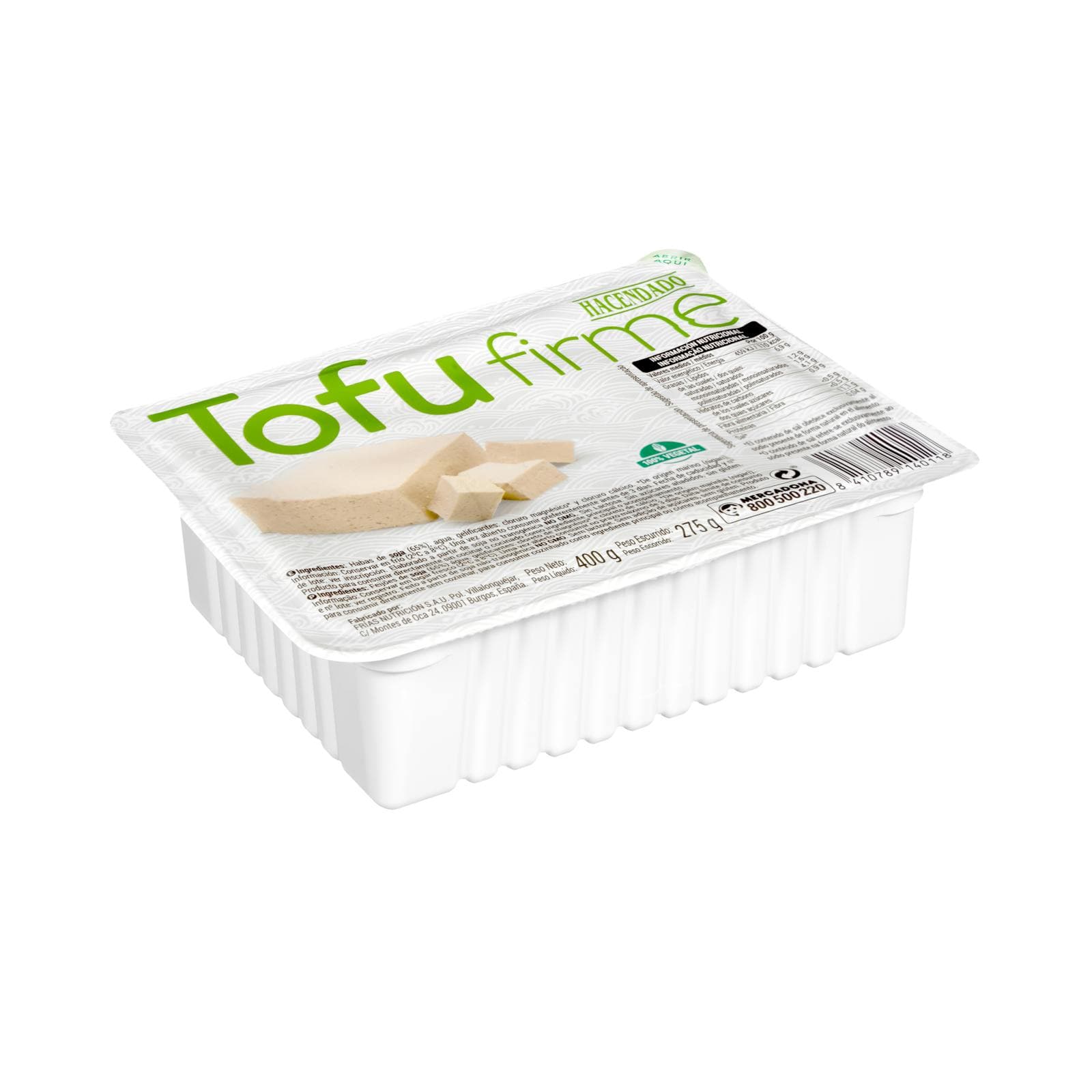 €1.90
€1.90Firm Tofu
Hacendado · 400 g · Mercadona
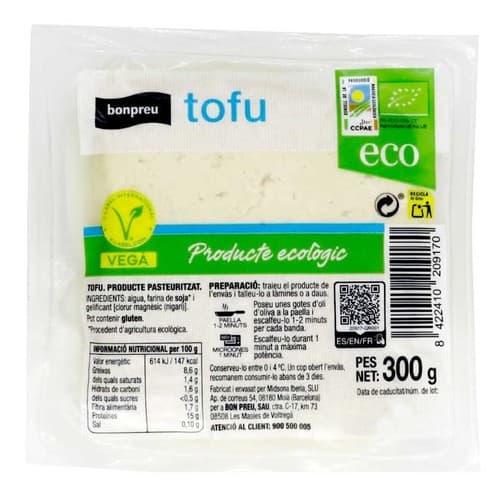 €2.45
€2.45Bonpreu Organic Tofu
BONPREU · kg · Bonpreu
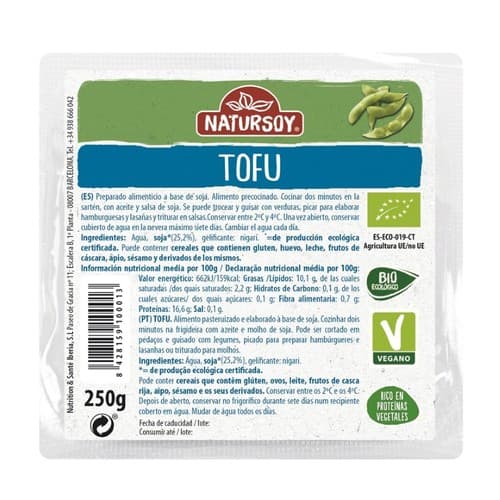 €2.99
€2.99Natursoy Fresh Organic Tofu
NATURSOY · kg · Bonpreu
Good to know
- Origin
- China, Han Dynasty (circa 164 BC); spread to Japan, Korea, and Southeast Asia
- Coagulant
- Nigari (magnesium chloride) or gypsum (calcium sulfate); affects flavor and texture
- Protein Content
- 8–10 g per 100 g serving
- Calories
- 76 per 100 g
- Water Content
- Approximately 70–80% (lower than soft/silken varieties)
- Typical Block Size
- 14–16 oz (400–450 g) per standard block
- Refrigerated Shelf Life
- 5–7 days unopened; 3–5 days after opening (submerged in water, changed daily)
- Freezer Storage
- Up to 3 months; frozen-thawed tofu develops spongy, porous texture ideal for braising
Substitutes
- Extra-Firm Tofu — Most direct substitute; cook identically; may need slightly less pressing time
- Super-Firm Tofu — Pre-pressed, denser; works for all firm tofu applications and reduces prep time
- Tempeh — Fermented, nutty, and denser; must slice thin or crumble; works well in stir-fries and curries
- Paneer — Firm Indian cheese with similar cooking behavior in Indian dishes; crumbles differently; not vegan
- Fried Firm Tofu (Aburage) — Pre-fried with puffy exterior; used in Japanese cuisine; already cooked; add at end of dishes
- Seitan — Wheat gluten with much chewier, meatier texture; does not absorb marinades the same way; not gluten-free
Pairs with
Also called
Firm Tofu (老豆腐) · Dried Pressed Tofu (豆腐干) · Bean Curd
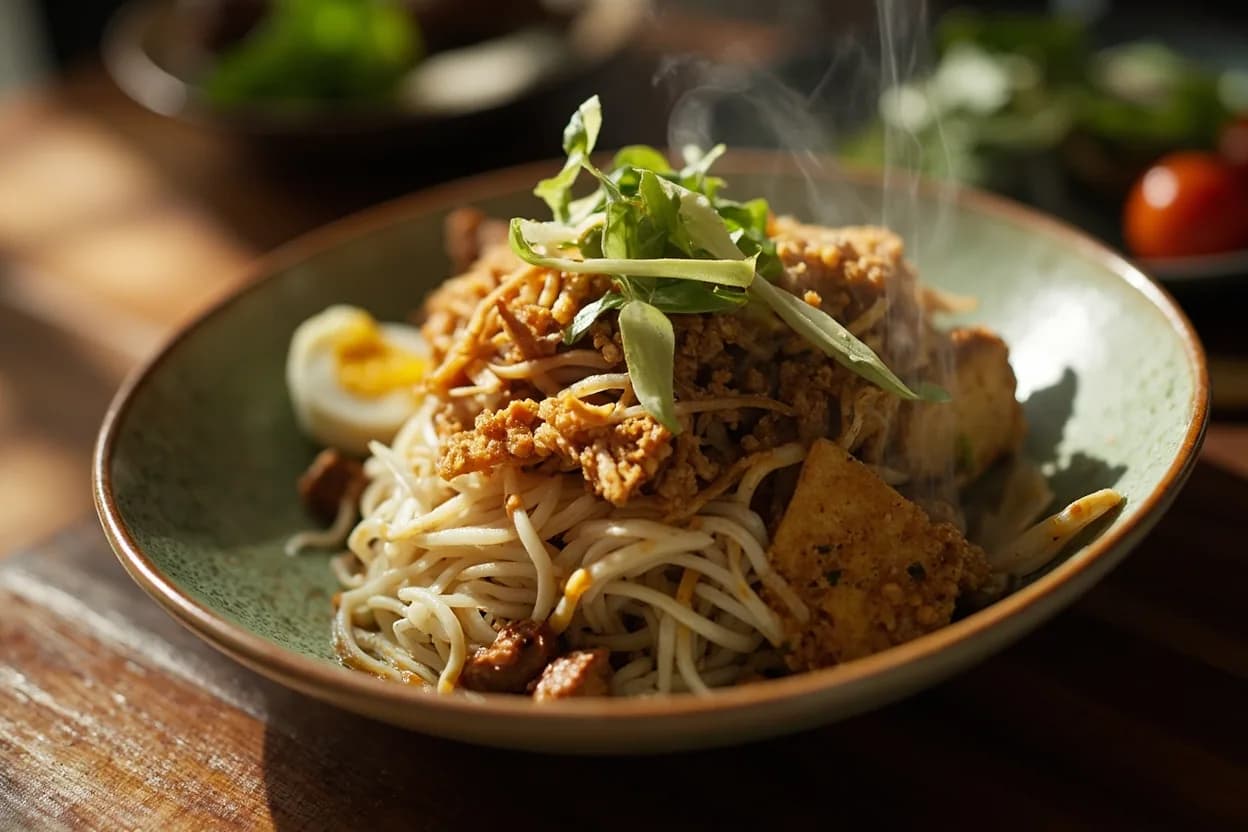
Appears in these dishes
Related

Egg
The kitchen's everything ingredient — bind, leaven, enrich, or fry

Chicken Breast
Lean, quick-cooking white meat for everyday dinners

Ground Beef
Versatile minced beef for burgers, ragù, tacos, and meatballs

Pork Loin
Lean, tender roasting cut that stays juicy with care

Salmon
Rich, rosy fish that roasts, grills, or cures beautifully

Egg White
Pure protein that whips to airy peaks for meringue and more

Egg Yolk
Rich, golden yolk for custards, mayonnaise, and pasta

Quail Egg
Tiny, speckled eggs for garnishing and elegant bites