Proteins
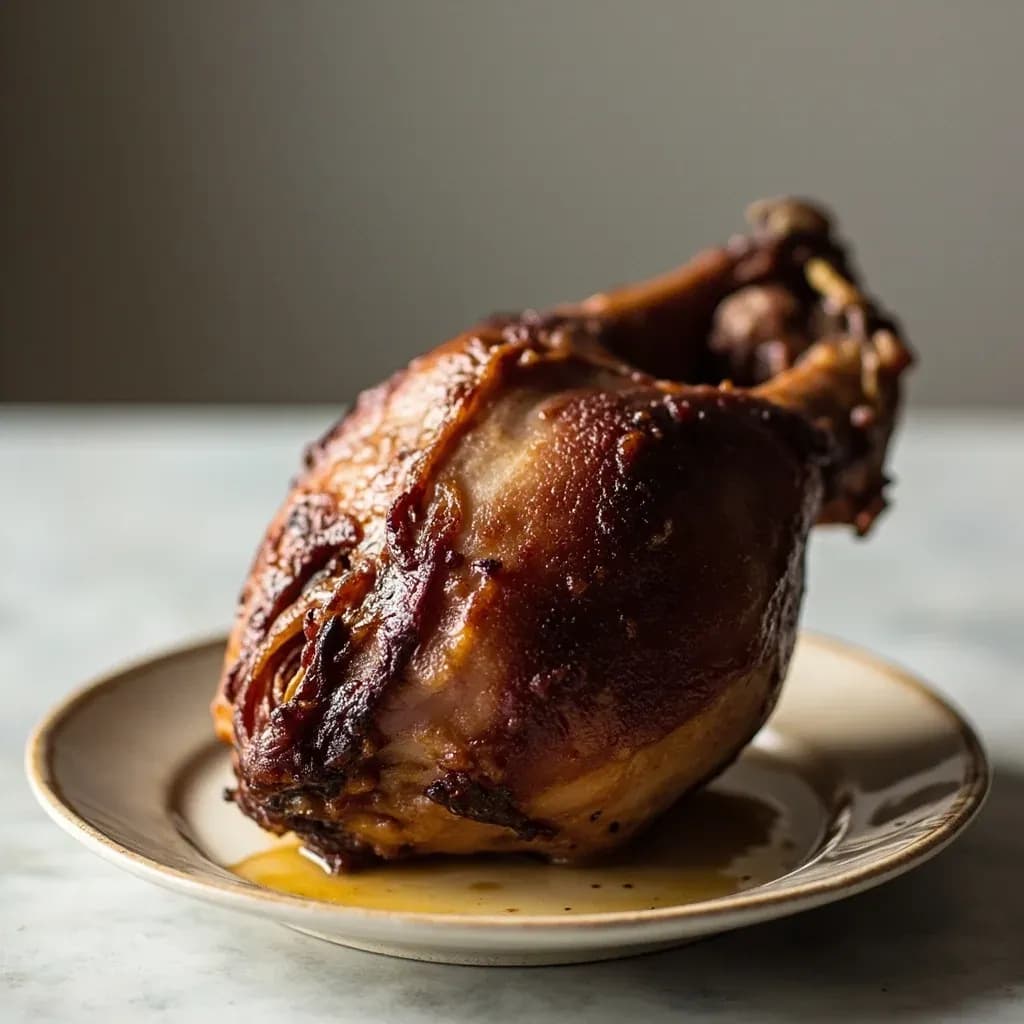
Smoked Ham Hock
Smoked pork shank joint slow-simmered to flavor beans, soups and greens.
A smoked ham hock is the cured and smoked joint of a pig's leg, full of collagen, fat and bone. It is simmered low and slow to enrich split-pea soup, collard greens, beans and stocks with smoky, savory depth, and the tender meat is then shredded back in. Soaking can reduce its saltiness before use.
A smoked ham hock is the joint between a pig's lower leg and foot, cured in salt (usually with nitrite) and then smoked over hardwoods like hickory, apple, or pecan. It is a tough, unglamorous cut dominated by skin, fat, collagen, and a central bone, with only a modest ring of meat wrapped around it. That composition is precisely why cooks value it: the connective tissue breaks down into gelatin during a long simmer, the bone leaches minerals and body, and the cured, smoked exterior floods the pot with salt and deep wood-fired flavor. Most recipes that call for a ham hock are really calling for everything that comes out of the pot, not just the shreds of meat you eventually pick off the bone.
In the pot, a smoked hock behaves more like a seasoning than a piece of meat. Two to three hours of gentle simmering extracts smoky, salty, pork-forward flavor and turns the collagen into a silken body that thickens bean cooking liquid, soup, and pot likker without extra effort. The hock itself rarely anchors the plate; it is a flavoring engine that stretches inexpensive, salt-preserved pork across a big pot of beans or greens. That role shaped its place in Southern, Central European, Alsatian, and Brazilian cooking, where a single hock can season a gallon of food.
Treat the hock as a two-for-one ingredient: a smoky, salty broth and a bonus cup or so of shreddable meat. The broth is almost always the more valuable yield, and many cooks reduce or freeze it for later use even after the meat has been picked clean. Add the meat back at the end of cooking so it stays tender and moist rather than drying out in a long braise.
- Measured in
- g
- Storage
- Fridge
Types & varieties
Cured and smoked; the standard American style, deep amber and very salty
Uncured and unsmoked; milder and paler; needs longer cooking and more seasoning
Salt-cured but not smoked; pure pork flavor without smoke
Dry-cured and aged in the Southern tradition; intensely salty, often needs soaking
German, Austrian, and Czech preparations of the same cut, usually roasted or boiled fresh rather than smoked
Front-leg (picnic) and hind-leg shanks are both sold as hocks; the hind hock is typically meatier
Building a Pot of Beans Around a Ham Hock
A smoked hock is the traditional backbone of long-simmered bean pots, and a few habits separate a good pot from a great one. Soak dried beans overnight in cool water with a pinch of baking soda if the skins are tough, then drain and start them in fresh water or, even better, a light stock. Add the hock early so the beans cook in the smoky, salty liquid, but hold off on additional salt until the beans are tender: a cured hock releases salt gradually, and salting too early can leave you with hard, wrinkled beans sitting in an over-salted broth. A typical ratio is one 1.5 lb hock per 1 to 1.5 lb of dried beans, which serves six to eight with leftovers.
- Start beans in cold water or unsalted stock, then add the hock; salt only after beans soften
- Aim for a gentle 180 to 200°F simmer; a hard boil cracks skins and clouds the broth
- Skim gray foam and rendered fat in the first 30 minutes for a cleaner pot
- Pull the hock when fork-tender, pick the meat, and stir it back in at the end
- Reserve the cooking liquid — it is essentially a smoky ham broth and the soul of the dish
Buying and Storage Notes
Weight alone is a poor guide to value. A heavy, bony hock yields almost no meat, while a meaty hock of the same weight will feed more people and give you a richer broth. Look for a piece with a thick ring of pink-red meat around the bone, a generous skin cap, and a clean smoky aroma; reject hocks that smell sour or feel slimy. Vacuum-sealed hocks keep for several weeks refrigerated unopened; once cut into, use within a week. Cooked hock meat keeps three to four days refrigerated and freezes well for six months in a tightly sealed container, ideally with a little of its cooking liquid to keep it moist.
Common uses
Tips & pitfalls
- Soak a heavily salted hock overnight in cold water, or blanch for 5 to 10 minutes, then taste the broth before adding any more salt
- Simmer at 180 to 200°F — a bare tremble on the surface — because a hard boil tightens proteins and yields a cloudy, poorly extracted broth
- Skim rendered fat from the surface to control richness and clarify the cooking liquid
- Pull the meat while it is still warm; it shreds cleanly off the bone and stays moist
- For crispy skin, score the fat, pat dry, and roast or broil the cooked hock briefly after braising
- Balance the salt with something acidic or sweet — vinegar, tomatoes, a splash of brown sugar, or a sharp mustard
- Save the bone after picking the meat; it can be re-simmered for a second, lighter broth
- Common mistake: salting beans early. Cured hock releases salt gradually, and an early salting leaves beans tough in an over-brined pot
- Common mistake: boiling hard. Aggressive boiling drives off smoke aromatics and toughens the meat; keep the heat gentle
- Common mistake: discarding the broth. The cooking liquid carries most of the flavor and is the most valuable yield
Nutrition
Energy
715 kJ · per 100 g
Where the calories come from
Protein
19.1g
38% DV
Carbs
0g
0% DV
Fat
10.5g
14% DV
Fiber
0g
0% DV
Sugars
0g
of which
Sodium
1050mg
46% DV
Source · USDA FoodData Central · Pork, pickled pork hocks
View on FDC →In the shops
Matched grocery products
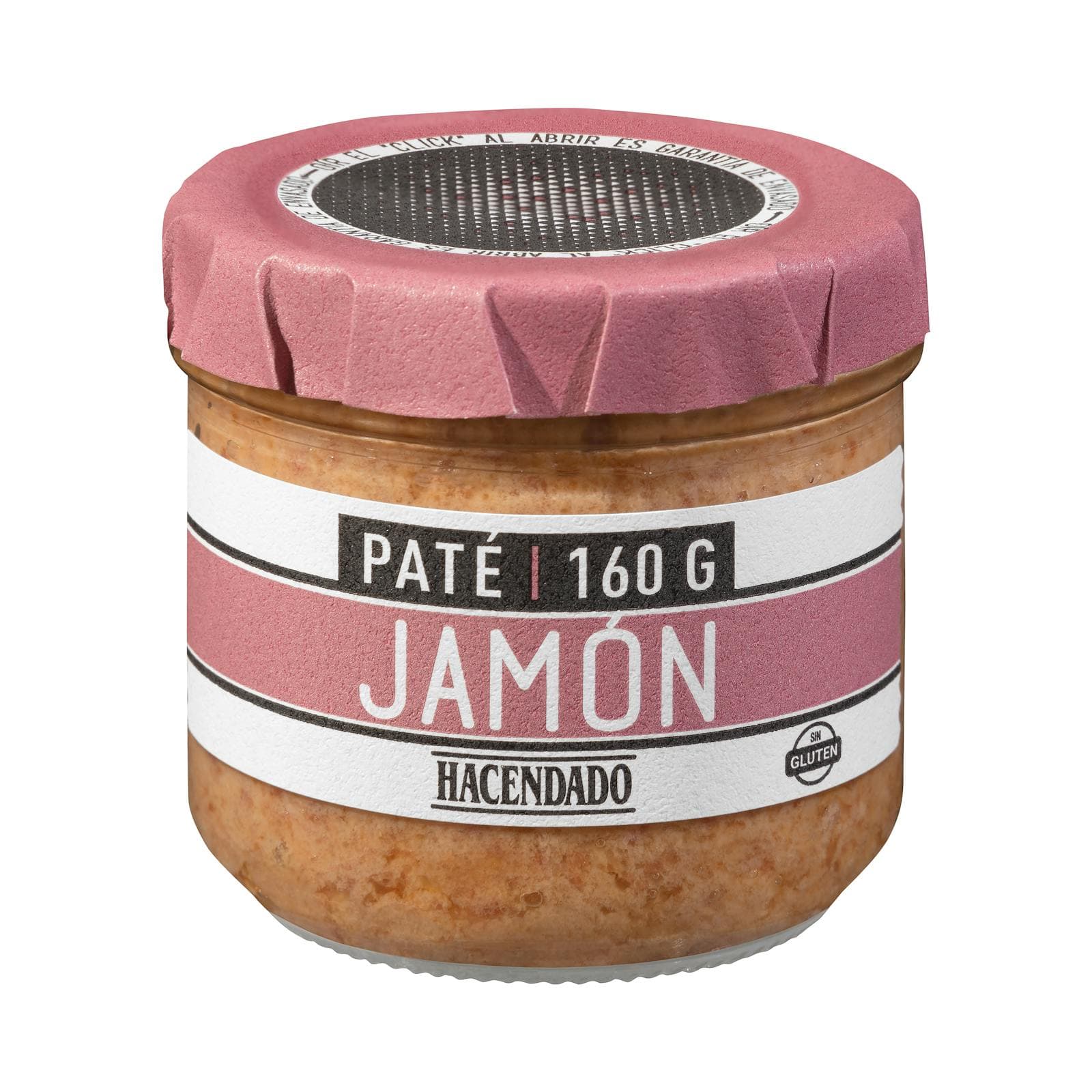 €1.10
€1.10Ham Pâté
Hacendado · 160 g · Mercadona
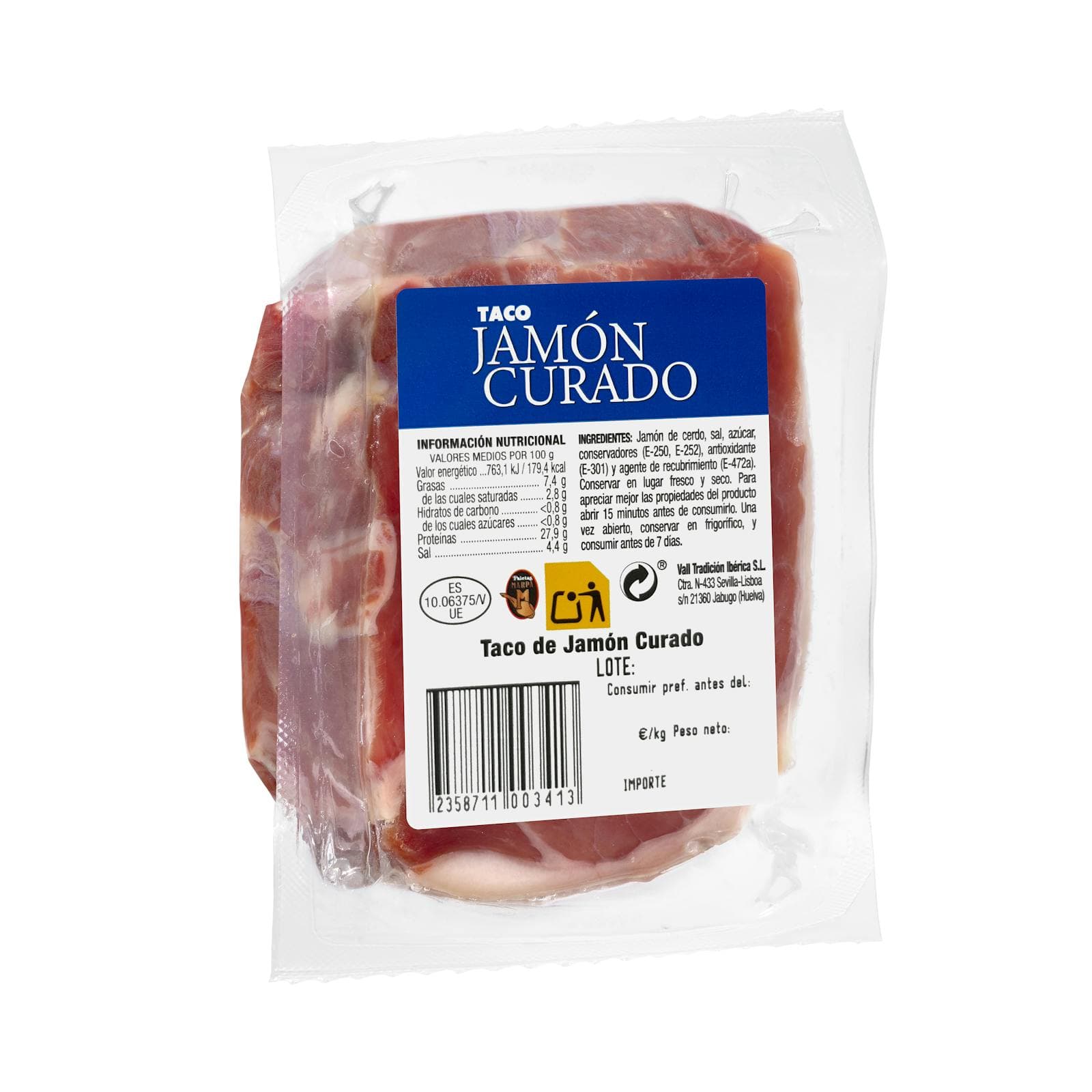 €3.85
€3.85Cured Ham Portion
220 g · Mercadona
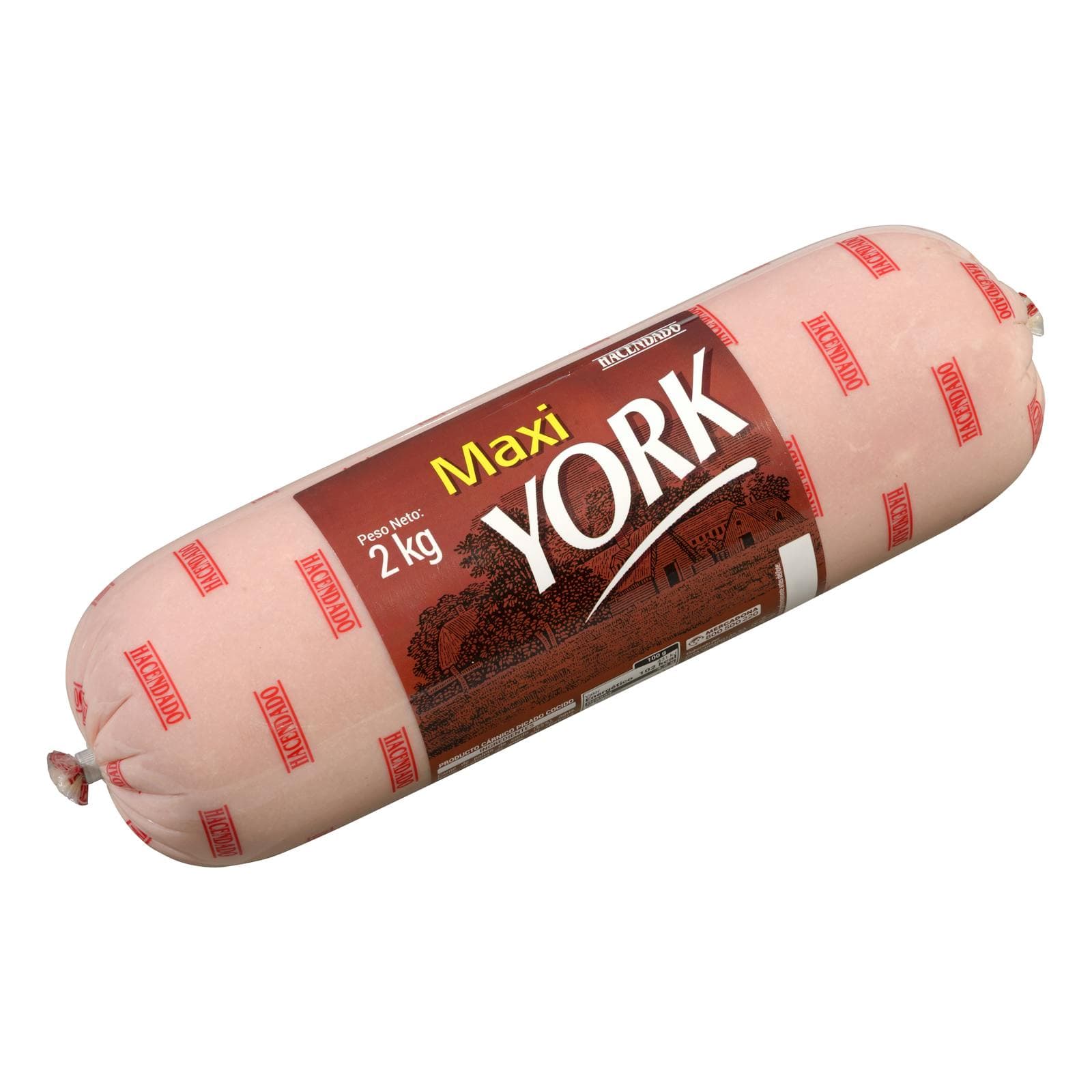 €5.95
€5.95Maxi York Ham
Hacendado · 2 kg · Mercadona
 €6.75
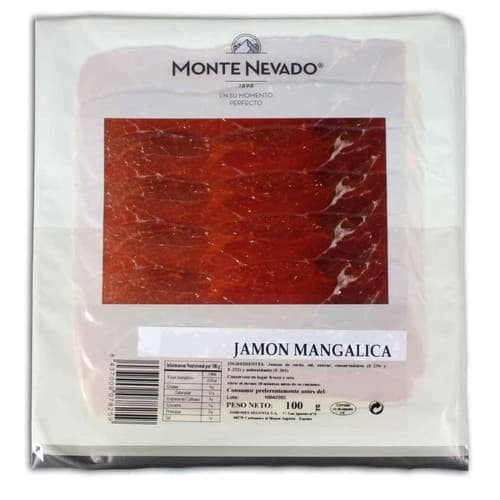
€6.75Mangalica Ham
MONTE NEVADO · kg · Bonpreu
 €65.00
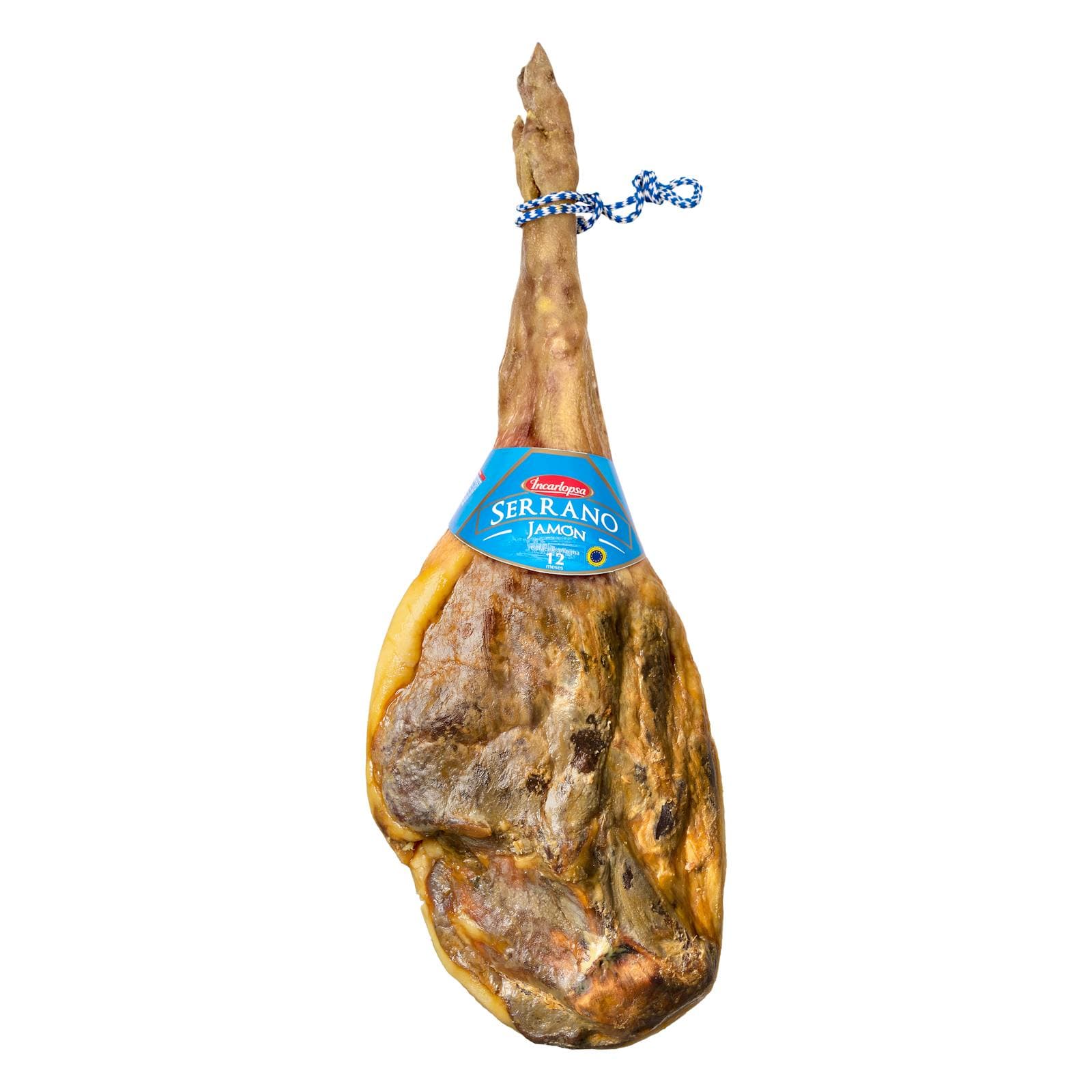
Serrano Ham Incarlopsa
Incarlopsa · 7.5 kg · Mercadona
 €3.85
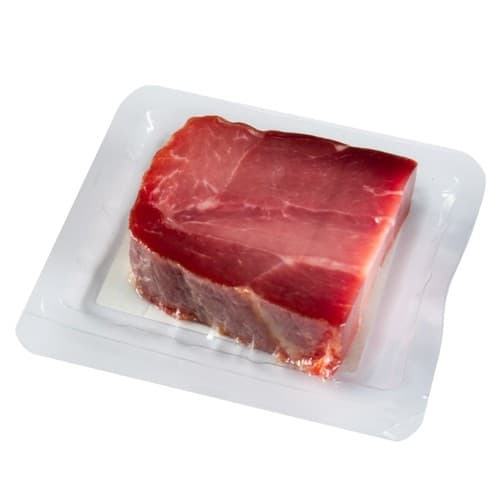
€3.85Cured Ham Block
ESPUÑA · kg · Bonpreu
Good to know
- Also known as
- Pork knuckle; Schweinshaxe or Eisbein (German/Austrian/Czech)
- Anatomical cut
- The joint between the pig's tibia/fibula and the foot; the lower shank
- Typical weight
- 1 to 2 lb (450 to 900 g); sold whole or cross-cut
- Composition
- High in skin, fat, and collagen, with modest meat around a central bone
- Curing and smoking
- Brined or dry-cured with salt (often with nitrite), then hot- or cold-smoked over hardwoods
- Cook time
- 2 to 3 hours of gentle simmering; 45 to 55 minutes in a pressure cooker
- Storage
- Refrigerate up to 1 week unopened; 3 to 4 days once cooked; up to 6 months frozen
- Yield
- About 1 to 1.5 cups shredded meat per 1.5 lb hock after cooking
Substitutes
- Smoked turkey wing or drumstick — Leaner and less rich than pork, but provides a similar smoky depth; excellent in beans and soups — reduce added salt
- Smoked pork neck bones — Close match in fat and smoke; shred into dishes the same way you would hock meat
- Salt pork or pancetta — Adds salt and pork flavor; lacks bone-driven body, so add a ham bone if you have one
- Smoked sausage (andouille, kielbasa) — Quick and convenient; provides smoke and pork but no gelatin, so the dish will be thinner
- Thick-cut bacon in larger amounts — Smoky and salty; pair with a ham bone for backbone body
- Prosciutto or other dry-cured ham — Intense salt and umami; use sparingly and add a ham bone for the collagen and mouthfeel
- Leftover ham bone with meat — The best 1:1 substitute when you have it on hand; the gelatin mimics hock body
Pairs with
Also called
Pork Hock · Smoked Pork Knuckle
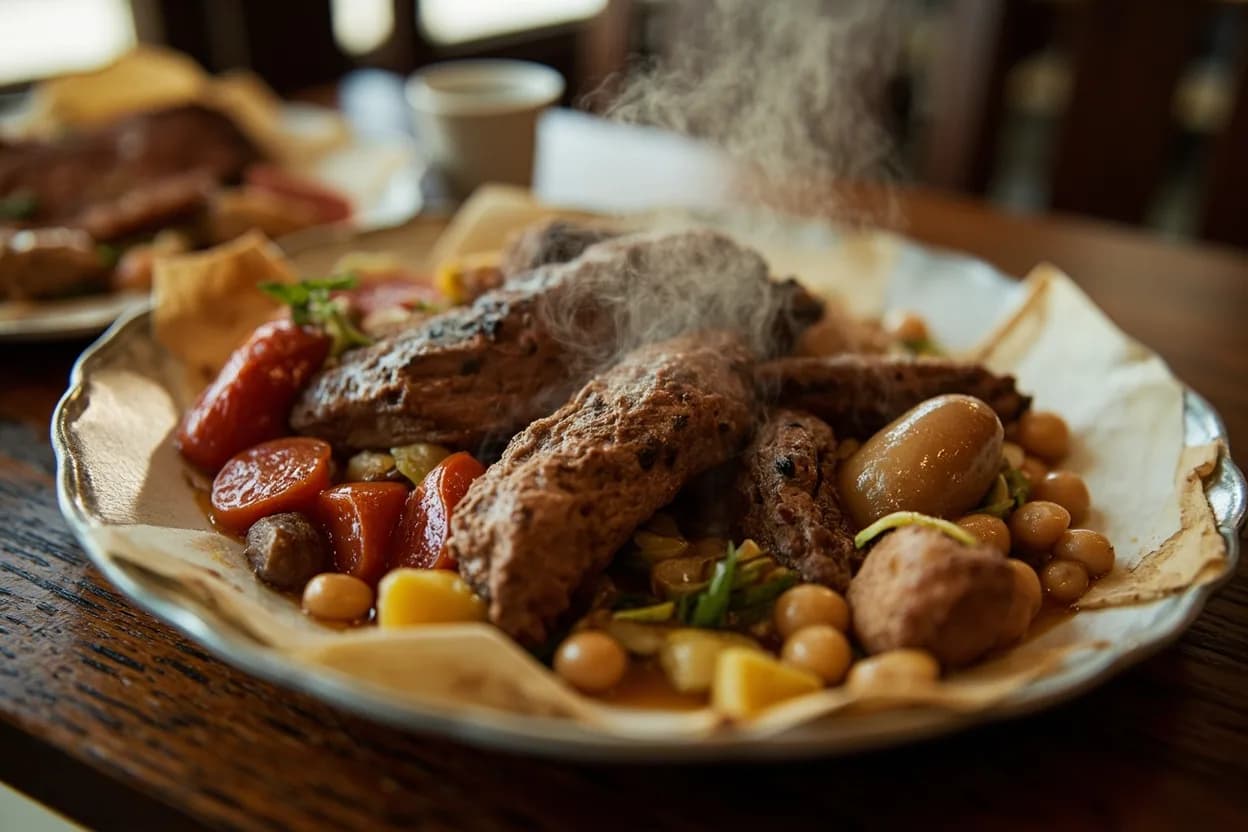
Appears in these dishes
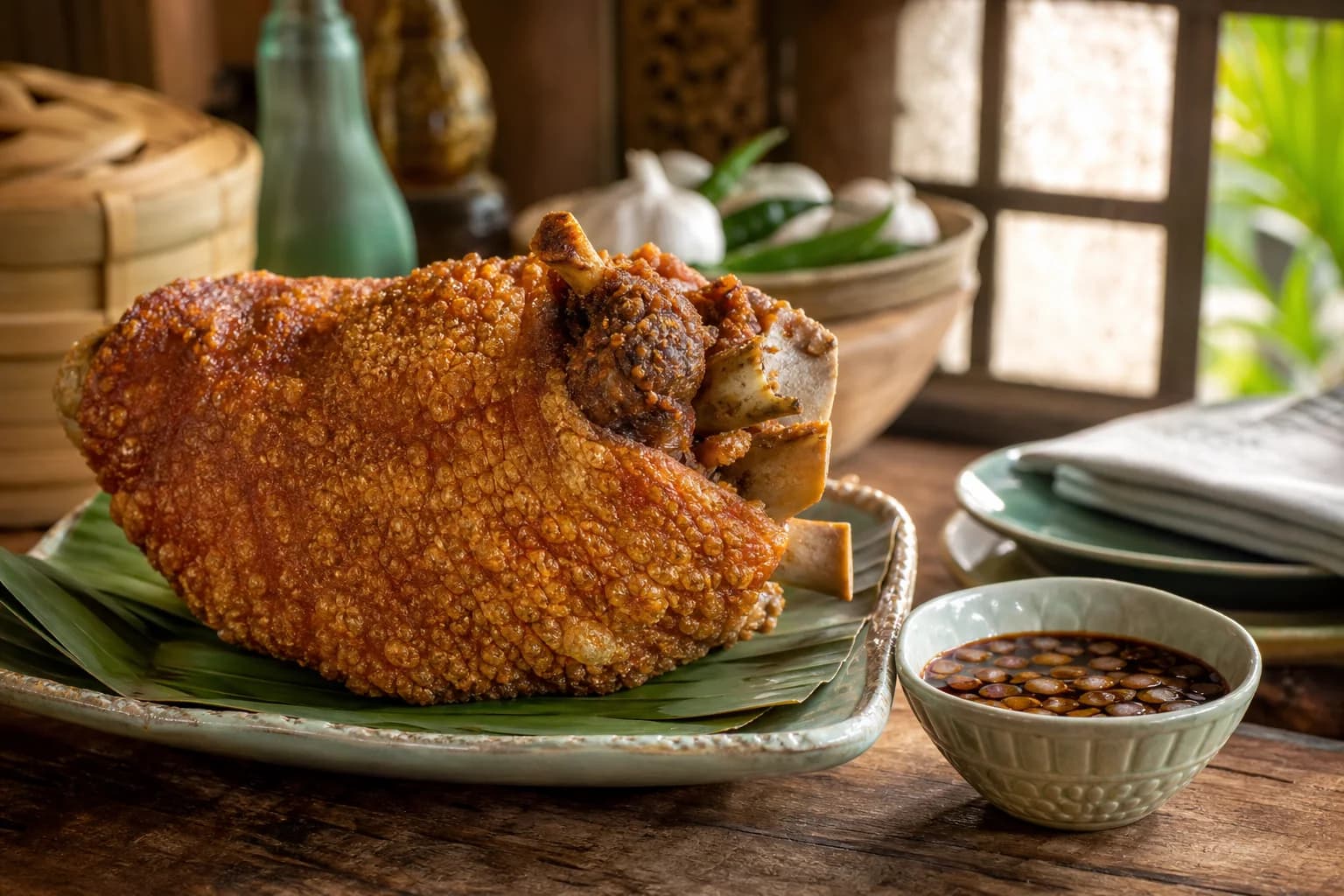
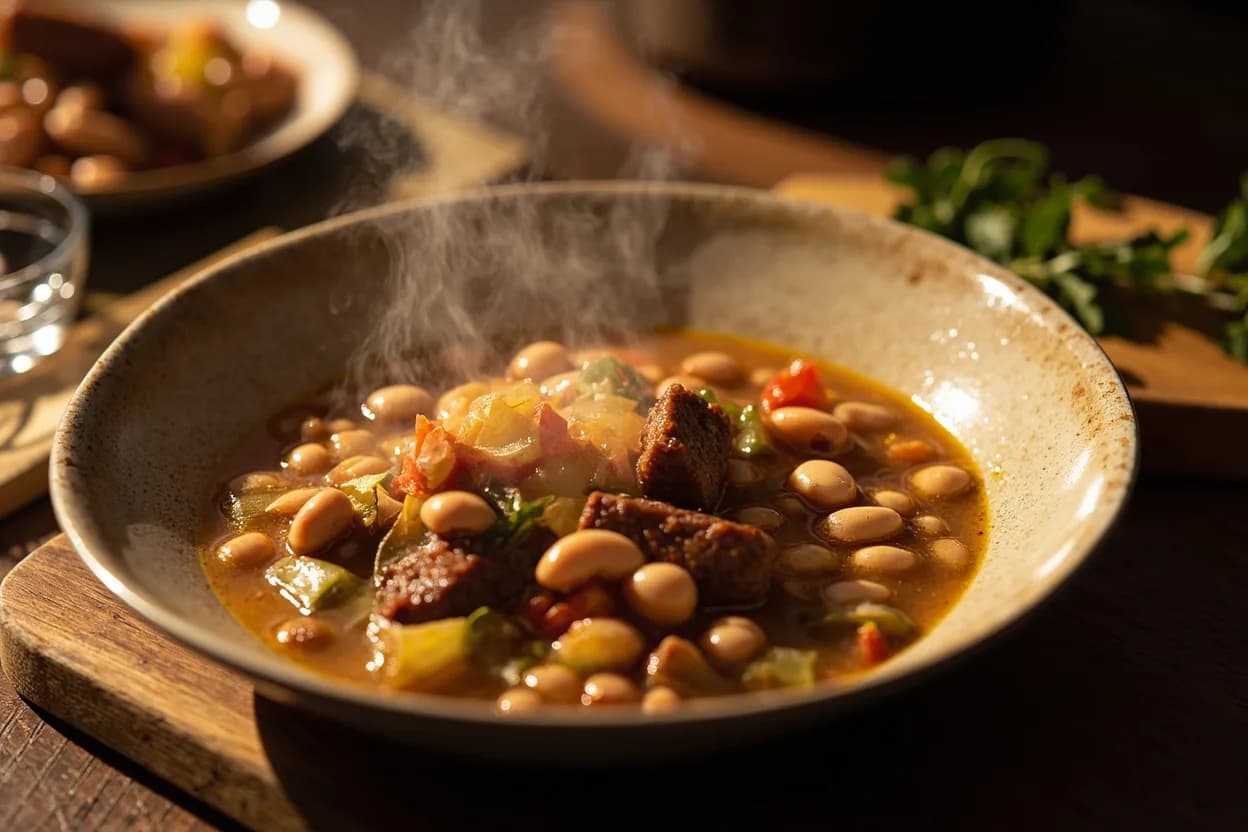
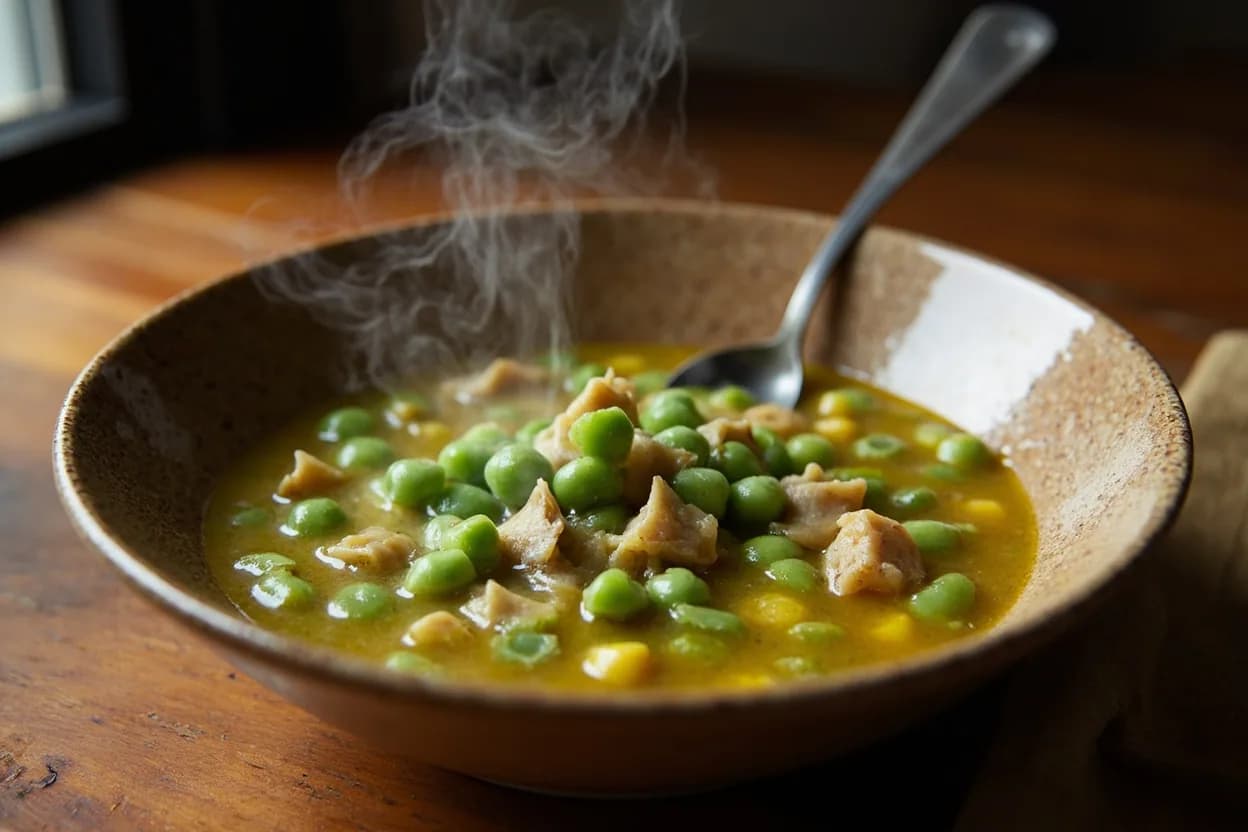
Related

Egg
The kitchen's everything ingredient — bind, leaven, enrich, or fry

Chicken Breast
Lean, quick-cooking white meat for everyday dinners

Ground Beef
Versatile minced beef for burgers, ragù, tacos, and meatballs

Pork Loin
Lean, tender roasting cut that stays juicy with care

Salmon
Rich, rosy fish that roasts, grills, or cures beautifully

Egg White
Pure protein that whips to airy peaks for meringue and more

Egg Yolk
Rich, golden yolk for custards, mayonnaise, and pasta

Quail Egg
Tiny, speckled eggs for garnishing and elegant bites