Natural form
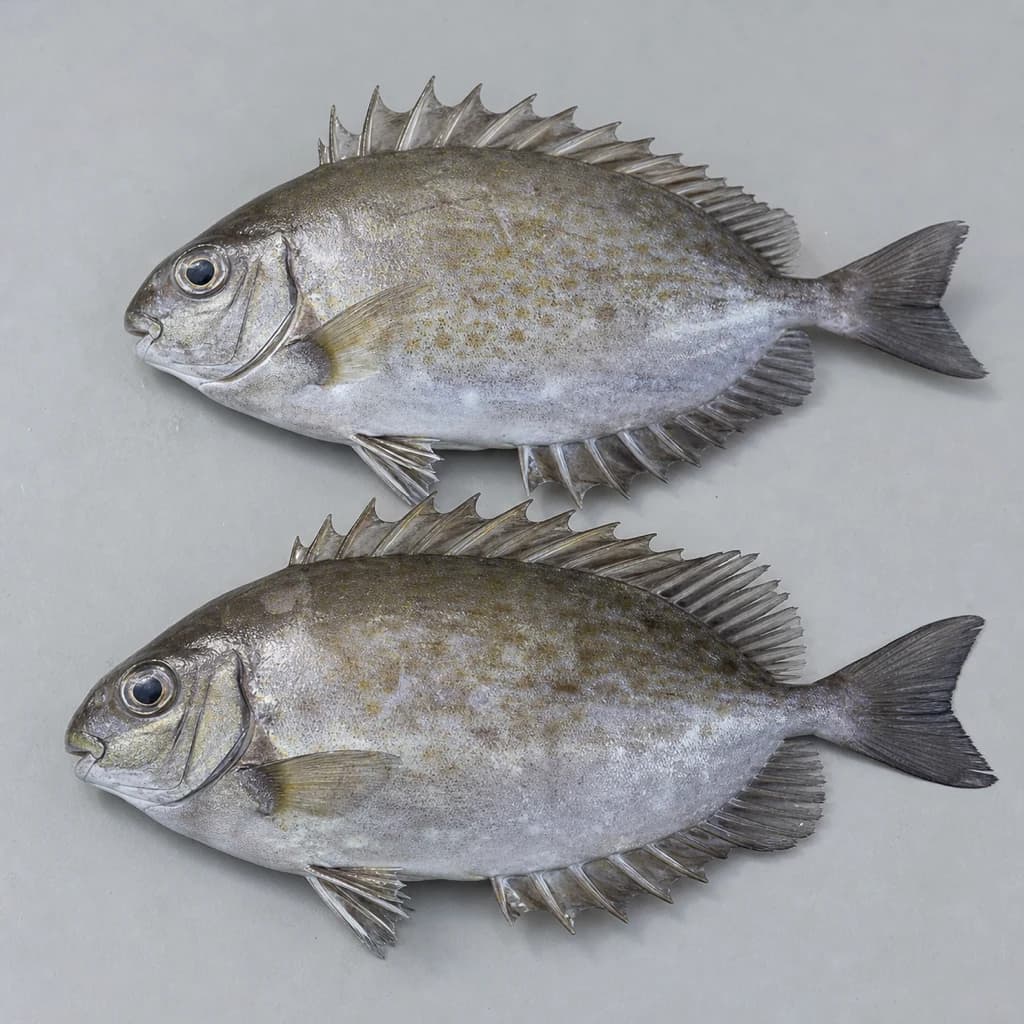
Whole fresh rabbitfish showing its oval body, blunt snout, and distinctive fin spines.
Shows the fish's defining physical traits — body shape, spiny fins, and coloration — so readers can identify it at market.
Proteins
Safi (Rabbitfish)
Mild, slightly sweet reef fish popular in Gulf and Mediterranean cooking, grilled or fried.
Safi, or rabbitfish, is a small reef fish with mild, slightly sweet white flesh, popular across the Arabian Gulf and Mediterranean. It is typically grilled, fried, or baked whole, often seasoned simply with spices and lemon. Handle with care, as its fins carry mild venomous spines when fresh.
Safi is the common name for rabbitfish of the genus Siganus, a reef-associated marine fish prized across the Indo-Pacific, Red Sea, Persian Gulf, and eastern Mediterranean. In Gulf and Levantine fish markets, the term 'safi' refers specifically to these small-to-medium spinefoot fish, distinct from the larger groupers and snappers that dominate more upscale menus. The fish earns its name from the rabbit-like grazing behavior it exhibits over coral reefs, though its culinary reputation rests on much older foundations: salting and drying are ancient preservation techniques that made rabbitfish a staple in coastal communities from East Africa to the Philippines long before modern refrigeration.
The flesh is mild and clean with a subtle sweetness that distinguishes it from the stronger-flavored demersal fish common in many Western markets. The texture is medium-firm and moist, flaking cleanly when properly cooked. This combination makes safi exceptionally versatile—it absorbs marinades without falling apart and holds its structure in soups and stews. Its one significant liability is the venomous dorsal and pectoral spines: a defensive mechanism that causes painful puncture wounds in the unwary. The venom degrades completely upon cooking, so properly prepared safi presents no danger to the diner, only to the cook during initial handling.
Safi occupies an important ecological niche as an abundant, sustainable fishery resource in many regions where it is considered a workhorse species rather than a delicacy. This abundance translates to affordability and availability—qualities that have made it a staple in coastal communities rather than a luxury item. The invasion of Siganus rivulatus and Siganus luridus into the eastern Mediterranean via the Suez Canal has created a controversial but productive fishery where traditional catches have declined. For the home cook, safi represents an opportunity to work with a genuinely versatile, sustainable white fish at a price point that invites experimentation.
- Measured in
- g
- Storage
- Fridge
Allergens
Types & varieties
Most common commercial species in East African and Indian Ocean waters; locally called 'safi' in these regions
Widespread Indo-Pacific species ranging from East Africa to Japan and Australia; darker coloring with mottled patterning
Lessepsian migrant now dominant in eastern Mediterranean; smaller than Indian Ocean populations; sold as 'safi' in Levantine markets
Mediterranean invasive species; similar profile to S. rivulatus; sold fresh in coastal markets from Turkey to Tunisia
Selecting Safi at the Market
Quality indicators are straightforward: clear, protruding eyes (not sunken); bright red or pink gills; firm flesh that springs back when pressed; and a clean, oceanic scent—no fishy or ammonia notes. Avoid any fish with dull eyes, discolored gills, or a strong odor, as these indicate oxidation and potential bacterial spoilage. Scales should be adherent and shiny. Whole fish with the head intact allow you to verify gill color directly. If purchasing fillets, look for moist, translucent flesh without browning at the edges.
- Fresh whole safi: clear eyes, bright red gills, firm flesh, clean scent
- Fillets: moist, translucent, no browning at edges
- Avoid sunken eyes, dull scales, or any ammonia smell
Preparing Safi for Cooking
Scaling comes first: hold the fish firmly by the tail and scrape from tail toward head using a spoon, fish scaler, or the back of a knife. Rabbitfish scales are small but adherent—work methodically to avoid leaving patches. The critical safety step follows: equip yourself with a heavy kitchen glove or fold a kitchen towel firmly around your non-dominant hand. Grasp the dorsal spines close to the body and press them down flat before making any cuts. Alternatively, sever the spines close to the body with scissors before proceeding. For whole-fish cooking, gut through the vent only if the fish is small; for larger specimens, remove the gills and internal organs via the gill opening to preserve the shape. Rinse thoroughly in cold water and pat dry.
- Scale thoroughly from tail toward head using a spoon or scaler
- Always glove or towel-grip the dorsal spines before handling
- For whole-fish preparations, consider gutting through the gill opening to preserve shape
- Score both sides of the flesh before cooking to allow heat penetration and prevent curling
Common uses
Tips & pitfalls
- Grip dorsal spines firmly with a cloth or heavy glove when cleaning to avoid venomous puncture wounds—these injuries are painful and can cause lingering swelling
- Scale thoroughly from tail toward head using a spoon or fish scaler; rabbitfish scales are small but adherent and left in patches if you rush
- Score the flesh on both sides before any cooking method to allow heat penetration and prevent the fish from curling on the grill
- Season simply—safi has delicate flavor that can be overwhelmed; salt, lemon, and olive oil are sufficient for most preparations
- Grill over medium coals approximately 4–5 minutes per side for a 400g whole fish; resist the urge to move it until the skin releases naturally
- Do not overcook—safi becomes dry and stringy once it passes 63°C (145°F) internal temperature; use a probe thermometer for precision
- If filleting, remove the dark bloodline running along the center to eliminate any muddy or stronger taste that some cooks object to
- When pan-frying, dust lightly with flour or semolina for a crispier, more golden crust than standard batter
- For baking or braising, acidulate the cooking liquid with a squeeze of lemon to help the flesh retain moisture during longer cooking times
Nutrition
Nutrition
No USDA FoodData Central match for Safi (Rabbitfish) yet. We surface a per-100 g profile once a generic whole-food entry is matched and verified.
In the shops
Matched grocery products
No matched grocery products for Safi (Rabbitfish) yet.
Good to know
- Scientific Names
- Siganus sutor (Shoemaker rabbitfish); Siganus fuscescens (Black/Common rabbitfish)
- Family
- Siganidae (Rabbitfish family)
- Flavor
- Mild, clean, slightly sweet; low oiliness; subtle sweetness that benefits from confident seasoning
- Texture
- Medium-firm; flakes well; approximately 45–55% edible yield after filleting and trimming
- Size
- Typically 25–40 cm when market-sized; commercially caught specimens up to 50 cm
- Season
- Year-round in tropical waters; peak availability varies by region
- Storage
- Use within 1–2 days fresh on ice; freeze at −18°C (0°F) for up to 3 months
- Handling Warning
- Dorsal and pectoral spines are venomous when fresh—grip firmly with cloth or glove; venom destroyed by cooking
Substitutes
- Red Mullet — Similar size range, texture, and mild-sweet flavor profile; excellent for grilling whole; typically slightly more expensive
- Sea Bream (Dourada) — Comparable mild flavor and firm white flesh; widely available in Mediterranean and Middle Eastern markets; reliable all-purpose substitute
- Striped Bass or Branzino — Solid substitute in Western kitchens; similar texture and equally mild flavor; nearly interchangeable in most preparations
- Grey Mullet — Good alternative for baking, braising, or stewing; slightly richer flavor than safi; excellent when grilled over medium heat
Pairs with
Also called
Rabbitfish
Appears in these dishes
Related
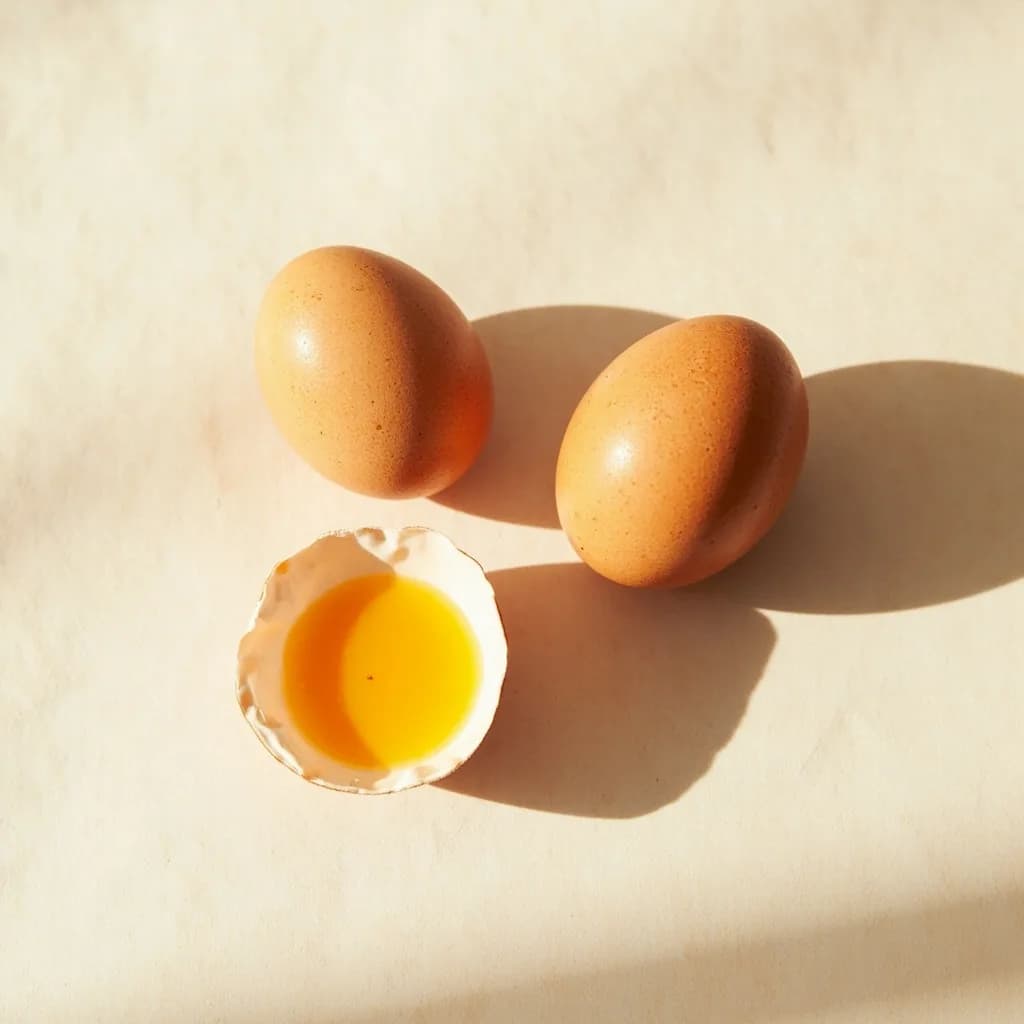
Egg
The kitchen's everything ingredient — bind, leaven, enrich, or fry
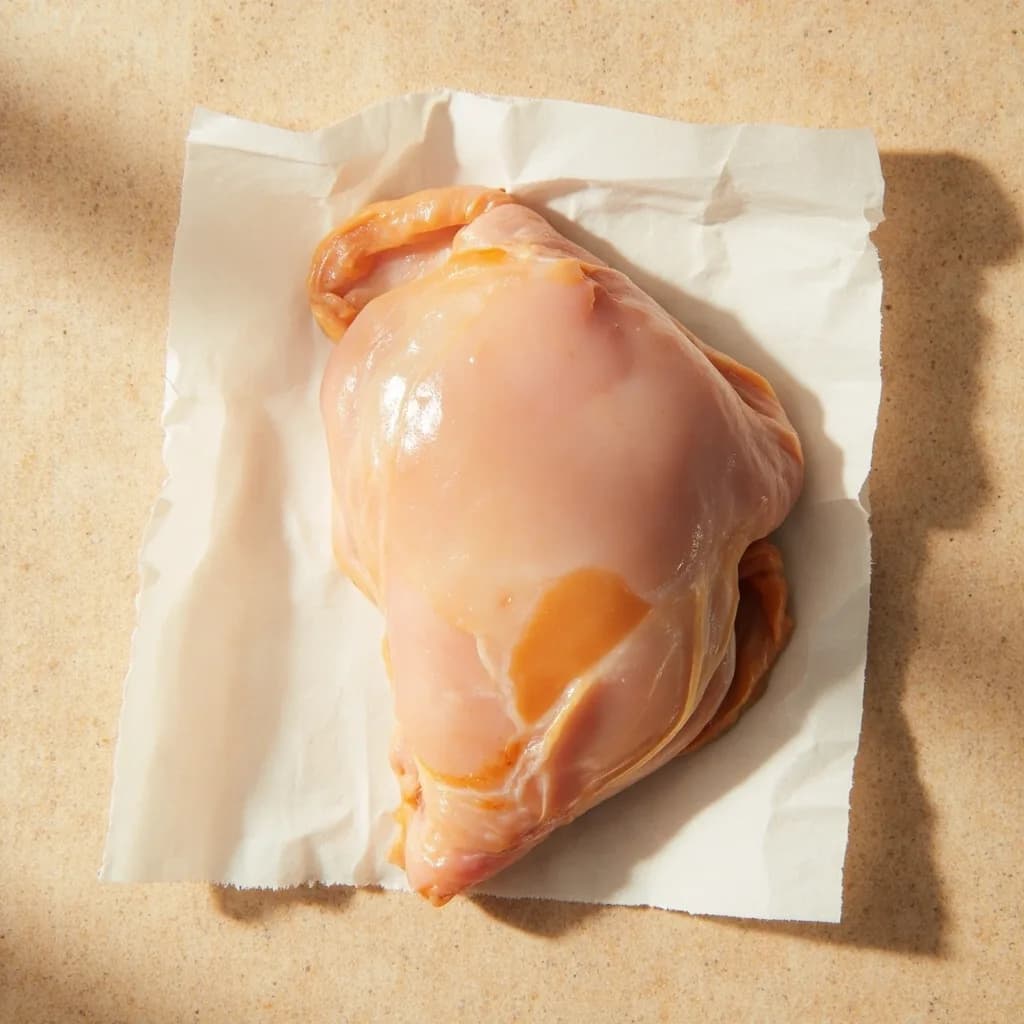
Chicken Breast
Lean, quick-cooking white meat for everyday dinners

Ground Beef
Versatile minced beef for burgers, ragù, tacos, and meatballs
Pork Loin
Lean, tender roasting cut that stays juicy with care
Salmon
Rich, rosy fish that roasts, grills, or cures beautifully

Egg White
Pure protein that whips to airy peaks for meringue and more

Egg Yolk
Rich, golden yolk for custards, mayonnaise, and pasta

Quail Egg
Tiny, speckled eggs for garnishing and elegant bites