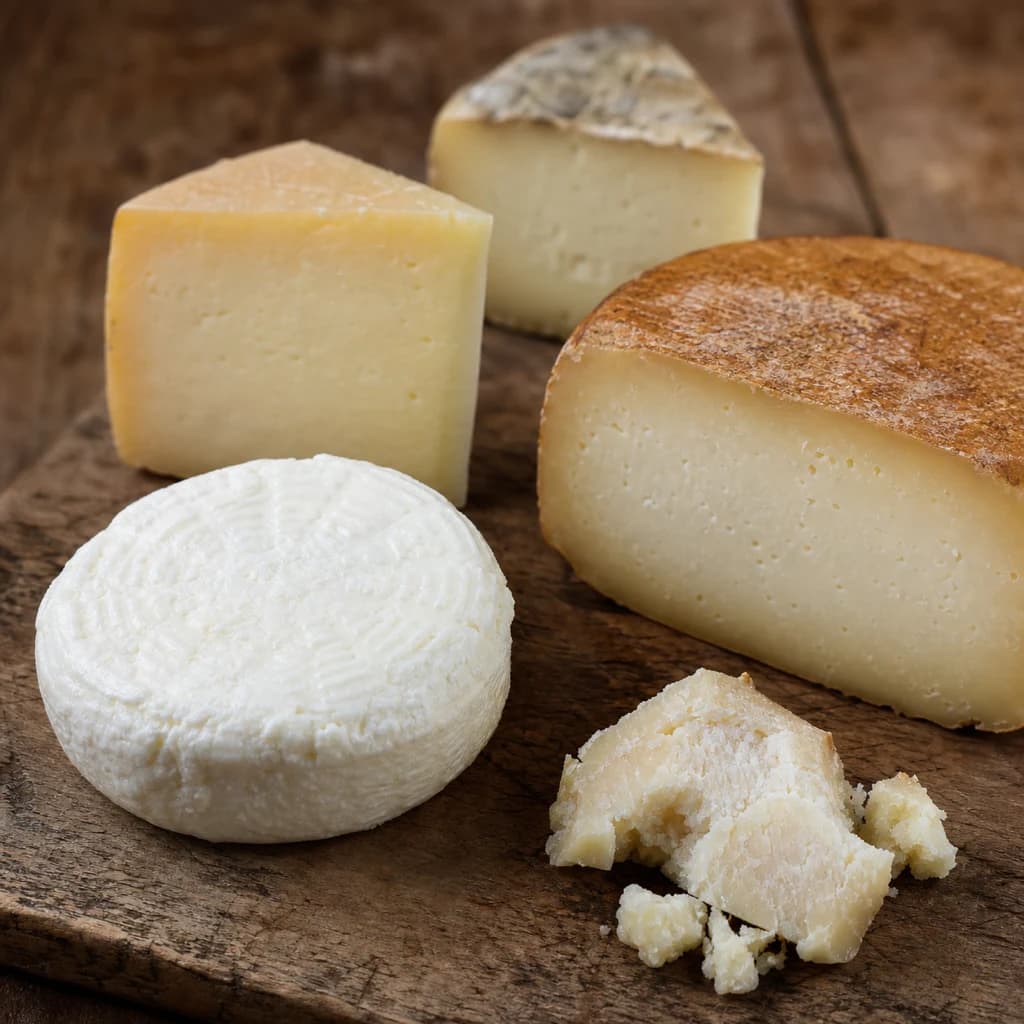
Varieties
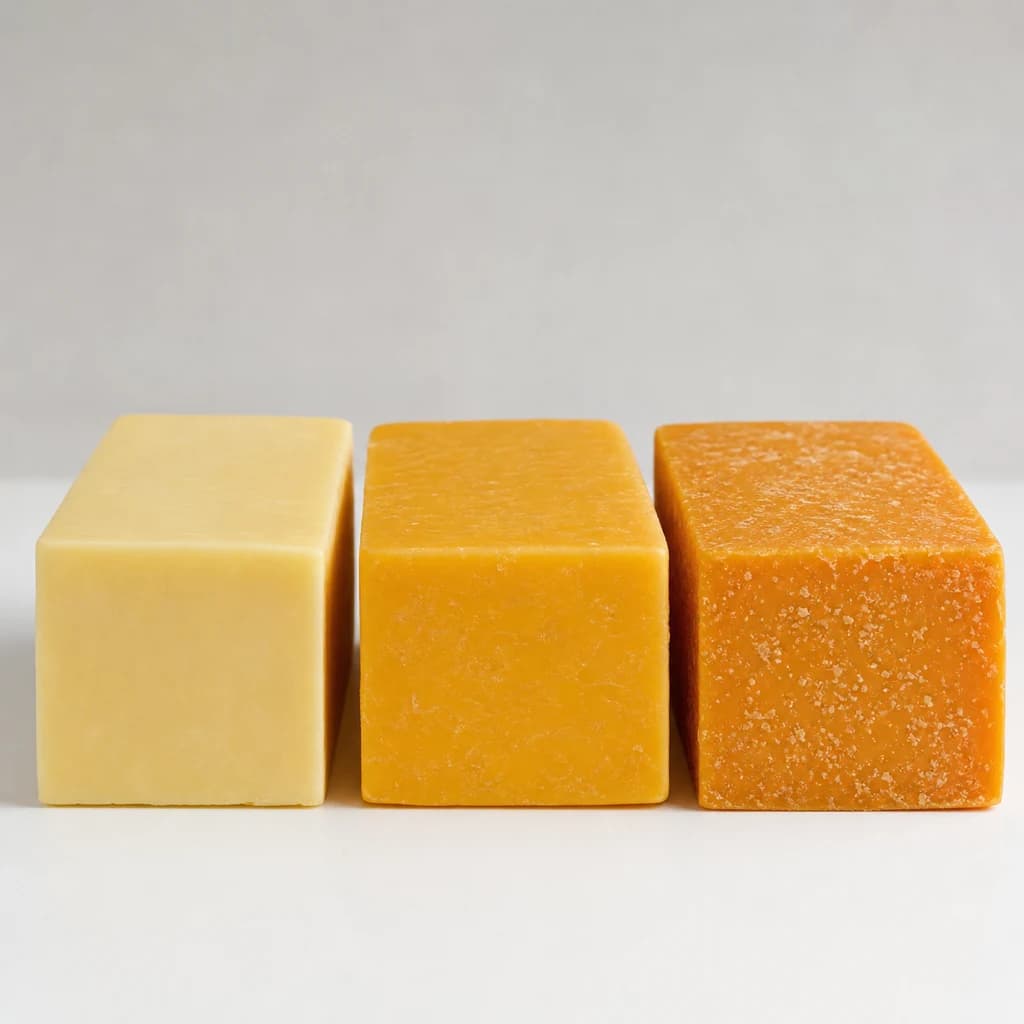
A range of sheep's milk cheeses showing fresh to aged forms side by side.
Placing multiple distinct forms together in one scene teaches the reader that sheep's milk cheese spans a wide spectrum from soft fresh rounds to firm aged wheels.
Dairy & Eggs
Sheep's Milk Cheese
Cheeses made from rich sheep's milk, from fresh Maltese ġbejna to firm aged wheels.
Sheep's milk cheese covers a broad range of cheeses made from the rich, high-fat milk of ewes, from soft fresh styles to firm aged wheels. Examples include the fresh Maltese ġbejna, Catalan formatge d'ovella, Bosnian Travnik cheese, and fresh Sicilian tuma. Sheep's milk gives these cheeses a fuller body and a characteristic savory, slightly gamey richness.
Sheep's milk cheese represents one of humanity's oldest cheesemaking traditions, with Mediterranean, Balkan, and Middle Eastern civilizations mastering the craft thousands of years before cow's milk cheese became widespread. The milk itself differs fundamentally from its bovine counterpart: with 6–8% fat (versus 3–4% in cow's milk) and notably higher protein content, sheep's milk produces cheeses of exceptional richness and a distinctive tang often described as "sheepy" or "barnyard." When well-made, these descriptors read as complex and savory rather than unpleasant. The natural whiteness of the milk comes from more efficient conversion of beta-carotene to vitamin A, which also affects the flavor profile in ways that distinguish these cheeses from their cow's milk counterparts.
The higher solids content in sheep's milk yields approximately 18–20% cheese by volume, compared to around 10% for cow's milk, making it remarkably efficient for cheesemakers. This concentration of fats and proteins translates directly into flavor intensity—a little goes further than with most cow's milk cheeses. The seasonal nature of sheep lactation (peak production runs spring through early summer) means that aged cheeses are traditional in many cultures, as preservation was historically necessary. Modern refrigeration and transportation have expanded the availability of fresh varieties, but quality still varies enormously; seek out specialty importers or dedicated cheese shops for the best representation of specific regional styles.
Sheep's milk cheeses span an extraordinary range, from fresh, soft, and lactic (like Maltese Ġbejna and Corsican Brocciu) to firm, granular, and sharp (like Pecorino Romano aged 5–8 months), to intensely pungent and crumbly blues (like Roquefort aged in limestone caves). This versatility makes sheep's milk cheese indispensable across Mediterranean and beyond—it is the canonical grating cheese for Roman pasta, the table cheese of Spanish tapas, the brined staple of Greek cuisine, and the key to Portuguese and Extremaduran thistle-rennet traditions. Understanding which variety to reach for, and how to handle it, unlocks the full range of what this ancient ingredient offers.
- Measured in
- g
- Storage
- Fridge
Allergens
Types & varieties
PDO Italian; aged 5–8 months; sharp, granular; primarily from Lazio and Sardinia; traditional grating cheese for cacio e pepe and carbonara
PDO Sardinian; milder and sweeter than Romano; available young (fresh) and aged (duro); table and grating uses
PDO Tuscan; younger, softer, milder than Romano; often rubbed with olive oil or vacuum-packed; table cheese with herbs or truffles
PDO Spanish; aged 60 days (semicurado) to 2+ years (viejo); firm, buttery, with nutty notes; unmistakable herringbone rind
PDO Basque/Navarran; smoked or unsmoked; firm, slightly pungent; traditionally made in mountain hutches
PDO Navarran; aged 4–6 months; smooth, nutty, slightly sharp; one of Spain's oldest named cheeses
PDO French Pyrenees; aged 3–6 months; supple, nutty, with hints of hazelnut; often served as table cheese
PDO French; blue cheese; aged 5 months minimum in limestone caves at Roquefort-sur-Soulzon; crumbly, pungent, intensely savory
Traditional Maltese; fresh, small round cheeses; either fresh (soft, mild, lactic) or salted/dried (harder, sharper); key to Maltese cuisine
PDO Corsican; fresh whey cheese; light, slightly sweet, lactic; used in fiadone (cheesecake) and as table cheese
Brined cheese; traditionally made from 100% sheep's milk (or sheep/goat blend); crumbly, tangy, brined; Greek PDO since 2002
Fresh whey cheese made from sheep's milk; creamier, richer, more flavorful than cow's ricotta; used in pasta fillings, desserts, spread on bruschetta
PDO Portuguese; made with thistle rennet; soft, spreadable when young; intense, complex flavor; rare outside Portugal
PDO Extremaduran; soft, buttery; made with thistle rennet; key to Torta de la Serena
Buying and Storing Sheep's Milk Cheese
The most important purchasing decision is buying whole pieces rather than pre-shredded or pre-cubed cheese. Exposure to air accelerates oxidation and flavor loss, and pre-shredded cheeses often contain anti-caking agents that interfere with melting. For hard aged cheeses, look for wheels with intact rinds and ask to sample before buying if possible. The rind should feel firm but not dried out, and the interior should be consistent in color when you cut into it. Fresh cheeses should smell clean and milky, never sour or ammonia-like—a sharp ammonia scent indicates age or improper storage and the cheese will taste bitter rather than complex.
- For hard cheeses: wrap first in cheese paper or parchment, then in plastic wrap or a zip-top bag; this allows the cheese to breathe while retaining moisture
- Refrigerate at 40–45°F (4–7°C); a vegetable drawer or cheese drawer works best
- Fresh varieties (Ġbejna, Brocciu, Ricotta di Pecora): use within 1–2 weeks; check for any off-odors before use
- Aged cheeses: 2–6 months when properly wrapped; inspect periodically for mold that might indicate moisture fluctuation
- Never freeze sheep's milk cheese; high fat content causes textural breakdown resulting in crumbly, mealy cheese upon thawing
Understanding Flavor Intensity
The "sheepy" character that defines these cheeses ranges from barely perceptible in fresh, young varieties to assertively tangy and almost pungent in long-aged specimens. This spectrum is not a quality issue—it is the defining characteristic of the category. If you find aged Pecorino Romano overwhelming, work your way up from Pecorino Toscano or Sardo. If you want the full-intensity experience, seek out 12-month or older Pecorino Romano or Spanish Manchego Viejo. For the most accessible entry point, try fresh Brocciu, young Ġbejna, or mild Pecorino Sardo fresco. The flavor develops and opens significantly at room temperature, so always let cheese sit out for 20–30 minutes before serving or cooking with it.
- Start with milder varieties and progress to sharper, more aged styles as your palate adjusts
- Room temperature serving is essential for full flavor release, especially in salads and cheese plates
- Pecorino Romano is notably saltier than Parmesan; reduce added salt in recipes when substituting
Cooking with Sheep's Milk Cheese
Hard, aged sheep's milk cheeses are grating cheeses—do not expect them to melt smoothly the way a young cow's milk cheddar does. When you apply direct heat, aged sheep's milk cheeses tend to seize and clump rather than form a creamy, elastic melt. This is correct behavior, not a flaw. To incorporate aged sheep's milk into cooked applications, either add it at the very end off the heat (as in cacio e pepe, where the starchy pasta water emulsifies the cheese) or grate it very finely and toss it with something acidic and hot that will help it distribute rather than clump. For true melting applications, choose younger, softer varieties like Pecorino Sardo fresco, fresh Ġbejna, or Brocciu. Fresh sheep's milk cheeses behave more like ricotta or farmer's cheese—they are gentle, creamy, and suitable for spreading, filling, or folding into dishes at the last moment.
- For pasta: bring aged cheese to room temperature and use starchy pasta water to emulsify; never add to a hot pan directly
- For melting: choose younger, softer varieties
- For grating: room temperature cheese grates cleaner and releases more aroma
- For salads: crumble or slice and let sit at room temperature for 20–30 minutes before serving
- For pasta fillings: fresh ricotta di pecora or fresh Ġbejna work beautifully
Common uses
Tips & pitfalls
- Buy whole wheels or large pieces rather than pre-shredded cheese; oxidation degrades flavor rapidly
- Wrap hard cheeses in cheese paper or parchment first, then plastic wrap or a zip-top bag; this allows the cheese to breathe while retaining moisture
- For grating, bring hard cheeses to room temperature; they grate more cleanly and the flavor opens up
- Fresh sheep's milk cheeses (like Ġbejna) should smell clean and milky, not sour or ammonia-like; discard any with off odors
- Pecorino Romano is saltier than Parmesan; adjust seasoning accordingly when substituting in recipes
- Aged sheep's milk cheeses develop sharp, almost pungent notes; if you find them overwhelming, try younger, milder varieties first
- Do not freeze sheep's milk cheese; the high fat content causes textural breakdown, resulting in crumbly, mealy cheese upon thawing
- When using in salads, let the cheese sit at room temperature for 20–30 minutes before serving; cold suppresses flavor release
- For melting applications, choose younger, softer varieties; aged sheep's milk cheeses tend to seize and clump rather than melt smoothly
- Seek out specialty cheese shops or importers for authentic regional varieties; supermarket offerings are often inferior or misrepresented
Nutrition
Energy
628 kJ · per 100 g
Where the calories come from
Protein
7.5g
15% DV
Carbs
7.3g
3% DV
Fat
10.2g
13% DV
Fiber
0g
0% DV
Sugars
0.3g
of which
Sodium
110mg
5% DV
Source · USDA FoodData Central · approx. Cheese, ricotta, whole milk
View on FDC →In the shops
Matched grocery products
No matched grocery products for Sheep's Milk Cheese yet.
Good to know
- Fat Content
- 6–8% (vs. 3–4% for cow's milk), giving sheep's milk cheese its characteristic richness
- Protein Content
- Higher than cow's milk; contributes to better cheese yield
- Cheese Yield
- ~18–20% vs. ~10% for cow's milk, due to higher solids content
- Seasonality
- Sheep lactate seasonally; peak milk production is spring through early summer
- Milk Production
- Sheep produce significantly less milk than cows (averaging 100–300 L vs. 6,000+ L annually)
- Color
- Milk is naturally whiter than cow's milk because beta-carotene is more efficiently converted to vitamin A
- Shelf Life
- Fresh varieties: 1–2 weeks refrigerated; aged cheeses: 2–6 months when properly wrapped
- Origin Regions
- Mediterranean basin, Balkans, and Middle East are traditional centers of sheep's milk cheese production
Substitutes
- Goat's Milk Cheese — Similar intensity and tang; softer texture in fresh varieties; best for milder applications
- Parmesan (Parmigiano-Reggiano) — Most similar in function for grating; different flavor (fruity, nutty vs. tangy); lacks the sheepy character
- Hard Aged Cow's Milk Cheese — Gruyère, Comté, or aged Cheddar; acceptable in cooked dishes where sheep's milk character is less critical
- Ricotta (Cow's Milk) — Serviceable for fresh sheep's ricotta in sauces and desserts; flavor is noticeably milder
- Feta (Cow's Milk Version) — Only if feta specifically is called for; traditional sheep's feta has noticeably more depth
Also called
Formatge d'Ovella · Travnik Cheese (Vlašićki Sir) · Ġbejna (Maltese Sheep Cheese) · Tuma (Fresh Sheep Cheese) · Ewe's Milk Cheese
Appears in these dishes

Related

Whole Milk
Rich, full-fat milk for drinking, coffee, sauces, and baking
Butter
Golden fat for searing, baking, and finishing a sauce
Yogurt
Tangy, creamy culture for breakfast, sauces, and marinades
Cheddar Cheese
Sharp, melty cheese for sandwiches, gratins, and grating
Skim Milk
Fat-free milk for lighter drinking, coffee, and cooking
Heavy Cream
Rich cream that whips, enriches sauces, and sets ganache

Sour Cream
Tangy, thick cream for dolloping, baking, and dips
Mozzarella
Soft, milky cheese that melts into stretchy pizza pulls