Natural form
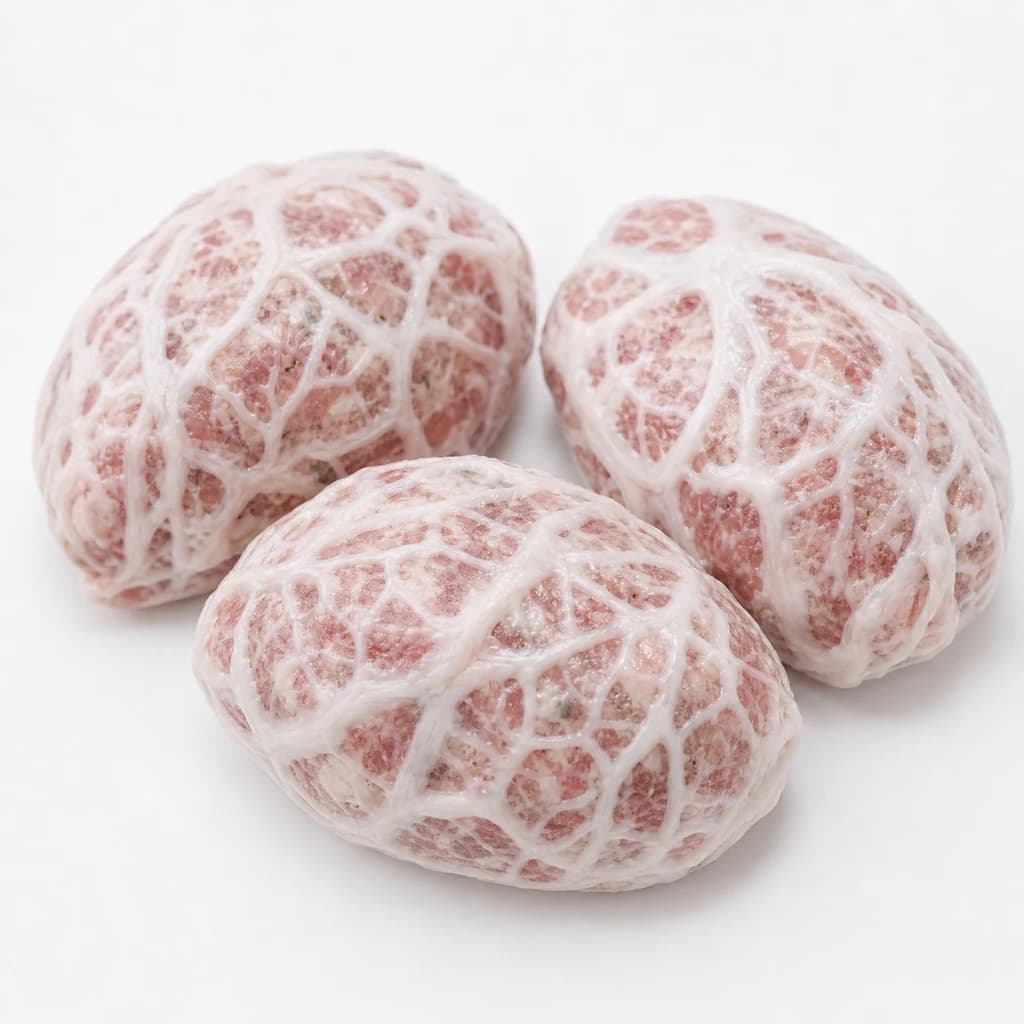
Raw sheftalia parcels wrapped in white caul fat netting, ready for the grill.
Shows the defining visual feature — the lacy caul fat casing — that makes sheftalia unmistakable before cooking.
Proteins
Sheftalia
Cypriot sausage of minced pork and herbs wrapped in caul fat, grilled over charcoal.
Sheftalia is a Cypriot and Greek sausage made from minced pork (sometimes lamb) mixed with onion, parsley, and seasonings, then wrapped in caul fat instead of casing. The caul fat melts during charcoal grilling, basting the meat and giving it a crisp exterior. It is usually served in pita with salad and tahini or yogurt.
Sheftalia is a Cypriot grilled sausage of seasoned minced pork enclosed in caul fat, a thin, lacy membrane from around the pig's stomach. Unlike most sausages, it has no intestine casing—the caul fat wraps the meat loosely and renders almost entirely during cooking, basting the interior from within and leaving occasional crispy, caramelized edges. The result is exceptionally moist, fragrant meat with herbal brightness dominated by flat-leaf parsley and fresh mint. Sheftalia is fundamentally a street food: in Cyprus, it is sold from charcoal grill carts alongside souvlaki, eaten standing with lemon and bread, or tucked into warm pita. It is always cooked fresh, never cured or smoked, and the quality hinges on two things—the fat content of the meat (shoulder mince, 20–30% fat) and the condition of the caul fat wrapper. Industrial versions sacrifice both, producing a dense, dry sausage; the best sheftalia is made by hand, with coarse-minced shoulder and a generous herb load.
- Measured in
- piece
- Storage
- Fridge
Types & varieties
The dominant and most traditional variety; uses fatty pork shoulder mince for moisture and flavor
Made with minced lamb; slightly leaner with a distinct mineral, grassy note; common in mountain villages
Pork and lamb combined, typically a 70/30 ratio for balance of fat and flavor depth
Less common; uses leaner beef mince, often supplemented with pork fat to compensate for moisture
Flattened oval portions rather than links; common in some Limassol preparations and easier to portion
About caul fat
Caul fat (also called omentum or lardo) is a thin, fatty membrane that surrounds the pig's internal organs, particularly the stomach and intestines. It is prized in charcuterie for its high fat content and the way it renders cleanly during cooking, basting the meat it envelops from within. Unlike intestine casings, caul fat disappears almost entirely as it cooks, leaving only moist, flavorful meat and a hint of crispy edges. It is available from butchers, specialty meat suppliers, and some Middle Eastern or Greek grocery stores. If unavailable, it can sometimes be special-ordered. Soak in cold water before use and handle gently—it tears easily when dry.
Sheftalia vs. other sausages
Sheftalia differs from most Western sausages in that it contains no traditional casing—only the caul fat wrapper—and is almost always cooked fresh, never cured or smoked. Unlike Greek loukaniko (which uses natural intestine casing and is often cured or smoked), sheftalia is a fresh preparation meant for immediate grilling. The herb profile—dominated by parsley and mint—is distinctly Cypriot and distinguishes it from other Mediterranean minced-meat preparations like kibbeh or kefta.
Common uses
Tips & pitfalls
- Do not overwork the meat mixture—combine just until homogenous to keep the texture light rather than dense and bouncy
- Season generously; pork needs salt to develop its flavor, and the herbs (parsley and mint) are essential, not optional—think plentiful, not decorative
- If using store-bought caul fat, soak it in cold water first, then squeeze dry gently—pliable fat wraps cleanly; dry fat tears and refuses to conform
- Wrap loosely; caul fat shrinks considerably as it renders, and tight wrapping will squeeze out the seasoning and compress the sausage
- Grill over medium coals—high heat will burn the caul fat before the interior cooks through; aim for a hot grill where the sausage sizzles steadily but doesn't scorch
- Let the sausage rest 3–5 minutes after grilling; the juices redistribute and the caul fat sets, making slicing cleaner and the interior more cohesive
- If caul fat is unavailable, some cooks substitute thin pork caul or omit it entirely, but the result loses the characteristic self-basting quality and juiciness
- Common mistake: using lean mince—without sufficient fat (20–30%), sheftalia dries out and loses its signature richness; choose shoulder cuts with visible marbling
Nutrition
Nutrition
No USDA FoodData Central match for Sheftalia yet. We surface a per-100 g profile once a generic whole-food entry is matched and verified.
In the shops
Matched grocery products
No matched grocery products for Sheftalia yet.
Good to know
- Primary protein
- Minced pork shoulder (traditional); also lamb or beef
- Wrapper
- Caul fat (omentum/lardo) from pig's stomach lining
- Key seasonings
- Flat-leaf parsley, fresh mint, onion, salt, pepper; sometimes cinnamon or allspice
- Cooking method
- Grilled over medium charcoal; also pan-fried or oven-baked
- Origin
- Cyprus; likely evolved from Ottoman-era meat preparations
- Etymology
- From Turkish 'şeftali' (peach), referring to the plump, rounded shape
- Fat content
- High—caul fat renders during cooking, self-basting the meat internally
- Storage (raw)
- Refrigerate up to 2 days; freeze up to 3 months if well-wrapped
Substitutes
- Homemade herb-packed pork patties in caul fat — Best substitute if sourcing issues; use pork mince seasoned with parsley, mint, onion, wrapped in caul fat and grilled—essentially homemade sheftalia
- Souvlaki (pork) — Marinated pork chunks on skewers; provides similar smoky-charred pork flavor but lacks the caul-fat wrapper and herb-forward profile
- Italian luganega — Fresh pork sausage with herbs; acceptable if Cypriot ingredients unavailable, though the seasoning profile differs significantly
Pairs with
Also called
Sheftalies
Appears in these dishes
Related
Egg
The kitchen's everything ingredient — bind, leaven, enrich, or fry
Chicken Breast
Lean, quick-cooking white meat for everyday dinners

Ground Beef
Versatile minced beef for burgers, ragù, tacos, and meatballs
Pork Loin
Lean, tender roasting cut that stays juicy with care
Salmon
Rich, rosy fish that roasts, grills, or cures beautifully

Egg White
Pure protein that whips to airy peaks for meringue and more
Egg Yolk
Rich, golden yolk for custards, mayonnaise, and pasta

Quail Egg
Tiny, speckled eggs for garnishing and elegant bites