Baking
Smoked Malt
Kiln-dried malted barley dried over beechwood smoke, used in brewing and baking.
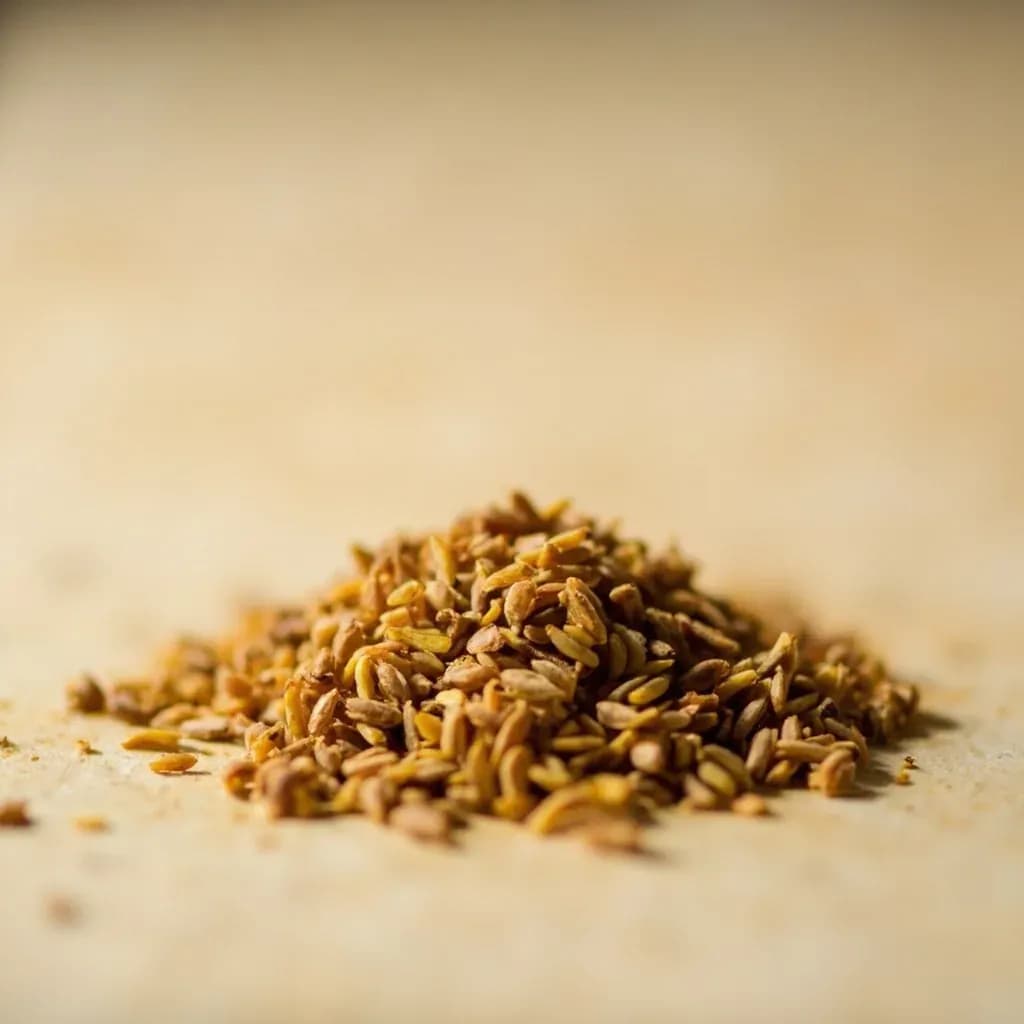
Smoked malt is malted barley that has been dried over an open wood fire, traditionally beechwood, imparting a campfire-like smoky aroma. It is best known in German Rauchbier and is also used in malt-rich breads and as a flavoring grain. The smokiness ranges from gentle to intensely bacon-like depending on the maltster.
Smoked malt is malted barley kilned over an open wood fire rather than in a modern indirect kiln. The technique dates to 16th-century Bamberg, Bavaria, where brewers traditionally dried their malt over beechwood flames on the malting floor. During 2–3 days of smoking, guaiacol and 4-methylguaiacol compounds from wood lignin become chemically fixed deep within the grain kernel—not merely coating the surface, as happens when you toast flour in a smoker. This structural integration is what distinguishes true smoked malt from smoked flour and explains its persistent, complex campfire character that survives fermentation and baking. The moisture content drops to 3–5%, producing a grain that grinds easily and disperses smoke evenly through dough. In baking, smoked malt behaves like other malted grains, contributing mild enzymatic activity and subtle sweetness alongside its smoke character, but the smoke itself dominates in ways that liquid smoke cannot authentically replicate. Different wood types yield distinctly different smoke profiles: beechwood produces the clean, bacon-like smokiness prized in German Rauchbier, while fruitwoods add delicate sweetness and hickory delivers bold intensity.
Bamberg nearly lost its smoked malt tradition when industrial direct-fire kilns replaced traditional methods in the 19th century. The Weyermann malting house preserved the craft and remains the primary producer of Buchenrauchmalz today. This historical lineage matters because the malting process itself—the controlled germination and dormancy of barley—is what creates the enzyme activity and grain matrix that smoke compounds penetrate during kilning. Outside German brewing traditions, smoked malt remains underutilized in baking. It offers bakers a clean, complex smoke that holds up through long ferments, with none of the sharp, artificial quality that liquid smoke can introduce. The key distinction from smoked flour (which is simply flour toasted in a smoker) is that true smoked malt begins as malted barley with active enzymes and structural integrity, and smoke compounds bond to this matrix during the critical kilning phase rather than sitting on the surface.
In practice, smoked malt is available as whole kernel or ground flour. Whole kernel stores well (1–2 years sealed, cool and odor-free) and can be ground fresh as needed, which preserves volatile smoke compounds better than pre-ground flour. The diastatic power—the enzyme activity that converts starches to sugars—varies by producer and roast level. Darker smoked malts like Chocolate Rauchmalz have negligible diastatic power and function as flavor agents rather than fermentation aids, while lighter versions may retain enough enzymatic activity to contribute to bread rise when used at moderate percentages.
- Measured in
- g
- Storage
- Pantry
Allergens
Types & varieties
The classic Bamberg standard; clean, bacon-like smoke with low phenolic sharpness. The traditional choice for Rauchbier and German rye breads.
Deeper, more complex smoke; vanilla and tannic notes from wood lignin. Common in craft breweries.
Fruity, mild smoke with slight tartness. Often used in fruit-forward or darker beers and breads.
Sweet, mild smoke with delicate fruit notes. Good for lighter applications.
Intense, bold smoke with strong bacon-ham character. Use sparingly in baking.
Medicinal, iodine-like smoke. More common in Scottish whisky than baking.
Dark-roasted smoked malt; coffee, chocolate, and campfire smoke. Used in Baltic porters, schwarzbier, and dark rye breads.
Smoked Malt vs. Smoked Flour
The critical difference is timing and chemistry. Smoked flour begins as finished flour—already milled and dried—that is then exposed to smoke, coating the particles' surfaces. True smoked malt is kilned over wood smoke during the malting process itself, when barley kernels are germinating and their internal structure is open and active. Smoke compounds bond to starches and proteins within the grain matrix, not merely the surface. In baking, this means smoked malt delivers smoke that survives fermentation and caramelization, whereas smoked flour loses much of its character quickly. For the most authentic results, insist on malt that was smoked during kilning, not flour that was smoked afterward.
- Smoked malt: grain smoked during malting, compounds fixed internally, persistent smoke flavor
- Smoked flour: finished flour exposed to smoke, compounds sit on surface, flavor dissipates faster
- Read labels or buy from specialty malt suppliers to ensure proper smoked malt
Choosing the Right Smoke Level for Baking
Smoked malt comes in a range from lightly to heavily smoked, and the choice dramatically affects your baked goods. For subtle background smoke in pretzels, crackers, or artisan loaves, use 1–5% smoked malt as a percentage of total flour weight. This adds complexity without announcing itself. For moderate smoke presence in rye breads or hearty loaves, 10–20% works well, though dough may become slightly stickier due to modified gluten interaction. Above 25%, smoke dominates and can overwhelm other flavors while making dough handling difficult. Heavily smoked malts like hickory-smoked varieties need even lower usage rates; start at half what you would use for beechwood. If you want aggressive smoke character, use a darker base malt like Chocolate Rauchmalz combined with a smaller percentage of high-smoke malt rather than increasing volume.
- Light smoke (1–5% flour weight): pretzels, crackers, subtle artisan loaves
- Medium smoke (5–15%): rye breads, sourdoughs, flatbreads
- Strong smoke (15–25%): pumpernickel, dark rye, hearty crackers
Common uses
Tips & pitfalls
- In baking, ground smoked malt works best at 10–20% of total flour weight; higher percentages overwhelm and make dough sticky due to modified gluten structure.
- Toast whole smoked malt briefly in a dry pan before grinding to brighten and standardize the smoke flavor for baking applications.
- Store smoked malt away from spices, coffee, and strongly scented items—it absorbs odors readily and loses purity.
- When substituting smoked malt for liquid smoke, use roughly 1 tablespoon of ground smoked malt per teaspoon of liquid smoke, adjusting to taste.
- Combine smoked malt with caraway seed and rye flour for an authentically German rye bread profile; this trio defines Bamberg-style baking.
- For brewing applications, add smoked malt later in the grain bill if you want smoke without bitterness—smoke compounds extracted early become harsh.
- The diastatic power of smoked malt varies by producer; for bread-making, choose fully modified malt with adequate enzymes or supplement with additional yeast.
- Different woods yield different results: beechwood for clean bacon-like smoke, fruitwoods for delicate sweetness, hickory for bold intensity—match wood to your dominant flavor.
Nutrition
Nutrition
No USDA FoodData Central match for Smoked Malt yet. We surface a per-100 g profile once a generic whole-food entry is matched and verified.
In the shops
Matched grocery products
No matched grocery products for Smoked Malt yet.
Good to know
- Origin
- Bamberg, Bavaria, Germany; documented since at least the 16th century
- Primary wood used
- Beechwood (traditional); also oak, cherry, apple, maple, hickory, pecan
- Processing
- Malted barley kilned over open wood fire for 2–3 days
- Key flavor compounds
- Guaiacol and 4-methylguaiacol from lignin breakdown during smoking
- Moisture content
- 3–5% after smoking (lower than standard pale malt)
- Diastatic power
- Varies; fully modified versions available for baking
- Storage
- Cool (below 70°F/21°C), dry, odor-free; keeps 1–2 years sealed
- Available forms
- Whole kernel; ground/flour; malted barley flour
Substitutes
- Liquid smoke — Use 1 teaspoon liquid smoke per tablespoon smoked malt flour. Less authentic but consistent; smoke flavor dissipates faster in baked goods.
- Smoked paprika — For bread applications: 1 teaspoon smoked paprika per 2 tablespoons smoked malt. Adds smoke but lacks the malty grain character.
- Smoked salt — Provides smoke flavor but adds sodium and no grain depth; not a direct substitute for the ingredient itself.
- Torrefied smoked wheat — Similar smoke delivery but different grain flavor; works when barley flavor is unwanted or for gluten-free applications.
Pairs with
Also called
rauchmalz · Rauchmalt
Related

All-Purpose Flour
The do-anything flour for bread, cakes, sauces, and dredging

Bread Flour
High-protein flour for chewy, well-risen breads
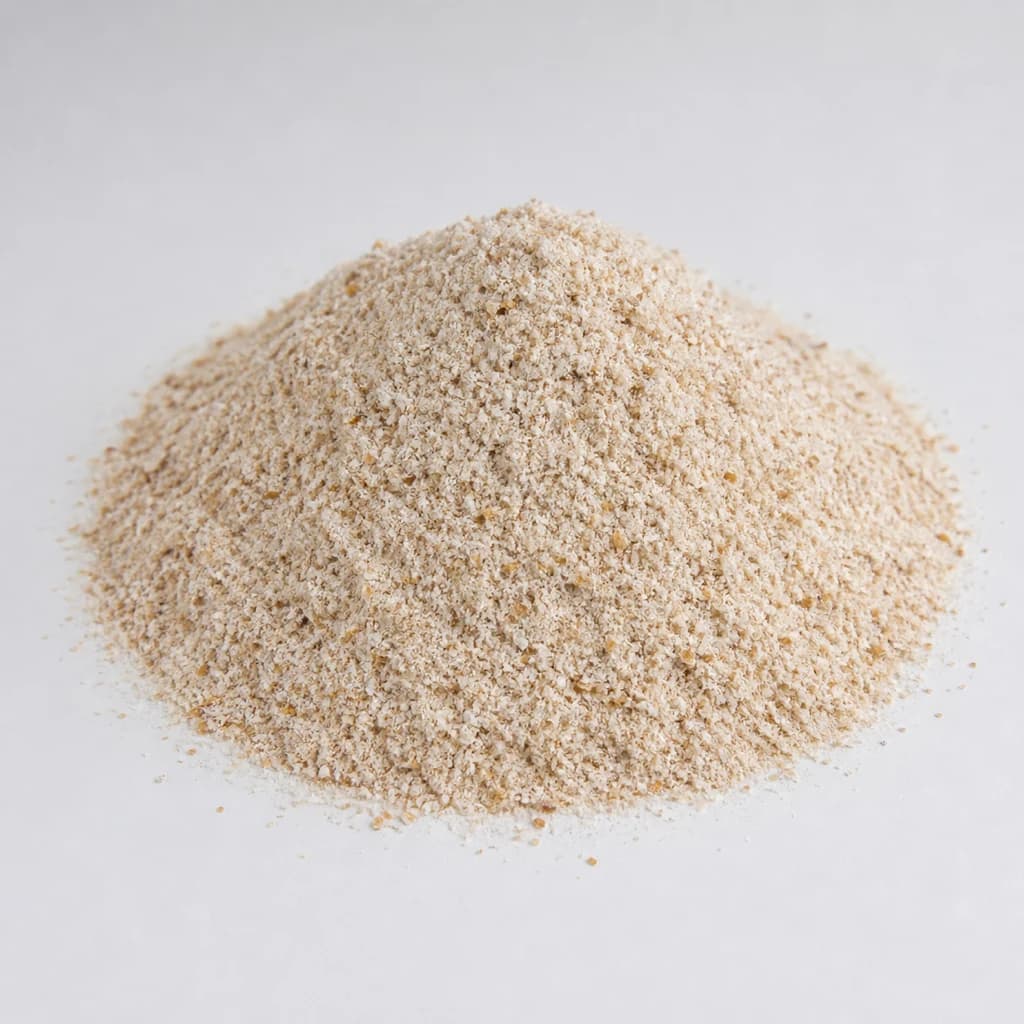
Whole Wheat Flour
Nutty, whole-grain flour for hearty breads and bakes
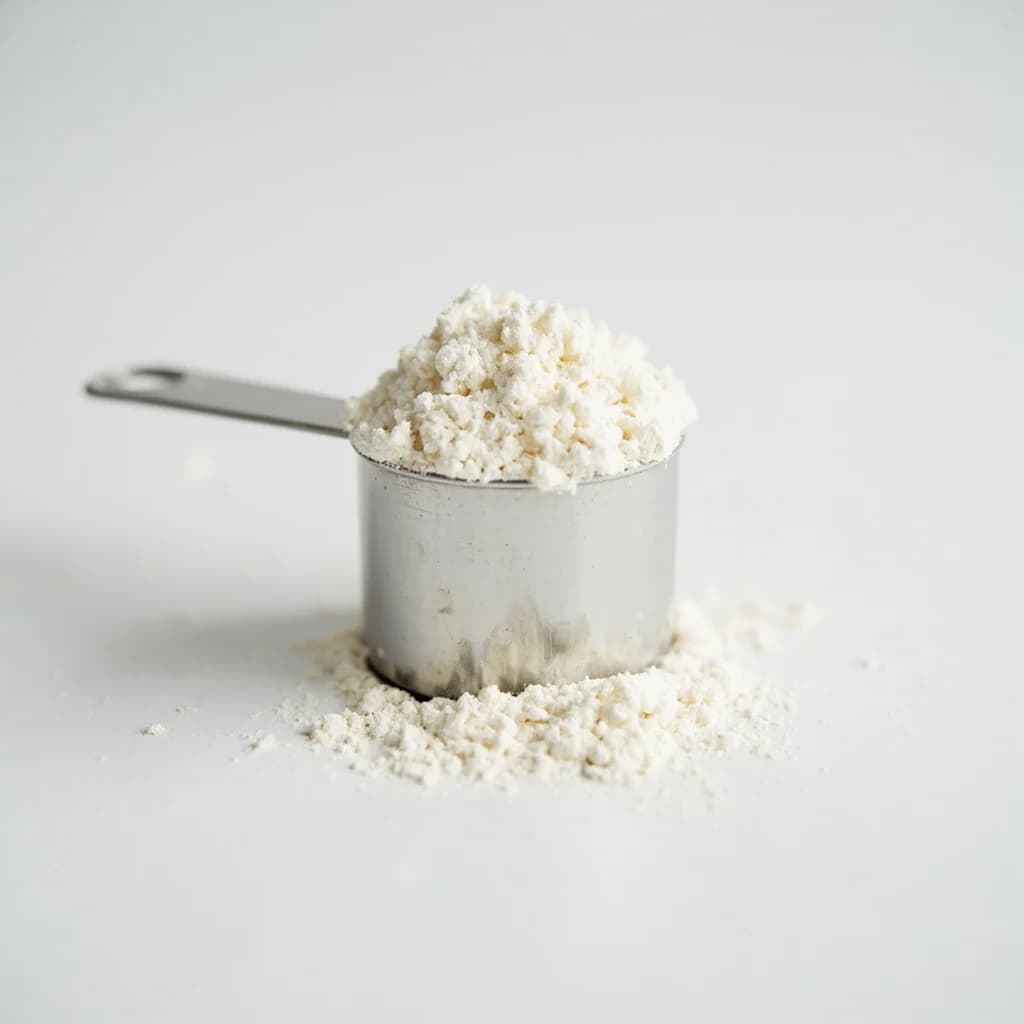
Cake Flour
Fine, low-protein flour for tender, delicate cakes
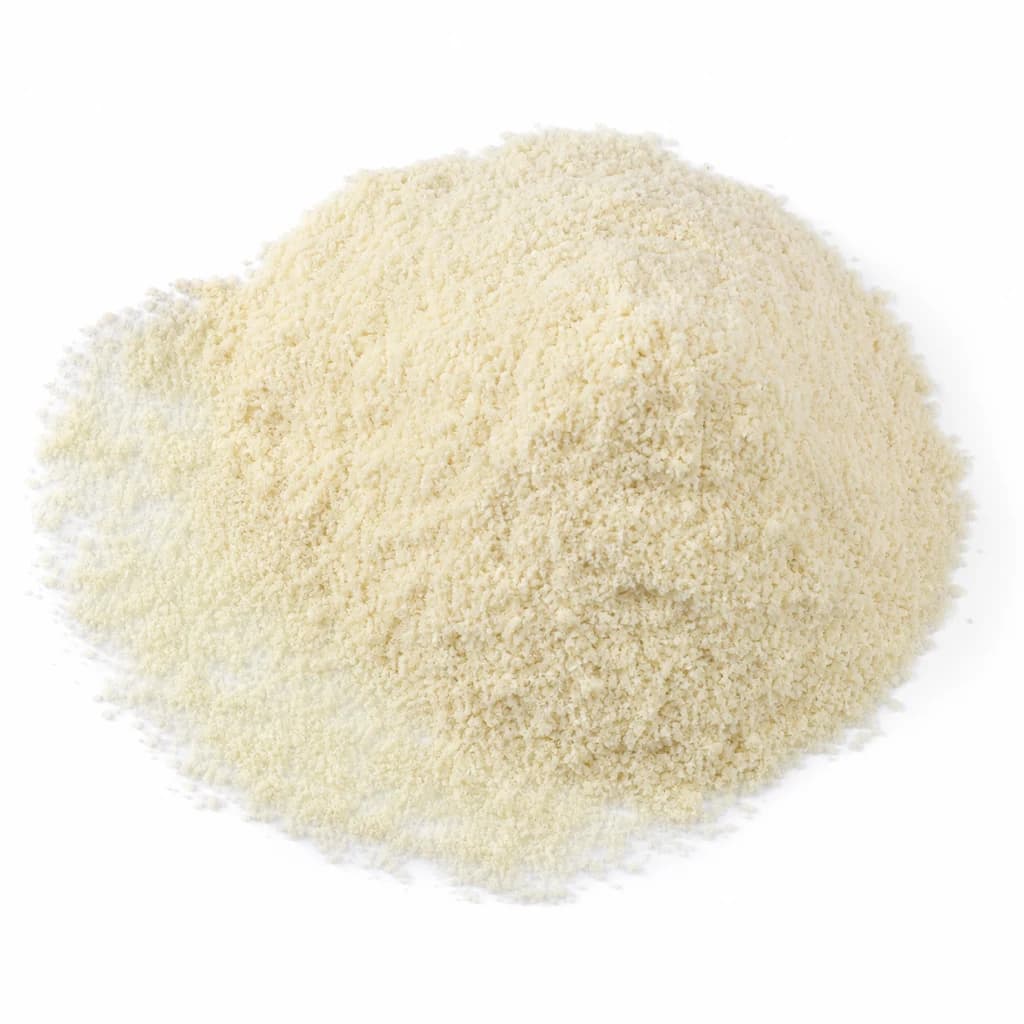
Almond Flour
Nutty, gluten-free flour for macarons and tender bakes

Baking Powder
All-in-one leavener for fluffy cakes, pancakes, and biscuits

Baking Soda
Pure leavener that needs acid to lift — and tenderize
Yeast
Living leaven that makes bread rise and dough come alive