Natural form
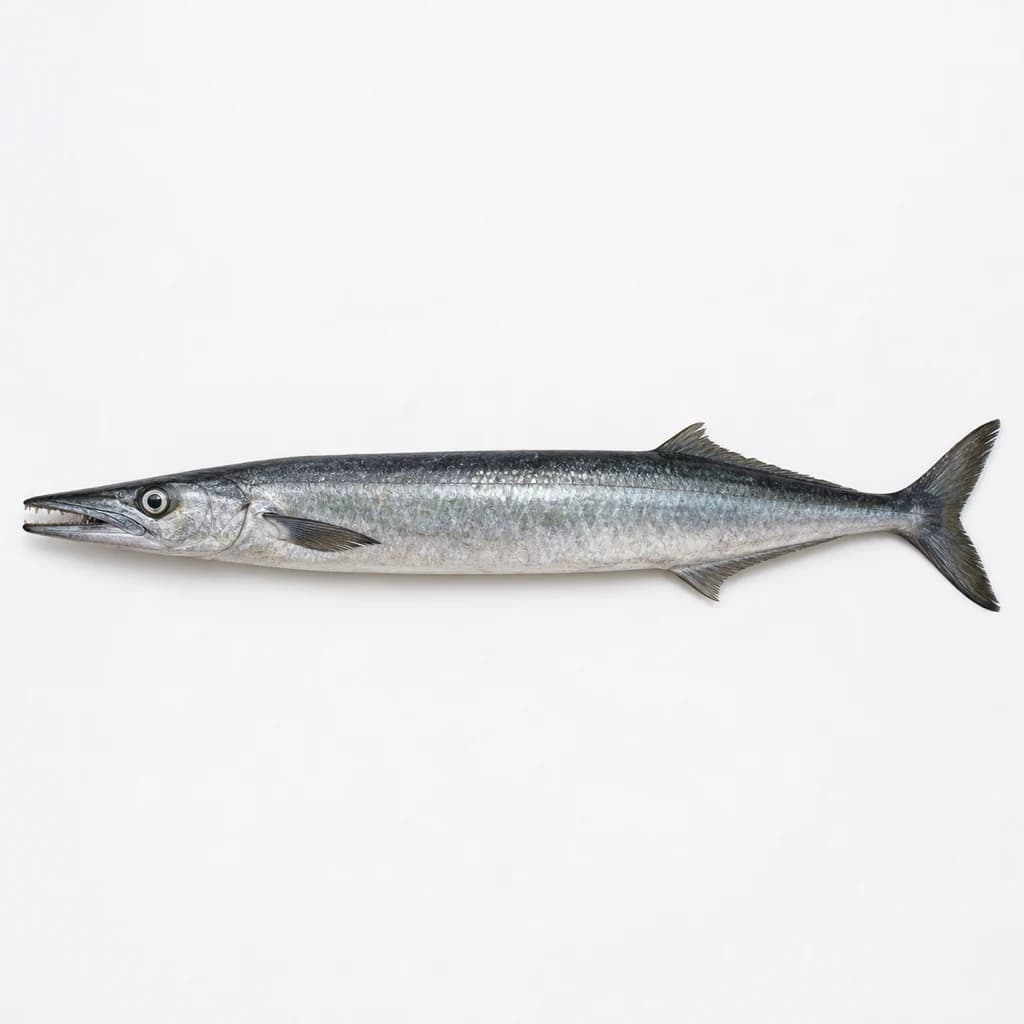
A whole fresh snoek laid flat, showing its long narrow silver-blue body and sharp teeth.
Shows the fish's distinctive elongated barracuda-like form, coloring, and size so readers can identify it at a market.
Proteins
Snoek
Oily South African sea fish, famously braaied (grilled) with apricot glaze or smoked.
Snoek is a long, oily saltwater fish popular in South Africa, related to barracuda. It is most often grilled over coals (braaied) and basted with an apricot-jam glaze, or smoked and flaked into pâté and fishcakes. Its rich, firm flesh stands up well to bold flavors and open-fire cooking.
Snoek (Thyrsites atun) is a predatory, oily sea fish native to the southern Atlantic and Indian Oceans. Its elongated body carries firm, moist flesh with a distinctive full-bodied flavor—assertive and slightly sweet, stronger than milder linefish like kob. The fish is covered in small, embedded scales and carries sharp teeth that give it a formidable appearance; the Dutch settlers who named it 'snoek' (pike) were not wrong about its predatory nature. What makes snoek remarkable in the kitchen is its exceptional fat content distributed throughout the flesh, which keeps it moist during high-heat cooking while delivering rich, concentrated flavor.
In South Africa, snoek is not merely an ingredient—it is a cultural institution. The annual winter migration along the West Coast (May through August) historically marked a significant food event for coastal communities. Cape Malay cooks transformed this abundant, affordable fish into something iconic: the apricot-glazed braai preparation that remains snoek's defining identity. Today, you will find it at every Cape Town market, road-side braai stand, and family gathering. The same fish caught in Australian and New Zealand waters (where it goes by Australian Snoek or simply snoek) supports a parallel culinary tradition with identical characteristics and uses.
From a cook's perspective, snoek's oily flesh behaves differently than lean fish. It resists drying but demands respect: the oils need heat channels to render properly, and the flesh goes from perfectly cooked to dry and stringy in a narrow window. Once you understand these properties—how to score it for grilling, how long to rest it, how to balance its assertiveness with simple glazes—snoek rewards you with some of the most satisfying fish preparations in southern hemisphere cuisine.
- Measured in
- g
- Storage
- Fridge
Allergens
Types & varieties
The classic Southern African variety from Atlantic and Indian Ocean waters; most commonly referenced in South African cuisine and the source of the iconic braai preparation
Same species found in Southern Australian and New Zealand waters; identical in flavor, texture, and culinary use
Handling and Preparation
Snoek's small, embedded scales require attention before cooking. Use a scaler or the back of a knife to scrape them away thoroughly—their grip is tighter than you expect on first encounter. Snoek carries pin bones along the center line of the fillet; run your fingers along the flesh to locate them and pull with tweezers before cooking, or pick through flaked fish carefully for spreads and pies. The flesh is bony but yields clean flakes when properly worked. When filleting, work from the tail toward the head, keeping the blade close to the bone; expect approximately 45–55% edible yield from a whole fish.
- Score the flesh deeply before grilling to create heat channels for oil rendering
- Remove pin bones by running fingers along the fillet center before cooking
- Scrape scales thoroughly with a dedicated scaler or back of knife edge
- Flake warm cooked fish and inspect carefully for residual bones
The Classic Apricot-Glazed Braai
The apricot-glazed braai is snoek's defining preparation and the benchmark against which all others are measured. The glaze balances snoek's assertive oils with sweetness, tang, and heat. Apply it in layers during the last few minutes of grilling, building up a lacquered finish without burning. The fish should sizzle over moderate coals, skin-side down for most of the cooking time to protect the delicate flesh from direct flame. Rest 3–5 minutes before serving—the carryover heat finishes cooking while the fibers relax for cleaner flakes.
- Build the glaze with apricot jam, butter, whole-grain mustard, and a splash of Worcestershire
- Apply in thin layers during the last 3–4 minutes of grilling, turning once
- Moderate heat is essential—snoek's oils protect it but only so much
- Rest 3–5 minutes before serving for cleaner flakes and even distribution
Common uses
Tips & pitfalls
- Score the flesh deeply before grilling—snoek's oily flesh needs heat channels to render properly and prevent curling
- Rest snoek 3–5 minutes after grilling—the flesh continues cooking and fibers relax for cleaner flakes
- Don't over-marinate with acidic ingredients; snoek's oils protect it but too much acid breaks down the texture (30 minutes maximum in vinegar or citrus)
- For smoking, cold-smoke then finish at moderate oven heat (150–180°C) or on the braai—produces a silky, spreadable texture ideal for pâté
- When braaiing, keep skin-side down longer with moderate heat—protects delicate flesh from direct flame
- Season simply—snoek's flavor is assertive; heavy spice mixes overwhelm it. Classic apricot-mustard-butter glaze is sufficient
- Avoid overcooking—snoek's oils keep it moist but the flesh goes dry and stringy past 10–12 minutes at high heat
- For pies and spreads, flake the fish while warm and pick through carefully to remove all small pin bones
- Scrape scales thoroughly with a scaler or knife back—the small, embedded scales grip harder than they appear
- Use moderate heat throughout; snoek's fat content means it can handle more than lean fish, but direct high flame still risks burning the exterior before the interior cooks
Nutrition
Nutrition
No USDA FoodData Central match for Snoek yet. We surface a per-100 g profile once a generic whole-food entry is matched and verified.
In the shops
Matched grocery products
No matched grocery products for Snoek yet.
Good to know
- Scientific Name
- Thyrsites atun (family Gempylidae)
- Common Names
- Cape Snoek, Australian Snoek, Barracuda (Australia)
- Habitat
- Southern Atlantic and Indian Oceans; migrate along South Africa's west coast May–August
- Peak Season
- May–August along South African coast; year-round in Australian waters
- Flavor Profile
- Oily, full-bodied with subtle sweetness; stronger and richer than mild linefish
- Texture
- Firm, moist, oily flesh that flakes when cooked; holds together well on braai
- Edible Yield
- 45–55% after filleting; skin removes easily once scales are scraped
- Storage
- Use within 2 days refrigerated on ice; freezes well for up to 3 months
- Typical Size
- 30–60 cm; up to 1 m and 2–3 kg
- Cost
- Inexpensive to moderate; considered a working-class fish in South Africa
Substitutes
- Mackerel — Closest match for flavor and oil content; King, Spanish, or Atlantic mackerel all work. Increase cooking time slightly as mackerel is denser.
- Blue Mackerel (Australian) — Direct substitute in Australian cooking; nearly identical fish with same culinary uses and behavior.
- Cob (Kob/Kroker) — Good texture substitute but milder in flavor; less oily so baste generously with butter when grilling.
- Wahoo (Ono) — Similar firm, oily texture; found in warmer waters; excellent braai fish with comparable fat content.
- Sardines/Pilchards (large) — When scaled and filleted, these work in a pinch for fried or grilled snoek dishes; much smaller yield requires scaling up quantities.
- Salmon (budget alternative) — Works for smoked snoek applications like pâté; different flavor but similar oil content and spreadable texture when smoked.
Pairs with
Also called
Cape Snoek
Appears in these dishes
Related

Egg
The kitchen's everything ingredient — bind, leaven, enrich, or fry

Chicken Breast
Lean, quick-cooking white meat for everyday dinners

Ground Beef
Versatile minced beef for burgers, ragù, tacos, and meatballs

Pork Loin
Lean, tender roasting cut that stays juicy with care

Salmon
Rich, rosy fish that roasts, grills, or cures beautifully

Egg White
Pure protein that whips to airy peaks for meringue and more

Egg Yolk
Rich, golden yolk for custards, mayonnaise, and pasta

Quail Egg
Tiny, speckled eggs for garnishing and elegant bites