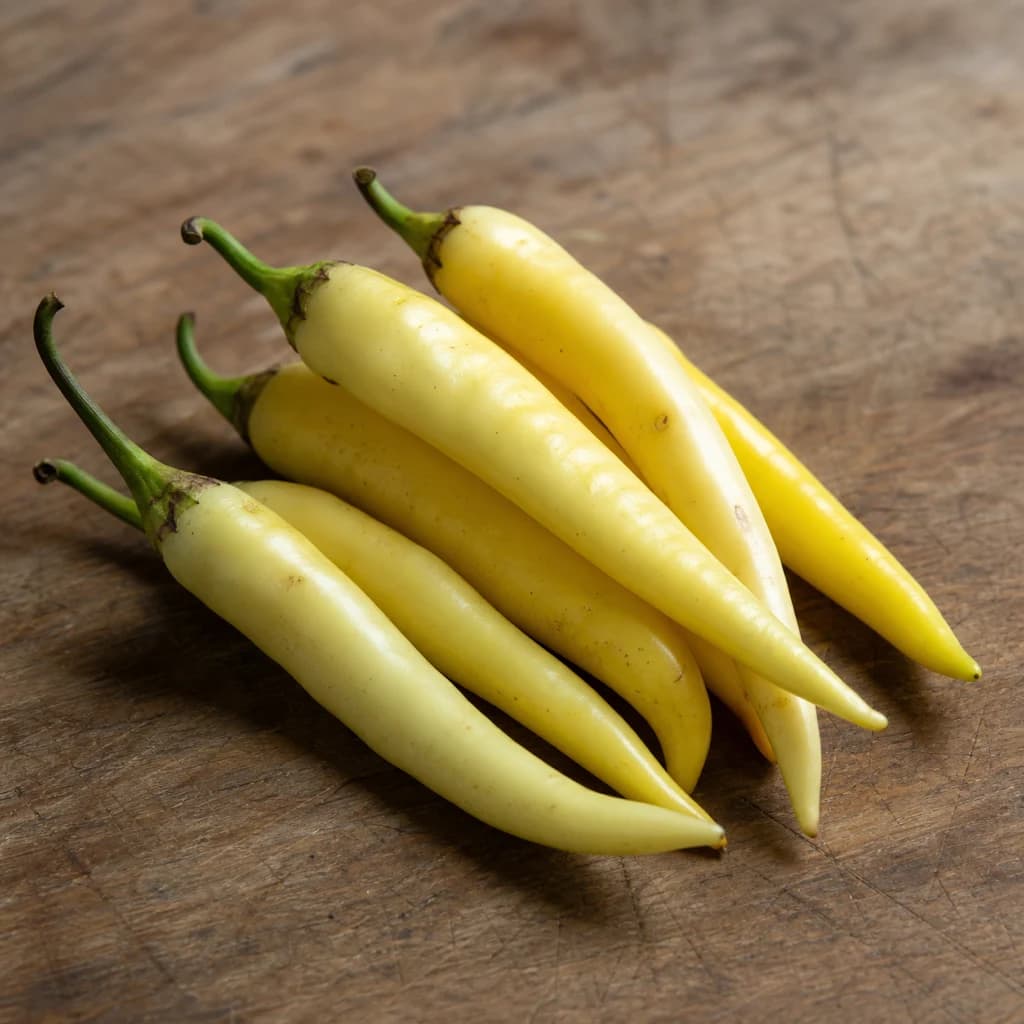
Natural form
Fresh xcatic chilies showing their characteristic long, pale yellow form before preparation.
Shows the reader exactly what to look for when identifying this pepper at a market or in a recipe.
Produce
Xcatic Chili
Pale yellow Yucatecan chili with mild-to-medium heat, roasted for salsas and Mayan dishes.
The xcatic (or x'catik) chili is a long, pale yellow pepper from Mexico's Yucatán Peninsula. It carries mild to medium heat and a subtle smoky-sweet flavor, especially once charred. Cooks roast and peel it for salsas, escabeche, and traditional dishes like tikin xic fish.
Xcatic (shka-TEEK) is a pale yellow, curved chili native to Mexico's Yucatán Peninsula, where it has been a foundational ingredient in Mayan cooking for centuries. The name derives from a Yucatecan Mayan word meaning ashen or ash-colored, a reference to the pepper's distinctive waxy, cream-colored skin. Unlike the region's more infamous habanero, which dominates through intensity, Xcatic provides controlled, approachable heat—typically 2,500 to 6,000 Scoville units—while delivering a subtly fruity, faintly citrusy character that makes it far more versatile than its modest reputation suggests. The pepper occupies a unique niche in Yucatecan cuisine: it is present in nearly every major regional preparation, from the complex black recados to bright roasted salsas, yet it never overwhelms. Its flesh is moderately thick, holding up well to roasting and drying, and its flavor deepens considerably when either technique is applied. Fresh Xcatic has a bright, vegetal acidity; dried, it becomes earthy and more rounded. Understanding this duality is key to using it well—you are not dealing with one ingredient but two distinct ingredients depending on how it is prepared.
- Measured in
- piece
- Storage
- Fridge
Types & varieties
The common pale yellow variety; most widely available in markets
A red variant with slightly sweeter, more complex flavor; similar heat but harder to find outside the Yucatán
Sourcing and Storage
Fresh Xcatic appears occasionally in well-stocked Latin markets, particularly in areas with Yucatecan communities. Look for firm, unblemished pods with tight, shiny skin—avoid any with soft spots or wrinkles. The dried whole pods and ground powder are more consistently available and will keep far longer without loss of quality. Dried Xcatic should be pliable, not brittle, with a deep golden color; if it has turned brown and papery, it is past its prime. Store dried pods in an airtight container away from heat and light. Ground Xcatic loses potency quickly—buy small quantities and use within a few months for best flavor.
- Seek out specialty Latin markets or Yucatecan grocery suppliers for the freshest stock
- The Xcatik Rojo variant is worth seeking out for its added sweetness in roasted applications
- Dried whole pods are preferable to pre-ground for control over texture and freshness
Fresh vs. Dried: Knowing the Difference
These are practically two different ingredients. Fresh Xcatic carries bright, vegetal acidity with a hint of citrus; it is best when roasted or raw in preparations where that liveliness is an asset. Dried Xcatic develops earthier, more rounded flavors with a deeper, almost nutty quality. When a recipe calls for dried Xcatic in a paste or recado, substituting fresh will produce a bright, acidic result that misses the intended depth. Conversely, using dried in place of fresh in a salsa will yield a flat, overly subdued flavor. Adjust proportions thoughtfully—dried ground chili typically concentrates flavor, so you need less than the fresh equivalent.
- Fresh: roast, char, or slice raw for brightness
- Dried: toast, grind, and incorporate into pastes and slow-cooked dishes for depth
- Never substitute one for the other in equal measure without adjusting for flavor intent
Common uses
Tips & pitfalls
- Toast dried Xcatic briefly in a dry skillet before grinding to unlock volatile aromatics; watch carefully because the thin flesh scorches quickly.
- When roasting fresh Xcatic, char the skin uniformly over high heat, then transfer to a covered bowl and steam for 10 minutes—this loosens the skin without drying the flesh.
- Remove seeds and ribs if you want the pepper's flavor without heat; the capsaicin concentrates in the placental tissue, not the seeds themselves.
- Do not substitute fresh for dried in equal measure—the flavor profiles are fundamentally different and will throw off a recipe's balance.
- A common mistake is overcooking fresh Xcatic, which turns the flesh mushy and destroys the subtle citrus notes that define the pepper's character.
- If using dried Xcatic in a paste, toast then soak in hot water for 20 minutes before grinding—this softens the flesh enough to yield a smooth, cohesive paste without graininess.
Nutrition
Energy
418 kJ · per 100 g
Where the calories come from
Protein
5.9g
12% DV
Carbs
10.9g
4% DV
Fat
3.7g
5% DV
Fiber
2.9g
10% DV
Sugars
1.8g
of which
Sodium
385mg
17% DV
Source · USDA FoodData Central · approx. Chili with beans, microwavable bowls
View on FDC →In the shops
Matched grocery products
No matched grocery products for Xcatic Chili yet.
Good to know
- Origin
- Yucatán Peninsula, Mexico; central to Mayan cuisine
- Color (fresh)
- Pale yellow to waxy cream
- Color (dried)
- Deep yellow to orange
- Heat level
- 2,500–6,000 Scoville units (mild to medium)
- Shape
- Curved and tapered, 6–10 cm long
- Primary preparations
- Roasted for salsas; dried and ground for recados and pastes
- Peak season
- Late summer to early fall; available year-round in the region
- Fresh storage
- Refrigerate in a paper bag up to 2 weeks
- Dried storage
- Airtight container in cool, dark place up to 6 months
Substitutes
- Aji Amarillo — Peruvian pepper with similar heat range and fruity, slightly citrusy flavor; best used fresh or roasted
- Yellow Hungarian Wax — Mild-to-medium heat, more curved and thicker-walled; works for roasting but lacks the subtle Mayan character of Xcatic
- Guajillo — Lower heat, reddish-brown when dried; different color and flavor profile but workable in cooked applications
- Chiltlpin — Small, red-orange Mayan chili; higher heat and different use case, but shares regional origin and traditional pairing logic
Pairs with
Also called
X'catik Chili · Güero Chili
Related
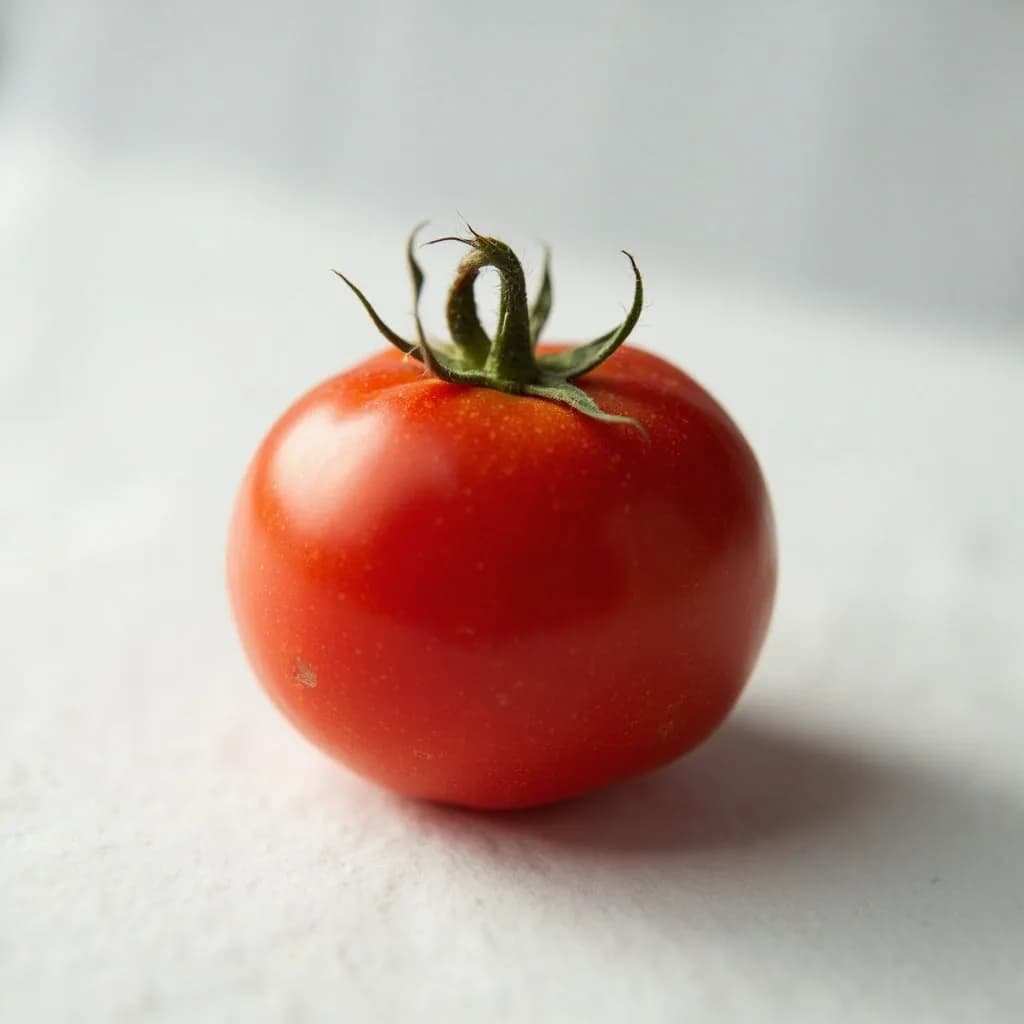
Tomato
Juicy, sun-sweet fruit for sauces, salads, and slow-cooked depth
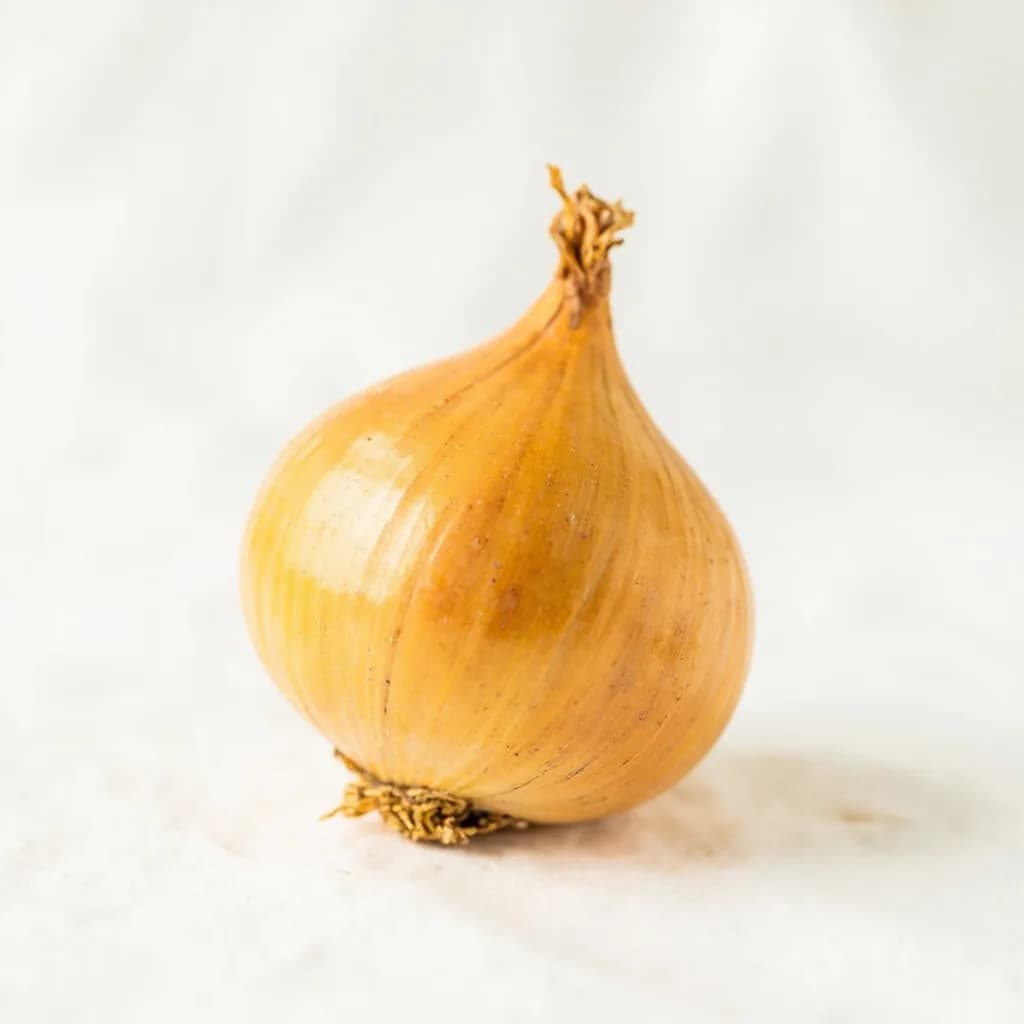
Yellow Onion
The aromatic backbone of soups, sofritos, and braises
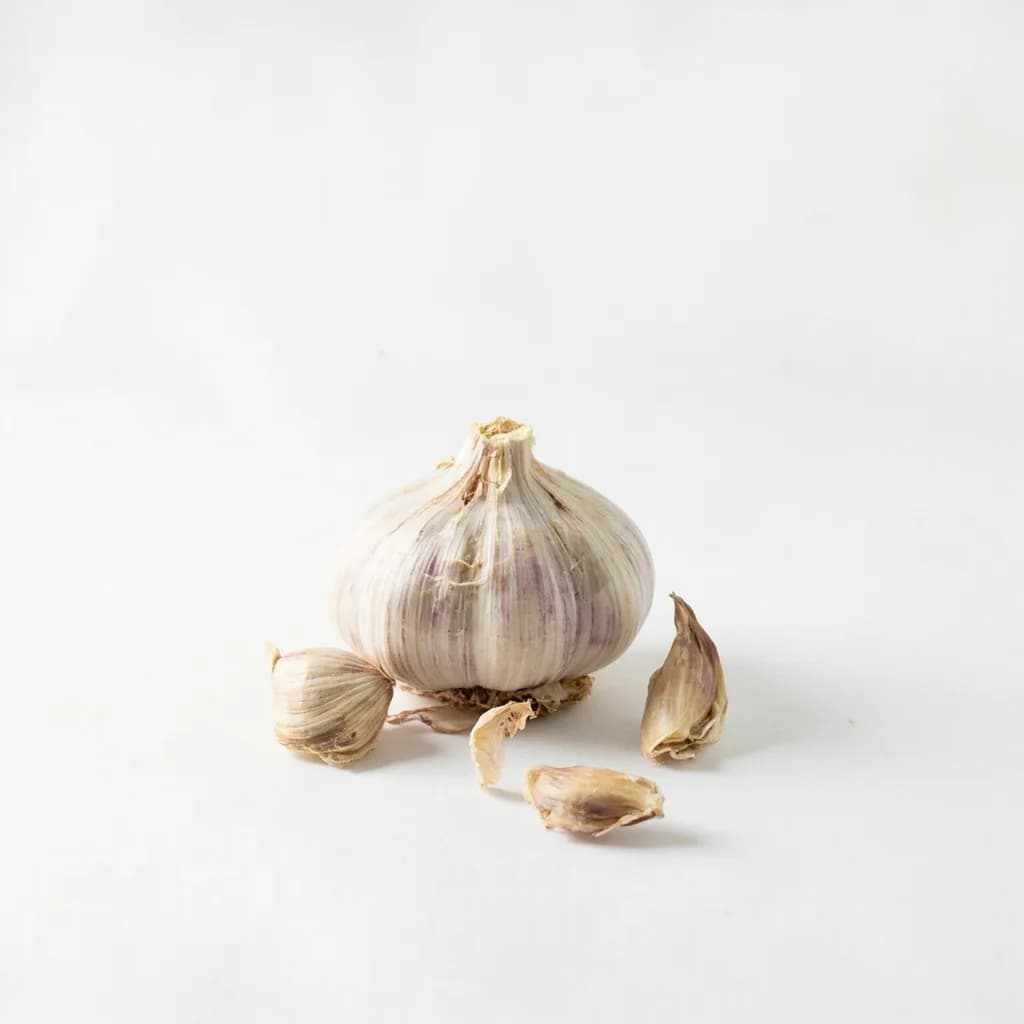
Garlic
Pungent cloves that perfume nearly every savory dish
Lemon
Bright, acidic citrus that wakes up almost any dish
Potato
Humble, hearty staple — roast, mash, fry, or boil
Carrot
Sweet, crunchy root — raw, roasted, or the base of a sofrito
Cucumber
Cool, crisp, and watery — for salads, pickles, and tzatziki

Lettuce
Crisp leaves for salads, wraps, and a fresh crunch