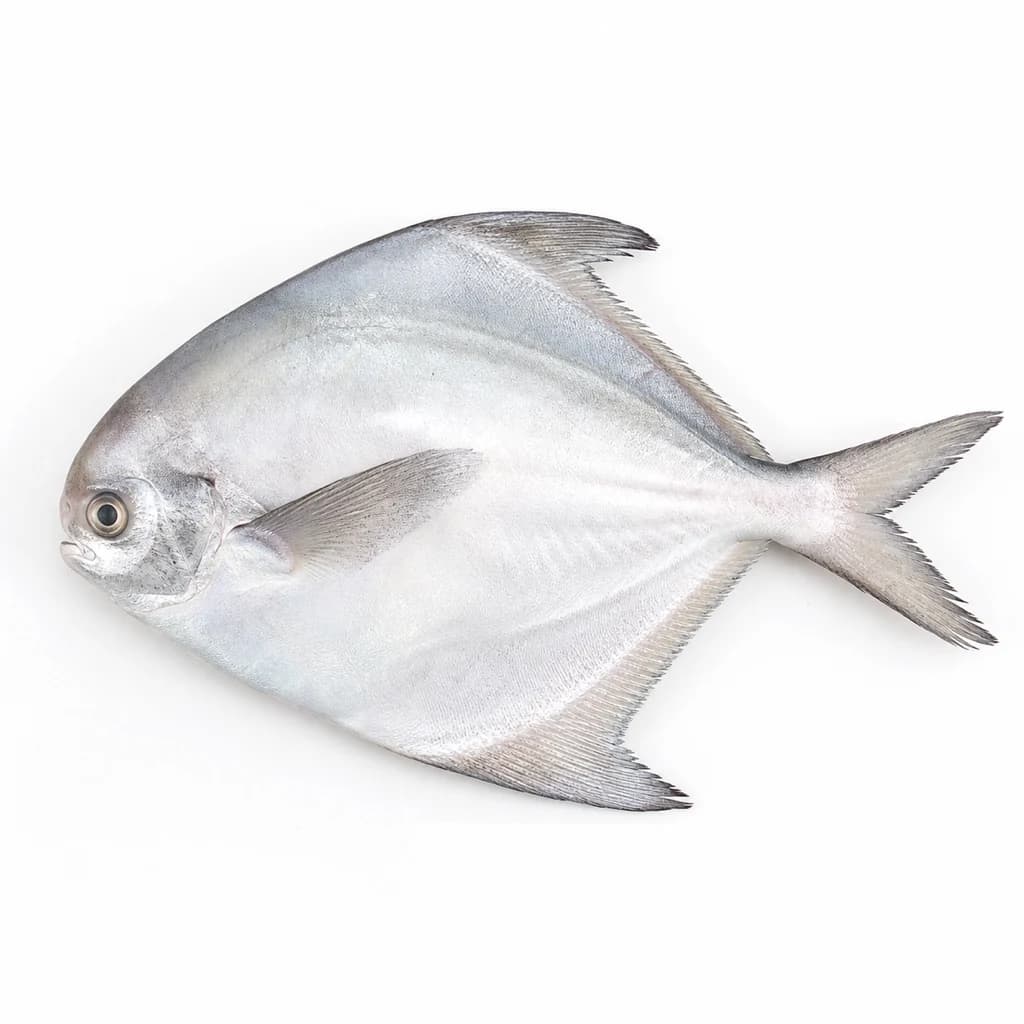
Natural form
Whole silver pomfret showing its distinctive flat, disc-shaped silver body and small head.
Teaches the reader to recognize the fish by its unmistakable body shape, coloration, and scale pattern before any preparation.
Proteins
Zubaidi (Silver Pomfret)
Prized Gulf silver pomfret with sweet, delicate flesh, grilled or used in machboos.
Zubaidi is the Gulf Arabic name for silver pomfret, a flat, disc-shaped fish with soft, sweet, almost boneless white flesh. It is among the most prized fish in Iraqi, Kuwaiti and Gulf cooking, grilled whole or layered into spiced rice dishes like machboos and quzi. Its fine texture makes it a festive centerpiece.
Zubaidi, or Silver Pomfret (Pampus argenteus), is among the most treasured fish of the Arabian Gulf, occupying a position in Gulf cooking analogous to Dover Sole in European cuisine — revered for its refinement and treated with corresponding care. Its flesh is sweet, clean, and mildly briny, with a tender, moist texture that flakes finely. A single pin bone runs along the center, making it remarkably easy to navigate for a fish of this quality. The fish is silvery-white and thin-bodied, which means it cooks quickly and responds poorly to heavy-handed technique.
In Bahrain, Zubaidi holds the distinction of being the national fish, and it features prominently in Eid al-Fitr and Eid al-Adha celebrations, typically served whole and grilled as a symbol of abundance. It is sold gutted and scaled (the scales adhere firmly and are difficult to remove at home, so always confirm with your fishmonger), as fillets, and occasionally steaked. Gulf-caught specimens are preferred for their flavor and sustainability, though significant quantities arrive from Indian and Sri Lankan waters. The peak season in Gulf waters runs from October through March, when the fish is at its plumpest and sweetest. Zubaidi demands respect: it is not a fish for aggressive heat, heavy spice rubs, or busy sauces. Treat it simply, and it rewards you.
- Measured in
- piece
- Storage
- Freezer
Allergens
Types & varieties
The standard Gulf variety; silvery-white, most delicate and prized
Slightly larger, golden-tinged scales; marginally firmer flesh, makes an excellent substitute
Darker grey-black coloring; meatier texture, stronger flavor; not a true pomfret but used similarly
Buying and Storing
Source your Zubaidi from a trusted fishmonger and confirm it has been properly scaled and gutted — the delicate scales grip the skin tenaciously and home removal is tedious. For whole fish, test freshness by pressing the flesh: it should spring back firmly. Eyes should be clear and convex, not sunken or cloudy. Gills must be bright red, never brown or slimy. The smell should be of cold seawater, never fishy. Use Zubaidi within one to two days if refrigerated on ice. For longer storage, freeze immediately; it holds well for up to three months. Thaw frozen fish slowly in the refrigerator overnight — never on the counter at room temperature, which degrades the texture.
- Look for clear, convex eyes and bright red gills
- Press the flesh — it should spring back immediately
- Confirm the fishmonger has scaled and gutted it before purchase
- Thaw frozen fish in the refrigerator overnight, never at room temperature
The Gulf Culinary Tradition
Zubaidi occupies a position of honor in Gulf hospitality. It is the fish served at life's most important moments — Eid celebrations, wedding feasts, and the Friday family table. Its preparation is never elaborate in the sense of complicated sauces or complex marinades. Instead, the tradition celebrates restraint: whole fish grilled over charcoal, finished with a squeeze of lime, accompanied by Arabic bread and a simple tomato salsa. This simplicity is the point. The fish is the star, and the cook's job is to get out of its way. In Bahrain especially, ordering Zubaidi at a coastal restaurant is a statement of cultural pride.
- Grilled whole is the benchmark preparation in Gulf homes
- Served at Eid al-Fitr and Eid al-Adha as a symbol of abundance
- Considered the national fish of Bahrain
Common uses
Tips & pitfalls
- Score the flesh 2–3 times on each side before cooking to allow heat to penetrate evenly and prevent curling — standard practice in Gulf kitchens.
- Do not overcook. The flesh turns from translucent white to opaque quickly. Remove from heat the moment flakes begin to separate; residual heat will finish it.
- If grilling whole, stuff the cavity with lemon halves and fresh cilantro to perfume the flesh from within.
- Avoid heavy spice rubs — the fish's delicacy is its asset. A light turmeric-salt rub or simply salt and lime preserves its character.
- When pan-frying, bring the fish to room temperature first. Cold fish hitting hot oil causes uneven cooking and a tough exterior.
- To test freshness: eyes should be clear and convex, gills bright red (not brown), and flesh should spring back when pressed. The smell should be like the sea, not fishy.
- Frozen Zubaidi should be thawed slowly in the refrigerator overnight — never at room temperature — to preserve texture.
- If using fillets for curry, add them in the last 5–7 minutes of cooking to prevent them from falling apart in the sauce.
Nutrition
Nutrition
No USDA FoodData Central match for Zubaidi (Silver Pomfret) yet. We surface a per-100 g profile once a generic whole-food entry is matched and verified.
In the shops
Matched grocery products
No matched grocery products for Zubaidi (Silver Pomfret) yet.
Good to know
- Scientific Name
- Pampus argenteus
- Arabic Name
- الزبيدي (Zubaidi)
- Common Names
- Silver Pomfret, White Pomfret, Chinese Pomfret
- Habitat
- Arabian Gulf, Persian Gulf, Arabian Sea, Bay of Bengal, South and East China Sea
- Peak Season
- October to March in Gulf waters
- Average Size
- 15–30 cm length; market specimens typically 300–600 g
- Flavor Profile
- Sweet, clean, mildly briny; delicate without fishiness
- Texture
- Tender, moist, fine-flaked; single pin bone, easy to navigate
- Form Sold
- Whole (gutted, scaled), fillets, and sometimes steaked
- Shelf Life
- 1–2 days refrigerated on ice; up to 3 months frozen
- Heat Tolerance
- Moderate; flesh dries out quickly under high, prolonged heat
- Edible Yield
- Approximately 55–60% from whole fish
Substitutes
- Sea Bream (Shaoori) — Comparable sweetness and flake; slightly firmer texture, widely available in the Gulf region
- Sea Bass (Naiji) — Mild flavor, tender texture; works in most preparations, though less traditional in Gulf cooking
- Red Snapper — Good flake, slightly stronger flavor; acceptable in grilled preparations and rice dishes
- Sole or Dover Sole — Similar delicacy and thin fillet structure; excellent for pan-frying and steaming
- Golden Pomfret (Asfar) — Closest flavor and texture; the most direct substitute if available
Pairs with
Also called
Silver Pomfret · Zubaidi · Pomfret
Appears in these dishes
Related
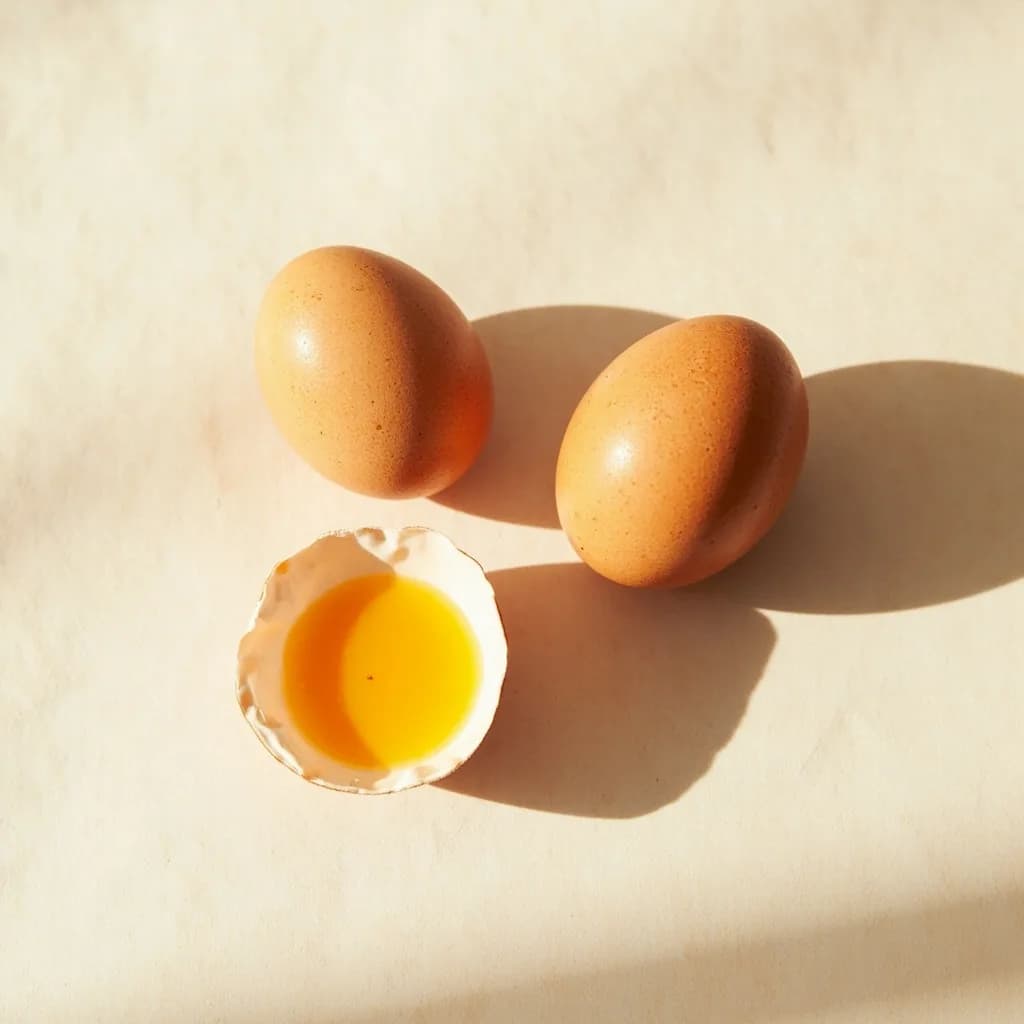
Egg
The kitchen's everything ingredient — bind, leaven, enrich, or fry
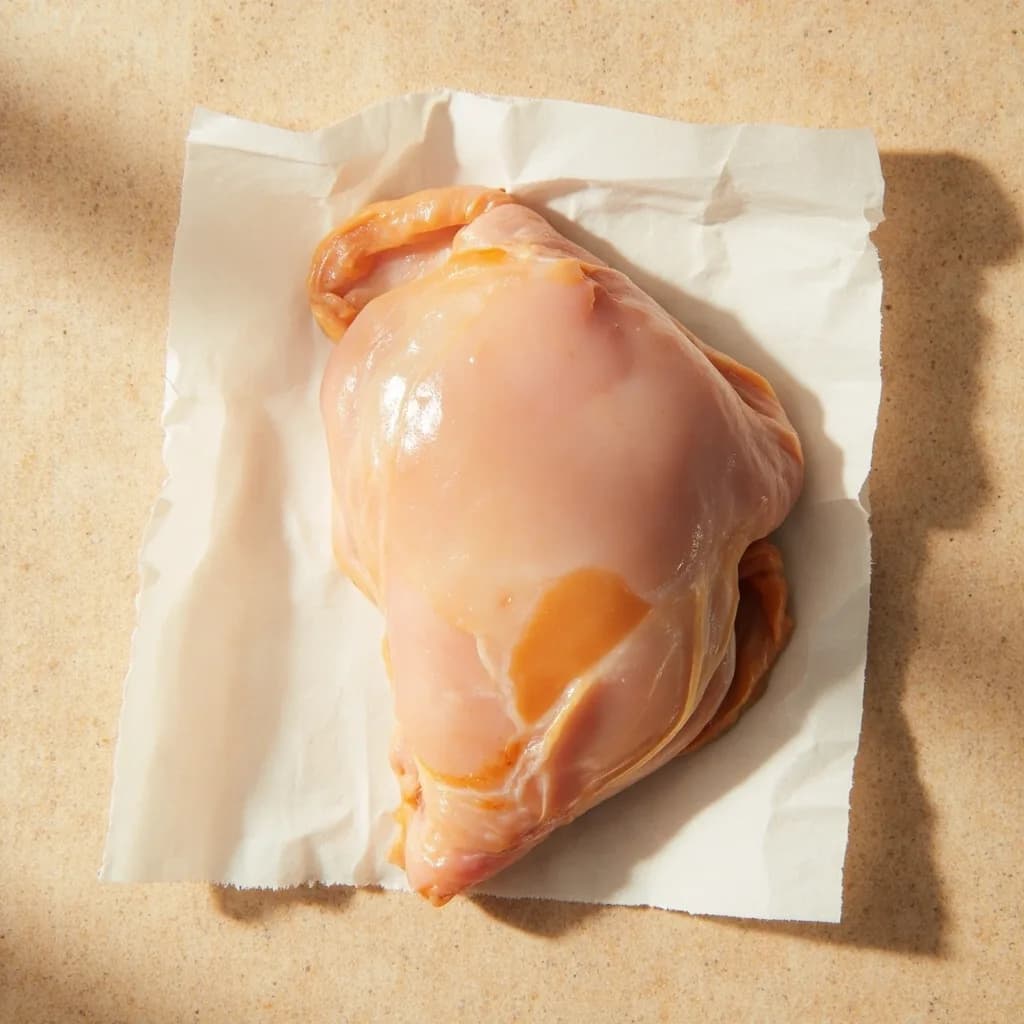
Chicken Breast
Lean, quick-cooking white meat for everyday dinners

Ground Beef
Versatile minced beef for burgers, ragù, tacos, and meatballs
Pork Loin
Lean, tender roasting cut that stays juicy with care
Salmon
Rich, rosy fish that roasts, grills, or cures beautifully

Egg White
Pure protein that whips to airy peaks for meringue and more

Egg Yolk
Rich, golden yolk for custards, mayonnaise, and pasta

Quail Egg
Tiny, speckled eggs for garnishing and elegant bites