 European
Medium · Warm
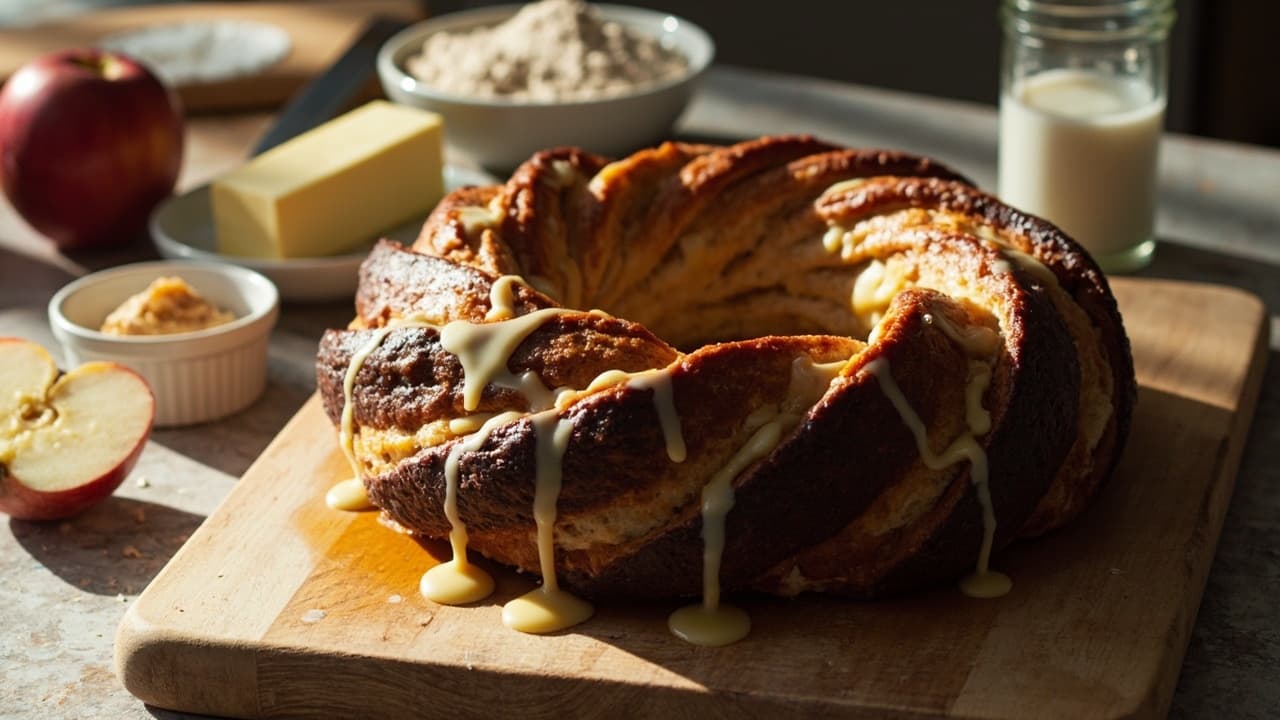
Cold-Fermented Rye and Apple Wreath with Brown Butter Glaze
A rustic wreath-shaped bread with a hearty rye crumb and thin-sliced apple ribbons, cold-fermented for depth, finished with a rich brown butter glaze.
Prep
30 min
Cook
28 min
Total
58 min
Method
1
Combine rye flour, all-purpose flour, yeast, and salt in a stand mixer bowl. Pour in the milk and mix on low with the dough hook until a shaggy mass forms, about 2 minutes.
2
Add 40g butter, piece by piece, with the mixer running on medium-low. Continue kneading for 8 minutes until the dough is smooth, supple, and pulls away from the bowl sides.
3
Form the dough into a taut ball, place in a lightly oiled bowl, cover with cling film, and refrigerate immediately. Cold-ferment for 12 to 16 hours.
4
Peel, core, and slice the apples paper-thin (3mm) using a mandoline or sharp knife. Toss with 30g white sugar and cinnamon. Set aside.
5
Remove the cold dough from the fridge and let it rest on the counter, covered, for 20 minutes. The dough will feel firm and cold — this short rest makes rolling easier.
6
On a lightly floured surface, roll the dough into a rectangle roughly 40cm x 30cm. Arrange the apple slices in overlapping rows across the entire surface, leaving a 2cm border at one short edge.
7
Starting from the apple-covered short edge, roll the dough tightly into a log. Seal the seam with a little water.
8
Transfer the log seam-side down. Using kitchen scissors or a sharp bench knife, cut the log lengthwise down the center, exposing the swirl cross-section. Twist the two halves around each other, apple-side facing up, keeping the cut sides visible.
9
Shape the twisted log into a ring on a parchment-lined baking sheet, pinching the ends firmly together. Cover loosely with a shower cap or oiled cling film.
10
Let the wreath proof at room temperature for 45 to 60 minutes, until noticeably puffed and wobbly when the sheet is shaken gently. Meanwhile, preheat the oven to 190°C (375°F).
11
12
13
Immediately remove from heat and whisk in 120g white sugar and 30ml milk until smooth. The mixture will be fluid and glossy.
14
Drizzle the warm brown butter glaze over the wreath in slow, even strokes. Serve warm or at room temperature.
C
Nutri-Score
Fair balance
A–E · lower is better · score 7
Calories
405
per serving
Source of fibre · 8g
Protein
8g
Carbs
68g
Fat
12g
Sat. fat
8g
Fiber
8g
Sugar
26g
Sodium
419mg
Contains DairyContains GlutenDiabetes CautionLow Fiber ConcernLow Sodium CautionComfort FoodOccasional Indulgence
Nutri-Score is a general nutritional-balance guide, not medical or dietary advice.
A
Environmental impact
Very low impact
A–E · lower is better · includes estimates
kg CO2e
0.4
per serving
ACarbonAEU all-round· both agree
Water
0.1m³
Land
14Pt
Runoff
0.03g P
Whole Milk drives 29% of this recipe’s estimated footprint.
Carbon from Poore & Nemecek 2018; water, land & runoff from Agribalyse — modelled averages for comparing recipes, not a measurement of your groceries.
Flavor Profile
6
Umami
7
Sweet
5
Salty
3
Sour
3
Bitter
4
Spicy
Textures
CrispySilkySoftTender
Aromas
BreadyCaramelDairyNuttySpice
Kitchen Equipment
Techniques
Safety & Storage
Cross Contamination
Use separate cutting boards and utensils for raw dough and fresh apple slices to prevent cross-contact. Wash hands thoroughly between handling different ingredients.
Cooking Temperature
Bake the wreath at 190°C (375°F) for 25-28 minutes until the crust is deep amber. Ensure the apples reach caramelization at the edges for safe consumption.
Handling
Use caution when handling the mandoline for apple slicing—keep fingers away from the blade and consider using a finger guard. The cut dough halves become slippery when twisted.
Storage
The cold-fermented dough must remain refrigerated at or below 4°C (40°F) during the 12-16 hour fermentation. Store finished glazed wreath in an airtight container at room temperature for up to 2 days, or refrigerate for up to 5 days.
Equipment Safety
When browning butter for the glaze, use a light-colored saucepan so you can monitor color changes. Remove from heat immediately when milk solids turn hazelnut-brown to prevent burning. The sugar and milk will create a hot splatter hazard when added.
Allergen Warning
Contains milk, wheat, and gluten. Not suitable for individuals with milk allergy, wheat allergy, or celiac disease. Verify all ingredients are free from cross-contamination if serving to allergic individuals.
High Risk Population
The glaze uses milk that is heated but not boiled. Immunocompromised individuals, pregnant individuals, young children, and elderly persons should ensure all dairy components are pasteurized before use.
Pro Tips
Technique
That cold fermentation isn't wasted time—it's when the rye really opens up and the gluten network settles into something cooperative. If your schedule shifts, the dough can go a full 24 hours, but anything beyond that and you'll start losing the depth you're building.
Equipment
A mandoline set to 3mm will give you apple ribbons of exactly the right thickness. Too thick and they steam instead of caramelize; too thin and they disappear into the crumb entirely.
Substitution
A decent substitute for rye flour in this recipe is buckwheat flour mixed half-and-half with whole wheat—it won't be identical, but the earthy depth stays intact.
Make Ahead
The brown butter glaze can be made up to three days ahead and stored in a sealed jar at room temperature. Gently reheat it in a bain-marie until it's pourable again before using.
From the chef
I first baked this wreath on a grey November morning in Barcelona, when the market stalls were heavy with late-season apples and I was still learning to trust the cold. The slow ferment transforms the rye into something deeply savory, almost earthy—while the thin apple slices caramelize against the hot dough into something I still dream about. The brown butter glaze came as an afterthought, but sometimes those are the details that become essential.
TagsCold FermentedRye FlourAppleBrown ButterWreathRusticArtisanSweet
AllergensMilkWheatGluten
Source: generated · June 12, 2026