 Thai
ThaiMedium · Hot
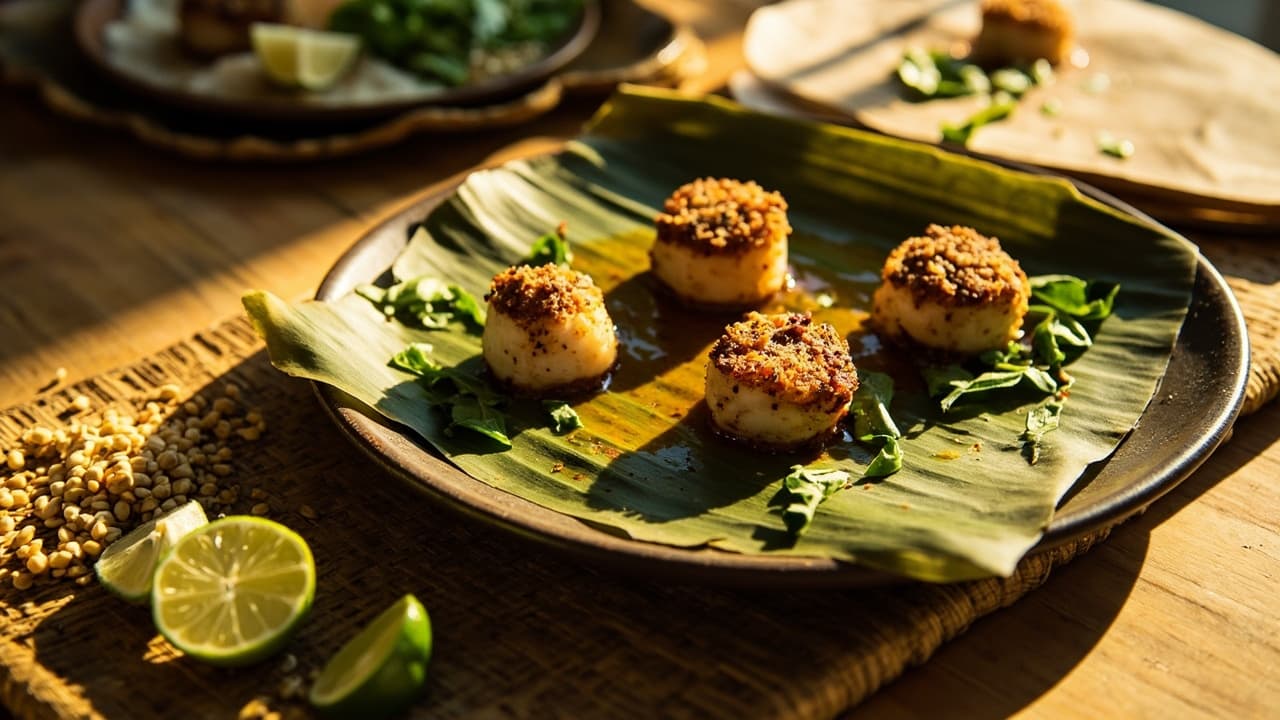
Buckwheat-Crusted Scallops with Thai Basil and Lime
Tender sea scallops coated in toasted buckwheat crumbs, finished with a bright Thai basil and lime pan sauce. Aromatic, slightly nutty, with that perfect squeeze of lime to wake everything up.
Prep
15 min
Cook
10 min
Total
25 min
Method
1
Pat scallops completely dry with paper towels — moisture is the enemy of a good crust. Season lightly with salt and let rest while you prepare the coating.
2
Toast buckwheat groats in a dry skillet over medium heat, stirring constantly, until fragrant and lightly golden, about 3-4 minutes. Transfer to a plate to cool.
3
Crush toasted buckwheat roughly in a mortar — you want coarse, uneven pieces for texture, not a fine powder. Combine with buckwheat flour, 1/4 tsp salt, and black pepper in a shallow bowl.
4
5
Whisk together lime juice, lime zest, soy sauce, cayenne, and half the minced garlic in a small bowl. Set aside.
6
Heat coconut oil in a large heavy skillet (cast iron is ideal) over high heat until oil shimmers and ripples — about 2 minutes. The pan must be ripping hot.
7
Lay scallops crust-side down in the pan, leaving space between each. Sear 2 minutes without touching until deeply golden. Flip carefully and sear the other side 1-2 minutes more. Scallops are done when they feel firm but still have a slight give in the center. Transfer to a warm plate.
8
9
Toss scallops gently in the sauce, coating each piece. Add fresh basil and fold just until wilted, about 20 seconds.
A
Nutri-Score
Excellent balance
A–E · lower is better · score -2
Calories
504
per serving
High in protein · 67gLow sugar · 2g
Protein
67g
Carbs
37g
Fat
12g
Sat. fat
8g
Fiber
9g
Sugar
2g
Sodium
1713mg
Dairy FreeGluten FreeHigh ProteinAnti InflammatoryDiabetesHeart HealthyLow CarbWeight Management
Nutri-Score is a general nutritional-balance guide, not medical or dietary advice.
Grade pending
Environmental impact
Estimated footprint
Grade pending · 73% ingredient coverage
kg CO2e
≥0.2
per serving
Fresh basil leaves drives 26% of this recipe’s estimated footprint.
Carbon from Poore & Nemecek 2018; water, land & runoff from Agribalyse — modelled averages for comparing recipes, not a measurement of your groceries.
Flavor Profile
6
Umami
3
Sweet
5
Salty
2
Sour
1
Bitter
4
Spicy
Textures
CrispySaucyTender
Aromas
CitrusHerbalNutty
Kitchen Equipment
Primary Tool
Large Cast Iron SkilletLarge Cast Iron SkilletChef KnifeCutting BoardMeasuring SpoonsMixing BowlMortar And PestleShallow Baking DishPaper Towels
Techniques
Safety & Storage
Cooking Temperature
Scallops require a ripping hot pan (oil should shimmer and ripple) for proper searing. Insufficient heat will cause sticking and prevent the buckwheat crust from developing properly.
Handling
Pat scallops completely dry with paper towels before coating and cooking. Residual moisture is the enemy of a good crust and will cause splattering.
Cross Contamination
Use separate plates and utensils for raw scallops and ready-to-eat components. Do not reuse the plate that held raw coated scallops for serving without thorough washing.
Storage
Keep scallops refrigerated at 40°F or below until ready to cook. Scallops are highly perishable and should be prepared the same day of purchase for optimal freshness and food safety.
High Risk Population
Mollusks (scallops) carry risk for pregnant individuals, elderly, young children, and immunocompromised persons. Ensure scallops are fully cooked to an internal temperature of 145°F and avoid raw consumption.
Allergen Warning
This dish contains soy from soy sauce. Verify soy sauce ingredients for wheat content if serving individuals with gluten-related disorders, as many soy sauces contain wheat.
Pro Tips
Technique
When you toast the buckwheat groats, listen for the moment they start to pop and smell nutty — that’s your signal, around 3-4 minutes. Pull them off early because they keep cooking on the hot pan, and nobody wants bitter crust on their beautiful scallops, na krap!
Equipment
A cast iron or carbon steel pan makes all the difference here, friends. You need that serious heat retention for a crust that actually crusts — a thin-bottomed pan will steam your scallops and make them sad. If you don’t have one, get that pan ripping hot and test with a drop of water first.
Substitution
No fresh Thai basil? Regular basil works in a pinch, but add a tiny squeeze of lime to revive those bright notes the Thai variety brings so naturally. The sauce needs something aromatic to bloom, na krap!
From the chef
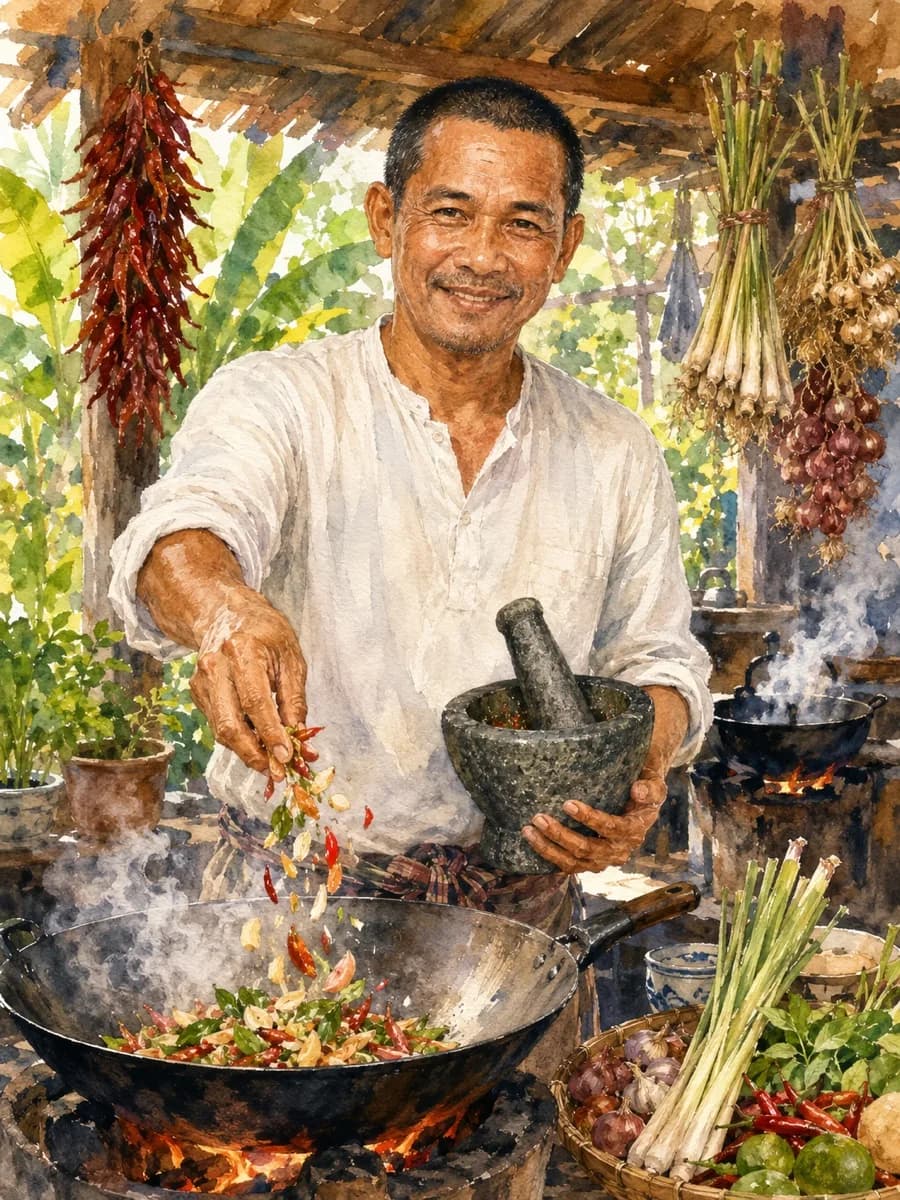
In Chiang Mai, we learn to balance four flavors before we learn to read, na krap — sour, sweet, salty, and the kiss of fire that wakes everything up. This dish is my little way of bringing that street-market soul to something elegant: nutty buckwheat gives you earth, lime gives you sunshine, and Thai basil? That’s the memory of my grandmother’s garden, right there on your plate.
TagsWeeknight DinnerSpicyOne PotGluten FreeQuick PrepCitrusAromatic
AllergensSoy
Source: generated · June 13, 2026