 Mediterranean
Medium · Hot
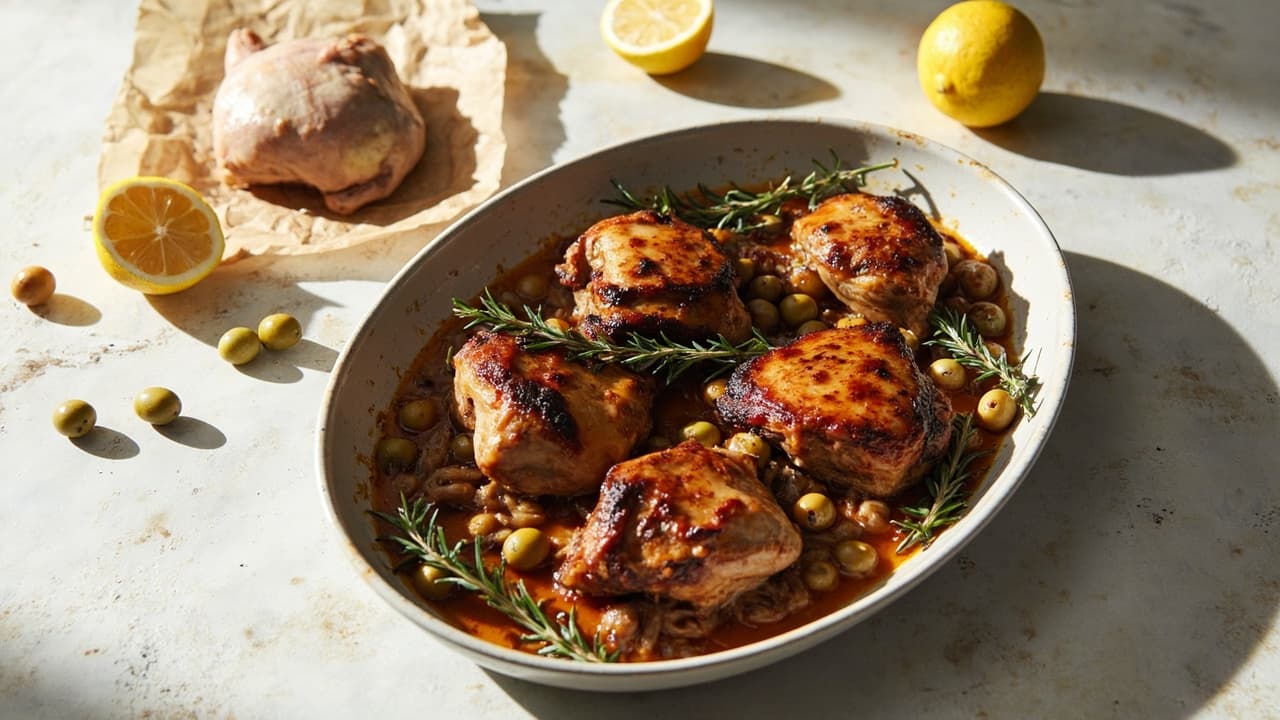
Lemon-Herb Chicken Skillet with Olives
Bone-in chicken thighs seared hard, then braised with brined olives and fresh thyme until tender. The lemon cuts through the richness. Nothing hidden, nothing optional.

Prep
10 min
Cook
30 min
Rest
5 min
Total
34 min
Method
Season and Sear
1
Pat chicken thighs dry with paper towels. Season aggressively with salt and black pepper on both sides. Let rest 5 minutes while pan heats.
2
Heat olive oil in a large cast iron skillet over high heat until smoking begins at edges. Reduce heat to medium-high.
Build and Braise
4
5
6
Nestle chicken thighs back into the pan. Scatter olives around and between the pieces. Add thyme sprigs on top.
7
Cover and cook over medium-low heat for 15 minutes until chicken is cooked through and juices run clear. Internal temperature should reach 165°F.
B
Nutri-Score
Good balance
A–E · lower is better · score 1
Calories
624
per serving
High in protein · 64gLow sugar · 4g
Protein
64g
Carbs
8g
Fat
37g
Sat. fat
8g
Fiber
2g
Sugar
4g
Sodium
789mg
Gluten FreeLow CarbMediterraneanHeart HealthyDiabetes FriendlyAnti InflammatoryHigh ProteinHealthy Fats
Nutri-Score is a general nutritional-balance guide, not medical or dietary advice.
D
Environmental impact
High impact
A–E · lower is better · includes estimates
kg CO2e
2.3
per serving
DCarbonAEU all-round· carbon sets the grade
Water
1.1m³
Land
82Pt
Runoff
0.2g P
Chicken Thigh drives 96% of this recipe’s estimated footprint.
Carbon from Poore & Nemecek 2018; water, land & runoff from Agribalyse — modelled averages for comparing recipes, not a measurement of your groceries.
Flavor Profile
7
Umami
3
Sweet
6
Salty
7
Sour
1
Bitter
4
Spicy
Textures
CrispyTenderSaucy
Aromas
HerbalCitrusSavoryGarlicky
Kitchen Equipment
Primary Tool
Cast Iron SkilletCast Iron SkilletInstant Read ThermometerChef KnifeCutting BoardMeasuring SpoonsTongsPlatePaper Towels
Counter FootprintMedium
Safety & Storage
Cooking Temperature
Chicken thighs must reach an internal temperature of 165°F to ensure food safety. Use a calibrated meat thermometer inserted into the thickest part of the thigh, avoiding bone contact.
Cross Contamination
Raw poultry juices can transfer harmful bacteria. Use separate cutting boards for raw chicken and ready-to-eat ingredients. Wash hands, utensils, and surfaces thoroughly after handling raw meat.
Storage
Refrigerate leftover chicken within 2 hours of cooking. Store in airtight containers and consume within 3-4 days. Reheat to 165°F before serving.
High Risk Population
Young children, elderly individuals, pregnant persons, and immunocompromised individuals face greater risk from undercooked poultry. Ensure thorough cooking and proper handling practices.
Handling
Do not wash raw chicken before cooking as this can spread bacteria via splashing. Pat dry with paper towels instead and discard packaging materials safely.
Pro Tips
Technique
Stop moving the chicken. Seven minutes skin-side down isn't a suggestion — it's the time required for the fat to render and the skin to release. If it sticks, you're early. If it tears, the heat was too high. Find the middle.
Substitution
Kalamata or Castelvetrano work if you're out of brined olives. But do not substitute the olive itself — its salt and brine are doing structural work in the pan, not just floating for appearance.
From the chef
Eight pieces of chicken. One pan. Olives that have been cured long enough to matter. This is what happens when you stop hiding behind complexity and let browning do its work. The lemon doesn't decorate — it cuts through the fat and reminds your palate the meal is still in charge. Nothing hidden, nothing optional.
TagsSkilletBraisedOne PanWeeknight DinnerMediterranean
Source: generated · June 10, 2026