 French
Advanced · Cold
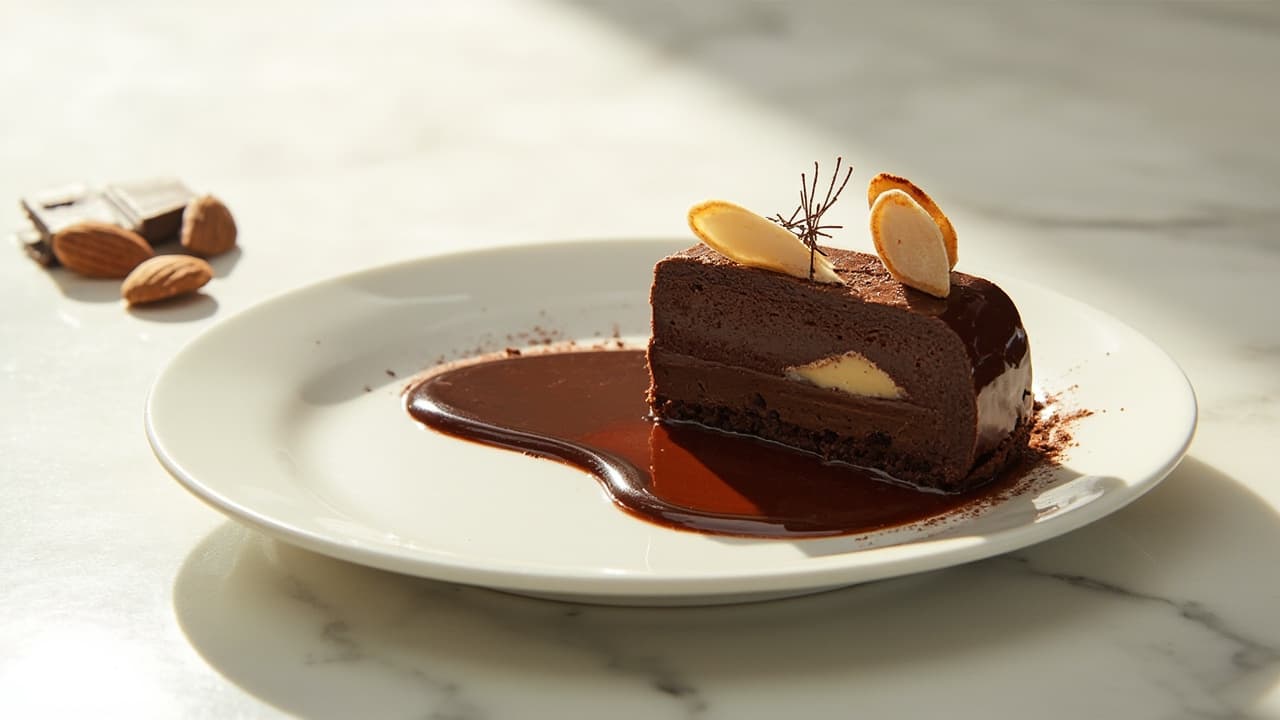
Dark Chocolate Almond Entremet
A refined French layered dessert featuring an almond dacquoise foundation, a billowing dark chocolate mousse, and a mirror-bright chocolate glaze.
Prep
1h
Cook
35 min
Total
1h 35m
Method
1
Toast the almonds in a dry pan over medium heat, stirring frequently, until golden and fragrant, about 5 minutes. Set aside to cool.
2
In a clean saucepan, heat the white sugar over medium heat without stirring until it forms a deep amber caramel, about 8-10 minutes. Swirl the pan gently as needed.
3
4
Pour the mixture onto a silicone mat or parchment-lined baking sheet. Allow to cool completely until hard, about 30 minutes.
5
Break the praline into small pieces and grind in a food processor until it forms a smooth, spreadable paste. Transfer to a piping bag and set aside.
6
Preheat the oven to 190°C (375°F). Line a 20cm round cake ring with parchment paper.
7
In a large bowl, whip the egg whites on medium speed until foamy. Gradually add the white sugar and continue whipping to stiff, glossy peaks, about 5-6 minutes.
8
Fold in the almond flour and all-purpose flour in two additions, using a large spatula with deliberate strokes to preserve as much air as possible.
9
Pipe or spread the batter into the prepared ring, smoothing the top evenly.
10
Bake for 15-18 minutes until the surface is lightly golden and a skewer inserted into the center comes out clean. Cool completely on a wire rack.
11
Melt the dark chocolate in a heatproof bowl set over simmering water, stirring until completely smooth. Remove from heat and let cool to room temperature, about 15 minutes.
12
In a separate bowl, whip 200ml of the heavy cream to soft peaks. Refrigerate the remaining 100ml.
13
In another clean bowl, whip the remaining egg whites to soft peaks.
14
Fold the melted chocolate into the whipped cream. Then fold in the whipped egg whites in two additions, maintaining as much volume as possible.
15
Transfer the mousse to a piping bag and refrigerate until needed.
16
Bring the 100ml of heavy cream to a gentle simmer in a small saucepan.
17
Pour the hot cream over the chopped dark chocolate and cocoa powder. Let sit for 2 minutes, then stir from the center outward until a smooth, glossy ganache forms.
18
Add the white sugar and stir until fully incorporated. Strain through a fine-mesh sieve.
19
Cool the glaze to 32-35°C (90-95°F), stirring occasionally, before applying.
20
Place the cooled dacquoise base into a clean 20cm ring mold. Pipe a layer of almond praline paste over the surface.
21
Pipe the dark chocolate mousse over the praline layer, filling to the rim. Smooth the top with an offset spatula. Tap the mold gently on the counter to release any air bubbles.
22
Refrigerate the assembled entremet for a minimum of 4 hours, preferably overnight, until the mousse is firmly set.
23
Remove the ring mold carefully. Place the entremet on a wire rack set over a rimmed baking sheet.
24
Pour the cooled mirror glaze over the top of the entremet, allowing it to flow down the sides naturally. Work quickly and continuously.
25
Once the glaze is set (about 10-15 minutes in the refrigerator), transfer the entremet to a serving plate using two offset spatulas.
26
Before serving, garnish with a few toasted almond slivers and dust lightly with cocoa powder if desired. Slice with a hot, clean knife for clean cuts.
D
Nutri-Score
Needs balance
A–E · lower is better · score 14
Calories
1040
per serving
High in saturated fat · 25gHigh in sugar · 76gCalorie-dense · 1040 kcalSource of fibre · 10gLow salt · 146mg
Protein
18g
Carbs
107g
Fat
64g
Sat. fat
25g
Fiber
10g
Sugar
76g
Sodium
146mg
Gluten FreeVegetarianAntioxidant RichLow SodiumBalanced IndulgenceIndulgence
Nutri-Score is a general nutritional-balance guide, not medical or dietary advice.
E
Environmental impact
Very high impact
A–E · lower is better · complete match
kg CO2e
3.6
per serving
ECarbonAEU all-round· carbon sets the grade
Water
1.4m³
Land
83Pt
Runoff
0.3g P
Dark Chocolate drives 43% of this recipe’s estimated footprint.
Carbon from Poore & Nemecek 2018; water, land & runoff from Agribalyse — modelled averages for comparing recipes, not a measurement of your groceries.
Flavor Profile
4
Umami
5
Sweet
3
Salty
1
Sour
5
Bitter
0
Spicy
Textures
ChewyCreamyCrispySilkySmoothTender
Aromas
ButterCaramelCocoaDark ChocolateToasted Nut
Kitchen Equipment
Primary Tool
OvenDouble BoilerOvenCake Ring MoldDigital Precision ScaleFine Mesh SieveFood ProcessorHeatproof BowlsInstant Read ThermometerOffset SpatulasParchment PaperPastry BrushPiping BagsRimmed Baking SheetRubber SpatulasSilicone MatStand MixerWire RackClean Kitchen TowelsPaper TowelsPlastic Wrap
Techniques
Safety & Storage
Allergen Warning
This recipe contains multiple allergen sources including tree nuts, eggs, milk, and gluten. Always verify all ingredients are free from cross-contamination before use for allergen-sensitive individuals.
High Risk Population
Raw egg whites are used in the dacquoise base and chocolate mousse. These present a Salmonella risk and are unsafe for children, pregnant women, elderly individuals, and immunocompromised persons. Consider using pasteurized egg whites or a Swiss meringue method that cooks the whites.
Cooking Temperature
Caramelized sugar reaches approximately 170°C (340°F). Never stir while melting and use caution when adding butter as it will vigorously bubble. Have cold water nearby for burns and work in a well-ventilated area.
Apply the mirror glaze only when cooled to 32-35°C (90-95°F). Glaze below 30°C will set too quickly with poor adhesion; above 40°C will melt the mousse underneath.
Handling
When melting chocolate for the mousse, ensure the bowl does not touch the simmering water and that no steam enters the bowl. Moisture causes chocolate to seize. Remove from heat when a few small pieces remain and stir until smooth.
Cross Contamination
Thoroughly clean and sanitize all equipment including food processor, piping bags, and bowls between uses. If serving to guests with nut allergies, prepare the praline insert last and clean equipment completely before other preparations.
Storage
The completed entremet must remain refrigerated at or below 4°C (40°F). Store under a cake dome or in an airtight container. Consume within 3-4 days for optimal texture and food safety.
Equipment Safety
When slicing the finished entremet, dip the knife in hot water and wipe dry between each cut for clean, precise slices. Warmed knives prevent the glaze from cracking and ensure professional presentation.
Pro Tips
Technique
Your glaze must be at 32-35°C when you pour — not warmer, or it will seep into the mousse and ruin your mirror. Not cooler, or it will set before it flows. I keep a digital thermometer beside me always, because guessing is for amateurs.
Substitution
If you cannot find almond flour, pulse whole blanched almonds in a food processor until fine — but do not over-process or you will make butter, not flour. The granularity matters for the dacquoise's structure.
Presentation
Slice with a knife dipped in hot water and wiped clean between each cut. A ragged edge is an insult to the four hours of refrigeration that preceded it.
From the chef
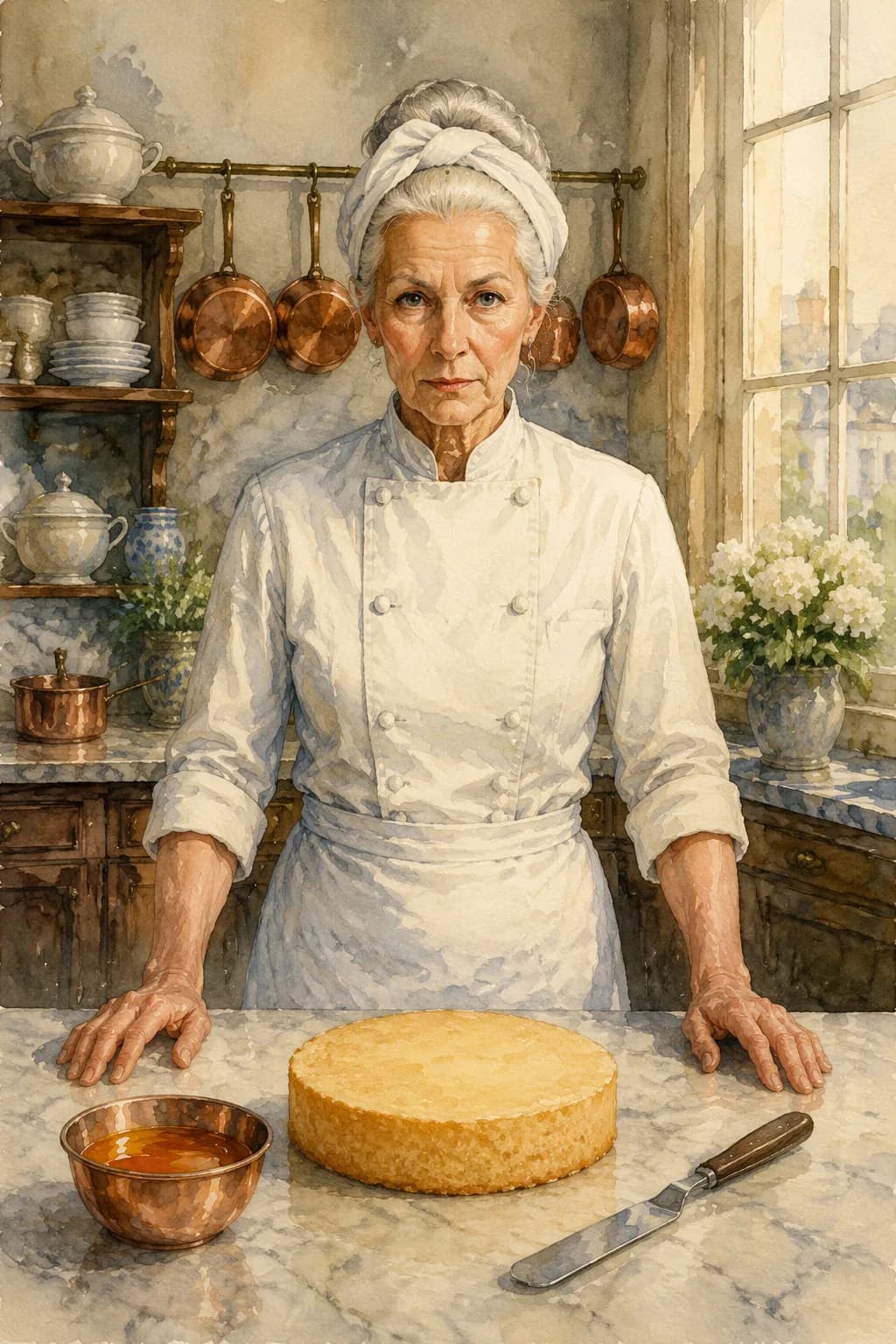
An entremet is a contract between layers, and every element here must earn its position. The almond dacquoise provides a dry, fragrant foundation — toasted, airy, with none of the cloying density that ruins lesser bases. The dark chocolate mousse above it must be folded with deliberate patience; overwork it and the air collapses, and there is no recovering from that. The praline insert is the structural argument of the whole composition: bitter caramel, crunch, and almond fragrance anchoring what would otherwise float into sweetness. The mirror glaze is the final discipline — it either sets perfectly or it does not set at all.
TagsChocolateAlmondPralineDacquoiseMousseMirror GlazeEntremetLayeredAdvanced TechniqueRefrigeratedFrench Pastry
AllergensTree NutsEggsMilkWheatGluten
Source: generated · June 13, 2026