 Italian
Medium · Hot
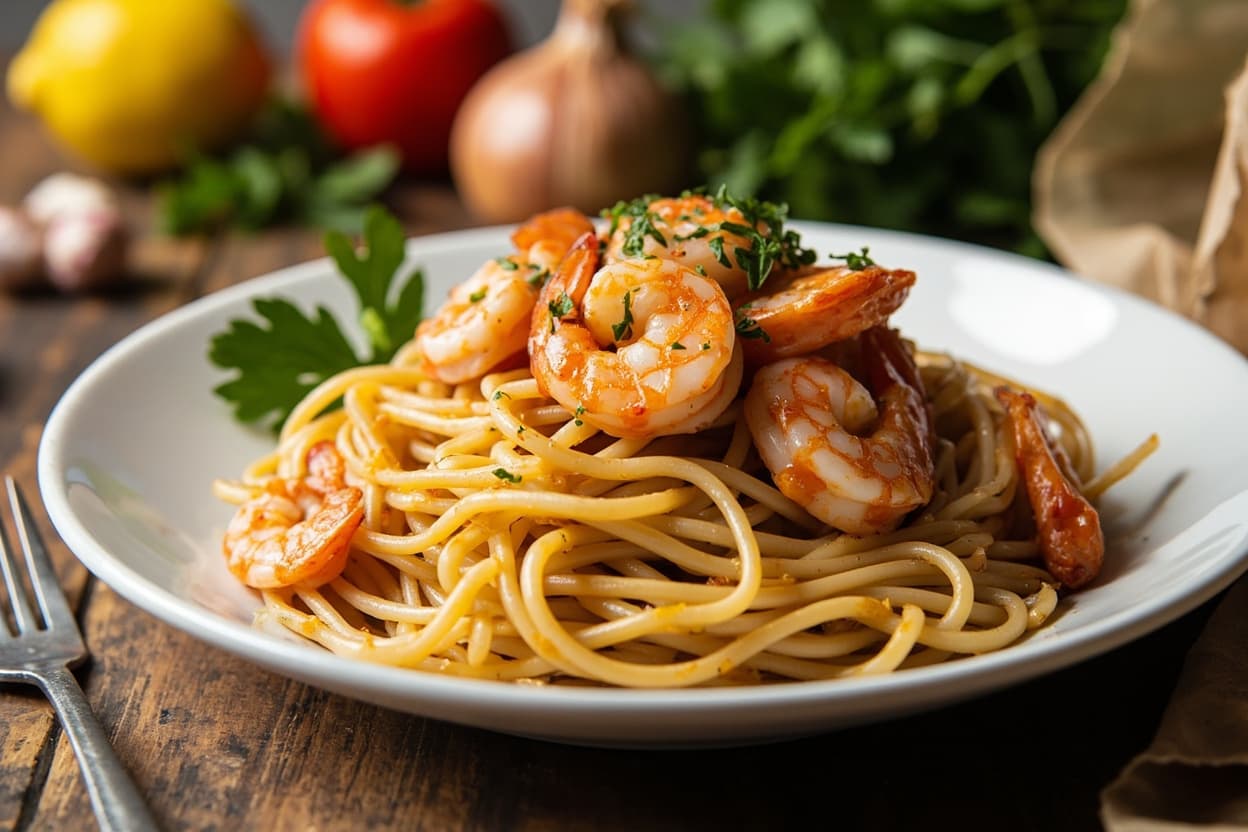
Garlic Shrimp Scampi over Spaghetti
Shrimp cooked fast in a lot of good olive oil with enough garlic to smell it from another room — that's the formula, and it hasn't needed changing. The spaghetti goes in while there's still liquid in the pan so it can drink up the garlicky, lemony juices, and parsley over the top keeps everything bright. Ten minutes start to finish, and it tastes like you meant it.

Prep
15 min
Cook
15 min
Total
30 min
Method
Prep
2
Pat the shrimp completely dry with paper towels. Season lightly with 1 teaspoon salt and black pepper. Set aside.
3
Fill a measuring cup with water and set near the stove. You will fill it with reserved pasta water AFTER the pasta is cooked in step stepGroups[2].steps[2].
Cook the Scampi Sauce
5
6
Add the chopped anchovies and cayenne pepper to the skillet. Stir and cook for 1 minute, pressing the anchovies into the oil until they dissolve.
7
Increase the heat to medium-high. Add the shrimp in a single layer and cook undisturbed for 90 seconds until the bottom side is pink.
8
Flip the shrimp and cook another 90 seconds until just opaque through. Verify doneness with a calibrated thermometer — internal temperature must reach 145°F throughout. If any shells fall off, remove them.
9
Add the butter to the skillet and swirl gently until it melts and incorporates into the sauce.
10
Increase the heat to medium-high. Add the shrimp in a single layer and cook undisturbed for 90 seconds until the bottom side is pink. Insert a calibrated food thermometer into the thickest part of the largest shrimp — the internal temperature must reach 145°F (63°C) before proceeding.
11
Flip the shrimp and cook another 90 seconds until just opaque through. Verify internal temperature again — shrimp should reach 145°F (63°C) throughout with no translucent areas. If any shells fall off, remove them immediately to prevent them from burning and creating bitter particles in the sauce.
Cook the Spaghetti
12
Add the spaghetti to the boiling salted water. Cook according to package directions until al dente, usually 1 minute less than the full time listed.
13
Reserve 1 cup of the starchy pasta water before draining. This is your secret weapon for the sauce.
14
Drain the spaghetti and immediately add to the skillet with the scampi sauce.
Bring It Together
15
16
D
Nutri-Score
Needs balance
A–E · lower is better · score 13
Calories
1150
per serving
High in salt · 8020mgHigh in protein · 88gLow sugar · 5g
Protein
88g
Carbs
95g
Fat
47g
Sat. fat
15g
Fiber
7g
Sugar
5g
Sodium
8020mg
Heart HealthyHigh Blood PressureHigh ProteinAnti Inflammatory
Nutri-Score is a general nutritional-balance guide, not medical or dietary advice.
E
Environmental impact
Very high impact
A–E · lower is better · includes estimates
kg CO2e
5.1
per serving
ECarbonCEU all-round· carbon sets the grade
Water
32m³
Land
94Pt
Runoff
1.6g P
large shrimp, peeled and deveined drives 90% of this recipe’s estimated footprint.
Carbon from Poore & Nemecek 2018; water, land & runoff from Agribalyse — modelled averages for comparing recipes, not a measurement of your groceries.
Flavor Profile
7
Umami
3
Sweet
6
Salty
5
Sour
1
Bitter
3
Spicy
Textures
TenderChewySaucyCrispy
Aromas
GarlickyBrinyHerbalCitrusFruity
Kitchen Equipment
Primary Tool
Saute PanCounter FootprintMedium
Techniques
Safety & Storage
Cooking Temperature
Cook shrimp to minimum 145°F internal temperature. Shrimp should turn pink and become opaque throughout. Use a calibrated food thermometer to verify doneness.
When blooming garlic in olive oil, maintain medium heat. Oil should shimmer but not smoke. Burnt garlic turns bitter and can cause digestive discomfort.
Cross Contamination
Use separate cutting boards and utensils for raw shrimp. Never place cooked shrimp on surfaces that held raw product without sanitizing between uses.
Anchovies and butter are allergenic ingredients. Clean all equipment and surfaces thoroughly after preparation if serving to guests with food allergies.
High Risk Population
Elderly, pregnant, immunocompromised, and young children are at higher risk for seafood-related illness. Ensure shrimp is fully cooked with no translucent areas before serving.
Storage
Refrigerate leftovers within 2 hours. Shrimp scampi pasta retains quality for 2-3 days refrigerated. Reheat to 165°F before consuming.
Handling
Pat shrimp completely dry before cooking to ensure proper browning and reduce splattering risk from surface moisture.
Allergen Warning
This dish contains shellfish (shrimp) and fish (anchovies). Even trace amounts from cross-contact can cause reactions in sensitive individuals.
Pro Tips
Technique
The anchovies are not optional, nonna's ghost will find you — they dissolve completely into the oil and add this deep, briny backbone that you can't get any other way. Trust me on this.
Substitution
No shrimp? No problem. Try bay scallops or even a firm white fish like halibut. And if you want to go full Amalfi, swap half the shrimp for little neck clams — scrub them clean, steam them open in the sauce, and you've got both.
From the chef
Shrimp wants high heat, good olive oil, and garlic sliced thin so it goes golden fast — that is the whole formula for scampi. A little anchovy dissolved into the oil first gives it depth without tasting fishy, and the cayenne keeps you honest. The spaghetti goes into the pan while there is still liquid clinging to the shrimp so every strand soaks up that garlicky, lemony base. Parsley over the top at the end, a last squeeze of lemon, and you have ten minutes of work that tastes like you planned it for hours.
TagsSeafoodPastaItalianShrimpGarlicMediterraneanWeeknight DinnerQuick
AllergensShellfishFishMilkWheatGluten
Source: generated · May 30, 2026