 North African
Medium · Warm
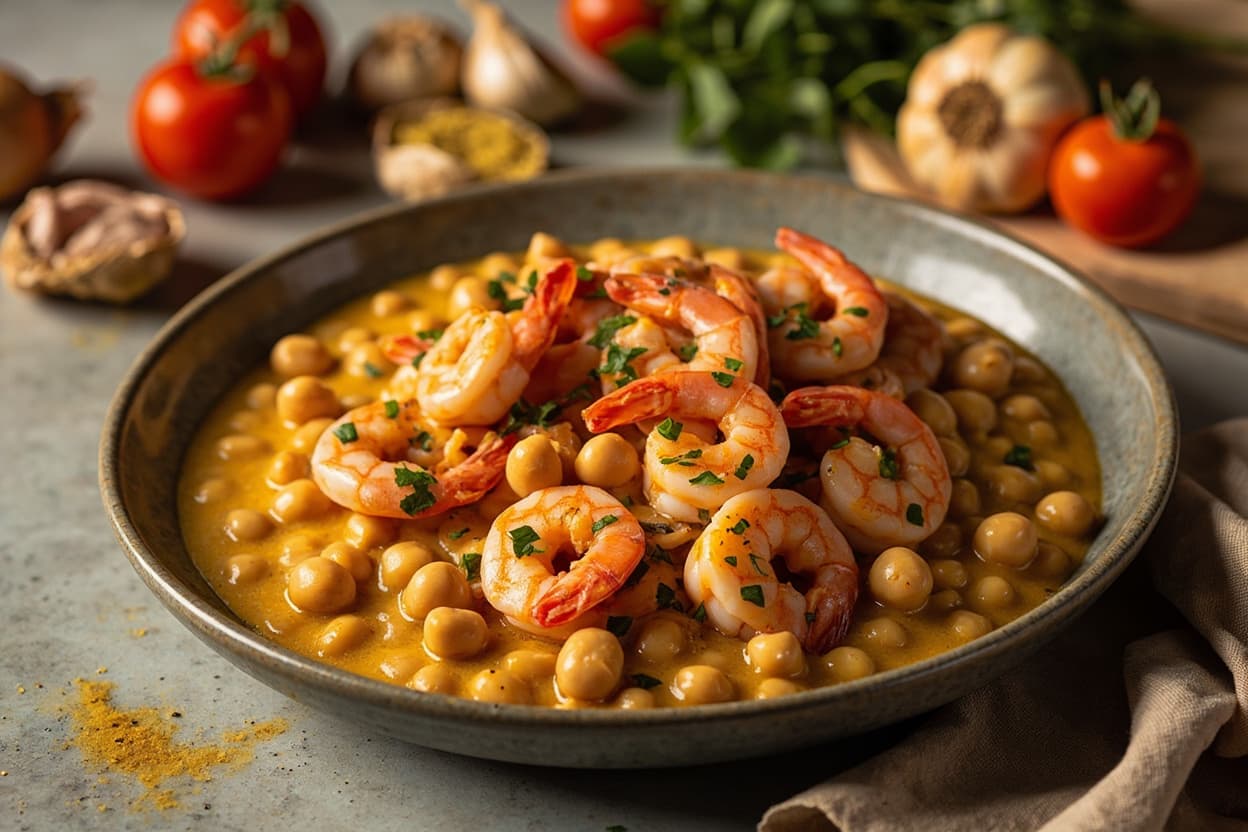
Saffron Shrimp with Chickpeas and Garlic
Shrimp cooks quickly into a saffron and garlic-scented tomato sauce that chickpeas have been absorbing patiently, the legumes lending weight to a broth that would otherwise move too fast. The shrimp bring a sweetness of their own — coastal, immediate — and saffron ties the two together with the kind of quiet authority it always seems to have. Parsley finishes the pan: a clean, unhurried note that makes the dish feel complete.
Prep
15 min
Cook
25 min
Rest
5 min
Total
45 min
Method
Bloom the Saffron
1
Crush the saffron threads between your fingertips and steep in 1/4 cup warm water for 10 minutes. The liquid will turn a deep amber gold.
Build the Aromatic Base
2
3
4
Stir in cumin, smoked-paprika, and salt. Let the spices bloom in the oil for 30 seconds, stirring constantly.
Cook the Chickpea Base
5
Pour in the canned diced tomatoes and their juices. Stir to combine with the aromatic base.
6
7
Let the chickpea mixture simmer uncovered for 10 minutes, allowing the flavors to meld and the broth to thicken slightly.
Add and Cook the Shrimp
8
9
Remove from heat. Squeeze the juice of one lemon over the surface and toss in the zest for a bright citrus note.
A
Nutri-Score
Excellent balance
A–E · lower is better · score -7
Calories
653
per serving
High in protein · 53gSource of fibre · 14gLow sugar · 6gLow saturated fat · 2g
Protein
53g
Carbs
77g
Fat
17g
Sat. fat
2g
Fiber
14g
Sugar
6g
Sodium
1338mg
Gluten FreeDairy FreePescatarianHeart HealthyLow Saturated FatHigh Omega 3High ProteinLow CarbBalanced Macros
Nutri-Score is a general nutritional-balance guide, not medical or dietary advice.
E
Environmental impact
Very high impact
A–E · lower is better · includes estimates
kg CO2e
3.9
per serving
ECarbonBEU all-round· carbon sets the grade
Water
23m³
Land
49Pt
Runoff
1.1g P
shrimp drives 87% of this recipe’s estimated footprint.
Carbon from Poore & Nemecek 2018; water, land & runoff from Agribalyse — modelled averages for comparing recipes, not a measurement of your groceries.
Flavor Profile
7
Umami
4
Sweet
5
Salty
4
Sour
1
Bitter
3
Spicy
Textures
TenderPlumpSaucySilky
Aromas
FloralPungentSmokyCitrusEarthy
Kitchen Equipment
Primary Tool
StockpotCounter FootprintMedium
Safety & Storage
Cooking Temperature
Cook shrimp to an internal temperature of 63°C (145°F) to ensure food safety. The shrimp are ready when they turn pink and are opaque throughout.
Handling
Shrimp should be handled carefully to avoid splatter when crushing saffron threads or adding to hot liquid.
Cross Contamination
Prevent cross-contamination by keeping raw shrimp separate from other ingredients. Use separate cutting boards and utensils for raw seafood.
Storage
Shrimp must be stored at or below 4°C (39°F) prior to cooking. If not used immediately, keep on ice or in the coldest part of the refrigerator.
High Risk Population
Pregnant women, young children, elderly individuals, and immunocompromised persons should ensure shrimp is fully cooked before consumption.
Allergen Warning
This dish contains shrimp. Individuals with shellfish allergies should avoid this recipe entirely.
Shelf Life
Consume cooked dish within 2-3 days when refrigerated at 4°C (39°F) or below.
Pro Tips
Technique
Never rush the saffron bloom — let those threads steep in warm water until the liquid deepens to amber gold, and pour it all in, threads included. The saffron needs time to unfurl its color and fragrance into the broth.
Substitution
If shrimp aren't to hand, firm white fish like cod works beautifully in this broth, or even mussels for a different kind of coastal character. The key is letting the seafood absorb that saffron-infused liquid.
From the chef
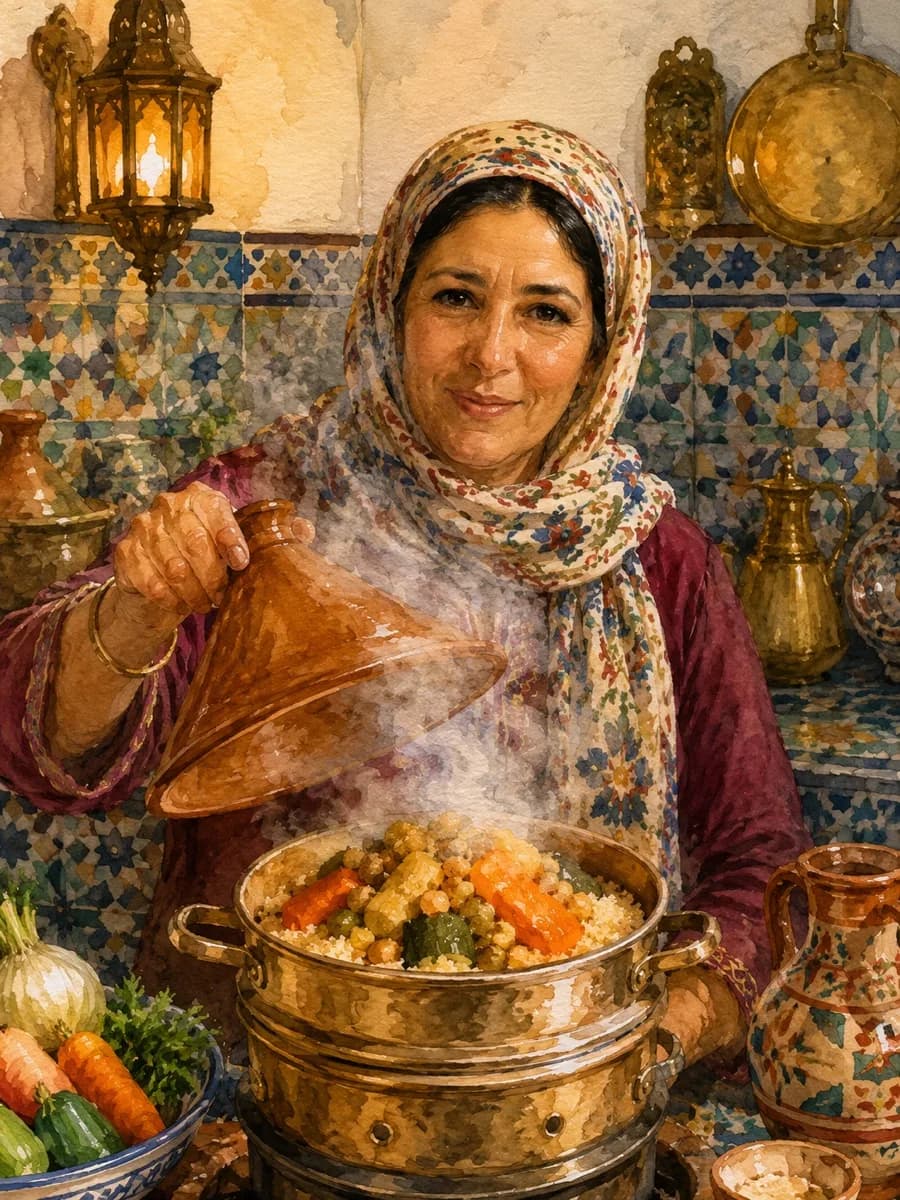
From the coast of Oran to your kitchen, this dish carries the fingerprints of my grandmother's seven-vegetable couscous steams, now reimagined with the briny gifts of the Mediterranean — saffron-gilded broth, plump chickpeas, and shrimp that curl pink in the warmth. Every spoonful is a cartographic reminder that the Maghreb's generosity flows in stages: first the spice bloom, then the slow simmer, finally the bright lemon that closes each bite like a sun setting over the harbor.
TagsSeafoodShellfishOne PotSaffronChickpeasMediterraneanWeeknight Dinner
AllergensShellfish
Source: generated · May 30, 2026