 Mexican American
Medium · Hot
Chili Chocolate Glazed Ribs
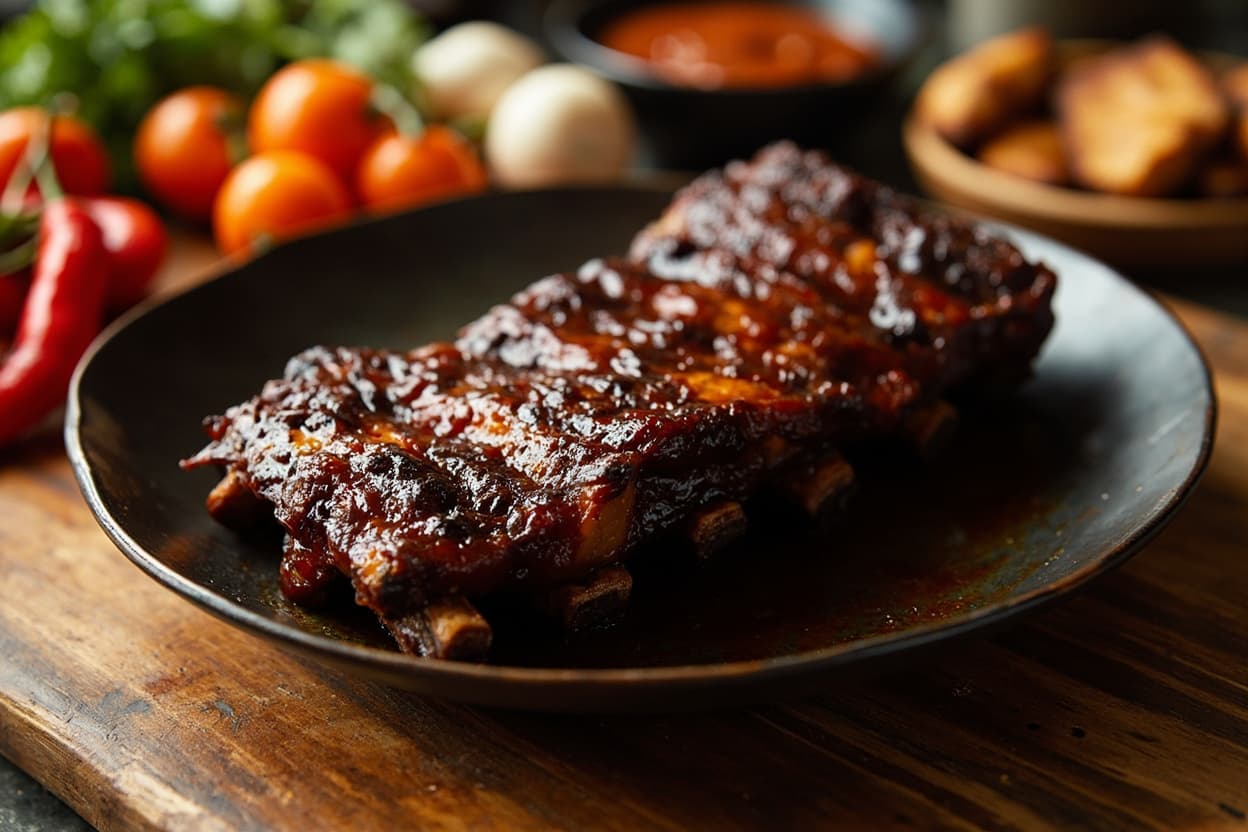
Tender pork belly ribs lacquered in a dark, smoky chili-chocolate glaze that walks the line between dessert and dinner — sweet, deeply savory, with a slow burn that lingers like a secret.

Prep
20 min
Cook
2h 10m
Rest
5 min
Total
2h 35m
Method
Prepare and Season the Ribs
1
Pat the pork belly dry with paper towels and cut into large, bone-in rib sections (about 2–3 ribs per piece). The drier the surface, the better the sear.
2
Crush or mince the garlic and combine it with salt and black pepper into a rough paste. Rub this mixture all over the pork belly ribs, pressing it into every crevice. Let them rest at room temperature for 15 minutes.
Sear the Ribs
3
4
Flip and sear the fat cap for 3–4 minutes until rendered and golden. Transfer the ribs to a plate and set aside.
Make the Chili Chocolate Glaze
5
6
Season the glaze with salt. Taste it — it should be bittersweet, smoky, with a slow building heat. Remove from heat and keep warm.
Braise Low and Slow
7
Pour chicken broth into the same FryingPan and scrape up any caramelized bits from the bottom with a wooden spoon — that fond is pure flavor.
8
Nestle the seared ribs back into the pan, meat-side down. They should be partially submerged. Bring to a gentle simmer, then reduce heat to the lowest setting.
9
Cover and braise for 1.5 to 2 hours, flipping the ribs halfway through, until the meat is completely tender and pulling away from the bone. The broth will reduce into a savory pan sauce — save it.
Glaze and Broil to Finish
10
Preheat your broiler to high. Brush the ribs generously with the chili chocolate glaze on all exposed surfaces.
11
Transfer the glazed ribs to a foil-lined baking sheet and place under the broiler for 4–6 minutes. Watch closely — you want the glaze to bubble, caramelize, and develop dark, almost charred edges without burning.
12
Remove from the broiler and brush with one more coat of warm glaze while still hot. Let them rest for 5 minutes before serving.
E
Nutri-Score
Least favorable
A–E · lower is better · score 20
Calories
2148
per serving
High in saturated fat · 65gCalorie-dense · 2148 kcalLow sugar · 22g
Protein
37g
Carbs
23g
Fat
214g
Sat. fat
65g
Fiber
2g
Sugar
22g
Sodium
2504mg
Gluten FreeDairy FreeLow CarbHeart DiseaseHypertensionHigh ProteinMuscle Gain
Nutri-Score is a general nutritional-balance guide, not medical or dietary advice.
E
Environmental impact
Very high impact
A–E · lower is better · includes estimates
kg CO2e
5.0
per serving
ECarbonBEU all-round· carbon sets the grade
Water
1.0m³
Land
145Pt
Runoff
0.4g P
Pork Belly drives 92% of this recipe’s estimated footprint.
Carbon from Poore & Nemecek 2018; water, land & runoff from Agribalyse — modelled averages for comparing recipes, not a measurement of your groceries.
Flavor Profile
7
Umami
5
Sweet
5
Salty
1
Sour
4
Bitter
5
Spicy
Textures
CrispyTenderStickyChewy
Aromas
SmokyChocolateySpicySavorySweet
Kitchen Equipment
Primary Tool
FryingpanFryingpanBroilerBaking SheetSaucepanChef KnifeCutting BoardMeasuring SpoonsWooden SpoonPastry BrushKitchen TongsPaper TowelsAluminum FoilPlastic Wrap
Counter FootprintLarge
Safety & Storage
Cooking Temperature
Pork ribs must reach minimum internal temperature of 145°F (63°C) to ensure safety against Trichinella and other pathogens.
Watch closely during broiler finish at 4-6 minutes - glaze contains honey and sugar that can transition from caramelized to burnt rapidly.
Cross Contamination
Use separate cutting boards and utensils for raw pork belly and ready-to-eat foods to prevent bacterial transfer.
Scrape fond from pan when adding braising liquid but ensure pan is not contaminated with other allergens after raw meat searing.
Storage
Refrigerate leftover ribs within 2 hours of cooking at or below 40°F (4°C) and consume within 3-4 days.
Store glaze separately in sealed container if preparing ahead - honey-based glazes can crystalize in refrigeration.
Handling
Allow glaze to cool slightly before brushing onto hot ribs - butter in glaze can cause splattering on contact with extreme heat.
Equipment Safety
Use heat-resistant mitts when removing broiler-finished ribs - foil-lined baking sheet and ribs retain extreme heat.
High Risk Population
Ensure pork reaches 160°F (71°C) internal temperature if serving immunocompromised individuals, pregnant women, or young children.
Pro Tips
Technique
Don't skip the sear — that deep mahogany crust isn't just color, it's the foundation of everything. Also, when broiling at the end, watch them like they're your own bad decisions: the line between perfect caramelization and burning is thin and worth guarding.
Flavor Boost
Toast your cocoa powder in the dry saucepan for 30 seconds before adding the butter. That slightly bitter, nutty aroma wakes up the chocolate in a way that raw cocoa simply can't match.
Substitution
If you're nervous about the spice, start with half the cayenne and taste the glaze before committing. You can always add heat, but you can't un-burn your tongue.
From the chef
I created this recipe because someone told me chocolate doesn't belong on savory meat. That kind of absolute nonsense is exactly why most dinners are boring. These ribs are my argument: dark chocolate and slow-burning cayenne in a honey glaze, lacquered until the edges turn almost charred, sweet and savory refusing to pick a side. The meat falls apart like a promise kept, and the glaze clings like a secret you want to tell everyone about.
TagsSweet SavorySpicyBraisedGlazedChocolatePork Ribs
AllergensMilk
Source: generated · June 9, 2026