 Peruvian Japanese
Medium · Cold
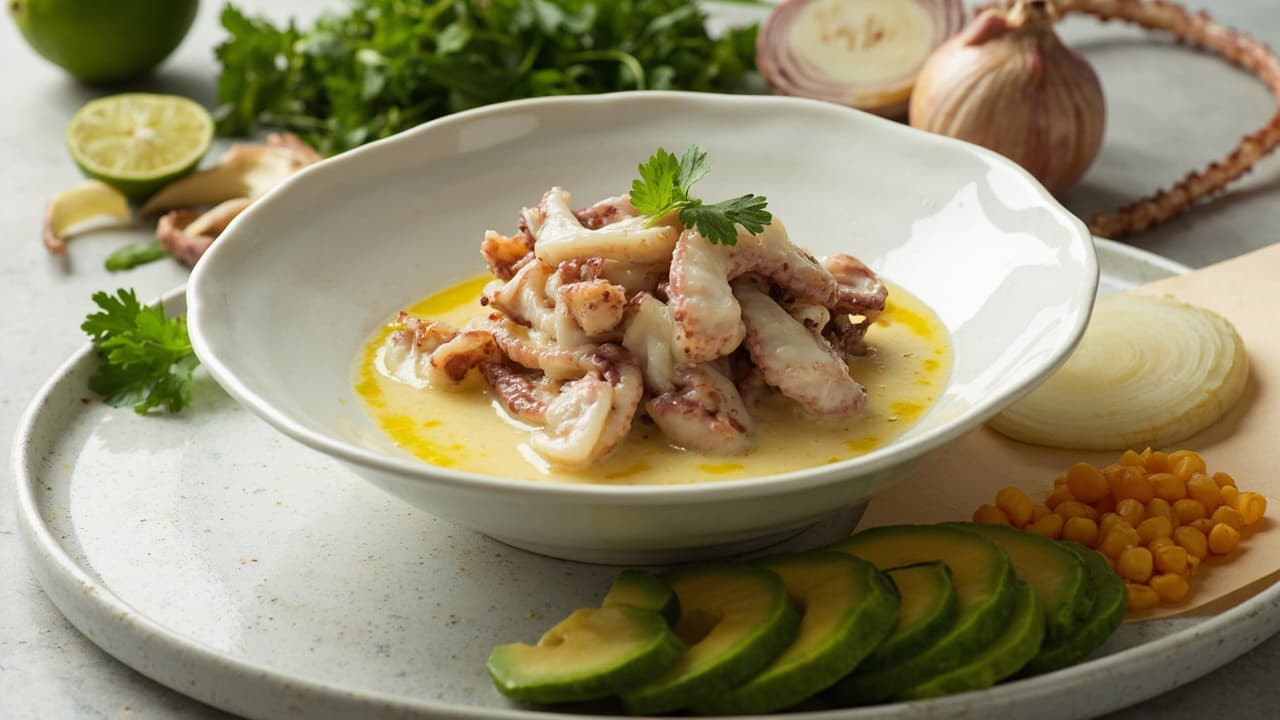
Octopus Tiradito with Lime and Cilantro
A Peruvian-Japanese fusion tiradito featuring tender octopus slices bathed in a bright lime and cilantro tiger's milk, finished with a hint of cayenne heat and served alongside sweet potato and corn.

Prep
20 min
Cook
50 min
Rest
15 min
Total
1h 25m
Method
Prepare the Octopus
1
2
3
Remove from heat and let the octopus cool in its cooking liquid for 15 minutes. Drain and refrigerate until ready to slice.
Make the Tiger's Milk
4
5
Strain through a fine-mesh strainer into a bowl. Season with additional salt and cayenne to taste. The acid should be sharp and the heat should be felt but not overwhelming.
Slice and Plate
6
7
Slice the cooled octopus tentacles into thin rounds, about 1/4 inch thick. Fan the slices across the center of chilled plates.
8
Spoon the tiger's milk generously around the octopus slices, allowing it to pool on the plate. Garnish with remaining raw yellow-onion slices and fresh cilantro leaves.
9
Arrange sweet potato rounds and corn kernels alongside. Fan sliced avocado at the edge of each plate. Serve immediately while the octopus is still cool and the citrus is bright.
A
Nutri-Score
Excellent balance
A–E · lower is better · score -5
Calories
321
per serving
High in protein · 31gLow sugar · 10gLow saturated fat · 1g
Protein
31g
Carbs
39g
Fat
7g
Sat. fat
1g
Fiber
9g
Sugar
10g
Sodium
1372mg
Gluten FreeDairy FreePescatarianLow FatWhole30Heart HealthyDiabetes FriendlyAnti InflammatoryLow Sodium AdaptableHigh ProteinLow CalorieBalanced MacrosPaleo
Nutri-Score is a general nutritional-balance guide, not medical or dietary advice.
Grade pending
Environmental impact
Estimated footprint
Grade pending · 61% ingredient coverage
kg CO2e
≥0.2
per serving
corn drives 36% of this recipe’s estimated footprint.
Carbon from Poore & Nemecek 2018; water, land & runoff from Agribalyse — modelled averages for comparing recipes, not a measurement of your groceries.
Flavor Profile
7
Umami
4
Sweet
6
Salty
9
Sour
1
Bitter
4
Spicy
Textures
TenderSilkyCreamyCrisp
Aromas
CitrusHerbalOnionGarlicSpicy
Kitchen Equipment
Safety & Storage
Cooking Temperature
Boil octopus at 212°F for 45-50 minutes until internal temperature reaches 145°F and tentacles pierce easily with fork. Undercooked octopus poses foodborne illness risk.
Storage
Refrigerate cooked octopus within 2 hours of cooking. Store in airtight container at 40°F or below for up to 2-3 days. Tiger's milk must be used same day; do not store overnight.
Cross Contamination
Use separate cutting boards and utensils for raw octopus. Clean and sanitize all surfaces that contact raw seafood before preparing ready-to-eat components like tiger's milk and garnishes.
Handling
Keep octopus cold until cooking. Cool cooked octopus rapidly in refrigerator, not at room temperature. When slicing for service, use chilled plates and serve immediately to maintain safe temperature.
High Risk Population
This dish contains raw garlic and raw onion in tiger's milk. Pregnant women, immunocompromised individuals, young children, and elderly should avoid or consume with caution due to potential bacterial contamination from raw ingredients.
Shelf Life
Tiger's milk loses potency and freshness after 4 hours at room temperature. Prepared tiradito should be consumed within 2 hours of plating. Do not prepare in advance or store assembled dish.
Pro Tips
Technique
Never rush the octopus—the simmer should be gentle, just breaking the surface. When a fork slides through the thickest tentacle like warm butter, you know it's ready. Pulled too early, it turns to rubber. Too long, and the sea essence vanishes entirely.
Substitution
If octopus feels intimidating, thick-cut scallops respond beautifully to the same tiger's milk treatment, or try squid tubes for a quicker cook that still captures that clean briny bite.
Make Ahead
The octopus can be simmered a day ahead and refrigerated whole. Slice and plate just before serving—tiradito waits for no one, and the citrus brightness fades within minutes of meeting the fish.
From the chef
Tiradito's power is the tiger's milk: lime juice blended with garlic, cilantro, and cayenne until the sauce is vibrant green, sharp, and alive. Octopus sliced thin into rounds fans across a chilled plate and the leche de tigre pools around it, each sip of the leftover liquid a reward in itself. Sweet potato and corn alongside bring sweetness and starch that let the acid register fully. The octopus must be cool when it meets the sauce, the citrus must be bright, and the timing from bowl to table must be immediate — this dish does not wait.
TagsTiraditoOctopusTigers MilkLimeCitrus CuredCold SeafoodPeruvian Japanese Fusion
AllergensMollusks
Source: generated · June 10, 2026