 American
Medium · Hot
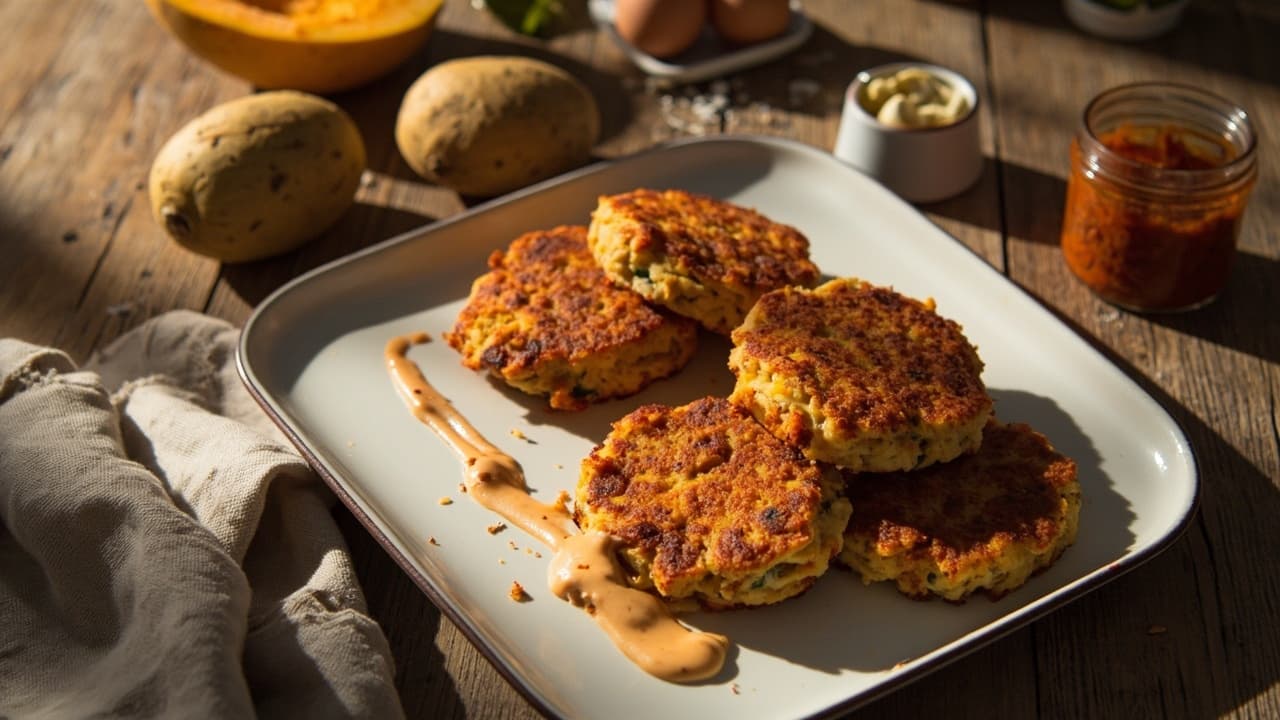
Crispy Butternut Squash and Potato Cakes with Smoky Paprika Mayo
Golden, crisp-edged cakes made from roasted butternut squash and mashed potato, served with a cool yogurt sauce punched up with smoked paprika. Petra would call this a fine reason to have cooked potatoes sitting around.

Prep
20 min
Cook
35 min
Total
55 min
Method
1
Roast butternut squash cubes at 200°C for 25 minutes until tender and caramelized at the edges. Meanwhile, boil potato cubes in salted water for 15 minutes until fork-tender; drain and return to hot pot for 1 minute to dry out.
2
Mash warm potato with a ricer or fork until smooth. Fold in roasted squash, beaten egg, grated cheddar, flour, breadcrumbs, salt, and black pepper until a cohesive dough forms.
3
Shape the mixture into 8 round cakes about 2.5 cm thick. If the mixture sticks, dust your hands with flour. Place on a floured plate and refrigerate for 10 minutes to firm up.
4
Heat 1.5 tbsp olive oil in a heavy frying pan over medium-high heat until shimmering. Add 4 cakes and cook undisturbed for 4 minutes until a deep golden crust forms on the bottom.
5
Flip each cake carefully and cook another 3-4 minutes until the second side is equally golden. Transfer to a paper-lined plate. Repeat with remaining oil and cakes.
6
Whisk together yogurt, smoked paprika, regular paprika, minced garlic, lemon juice, salt, and 1 tbsp olive oil until smooth and bright orange-red.
7
Arrange the hot crispy cakes on a platter. Drizzle or dollop the smoky paprika mayo alongside. Serve immediately while the edges are still crackling.
A
Nutri-Score
Excellent balance
A–E · lower is better · score -1
Calories
405
per serving
Source of protein · 14gLow sugar · 7g
Protein
14g
Carbs
42g
Fat
21g
Sat. fat
10g
Fiber
7g
Sugar
7g
Sodium
973mg
Gluten ContainingLacto Ovo VegetarianModerate ProteinComfort FoodSatisfaction Focused
Nutri-Score is a general nutritional-balance guide, not medical or dietary advice.
B
Environmental impact
Low impact
A–E · lower is better · includes estimates
kg CO2e
0.7
per serving
BCarbonAEU all-round· carbon sets the grade
Water
0.5m³
Land
24Pt
Runoff
0.06g P
Cheddar cheese, grated drives 49% of this recipe’s estimated footprint.
Carbon from Poore & Nemecek 2018; water, land & runoff from Agribalyse — modelled averages for comparing recipes, not a measurement of your groceries.
Flavor Profile
6
Umami
4
Sweet
5
Salty
2
Sour
1
Bitter
4
Spicy
Textures
CreamyCrispyTender
Aromas
DairyHerbalPungentSmoky
Kitchen Equipment
Techniques
Safety & Storage
Cooking Temperature
Heat frying oil until shimmering before adding cakes. A thermometer should read 350-375°F (175-190°C). Oil that is too cool will cause the cakes to absorb excess oil and fall apart; oil that is too hot will burn the exterior before the interior heats through.
Allergen Warning
This recipe contains multiple major allergens (eggs, milk/dairy, wheat/gluten). Do not serve to individuals with severe allergies without complete ingredient verification from suppliers. Use separate utensils and surfaces when preparing for allergen-sensitive diners.
Cross Contamination
The beaten egg is a raw ingredient mixed into the potato-squash base. Ensure eggs are fully incorporated and the mixture reaches adequate cooking temperature throughout. Wash hands thoroughly after handling raw egg before touching other ingredients or surfaces.
Handling
Allow cooked cakes to rest briefly before serving. The interior binding may still be soft immediately after frying. A 2-minute rest allows the structure to firm slightly while maintaining crisp exterior.
Storage
Refrigerate leftover cakes within 2 hours of cooking. Store in an airtight container with paper towels to absorb excess oil. Consume within 3 days. Do not leave at room temperature for more than 2 hours total.
High Risk Population
These cakes are not recommended for pregnant individuals, young children, elderly, or immunocompromised persons when reheated from leftovers due to the egg and dairy content. Serve immediately after cooking for highest safety with vulnerable populations.
Equipment Safety
Use a sturdy, high-sided frying pan for shallow frying. The 3 tbsp olive oil may not fully cover the pan bottom—add more oil if needed rather than crowding the pan. Overcrowding drops oil temperature and causes uneven cooking.
Pro Tips
Technique
Press the cakes firmly when shaping them. Loose cakes will fall apart in the pan, and nobody wants that kind of disappointment on a Tuesday.
Substitution
Swap the cheddar for whatever cheese you have—Gruyère for nuttiness, Parmesan for sharper bite, or a mix of both if you're feeling generous with the fridge.
Equipment
A cast iron pan gives you the best caramelized crust. It retains heat like a reliable friend and keeps the cakes cooking even when you add the second batch.
Time Saver
Make the cakes ahead and refrigerate overnight. They hold their shape better when cold and go straight from fridge to pan.
From the chef
I always have roasted squash sitting around in autumn, and I always have potatoes because I never trust a fridge without them. Put them together with an egg, some cheese, breadcrumbs for crunch, and suddenly you have something thatbrowns beautifully, something with edges that crackle. The mayo is just yogurt, paprika, and lemon—a reminder that yesterday's dinner can become today's reason to cook again.
TagsVegetarianComfort FoodPan FriedFallWeeknight DinnerCrispyVegetable Cake
AllergensEggsDairyWheat
Source: generated · June 13, 2026