 Senegalese
Medium · Hot
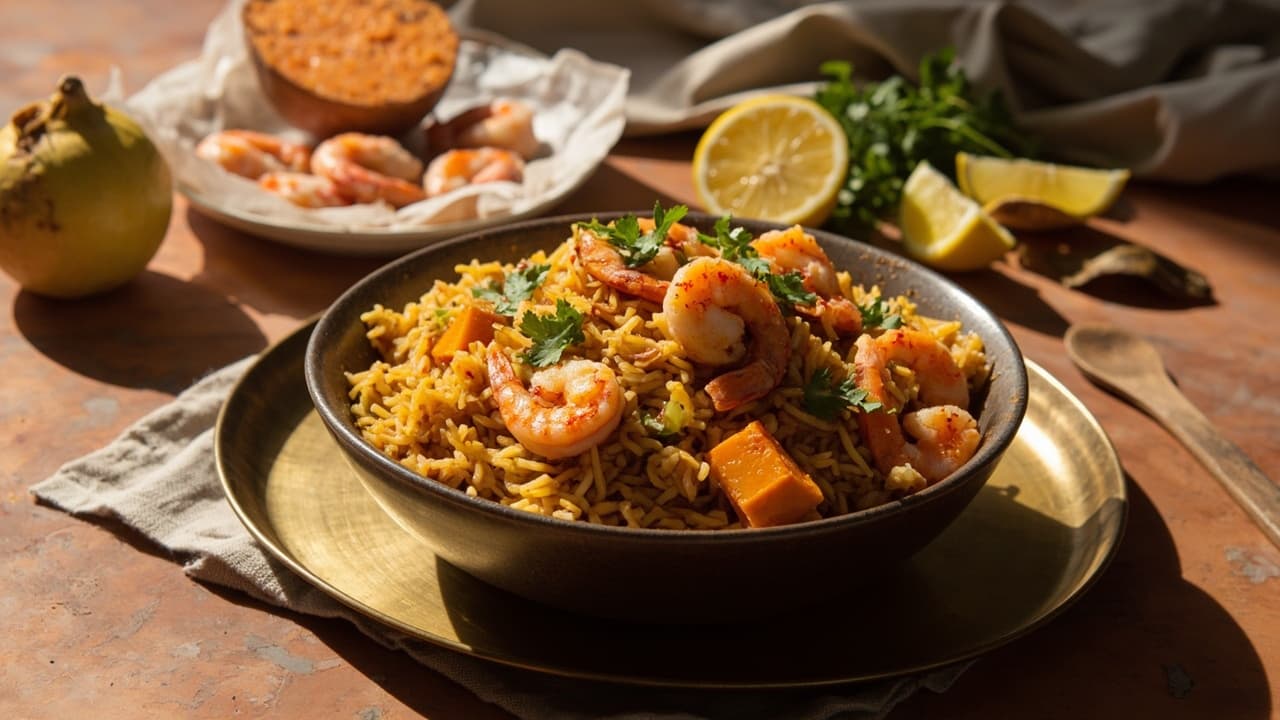
Shrimp and Sweet Potato Jollof Skillet
A bold one-pan jollof rice studded with tender sweet potato and plump shrimp, built on a mountain of caramelized onion with a hard squeeze of lemon and gentle cayenne warmth.
Prep
15 min
Cook
30 min
Total
45 min
Method
Build the Aromatic Base
1
In a large Dutch oven or deep skillet over medium-high heat, warm the olive oil. Add the yellow-onion and cook, stirring with a wooden spoon, for 10 to 12 minutes until deeply golden and caramelized. This mountain of onion is the soul of the dish.
Build the Jollof Foundation
3
Add the tomato, cayenne, salt, and black-pepper directly to the pot. Stir and cook 5 minutes, breaking the tomato down until it collapses into a thick, bold sauce that coats the onion.
4
Add the white-rice and stir to coat every grain in the jollof sauce. Let it toast 2 minutes, stirring constantly.
Simmer the Skillet
5
Pour in the chicken-broth and bring to a boil. Nestle the sweet-potato chunks into the liquid, pressing them slightly into the rice. Reduce heat to low, cover tightly, and simmer 12 to 15 minutes until the sweet potato is tender and the rice has absorbed the broth.
6
Uncover and fold the sweet-potato gently into the rice, creating a rustic textured base. Taste and adjust salt.
Finish with Shrimp and Lemon
7
Scatter the shrimp over the hot rice and sweet potato. Cover and cook 3 to 4 minutes until the shrimp turn pink and curl — they finish perfectly in the residual heat.
A
Nutri-Score
Excellent balance
A–E · lower is better · score -2
Calories
629
per serving
High in protein · 34gLow sugar · 10gLow saturated fat · 2g
Protein
34g
Carbs
98g
Fat
12g
Sat. fat
2g
Fiber
6g
Sugar
10g
Sodium
1438mg
Gluten FreeDairy FreePescatarianHeart HealthyDiabetes FriendlyLow InflammatoryHigh ProteinBalanced PlateFiber Rich
Nutri-Score is a general nutritional-balance guide, not medical or dietary advice.
E
Environmental impact
Very high impact
A–E · lower is better · includes estimates
kg CO2e
3.4
per serving
ECarbonBEU all-round· carbon sets the grade
Water
20m³
Land
41Pt
Runoff
0.9g P
shrimp drives 80% of this recipe’s estimated footprint.
Carbon from Poore & Nemecek 2018; water, land & runoff from Agribalyse — modelled averages for comparing recipes, not a measurement of your groceries.
Flavor Profile
7
Umami
4
Sweet
5
Salty
3
Sour
2
Bitter
4
Spicy
Textures
TenderSucculentSilky
Aromas
HerbalSavorySmokyCitrus
Kitchen Equipment
Primary Tool
Dutch OvenCounter FootprintLarge
Safety & Storage
Allergen Warning
Shrimp is a crustacean shellfish allergen. Do not serve to individuals with shellfish allergies. When using store-bought chicken broth, verify the label for additional allergens like soy, gluten, or dairy that may be present in some commercial broths.
Cooking Temperature
Shrimp must reach an internal temperature of 145°F (63°C) to be safe. Cook until shrimp turn pink and curl, approximately 3-4 minutes covered on the hot rice. Undercooked shellfish poses foodborne illness risk.
High Risk Population
This dish contains shrimp, which is a high-risk allergen for anaphylaxis in sensitive individuals. Elderly, immunocompromised, pregnant individuals, and young children are particularly vulnerable to foodborne illness from undercooked shellfish.
Cross Contamination
Use separate cutting boards, utensils, and plates for raw shrimp and ready-to-eat foods. Never use the same surface that handled raw shrimp for other ingredients without proper sanitization.
Storage
Refrigerate leftovers within 2 hours of cooking at 40°F (4°C) or below. Shrimp-rice dishes should be consumed within 2-3 days. Reheat leftovers to 165°F (74°C) until steaming hot throughout.
Handling
Keep shrimp refrigerated until ready to use. Thaw frozen shrimp in the refrigerator overnight or under cold running water - never at room temperature. Do not leave cooked shrimp at room temperature for more than 2 hours.
Shelf Life
Prepared shrimp dishes have a limited shelf life of 2-3 days refrigerated. Longer storage increases risk of histamine accumulation in shrimp and bacterial growth.
Pro Tips
Technique
Never rush the onion — those 10 to 12 minutes of slow caramelization are where all the flavor lives. Stir with your wooden spoon, let it deepen to a rich amber gold. This mountain of onion is not just the base; it is the soul of everything we build upon it.
Substitution
If shrimp is not available, flaked white fish like cod works beautifully here. Keep the lemon, keep the cayenne, keep the sharing — those are non-negotiable in my kitchen.
From the chef
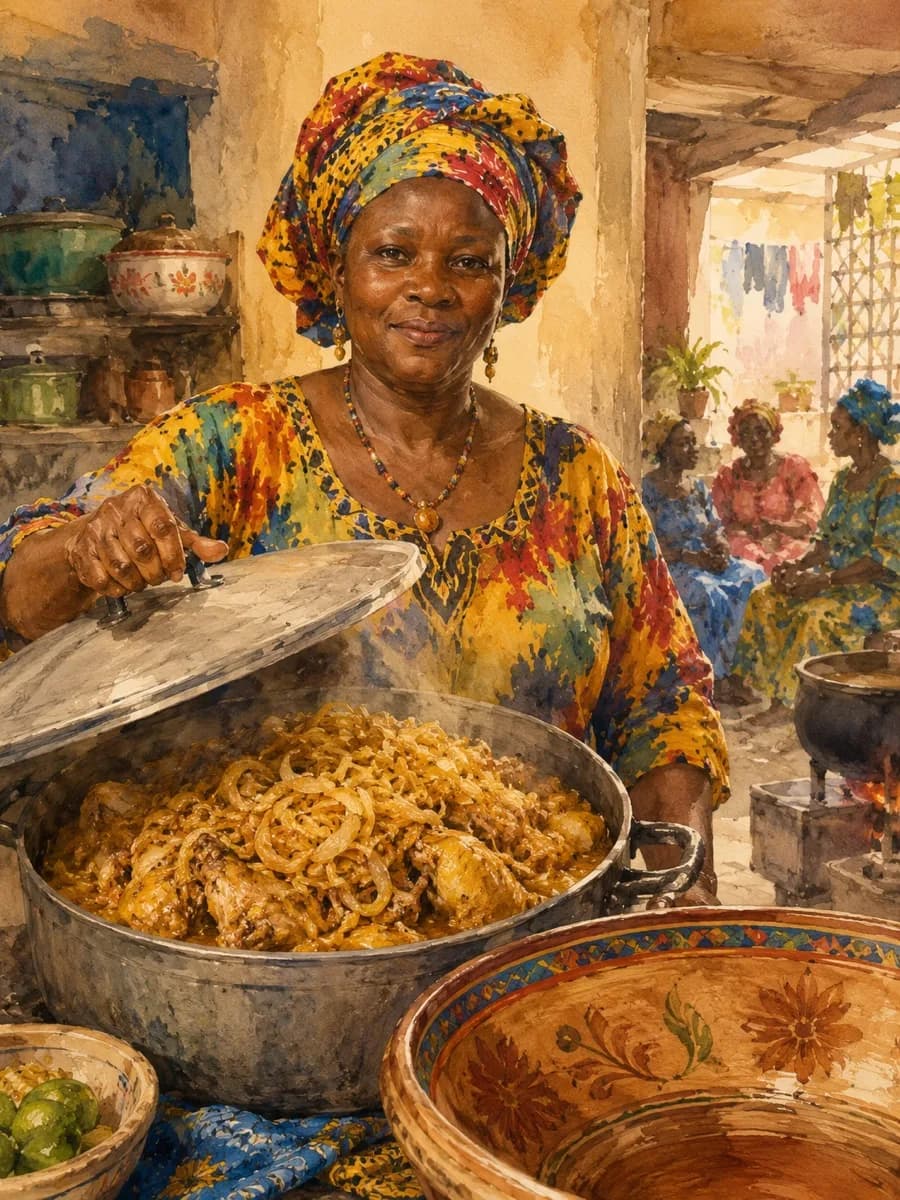
In the Medina where I grew up, we never measured the onion — we poured it like we meant it, and we always meant it. This skillet carries that same spirit: the sweet potato anchors the dish with honest earthiness while the shrimp bring the sea to your table, and that hard squeeze of lemon at the end? That is my signature, that bright burst that reminds you joy should hit your tongue as hard as the warmth does. This is not a quiet dish, and it was never meant to be eaten alone.
TagsOne PotWeeknight DinnerSpicySeafoodWest AfricanGluten Free
AllergensShellfish
Source: generated · June 10, 2026