 American
Medium · Hot
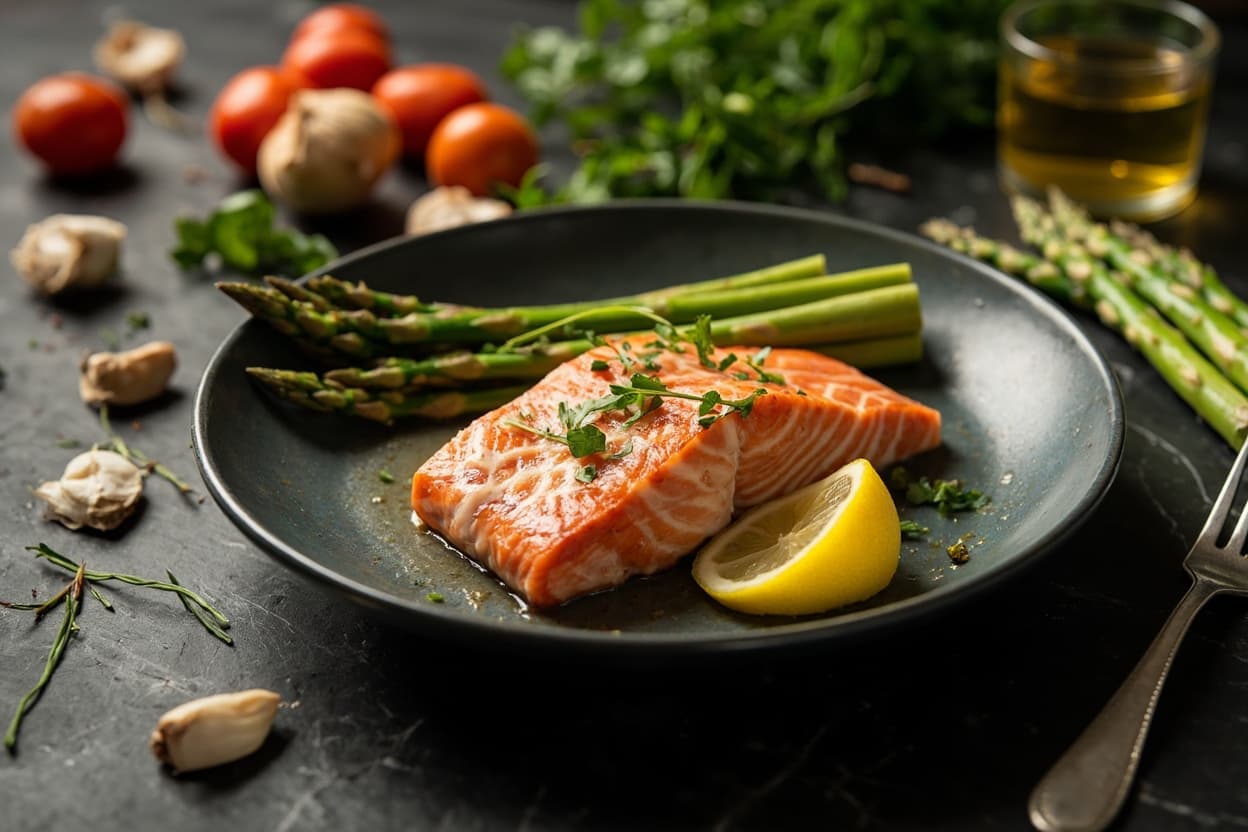
Lemon Garlic Salmon with Asparagus
Salmon cooks in garlicky brown butter while asparagus picks up the same fat in the same pan — one skillet, nothing complicated. Lemon cuts through the richness at the end and the result is clean, direct, and satisfying in the way only a really good piece of fish can be.

Prep
15 min
Cook
25 min
Total
40 min
Method
Preparation
1
Preheat oven to 400°F (200°C). Pat salmon fillets dry with paper towels and season generously with salt and black pepper on both sides.
Cooking
4
Heat a large oven-safe skillet over medium-high heat with remaining olive oil. Sear salmon fillets skin-side up for 3-4 minutes until golden crust forms.
5
B
Nutri-Score
Good balance
A–E · lower is better · score 2
Calories
459
per serving
High in protein · 28gLow sugar · 3g
Protein
28g
Carbs
9g
Fat
35g
Sat. fat
12g
Fiber
3g
Sugar
3g
Sodium
1396mg
Gluten FreeLow CarbKeto FriendlyPescatarianDairy Free OptionWhole30Heart HealthyAnti InflammatoryDiabetes FriendlyBlood Pressure FriendlyWeight ManagementHigh ProteinOmega3 Rich
Nutri-Score is a general nutritional-balance guide, not medical or dietary advice.
D
Environmental impact
High impact
A–E · lower is better · includes estimates
kg CO2e
2.6
per serving
DCarbonAEU all-round· carbon sets the grade
Water
1.2m³
Land
77Pt
Runoff
0.3g P
Salmon fillets drives 90% of this recipe’s estimated footprint.
Carbon from Poore & Nemecek 2018; water, land & runoff from Agribalyse — modelled averages for comparing recipes, not a measurement of your groceries.
Flavor Profile
6
Umami
2
Sweet
5
Salty
3
Sour
1
Bitter
2
Spicy
Textures
FlakyTenderCrispButtery
Aromas
GarlickyCitrusButteryHerbal
Kitchen Equipment
Primary Tool
Cast Iron SkilletOvenCast Iron SkilletSaucepanChef KnifeCutting BoardTongsMeasuring SpoonsCitrus JuicerPaper TowelsAluminum Foil
Counter FootprintMedium
Safety & Storage
Cooking Temperature
Cook salmon to 145°F (63°C) internal temperature using a calibrated meat thermometer for food safety.
Cross Contamination
Use separate cutting boards and utensils for raw salmon. Wash hands thoroughly with soap after handling raw fish before touching other ingredients.
Storage
Refrigerate leftover salmon within 2 hours at 40°F (4°C) or below. Consume within 3-4 days or freeze for up to 3 months.
High Risk Population
Pregnant women, elderly, and immunocompromised individuals should ensure salmon is cooked to recommended temperature. Reheat leftovers to 165°F (74°C).
Allergen Warning
Butter in the sauce contains milk. Use dairy-free alternative if preparing for milk allergy.
Pro Tips
Technique
Don't touch that salmon for the first 3-4 minutes. I mean it. Let that crust develop properly before you flip. If it sticks, it's not ready—that golden crust is what makes this dish, and rushing it is where most people fail.
Substitution
Want extra richness? Swap 2 tablespoons of butter for heavy cream and add a tablespoon of Parmesan to the sauce. It becomes glossy and clings to every flake of fish like a proper Italian gravy should.
Time Saver
Make the lemon garlic butter ahead of time and store it in a jar. When you're ready to eat, just melt and drizzle. Weeknight dinners shouldn't feel like a chore, even on keto.
From the chef
Salmon cooked in brown butter is already a good idea. Add garlic, hit it with lemon at the end, and toss the asparagus in the same fat in the same pan, and you have something that tastes far more considered than the effort involved. The key is searing the fish skin-side up first to build a crust, then finishing in the oven so the center stays tender. The lemon garlic butter sauce ties everything together — bright enough to cut the richness without washing it out. One skillet, twenty minutes, nothing complicated.
TagsKetoLow CarbGluten FreeWeeknight DinnerOne PanHigh ProteinHealthy Fats
AllergensFishMilk
Source: generated · May 30, 2026