 Catalan
Medium · Hot
Romesco Roasted Cauliflower with Hazelnut Crumble
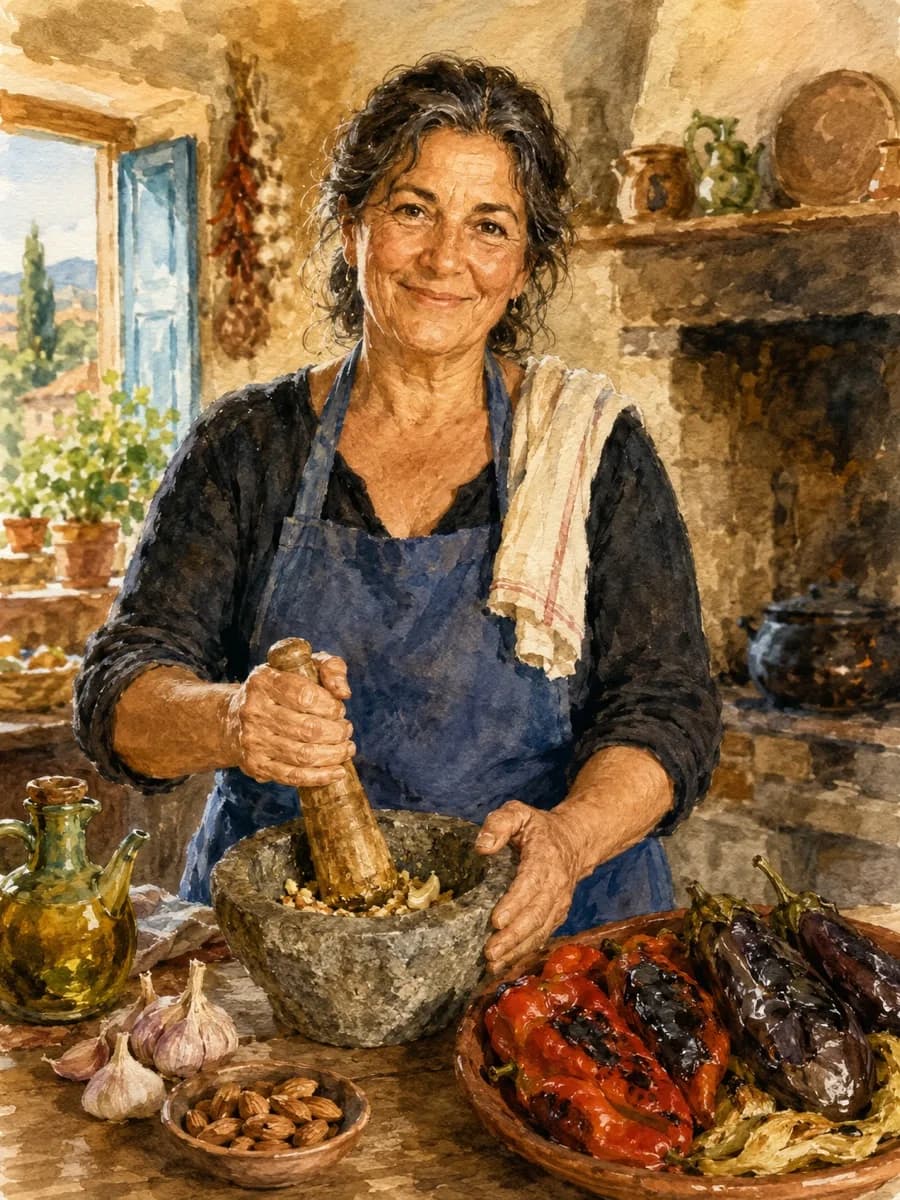
Charred roasted cauliflower crowns slathered in a smoky Catalan romesco of roasted peppers, tomato and hazelnuts, finished with a crunchy hazelnut-breadcrumb crumble. Pure Empordà on a plate.
Prep
15 min
Cook
35 min
Rest
5 min
Total
55 min
Method
Char the Vegetables
1
Place the scored tomatoes and whole bell peppers directly over a gas flame or under the broiler, turning occasionally, until the skins are blackened and blistered all around, about 10-12 minutes. Transfer to a bowl and cover tightly with plastic wrap to steam for 5 minutes.
2
Peel off the charred skins from the tomatoes and peppers. Core the tomatoes and seed the peppers. This smoky char is the soul of the romesco.
Make the Romesco
3
In a food processor or mortar, combine the roasted garlic, charred tomatoes, charred bell peppers, hazelnuts, olive oil, red wine vinegar, smoked paprika and salt. Pulse to a rough, textured sauce — you want some chunkiness, not a smooth purée. Taste and adjust salt. Set aside.
Prepare the Crumble
4
Preheat oven to 200°C (400°F). Toss together the chopped hazelnuts, breadcrumbs, olive oil, parsley and salt on a small baking sheet. Spread in a single layer. Toast in the oven for 8-10 minutes until golden and fragrant. Remove and let cool.
Roast the Cauliflower
5
Increase oven to 220°C (425°F). Toss the cauliflower florets with the olive oil and salt, making sure each floret is well coated. Spread on a large baking sheet in a single layer without crowding.
6
Roast for 20-25 minutes, turning once halfway through, until deeply golden and tender with crispy charred edges. The caramelization is what you want.
Assemble
7
Spread the romesco generously across a large serving platter or divide among plates. Pile the hot roasted cauliflower on top.
8
Scatter the toasted hazelnut crumble over the cauliflower while still warm. Serve immediately, letting everyone smell that beautiful nuttiness as it hits the heat.
A
Nutri-Score
Excellent balance
A–E · lower is better · score -1
Calories
756
per serving
Calorie-dense · 756 kcalSource of fibre · 10gLow sugar · 7g
Protein
13g
Carbs
31g
Fat
69g
Sat. fat
8g
Fiber
10g
Sugar
7g
Sodium
1141mg
VeganGluten FreeDairy FreeMediterraneanWhole FoodHeart HealthyDiabetes FriendlyAnti InflammatoryWeight ManagementLow Saturated FatHigh FiberPlant ProteinLow Processed FoodsGut Friendly
Nutri-Score is a general nutritional-balance guide, not medical or dietary advice.
B
Environmental impact
Low impact
A–E · lower is better · includes estimates
kg CO2e
0.5
per serving
BCarbonAEU all-round· carbon sets the grade
Water
1.2m³
Land
55Pt
Runoff
0.1g P
Tomato, core and score drives 28% of this recipe’s estimated footprint.
Carbon from Poore & Nemecek 2018; water, land & runoff from Agribalyse — modelled averages for comparing recipes, not a measurement of your groceries.
Flavor Profile
6
Umami
4
Sweet
4
Salty
3
Sour
1
Bitter
3
Spicy
Textures
CrispyTenderChunkyNutty
Aromas
SmokyNuttyHerbalCharredEarthy
Kitchen Equipment
Primary Tool
OvenOvenFood ProcessorChef KnifeCutting BoardBaking SheetMixing BowlMeasuring CupsMeasuring SpoonsSpatulaPlastic WrapServing Platter
Counter FootprintMedium
Safety & Storage
Allergen Warning
This dish contains TREE NUTS (hazelnuts) in both the romesco sauce and the crumble topping. Both components must be clearly labeled as containing hazelnuts. Do not serve to individuals with tree nut allergies.
Breadcrumbs in the hazelnut crumble contain GLUTEN and WHEAT. Label all components accordingly and avoid serving to those with celiac disease or wheat allergies.
Cross Contamination
The food processor used for romesco sauce also processes hazelnuts. Thoroughly clean between uses if preparing for allergen-sensitive individuals. Consider using dedicated equipment.
Cooking Temperature
Crumble topping toasts at 200°C (400°F) and cauliflower roasts at 220°C (425°F). Ensure oven reaches target temperature before baking to achieve proper caramelization and kill surface bacteria.
Handling
Charred vegetables (tomatoes and peppers) are steamed under plastic wrap for 5 minutes to loosen skins. Allow to cool slightly before handling to avoid burns. Skins may still be hot.
High Risk Population
Serve romesco sauce immediately after preparation. Leftover romesco with hazelnuts should be refrigerated within 2 hours for high-risk populations (elderly, immunocompromised, young children).
Storage
Store components separately. Romesco sauce keeps refrigerated for 3-4 days. Crumble topping can be stored in airtight container at room temperature for 2 days. Cauliflower is best consumed immediately after roasting.
This dish is served warm immediately after assembly. Do not leave at room temperature for more than 2 hours as the hazelnut crumble contains perishable oils.
Pro Tips
Technique
Char your tomatoes and peppers directly over the flame until the skin is completely blackened — this blistering is non-negotiable. The smoke inside those charred skins is what gives the romesco its soul, and a pale, timid roasted pepper will give you a pale, timid sauce.
Substitution
If hazelnuts are hard to find, blanched almonds are the traditional substitute — in my grandmother's time, this was always made with whatever nuts were in the larder. Both are magnificent, but the hazelnut gives it that Empordà forest character I love.
Make Ahead
The romesco sauce actually improves overnight. Make it in the morning, let it rest in the fridge, and let the smoky paprika and vinegar deepen into something far more interesting. Just bring it to room temperature before serving.
Equipment
A mortar and pestle for the romesco gives a superior texture — the nuts fracture rather than grind, leaving beautiful rough pieces that catch the sauce. A food processor works, but pulse gently and resist the urge to make it smooth.
From the chef
Romesco begins with fire — peppers and tomatoes charred directly over the flame until the skins blacken and peel away, revealing flesh that carries the memory of that heat all the way through the sauce. Here the cauliflower gets the same treatment: roasted hard at high heat until the edges caramelise and crisp. The hazelnuts go into the romesco for nuttiness and body, and what is left over gets toasted with breadcrumbs and parsley into a crumble that shatters over the top. Every element earns its place, and the result is one of those dishes that tastes far more generous than the effort it demands.
TagsVegetarianRoastedCharredSmokyCatalanRomesco SauceHazelnutMediterraneanVegetable ForwardSeasonal
AllergensTree NutsWheatGluten
Source: generated · June 10, 2026