 Catalan
Medium · Hot
Seared Scallops on Saffron Sofregit
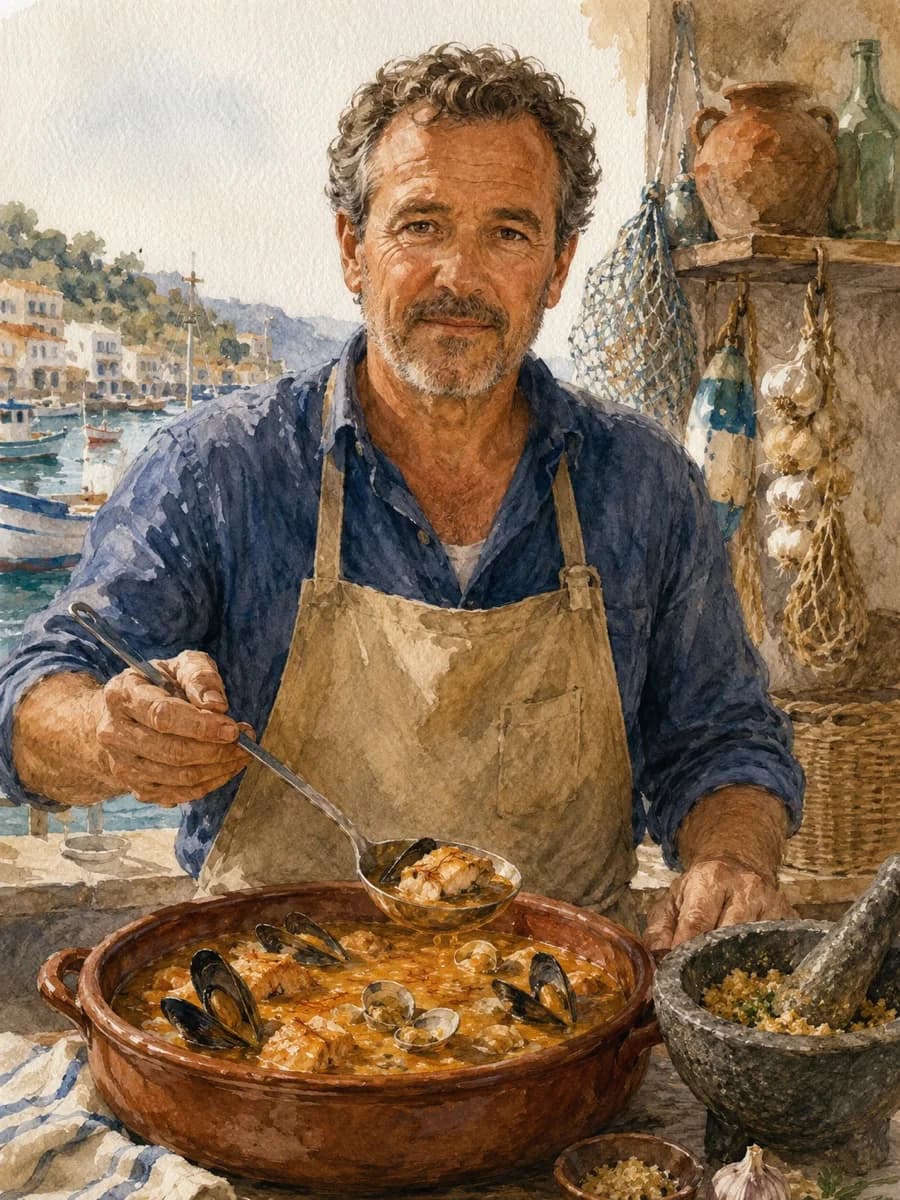
Yellow onion cooked slow in olive oil until it barely holds its shape, tomato added and reduced until the sofregit deepens, saffron stirred through to stain the whole base amber. The scallops go on top, seared just long enough to crust without losing their sweetness. A foundation that earns its place beneath.
Prep
15 min
Cook
30 min
Total
45 min
Method
Build the Saffron Sofregit
1
Warm the saffron threads in a small dry pan over low heat for 30 seconds — just until fragrant. Transfer to a bowl and pour over 3 tablespoons of hot water. Let steep while you build the sofregit.
2
3
Add the sliced garlic and cook for another 3 minutes until fragrant and barely colored.
4
Pour in the grated tomato and increase heat to medium. Cook for 10 to 12 minutes, stirring often, until the tomato has thickened into a jammy sauce and the oil begins to separate.
5
Stir in the saffron with its soaking water. Season with salt and black pepper. Reduce heat to a gentle simmer and cook for 5 more minutes until the broth is rich and aromatic. Keep warm.
Sear the Scallops
6
Remove the scallops from refrigeration 10 minutes before cooking. Pat them thoroughly dry with paper towels — moisture is the enemy of a good sear.
7
Season both flat sides generously with salt and black pepper.
8
Heat a heavy skillet (cast iron is ideal) over high heat until smoking. Add 2 tablespoons of olive oil and swirl to coat.
9
Lay the scallops in the pan, spaced well apart. Resist the urge to move them. Sear for 90 seconds until a deep golden crust forms. Flip and cook for another 60 seconds. The interior should remain slightly translucent at the center.
10
Remove from heat immediately. The scallops will continue to cook from residual heat.
A
Nutri-Score
Excellent balance
A–E · lower is better · score -3
Calories
450
per serving
High in protein · 43gLow sugar · 6gLow saturated fat · 4g
Protein
43g
Carbs
19g
Fat
23g
Sat. fat
4g
Fiber
6g
Sugar
6g
Sodium
1336mg
Gluten FreeDairy FreePescatarianWhole30Heart HealthyLow CarbAnti InflammatoryHigh ProteinLow SugarMediterranean StyleOmega 3
Nutri-Score is a general nutritional-balance guide, not medical or dietary advice.
Grade pending
Environmental impact
Estimated footprint
Grade pending · 85% ingredient coverage
kg CO2e
≥0.4
per serving
plum tomatoes, grated drives 62% of this recipe’s estimated footprint.
Carbon from Poore & Nemecek 2018; water, land & runoff from Agribalyse — modelled averages for comparing recipes, not a measurement of your groceries.
Flavor Profile
7
Umami
6
Sweet
5
Salty
4
Sour
2
Bitter
3
Spicy
Textures
CrispyTenderSilkyJammy
Aromas
FloralHerbalPungentSweet
Kitchen Equipment
Primary Tool
Heavy SkilletWide Saute PanHeavy SkilletChef KnifeCutting BoardMixing BowlsMeasuring SpoonsTongsSpatulaPaper TowelsSmall Bowl
Counter FootprintMedium
Safety & Storage
Cooking Temperature
Heat cast iron skillet until smoking (approximately 400-450°F) before adding olive oil and scallops to achieve proper sear without steaming.
Sear scallops 90 seconds per side only. Residual heat will continue cooking the interior. Do not overcook or scallops become tough and rubbery.
For food safety, scallops should reach an internal temperature of 145°F (63°C). Use a calibrated instant-read thermometer inserted into the thickest part of the scallop to verify doneness, especially when serving to vulnerable populations.
Handling
Pat scallops thoroughly dry before searing - moisture on scallop surfaces prevents browning and creates steam instead of crust.
Cross Contamination
Use separate cutting boards and utensils for raw scallops. The natural juices can cross-contaminate other ingredients if not properly managed.
High Risk Population
Scallops are served with centers slightly translucent, which may pose risk for pregnant women, elderly, young children, or immunocompromised individuals. Consider cooking to opaque throughout if serving to vulnerable populations.
Storage
Keep dry-packed scallops refrigerated at 32-38°F until ready to use. Do not freeze if planning to sear, as texture may degrade.
Shelf Life
Prepare scallops same day as purchase. Use within 1-2 days of receiving. Any scallops with off-odor should be discarded before cooking.
Allergen Warning
This dish contains mollusks. Persons with shellfish/mollusk allergies should avoid entirely. Verify all kitchen equipment and oils used have not been cross-contaminated.
Pro Tips
Technique
The sear is everything — your pan must smoke before the oil touches it, and the scallops must not crowd. If they steam, they weep, and a weeping scallop has lost its crust before it begins.
Your sofregit is ready when the oil separates and pools around the edges — this is not burning, this is the tomato's water gone and its sugars finally speaking.
Substitution
If saffron threads are not within reach, a generous pinch of saffron powder will serve, though the threads carry a perfume that powder can only gesture toward.
From the chef
At the Barceloneta market, the last fish of the day always whispered its best self — softer, sweeter, ready for a slow braise. This dish honors that philosophy: a sofregit stained with saffron, slow-cooked until the tomato forgets it was ever fresh, cradling a seared scallop that remembers the sea. It is Catalonia's coast on a plate, unhurried and true.
TagsSeared ScallopsSofregitSaffronMediterraneanSeafoodCatalan CuisineElegantDate NightNo Cook Rest
AllergensMollusks
Source: generated · May 30, 2026