 Korean
Medium · Warm
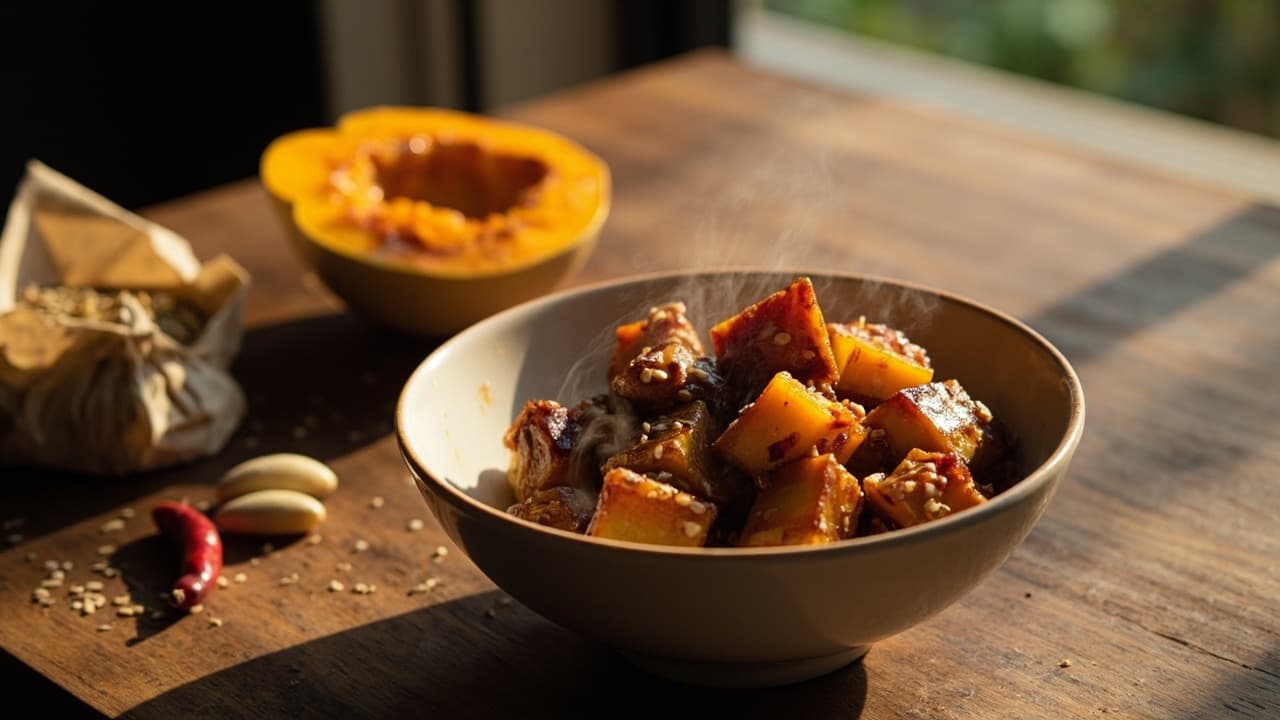
Soy-Glazed Butternut Squash Cubes with Sesame and Cayenne
Caramelized butternut squash cubes tossed in a glossy soy-honey glaze with a hint of cayenne heat and toasted sesame seeds — a sweet-savory banchan that works equally well as a side or over steamed rice.

Prep
15 min
Cook
30 min
Total
45 min
Method
1
Peel the butternut squash, halve lengthwise, scoop out seeds, and cut into 2 cm cubes. You should have about 4 cups.
2
Preheat oven to 200°C. Line a large baking sheet with parchment paper.
3
Toss squash cubes with olive oil, salt, and black pepper in a large bowl until evenly coated.
4
Spread in a single layer on the prepared baking sheet — do not crowd them or they will steam instead of caramelize.
5
6
7
Stir until honey dissolves, then bring to a gentle boil.
8
Reduce heat to low and simmer for 3-4 minutes, stirring occasionally, until the glaze thickens slightly and coats the back of a spoon. Remove from heat.
9
Transfer the roasted squash to a large mixing bowl.
10
Pour the warm soy glaze over the squash and toss gently until each cube is evenly coated and glossy.
11
Transfer to a serving dish and sprinkle generously with toasted sesame seeds. Serve immediately while warm.
C
Nutri-Score
Fair balance
A–E · lower is better · score 4
Calories
216
per serving
Source of fibre · 7g
Protein
4g
Carbs
30g
Fat
11g
Sat. fat
7g
Fiber
7g
Sugar
15g
Sodium
1075mg
Anti InflammatoryHeart HealthyLow Protein
Nutri-Score is a general nutritional-balance guide, not medical or dietary advice.
A
Environmental impact
Very low impact
A–E · lower is better · includes estimates
kg CO2e
0.2
per serving
ACarbonAEU all-round· both agree
Water
0.3m³
Land
11Pt
Runoff
0.03g P
Butternut Squash, peeled and cubed (2 cm pieces) drives 46% of this recipe’s estimated footprint.
Carbon from Poore & Nemecek 2018; water, land & runoff from Agribalyse — modelled averages for comparing recipes, not a measurement of your groceries.
Flavor Profile
6
Umami
3
Sweet
5
Salty
1
Sour
1
Bitter
4
Spicy
Textures
CrispyTender
Aromas
HerbalSmokyToasted Sesame
Kitchen Equipment
Safety & Storage
Cooking Temperature
Preheat oven to 200°C (400°F) before roasting; verify with an oven thermometer to ensure even caramelization and tender flesh.
Cross Contamination
Clean all utensils, cutting boards, and bowls thoroughly between uses to prevent sesame and soy residue from contaminating allergen-free dishes.
Storage
Refrigerate leftovers within 2 hours in an airtight container; consume within 3 days. Reheat to 74°C (165°F) before serving.
Allergen Warning
Clearly label this dish as containing soy, sesame, and gluten for guests with food allergies or sensitivities.
Handling
Wear gloves when handling cayenne pepper to avoid skin irritation; avoid touching eyes during and after preparation.
High Risk Population
This dish contains sesame, which is one of the top 9 allergens and can cause severe reactions in sensitized individuals; do not serve to those with sesame allergies.
Pro Tips
Technique
Do not crowd your baking sheet — those squash cubes need breathing room to roast, not steam. If they touch, they'll release moisture and you'll lose the caramelization that makes this banchan sing.
Substitution
If butternut squash isn't available, sweet potato works beautifully here with the same glaze. Cut into similar 2 cm cubes so they roast at the same rate.
From the chef
Butternut squash earns its place at a Korean table when roasted until the edges caramelize and then tossed in a soy-honey glaze built on minced garlic, grated ginger, and cayenne — that signature sweet-heat balance that makes banchan worth eating cold the next day. Spread the cubes in a single layer so they roast properly, not steam. The sesame seeds at the end are not decoration; they close the flavor loop. Banchan logic applied to an autumn squash, and it belongs at your table.
TagsSweet SavorySpicyRoastedGlazedSesameSoy GlazeWeeknight DinnerVegetarian AdaptableButternut SquashBanchan
AllergensSoySesameGluten
Source: generated · June 13, 2026