 French
Medium · Hot
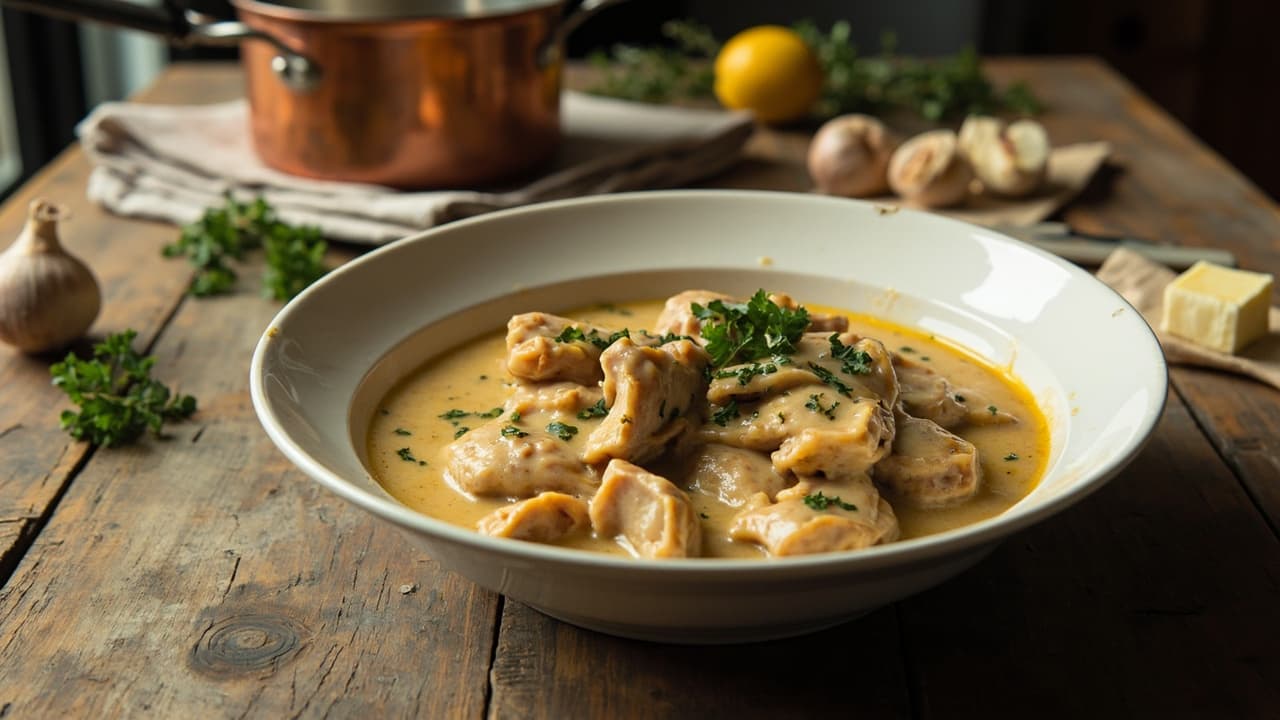
Chicken Fricassée with White Wine and Cream
A classic French bistro braise of chicken in a rich, creamy white wine-infused sauce with shallots and thyme. Silky, warming, and deeply satisfying.

Prep
20 min
Cook
40 min
Total
1h
Method
Preparation
1
Cut the whole lemon in half and juice it. Set the juice aside. Reserve the spent halves for the pot.
2
[object Object]
4
[object Object]
Finishing the Sauce
5
Increase heat to medium-high and pour in the heavy cream. Stir well and let the sauce simmer uncovered for 5-7 minutes until it thickens and coats the back of a spoon. Taste and adjust seasoning with salt and pepper.
Final Montage
6
Return the chicken pieces to the pan, spooning the creamy sauce over them. Scatter the chopped parsley over the top and serve immediately with crusty bread or buttered egg noodles.
C
Nutri-Score
Fair balance
A–E · lower is better · score 3
Calories
1228
per serving
High in saturated fat · 33gHigh in protein · 72gLow sugar · 11g
Protein
72g
Carbs
22g
Fat
93g
Sat. fat
33g
Fiber
4g
Sugar
11g
Sodium
911mg
EggLow Carb FriendlyHigh ProteinMuscle MaintenanceComfort FoodProtein Dense
Nutri-Score is a general nutritional-balance guide, not medical or dietary advice.
E
Environmental impact
Very high impact
A–E · lower is better · includes estimates
kg CO2e
4.2
per serving
ECarbonBEU all-round· carbon sets the grade
Water
1.1m³
Land
122Pt
Runoff
0.3g P
Whole Chicken, cut into 8 pieces drives 88% of this recipe’s estimated footprint.
Carbon from Poore & Nemecek 2018; water, land & runoff from Agribalyse — modelled averages for comparing recipes, not a measurement of your groceries.
Flavor Profile
7
Umami
3
Sweet
5
Salty
3
Sour
1
Bitter
2
Spicy
Textures
CrispyTenderSilkySaucy
Aromas
HerbalButteryWine ReducedGarlickyCreamy
Kitchen Equipment
Primary Tool
Large SkilletLarge SkilletMedium SaucepanChef KnifeCutting BoardMeasuring CupsMeasuring SpoonsTongsWooden SpoonWhiskPaper Towels
Counter FootprintMedium
Safety & Storage
Cooking Temperature
Chicken must reach minimum 165°F/74°C internal temperature. Verify with calibrated thermometer in thickest part of thigh without touching bone.
Cross Contamination
Raw poultry juices contaminate surfaces easily. Use separate cutting boards for raw chicken and vegetables. Sanitize all utensils and hands after handling raw meat.
Storage
Cream-based sauces are high-risk for bacterial growth. Cool and refrigerate leftovers within 2 hours. Consume within 3 days. Reheat to 165°F/74°C before serving.
Handling
Use tongs for turning chicken to avoid piercing meat and losing juices. Avoid overcrowding pan during searing to ensure proper browning and safe cooking.
High Risk Population
This dish contains dairy and gluten. For pregnant individuals, ensure chicken is fully cooked. For milk allergy sufferers, cream-based sauces present severe risk.
Pro Tips
Technique
Never rush the sear—get the chicken skin deeply golden before flipping. That fond is the foundation of your entire sauce, and there are no shortcuts to building flavor properly.
Substitution
If you do not have heavy cream, you may substitute with crème fraîche for a tangier finish, or use a mixture of half milk and half butter (monter au beurre) for a lighter touch, though the sauce will require more attention.
Equipment
Use a heavy-bottomed sauté pan or your trusty cast iron—not non-stick. You need the bits that stick to the bottom to become part of your story.
From the chef
Fricassée begins with a proper sear — skin against a hot pan, fat rendering into the fond that will carry the entire sauce. From there it is a slow, patient braise in white wine, shallots, and thyme until the chicken is yielding and the liquid has absorbed every aromatic in the pot. The cream goes in last, thickening as it simmers until it coats the back of a spoon with authority. A cold knob of butter at the finish pulls the sauce into something silky and glossy. This is not a quick dish, but it is a precise one, and that precision is exactly what makes it worth the time.
TagsCreamyWine SauceClassic BistroThymeShallotsButter RichOne Pot
AllergensMilkWheatGluten
Source: generated · June 10, 2026