 Spanish
Medium · Hot
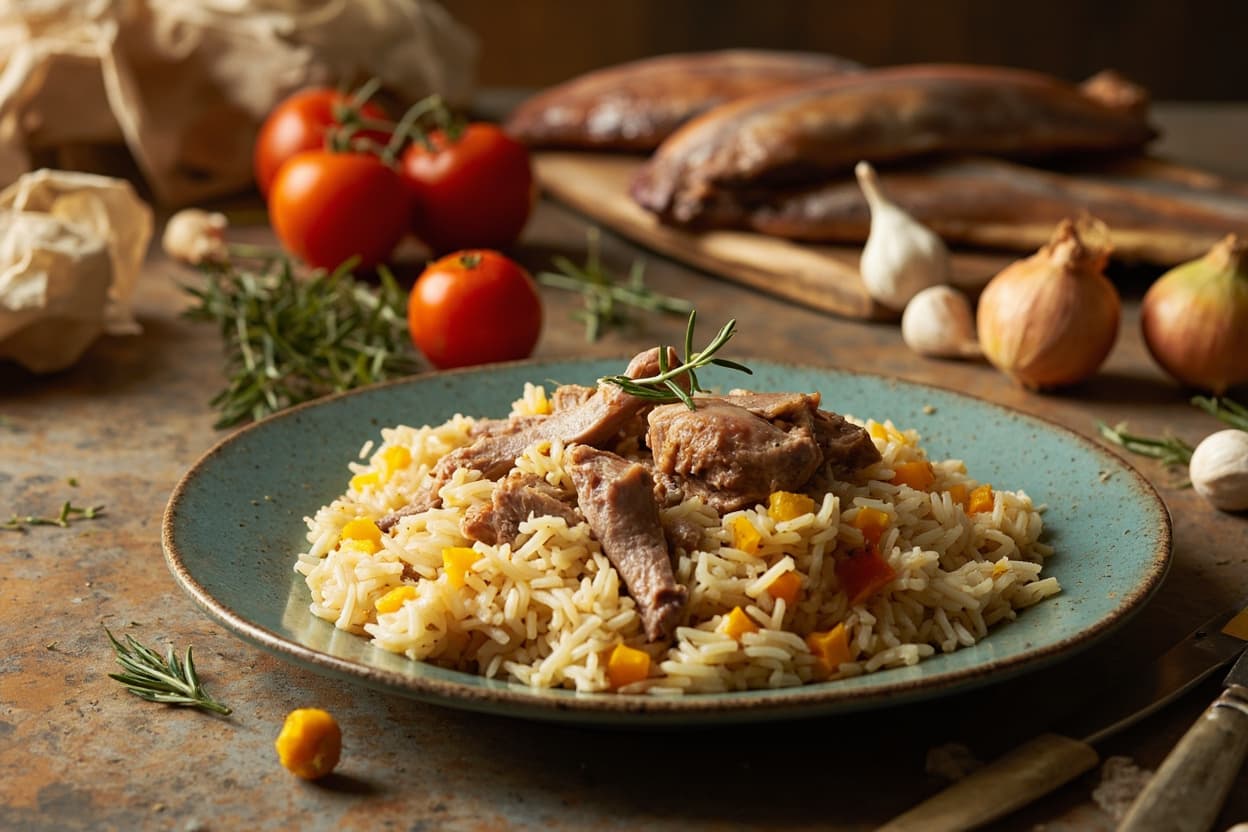
Duck and Rosemary Valencian Rice
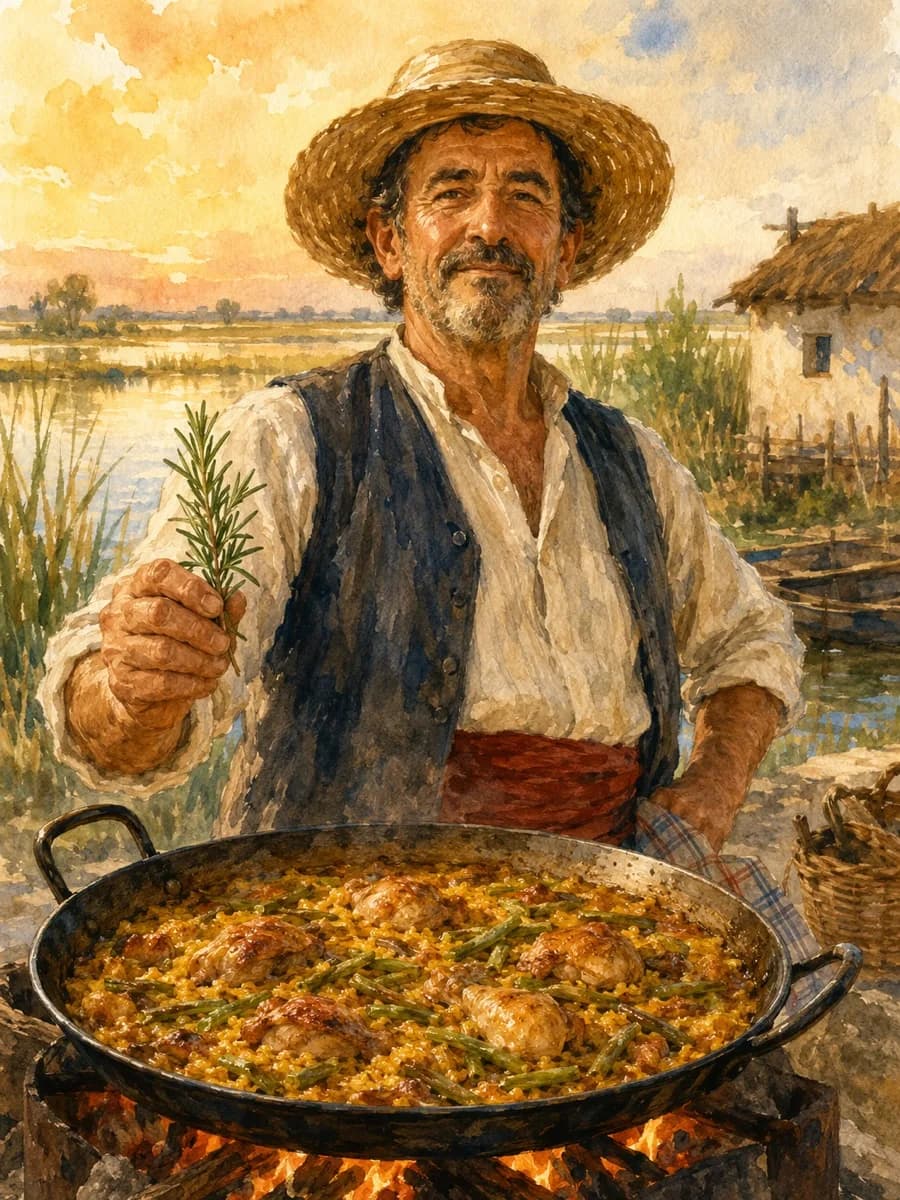
Duck rendered low and slow until the fat runs free, then rice spread across the pan to drink up every drop of saffron-tinted, rosemary-scented stock — the garlic coaxed into sweetness, the grains holding their shape but tender all the way through. Leave it alone and let the socarrat form. That is where all the flavour lives.
Prep
20 min
Cook
30 min
Rest
10 min
Total
1h
Method
Prep the Duck
1
Season duck legs all over with salt and black pepper. Let sit at room temperature for 15 minutes.
Render and Sear the Duck
2
In a wide paella pan or cast-iron skillet over medium-high heat, add 2 tablespoons of olive oil. Place duck legs skin-side down and cook undisturbed for 8 minutes until the skin is deeply golden and most of the fat has rendered. Flip and cook 3 more minutes. Remove duck to a plate and pour off all but 2 tablespoons of the fat.
Build the Sofrito
3
4
Stir in tomato paste and sweet paprika, cook together for 1 minute until fragrant and the paste darkens slightly. This is the heart of the dish — do not rush it.
Cook the Rice
5
Add green beans and white beans to the pan, stir to coat in the sofrito. Spread rice in an even, thin layer across the pan — never stir again after this point.
6
In a small bowl, crumble saffron threads into the warm water and let bloom for 2 minutes. Pour evenly over the rice.
7
8
Cook uncovered for 18–20 minutes, watching for the liquid to be absorbed and small holes to appear on the surface of the rice. You hear a faint crackling — that is the socarrat speaking.
Sear the Socarrat
9
Increase heat to high for the final 2 minutes to caramelize the bottom crust. Tilt and rotate the pan as needed for even browning. You want a deep amber, toasted crust — not burned.
C
Nutri-Score
Fair balance
A–E · lower is better · score 3
Calories
805
per serving
Calorie-dense · 805 kcalSource of protein · 26gLow sugar · 3g
Protein
26g
Carbs
103g
Fat
32g
Sat. fat
12g
Fiber
5g
Sugar
3g
Sodium
868mg
Gluten FreeDairy FreeWhole30 CompliantDiabetes FriendlyAnti InflammatoryHigh ProteinModerate Carb
Nutri-Score is a general nutritional-balance guide, not medical or dietary advice.
C
Environmental impact
Moderate impact
A–E · lower is better · includes estimates
kg CO2e
1.2
per serving
CCarbonAEU all-round· carbon sets the grade
Water
2.3m³
Land
46Pt
Runoff
0.1g P
Duck legs, halved drives 49% of this recipe’s estimated footprint.
Carbon from Poore & Nemecek 2018; water, land & runoff from Agribalyse — modelled averages for comparing recipes, not a measurement of your groceries.
Flavor Profile
7
Umami
3
Sweet
5
Salty
2
Sour
2
Bitter
4
Spicy
Textures
CrispyTenderSoftSilky
Aromas
HerbalSmokyNuttyGarlickyEarthy
Kitchen Equipment
Primary Tool
Wide Paella PanCounter FootprintLarge
Safety & Storage
Cooking Temperature
Duck legs must reach an internal temperature of at least 165°F (74°C) to ensure safety from poultry pathogens. Use a meat thermometer to verify doneness during the initial sear before returning duck to the pan.
The final 2-minute high-heat socarrat stage creates temperatures that can rapidly exceed safe limits, causing the bottom crust to transition from caramelized to burned within seconds. Watch closely and tilt the pan as needed for even browning without charring.
Equipment Safety
Cast iron skillets retain extreme heat even after removal from heat source. Allow the pan to cool completely before handling or cleaning. The handles remain dangerously hot long after cooking completes.
Handling
Raw duck legs excrete significant fat during the initial sear. Use appropriate oven mitts or pot holders when pouring off rendered duck fat to prevent grease splattering and burns.
Storage
Leftover rice with duck must be cooled rapidly and refrigerated within 2 hours. Store in shallow airtight containers at 40°F (4°C) or below and consume within 3-4 days. Reheat to165°F (74°C) before serving.
Cross Contamination
After handling raw duck, sanitize all utensils, cutting boards, and surfaces that contacted the meat before using them for other ingredients. Wash hands thoroughly with soap for at least 20 seconds.
High Risk Population
This dish contains poultry (duck) which poses higher infection risk for pregnant individuals, young children, elderly, and immunocompromised persons if undercooked. Ensure thorough cooking and proper handling throughout preparation.
Allergen Warning
While no top-14 allergens are present, this recipe uses legumes (butter beans and green beans). Individuals with legume allergies should exercise caution and consider allergic reaction risk before consumption.
Pro Tips
Technique
When rendering the duck fat, be patient and let the skin crisp undisturbed for those full 8 minutes — this is not a race, and the fat you collect now is the foundation of your entire sofrito.
Substitution
If you cannot find butter beans, large white beans like gigante or cannellini work beautifully — they hold their shape and absorb the saffron stock just as well.
From the chef
Duck legs render their fat beautifully into the pan — far more than chicken, and richer for it — giving the sofrito a depth that becomes the foundation for everything that follows. Garlic goes in gently, tomato paste and sweet paprika darken together, then green beans and butter beans coat in the base before the rice spreads flat and the saffron water pours over. From that point on, you do not touch it. The grain drinks up every drop of rosemary-scented, saffron-tinted stock and the bottom toasts to a deep amber crust. Scrape up the socarrat when you serve it — that crackling layer at the bottom is the reward for patience, and it is the prize.
TagsPaellaValencianSocarratDuckSaffronArrozSpanish
Source: generated · May 30, 2026