 North American
Medium · Hot
Maple‑Glazed Seared Pumpkin Custard
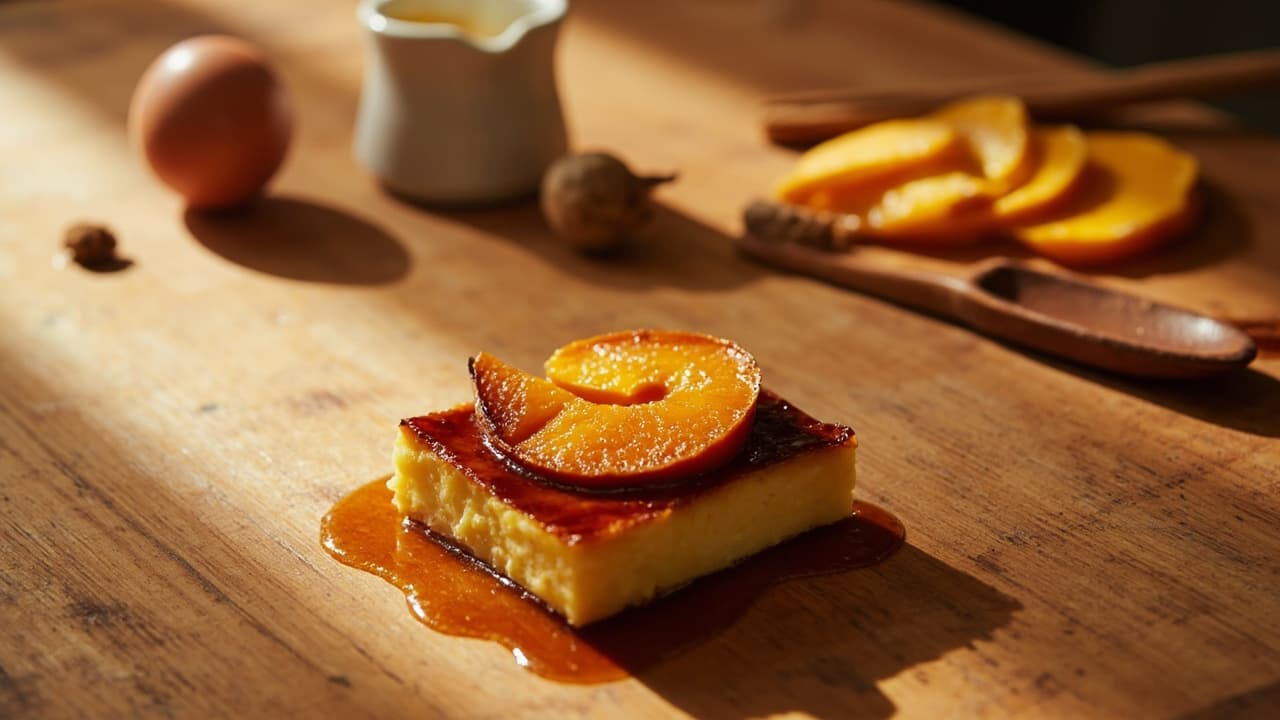
A velvety baked pumpkin custard finished with a caramelized maple sear on top, balancing silky texture with crispy Maillard-browned contrast.

Prep
15 min
Cook
30 min
Total
45 min
Method
1
Position rack in center of oven; preheat to 325°F (163°C). Whisk together 1 cup pumpkin puree, eggs, heavy cream, whole milk, 2 tbsp melted butter, 2 tbsp maple syrup, flour, salt, black pepper, cinnamon, and nutmeg in a large bowl until smooth and fully combined, about 1 minute.
2
Pour custard mixture into a lightly buttered 8-inch square baking dish or 4 individual ramekins set in a water bath. Bake 25-30 minutes until edges are set and center jiggles slightly (165°F internal by thermometer).
3
Remove from water bath; let cool on a wire rack 10 minutes until surface firms enough to slice.
4
While custard bakes, heat 2 tbsp butter in a stainless steel skillet over medium-high heat until butter foams and begins to turn golden, about 2 minutes.
5
6
In the same skillet over medium heat, combine 3 tbsp maple syrup and 1 tbsp butter. Stir and simmer 2-3 minutes until slightly thickened and fragrant (225°F).
7
Cut cooled custard into 4 squares. Ladle maple glaze generously over each portion. Using a kitchen torch or broiler set to high (550°F) positioned 4 inches away, sear glaze 90 seconds until bubbling and caramelized to a deep amber. Do not walk away—watch for even browning.
8
Top each glazed custard square with 2-3 seared pumpkin slices. Serve immediately while seared crust is crisp.
D
Nutri-Score
Needs balance
A–E · lower is better · score 12
Calories
484
per serving
High in saturated fat · 20g
Protein
9g
Carbs
30g
Fat
39g
Sat. fat
20g
Fiber
2g
Sugar
24g
Sodium
1537mg
KetoDiabetesLow Sodium
Nutri-Score is a general nutritional-balance guide, not medical or dietary advice.
B
Environmental impact
Low impact
A–E · lower is better · includes estimates
kg CO2e
0.8
per serving
BCarbonAEU all-round· carbon sets the grade
Water
0.3m³
Land
30Pt
Runoff
0.08g P
Heavy cream drives 30% of this recipe’s estimated footprint.
Carbon from Poore & Nemecek 2018; water, land & runoff from Agribalyse — modelled averages for comparing recipes, not a measurement of your groceries.
Flavor Profile
6
Umami
8
Sweet
5
Salty
1
Sour
2
Bitter
3
Spicy
Textures
CreamyCrispySilkyTender
Aromas
CaramelDairySweet SpicedWarm Baking
Kitchen Equipment
Primary Tool
Stainless Steel SkilletKitchen TorchOvenStainless Steel SkilletChef KnifeCutting BoardDigital ThermometerLadleMeasuring CupsMeasuring SpoonsMixing BowlSilicone Mat Or ParchmentSilicone SpatulaTimerTongsWhiskWire RackAluminum FoilPaper Towels
Safety & Storage
Cooking Temperature
Custard must reach 165°F internal temperature before consumption to ensure egg proteins are fully cooked and pathogens are eliminated. Use a calibrated thermometer to verify center temperature.
Equipment Safety
Kitchen torch operates at 550°F positioned 4 inches from glaze surface. This presents significant burn and fire risk. Maintain constant observation during caramelization and never walk away from active torch operation.
Storage
Contains perishable dairy (cream, milk, butter) and eggs. Refrigerate at 40°F or below within 2 hours of cooking. Best consumed within 3-4 days when properly stored.
Cross Contamination
Skillet is reused for searing pumpkin slices (step 3) and preparing maple glaze (step 4). Any residual allergens from previous kitchen use could transfer. Clean skillet thoroughly between uses if serving allergen-sensitive individuals.
Allergen Warning
This dish contains milk, eggs, and wheat. Verify all ingredients are from uncontaminated sources. Individuals with severe allergies should exercise caution with any cross-contact risks.
High Risk Population
Custard contains eggs and dairy. Immunocompromised individuals, young children, elderly, and pregnant persons should ensure eggs are cooked to 165°F throughout before consumption.
Pro Tips
Technique
Stop eyeballing your sear. I use a thermometer on my pan surface, targeting 375-385°F, and my caramelization becomes consistent every time. Watch for the butter foam to transition from white to golden—that's your visual cue the Maillard window is open.
Substitution
No maple syrup? Brown sugar dissolved in a splash of vanilla extract is your closest approximation, but expect roughly 30% less browning depth. The sucrose concentration in real maple syrup is what drives that specific caramelization response.
From the chef
This custard earns its texture from two separate techniques: a low, slow bake in a water bath that keeps the eggs from curdling, and a final maple glaze seared under a broiler or torch until it bubbles to deep amber. Pumpkin puree gives the custard a dense, silky base that holds the spice notes of cinnamon and nutmeg without competing with them. The maple glaze is not just sweetness — at 225 degrees it thickens into a lacquer that caramelizes on contact with heat, adding a crisp contrast to the custardy interior. The seared pumpkin slices on top reinforce the same flavor through texture.
TagsBakedSearedMaplePumpkinFallCustardBruleeGlazedAmerican Maple
AllergensMilkEggsWheat
Source: generated · June 12, 2026