 European
Medium · Warm
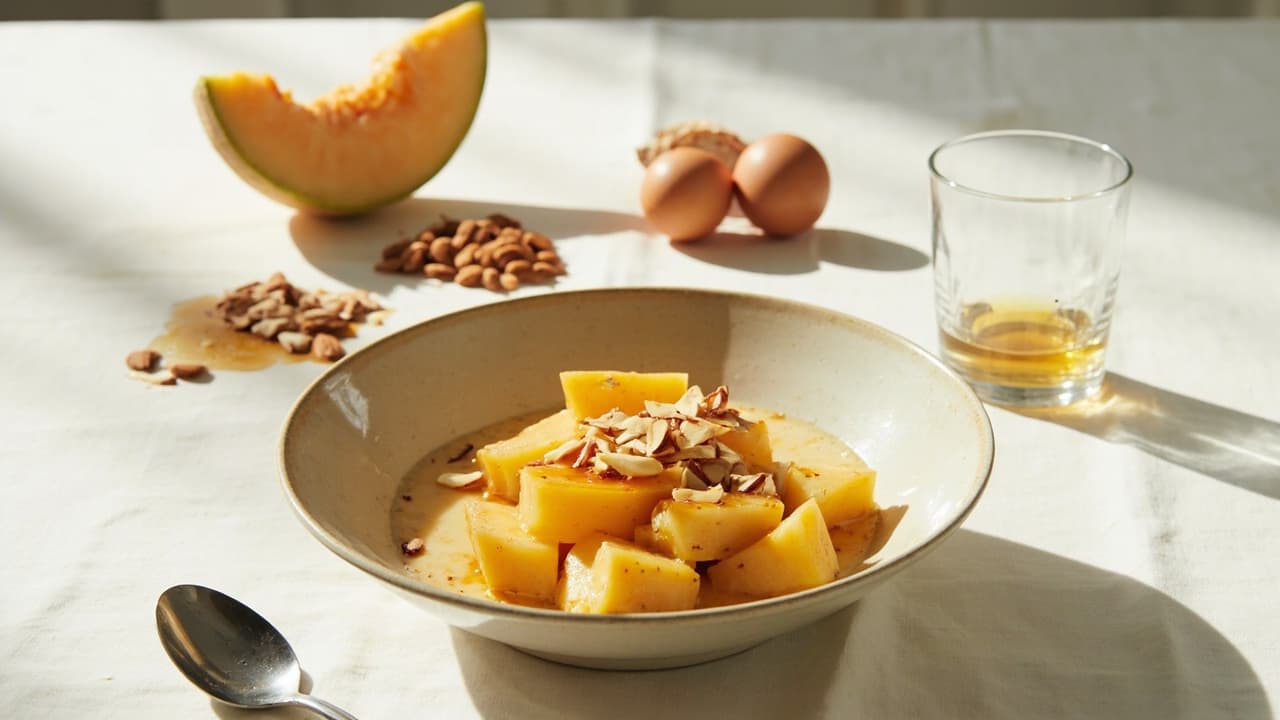
Warm Cantaloupe Almond Custard with Honey Drizzle
A silky almond-enriched custard baked over caramelized cantaloupe, finished with a warm honey drizzle and toasted almond shards. Unhurried and gentle, the way a lazy Sunday morning should taste.

Prep
15 min
Cook
45 min
Total
1h
Method
1
Preheat your oven to 190°C (375°F). Arrange the cantaloupe cubes in a single layer in a 20x25cm baking dish, leaving a little space between each piece.
2
Scatter 1 tablespoon of white sugar over the cantaloupe and slide the dish into the oven. Roast for 15 minutes until the edges are golden and the melon has softened and released its juices.
3
Remove from oven and set aside while you prepare the custard. The cantaloupe should look lightly caramelized at the edges but hold its shape.
4
In a medium saucepan over gentle heat, warm the whole milk, heavy cream, and 2 tablespoons of butter together, stirring occasionally, until the butter has melted and tiny bubbles form around the edges of the pan. Do not let it boil. Remove from heat.
5
In a mixing bowl, whisk the eggs, remaining 2 tablespoons of white sugar, almond flour, vanilla extract, and salt together until smooth and slightly lightened in color.
6
Slowly pour the warm milk mixture into the egg mixture in a thin stream, whisking constantly to temper the eggs without scrambling them. Once fully combined, stir in the almond flour mixture until no streaks remain.
7
Pour the custard mixture gently over the roasted cantaloupe in the baking dish, nudging the cantaloupe pieces back into an even layer if they shifted.
8
Bake at 175°C (350°F) for 25-28 minutes. The custard should be set at the edges but still have a gentle wobble in the very center, like a soft custard should. It will continue to firm up as it cools.
9
Let the dish rest on a wire rack for 5 minutes. The cantaloupe will have perfumed the custard as it baked, and the whole thing should feel warm and silky when you give the dish a gentle nudge.
10
11
Scatter the toasted almond shards generously over the top of the warm custard.
12
Drizzle the warm honey butter liberally across the surface in slow, generous strokes. Serve immediately while still warm, with a spoon to scoop through the tender cantaloupe and silky custard layers.
D
Nutri-Score
Needs balance
A–E · lower is better · score 11
Calories
535
per serving
High in saturated fat · 14gCalorie-dense · 535 kcalLow salt · 244mg
Protein
14g
Carbs
35g
Fat
40g
Sat. fat
14g
Fiber
4g
Sugar
29g
Sodium
244mg
Gluten FreeLow Sodium OptionVegetarianCandida CautionDiabetes CautionHeart Health CautionWeight ManagementBalanced MacroHigh ProteinLow Sodium
Nutri-Score is a general nutritional-balance guide, not medical or dietary advice.
B
Environmental impact
Low impact
A–E · lower is better · includes estimates
kg CO2e
0.9
per serving
BCarbonAEU all-round· carbon sets the grade
Water
0.9m³
Land
38Pt
Runoff
0.1g P
Cantaloupe, peeled and cubed drives 28% of this recipe’s estimated footprint.
Carbon from Poore & Nemecek 2018; water, land & runoff from Agribalyse — modelled averages for comparing recipes, not a measurement of your groceries.
Flavor Profile
5
Umami
7
Sweet
3
Salty
1
Sour
1
Bitter
0
Spicy
Textures
CreamyCrispySilkyTender
Aromas
CaramelDairyFloralNuttySweet
Kitchen Equipment
Primary Tool
OvenMedium SaucepanOvenSmall SaucepanMeasuring CupsMeasuring SpoonsMixing BowlSpatulaWhiskWire RackBaking Dish 20x25cm
Safety & Storage
Cooking Temperature
Ensure custard reaches safe internal temperature of 160°F (71°C) during baking at 175°C (350°F) for 25-28 minutes. The edges should be fully set with only the center showing a gentle wobble. Use a clean food thermometer to verify doneness, especially when serving to high-risk individuals.
Do not allow the milk and cream mixture to boil. Remove from heat when tiny bubbles form around pan edges to prevent curdling and ensure smooth custard texture.
Handling
When tempering eggs with warm milk mixture, pour in a thin steady stream while whisking constantly. Rapid addition or insufficient whisking will cause eggs to scramble, creating unsafe raw egg pockets in the custard.
High Risk Population
This dish contains raw eggs in the custard base. Infants, young children, pregnant individuals, elderly persons, and immunocompromised persons should consume only after verifying eggs are fully cooked to safe temperature.
Allergen Warning
Cross-contact risk exists for peanut and other tree-nut allergies if almonds are processed in facilities handling these allergens. Verify almond sourcing for specific allergen concerns.
Storage
Refrigerate any leftovers within 2 hours of serving. Custard-based dishes are perishable and should not sit at room temperature longer than 2 hours total.
Shelf Life
Consume refrigerated leftovers within 2-3 days for optimal quality and food safety. The fruit juices released during baking may cause custard to weep over time.
Cross Contamination
Thoroughly clean mixing bowls, whisks, and saucepans used for egg mixture before using for allergen-free preparations. Almond residue may persist on utensils even after washing.
Pro Tips
Technique
When tempering the warm milk into your egg mixture, pour in a thin, steady stream while whisking constantly—this keeps the eggs smooth and silky rather than turning them into scrambled bits. Think of it like coaxing, not rushing.
Substitution
If nectarines or ripe peaches are at their peak, they work beautifully here too. Stone fruit caramelizes just as sweetly and brings a different gentle fragrance that pairs just as well with the almond custard.
From the chef
Cantaloupe roasts in a hot oven until the edges caramelize and the flesh softens into something perfumed and golden, then a silky almond custard poured gently over the top bakes down until the edges are just set and the center holds a gentle wobble. The almond flour gives the custard a warm, slightly nutty depth that suits the sweet melon perfectly. While it rests, a little butter melts into warm honey for a drizzle that threads across the toasted almond shards scattered over the surface. It is the kind of dessert that feels almost like breakfast, unhurried and quiet, asking nothing more than a spoon and a moment to sit.
TagsSweetBakedCustardFruitAlmondHoneyBreakfastComfort FoodLazy SundaySeasonalMelon
AllergensEggsMilkTree Nuts
Source: generated · June 12, 2026