 Basque
Medium · Hot
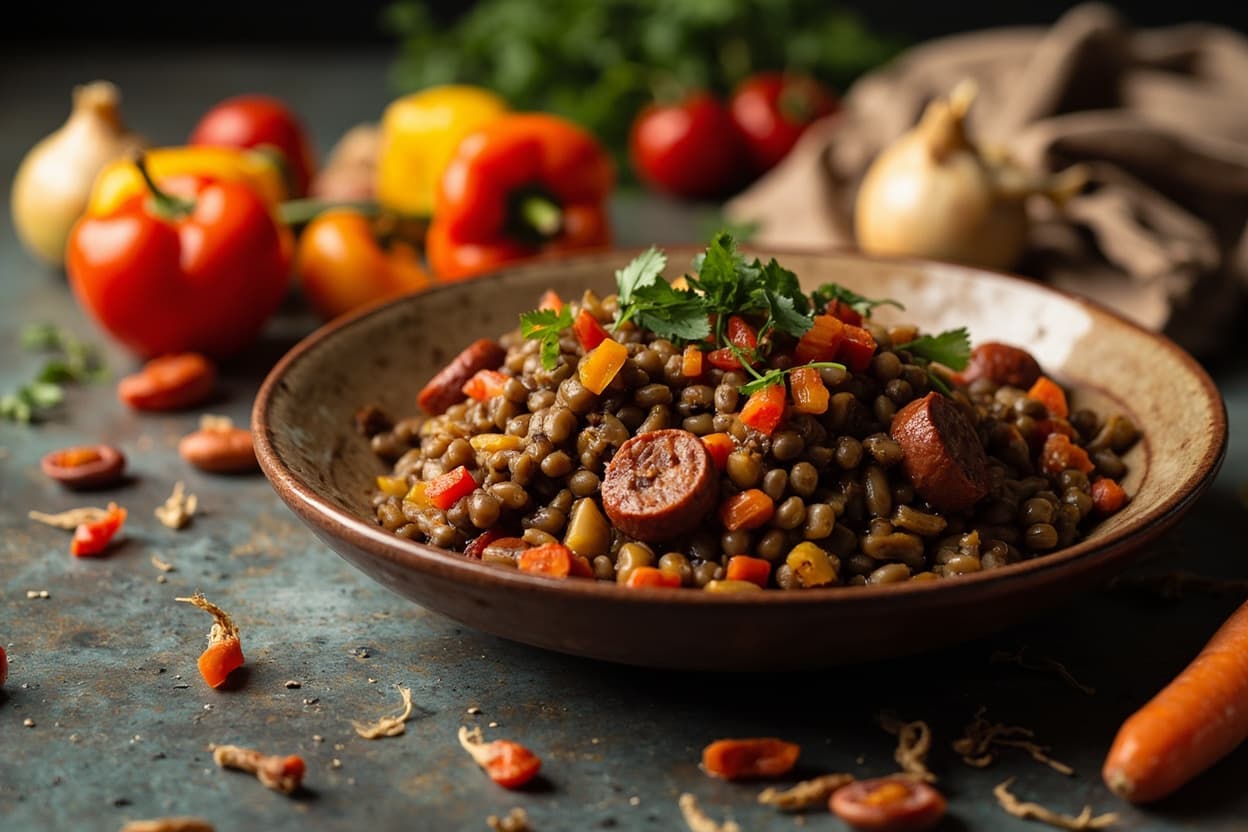
Lentejas Estofadas with Sausage and Peppers
Carrot, onion, and bell pepper sweated slowly together before the sausage goes in, building the kind of base that gives lentils something to absorb over an unhurried simmer. The sausage fat threads through the pot, and the lentils drink until they are tender but not broken. No flourish required — this is the food that keeps a cook standing at the grill for eleven hours.

Prep
15 min
Cook
35 min
Rest
5 min
Total
55 min
Method
Build the Soffrito
1
In a heavy-bottomed casserole or Dutch oven, heat the olive oil over medium heat. Add the diced yellow onion and cook, stirring occasionally, until softened and translucent, about 5 minutes.
2
Add the minced garlic and cook for 1 minute until fragrant. Stir in the diced carrot and bell pepper. Continue cooking for another 5 minutes until the vegetables begin to soften.
Add Tomato and Paprika
3
Add the grated or finely chopped tomato to the pot. Cook, stirring often, for 3-4 minutes until the tomato breaks down and the liquid begins to evaporate slightly.
4
Sprinkle in the smoked paprika, regular paprika, and salt. Stir to coat all the vegetables evenly and let the spices toast in the pan for 30 seconds to bloom their flavors.
Brown the Sausage and Add Lentils
5
Push the vegetable mixture to the sides of the pot. Add the crumbled or diced sausage and cook until nicely browned on all sides, about 4-5 minutes. Break it up with your spoon as it cooks.
6
Pour in the lentils and stir everything together. Add the 4 cups of water, season with black pepper, and bring to a gentle boil.
Braise Until Tender
7
Finish and Serve
9
Remove from heat and stir in the white vinegar for that clean, sharp Basque acidity. Let the stew rest for 2-3 minutes.
A
Nutri-Score
Excellent balance
A–E · lower is better · score -2
Calories
780
per serving
Source of protein · 37gLow sugar · 9g
Protein
37g
Carbs
73g
Fat
39g
Sat. fat
10g
Fiber
9g
Sugar
9g
Sodium
1630mg
Gluten FreeDairy FreeEgg FreeHeart HealthyHigh SodiumHigh ProteinHigh Fiber
Nutri-Score is a general nutritional-balance guide, not medical or dietary advice.
C
Environmental impact
Moderate impact
A–E · lower is better · includes estimates
kg CO2e
1.6
per serving
CCarbonAEU all-round· carbon sets the grade
Water
0.6m³
Land
47Pt
Runoff
0.1g P
Sausage drives 76% of this recipe’s estimated footprint.
Carbon from Poore & Nemecek 2018; water, land & runoff from Agribalyse — modelled averages for comparing recipes, not a measurement of your groceries.
Flavor Profile
8
Umami
4
Sweet
6
Salty
3
Sour
1
Bitter
5
Spicy
Textures
TenderCreamyChewySaucy
Aromas
SmokyEarthyMeatyHerbal
Kitchen Equipment
Techniques
Safety & Storage
Cross Contamination
If using store-bought sausage, verify ingredient labels for hidden allergens such as gluten, milk derivatives, or soy fillers commonly used in processed meat products.
Handling
Use separate cutting boards and utensils for raw sausage and vegetables to prevent cross-contamination between protein and produce items.
Cooking Temperature
Ensure sausage reaches safe internal temperature (160°F/71°C for fresh sausage, 165°F/74°C if poultry-based) and lentils are cooked until completely tender, about 25-30 minutes at steady simmer.
Storage
Refrigerate leftover lentejas estofadas within 2 hours of cooking; store in airtight container for up to 3-4 days. Reheat thoroughly until steaming hot before consuming.
Pro Tips
Technique
Do not rush the soffrito — the onion, carrot, and peppers must soften completely and lose their raw edge before you add the paprika, otherwise the spices taste flat and the whole stew suffers.
Flavor Boost
Use a good quality smoked paprika from La Vera; the Spanish version has a depth that American brands simply cannot match, and it is the backbone of this dish.
Substitution
If you cannot find Spanish-style sausage, an Italian fennel sausage works well, or even a quality chorizo — but avoid anything pre-cooked in casing, it must be raw and able to brown properly.
Storage
This estofado improves dramatically the next day as the flavors marry, so cook it the night before and reheat gently — it is even better on day two.
From the chef
In Donostia we say a good lentejas estofada should stick to the ribs like a proper txuleta and taste of home, not some tourist menu. I learned this stew from the women at the market who sold lentils by the kilo and peppers by the armful — they taught me that the soffrito must weep with patience, that the smoked paprika is not decoration but the soul of the dish, and that one spoonful of white vinegar at the end is what separates an honest Basque stew from something forgettable. This is what my grandmother made on feast days, and it still feeds me better than any restaurant in Madrid.
TagsHeartySlow CookedLentilsSausageOne PotPaprika
Source: generated · May 30, 2026