 Vietnamese
Medium · Hot
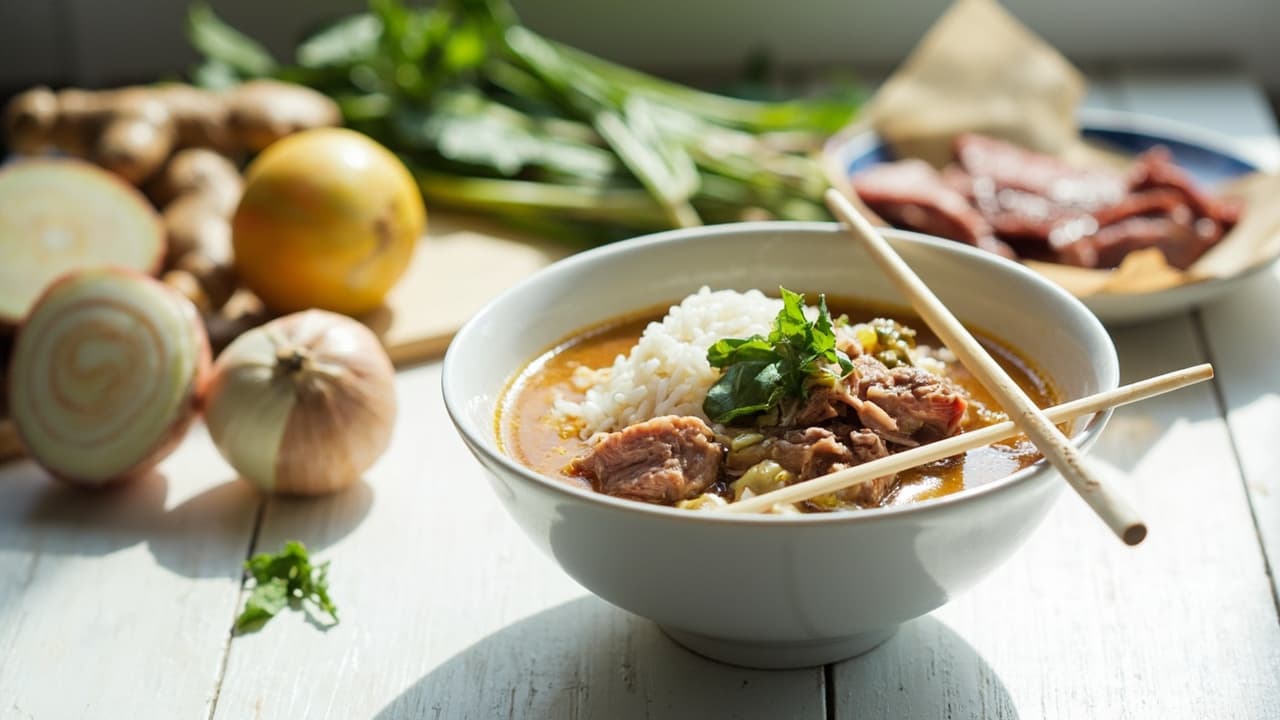
Bright Beef Pho Over Jasmine Rice
A fragrant Vietnamese-inspired bowl where a deeply savory broth meets tender slices of beef over fluffy jasmine rice, finished at the table with a cascade of fresh herbs and a squeeze of lime.

Prep
20 min
Cook
35 min
Rest
5 min
Total
1h
Method
Prepare the Aromatics
1
Peel and thinly slice the garlic cloves. Cut the yellow onion in half and slice into thin half-moons. Peel the ginger and slice into thin coins. Trim the roots from the scallions and slice on a bias into 1-inch pieces.
Build the Broth
2
Add the star anise pieces and pour in the chicken broth. Bring to a gentle boil, then reduce to a steady simmer. Allow the broth to simmer uncovered for 15 minutes to meld all the flavors together.
Cook the Beef and Rice
3
Slice the beef steak into paper-thin strips against the grain. When the broth has finished simmering, increase the heat to a lively simmer and carefully add the beef slices. Cook for just 2-3 minutes until the beef is tender and cooked through.
Plate and Serve
4
Instruct each guest to tear fresh herbs from the bunches and add them directly to their bowl, squeeze lime over the top, and perhaps add a touch more soy sauce to taste. The finishing happens at the table — that is where the brightness lives.
A
Nutri-Score
Excellent balance
A–E · lower is better · score -1
Calories
704
per serving
High in protein · 39gLow sugar · 4gLow saturated fat · 4g
Protein
39g
Carbs
75g
Fat
28g
Sat. fat
4g
Fiber
3g
Sugar
4g
Sodium
623mg
Gluten FreeDairy FreeHeart HealthyDiabetes FriendlyAnti InflammatoryLow FatHigh ProteinHigh FiberBalanced MealLean Protein
Nutri-Score is a general nutritional-balance guide, not medical or dietary advice.
E
Environmental impact
Very high impact
A–E · lower is better · includes estimates
kg CO2e
13
per serving
ECarbonBEU all-round· carbon sets the grade
Water
2.1m³
Land
245Pt
Runoff
0.2g P
Beef Steak drives 97% of this recipe’s estimated footprint.
Carbon from Poore & Nemecek 2018; water, land & runoff from Agribalyse — modelled averages for comparing recipes, not a measurement of your groceries.
Flavor Profile
9
Umami
4
Sweet
6
Salty
5
Sour
2
Bitter
3
Spicy
Textures
TenderSilkySoftFresh
Aromas
HerbalAromaticSavoryEarthyCitrus
Kitchen Equipment
Primary Tool
StockpotCounter FootprintMedium
Techniques
Safety & Storage
Cooking Temperature
Beef slices must reach a minimum internal temperature of 145°F (63°C) when added to the simmering broth. Ensure broth maintains a steady simmer before adding beef.
Cross Contamination
Use separate cutting boards and utensils for raw beef. Do not allow raw beef to contact the cooked broth or garnishes. Wash hands thoroughly after handling raw beef.
Storage
If storing leftover pho, separate the broth from beef and rice. Refrigerate within 2 hours. Consume within 3-4 days. Reheat broth to boiling before combining with pre-cooked beef and rice.
High Risk Population
Fresh herbs served raw at the table may pose a risk for immunocompromised individuals, elderly, pregnant women, or young children. Consider briefly blanching herbs or using pre-washed commercial herbs for these populations.
Allergen Warning
Soy sauce contains both soy and gluten. Verify commercial chicken broth does not contain additional allergens or cross-contamination risks. Notify guests of these allergens before serving.
Pro Tips
Technique
Slice your beef against the grain as thin as possible while still holding together—it should be nearly translucent. The brief swim in the hot broth will cook it to perfect tenderness, and that gentle preparation is what keeps the beef bright, never chewy or overworked.
Substitution
If jasmine rice isn't available, feel free to use any long-grain white rice or even rice noodles for a more traditional pho experience. The key is something that can hold its own beneath the fragrant broth without becoming mushy.
From the chef
A good pho broth carries star anise and ginger through every sip — fragrant and deeply savory, it is the soul of the bowl. Here it meets jasmine rice instead of noodles, and paper-thin beef slices that cook in just two or three minutes at a lively simmer, tender and never overdone. The finishing happens at the table, where each person tears basil, cilantro, and mint over their bowl and squeezes lime to their own taste. That act of assembly is not a garnish — it is where the brightness lives, and no two bowls ever come out quite the same.
TagsWeeknight DinnerComfort FoodOne PotBeefSoupRice Bowl
AllergensSoyGluten
Source: generated · June 10, 2026