 Spanish
Medium · Hot
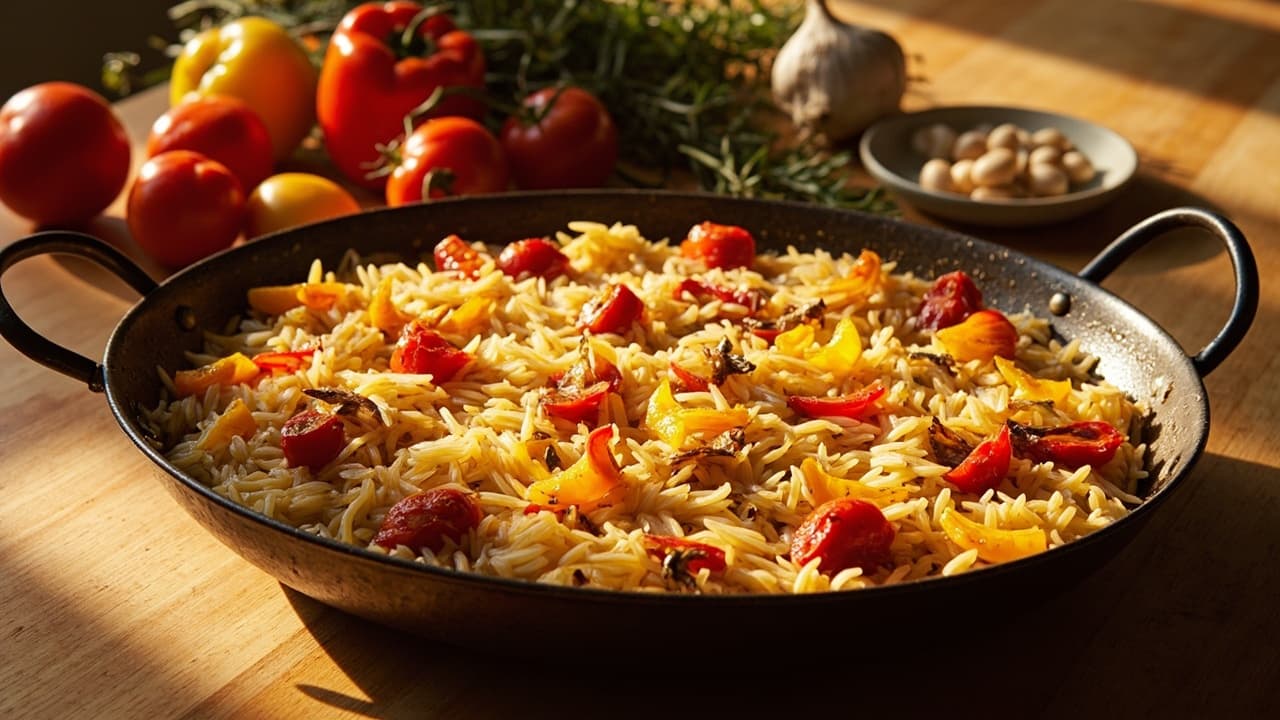
Garlic and Saffron Rice with Roasted Bell Peppers and Tomatoes
A Valencian-style rice dish with a slow garlic sofrito, saffron-stained grains, and sweet roasted peppers and tomatoes. The pride of this recipe is the socarrat — that toasted, crackling crust at the bottom of the pan.
Prep
20 min
Cook
40 min
Rest
5 min
Total
1h 5m
Method
Roasting the Vegetables
1
Preheat your oven to 220°C (425°F). Place the whole bell peppers and tomatoes on a baking tray. Drizzle with 2 tablespoons of olive oil and season with a pinch of salt.
2
3
Once cooled, peel the peppers and tomatoes, discarding the skins and seeds. Slice the peppers into strips and roughly chop the tomatoes. Set aside.
Building the Saffron Rice
4
Warm the chicken broth in a small saucepan over low heat. Add the saffron threads and let them bloom for 10 minutes — the broth should turn a deep, glorious amber. Keep warm.
5
In a wide paella pan or heavy skillet over medium heat, add the remaining 2 tablespoons of olive oil. Gently fry the whole garlic cloves until golden, about 2 minutes. Do not burn them — Vicent would never forgive you.
6
7
Pour the saffron-infused chicken broth evenly over the rice. Season with salt. Scatter the white beans across the surface. Add the fried garlic cloves and rosemary sprigs. Do not stir the rice from this point — never, ever stir.
8
Cook over medium heat for 10 minutes, then reduce to low for another 8–10 minutes. You will hear a gentle crackling — that is the socarrat forming. Resist the urge to touch it. When the liquid is fully absorbed and the rice smells nutty and toasted, remove from heat.
Finishing
9
Rest the rice, uncovered, for 5 minutes. Arrange the roasted bell pepper strips and chopped tomatoes over the surface. Drizzle with a little extra olive oil and a final pinch of salt if needed.
10
Serve directly from the pan. Scrape up the socarrat crust with each portion — that golden, crackling bottom is the whole point, and Vicent would expect nothing less.
B
Nutri-Score
Good balance
A–E · lower is better · score 0
Calories
709
per serving
Low sugar · 7gLow saturated fat · 2g
Protein
17g
Carbs
124g
Fat
15g
Sat. fat
2g
Fiber
6g
Sugar
7g
Sodium
1204mg
Gluten FreeDairy FreeMediterraneanHeart HealthyAntioxidant RichLow Saturated FatBalanced MealsFiber ConsciousWhole Grain Carbs
Nutri-Score is a general nutritional-balance guide, not medical or dietary advice.
B
Environmental impact
Low impact
A–E · lower is better · includes estimates
kg CO2e
0.7
per serving
BCarbonAEU all-round· carbon sets the grade
Water
1.8m³
Land
16Pt
Runoff
0.05g P
White Rice drives 60% of this recipe’s estimated footprint.
Carbon from Poore & Nemecek 2018; water, land & runoff from Agribalyse — modelled averages for comparing recipes, not a measurement of your groceries.
Flavor Profile
7
Umami
4
Sweet
5
Salty
2
Sour
1
Bitter
2
Spicy
Textures
CrispyTenderCreamyChewy
Aromas
HerbalGarlickySmokyFloral
Kitchen Equipment
Primary Tool
Paella PanPaella PanSmall SaucepanBaking TrayChef KnifeCutting BoardTongsMeasuring CupsMeasuring SpoonsAluminum FoilPaper Towels
Counter FootprintMedium
Safety & Storage
Cooking Temperature
Roast vegetables at 220°C (425°F) until skins are charred and blistered. Cook rice over medium heat for 10 minutes then reduce to low for 8-10 minutes until liquid is fully absorbed.
Handling
Use oven mitts when handling the hot paella pan. The cast iron or heavy skillet retains heat and can cause burns when removing from oven or stovetop.
Cross Contamination
Peel roasted peppers and tomatoes after cooling to avoid burns. Discard skins and seeds properly to prevent contamination with prep surfaces.
Storage
Refrigerate leftover rice within 2 hours. Rice dishes are susceptible to Bacillus cereus if left at room temperature. Store in airtight container for up to 3 days.
High Risk Population
Ensure chicken broth is fully heated to boiling when blooming saffron to eliminate potential bacteria. Reheat leftovers to 74°C (165°F) before serving to vulnerable populations.
Equipment Safety
Use a wide paella pan or heavy skillet with sturdy handles. Never use wet towels or damp hands when handling hot cookware to prevent steam burns.
Do not stir rice after adding broth as this disrupts even cooking and socarrat formation. Never cover the pan during the final cooking phase as trapped steam prevents the desired toasted crust.
Pro Tips
Technique
Listen for the socarrat—it will tell you when it is ready. You will hear a gentle crackling, like whispers from the pan. When the rice smells nutty and toasted and no more liquid remains, you have achieved the golden crust that makes this dish worth everything.
Substitution
If Spanish saffron proves impossible to find, steep a pinch of safflower or annatto in the warm broth—but seek out true saffron threads if you can. A timid saffron means a forgettable rice, and your pan deserves better.
From the chef
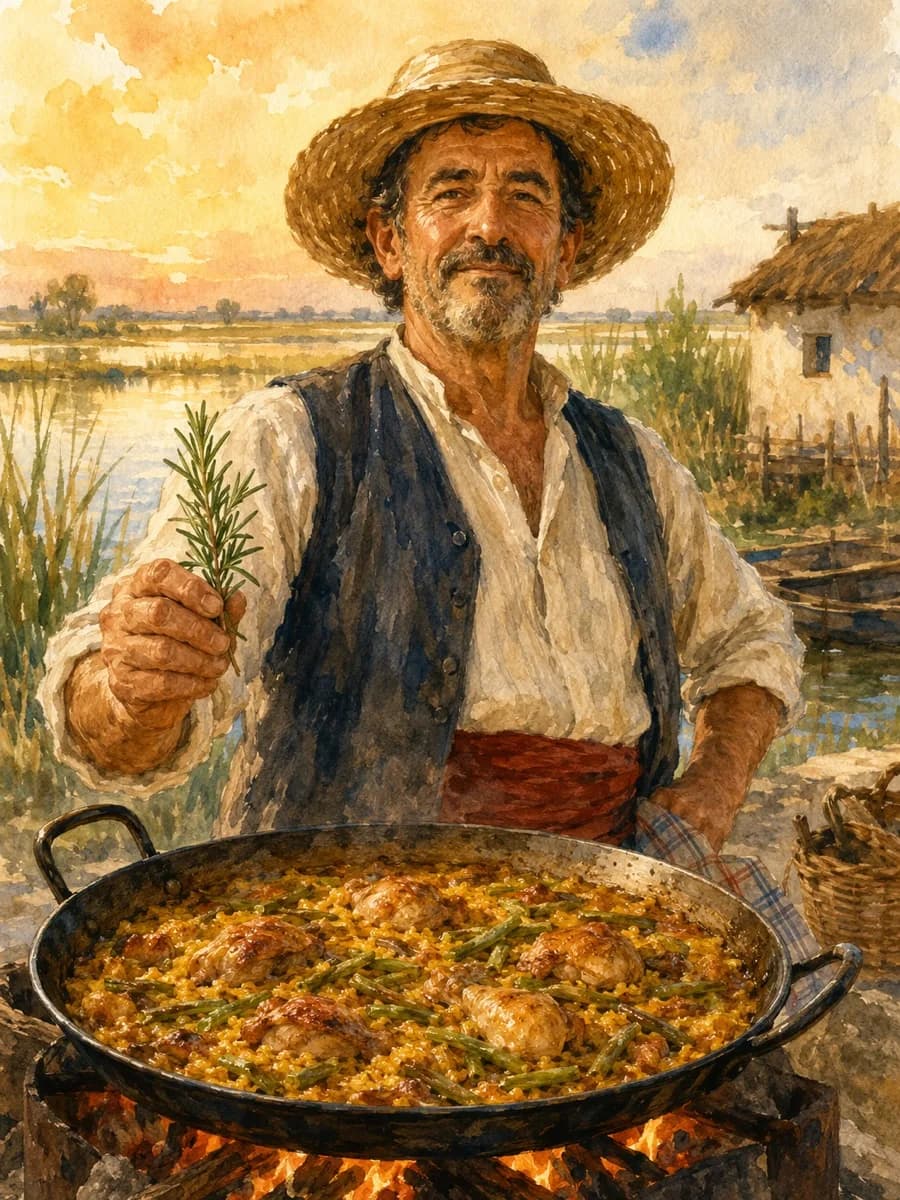
In El Palmar, we say the socarrat is the soul of the rice—and everything else is just filling. This dish, with its slow-roasted peppers and tomatoes tumbling across saffron-stained grains, brings me back to Sunday afternoons at my grandfather's table, when the whole family would gather around the pan and fight over who got the crispy corner pieces. My grandfather never added seafood, never stirred, and never apologized for either.
TagsPaellaSocarratSaffronValencianOne PotSpanish CuisineRoasted Vegetables
Source: generated · June 10, 2026