 Japanese
Medium · Hot
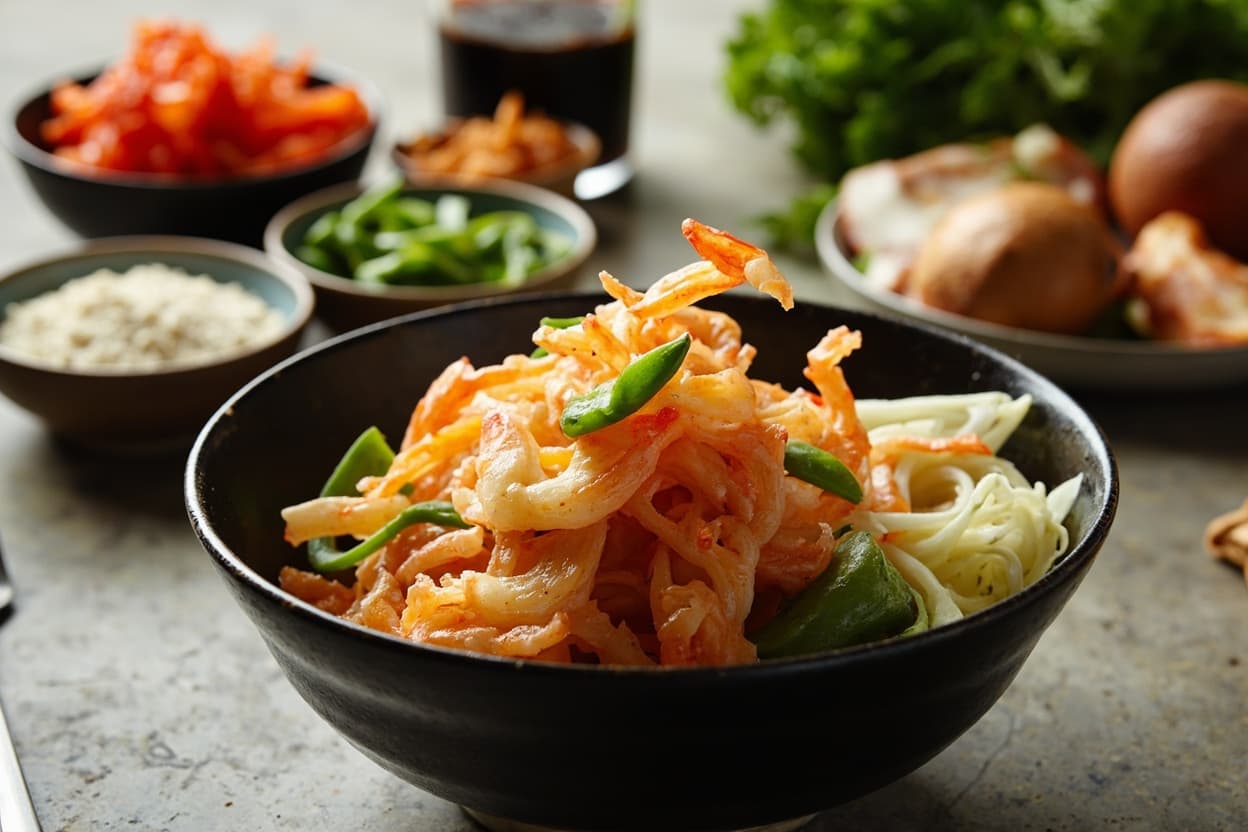
Shrimp and Vegetable Tempura Bowl
Shrimp and sweet potato coated in a cold, minimal flour batter and lowered into hot oil until the crust is pale and shatters on contact. Green beans go in last, barely a minute. Soy for dipping — sharp and immediate against the batter's neutral delicacy.

Prep
20 min
Cook
25 min
Total
45 min
Method
Prepare
1
Rinse rice until water runs clear. Cook in rice cooker with equal parts water to rice ratio. Set aside and keep warm.
2
Slice sweet potato into thin rounds, approximately 1/4 inch thick. Peel and slice carrot into diagonal pieces. Cut zucchini into 1/2 inch rounds. Trim green beans. Leave mushroom whole or halve if large.
3
Peel and devein shrimp, leaving tails intact for presentation. Pat dry with paper towel.
Make Dipping Sauce
4
Grate fresh ginger using a fine grater to extract 1 teaspoon of juice. Combine soy sauce, honey, grated ginger, and dashi stock in a small bowl. Stir gently until honey dissolves. Set aside at room temperature.
Prepare Tempura Batter
5
Sift all-purpose flour and baking powder into a large mixing bowl. Add salt and whisk to combine.
6
Make a well in the center. Crack egg into the well and add ice water. Using chopsticks or a fork, mix with quick, light strokes just until flour is incorporated. The batter should remain slightly lumpy. Do not overmix.
7
Keep batter COLD at all times. Place bowl over ice water if necessary. Use within 10 minutes for best results.
Assemble Bowls
8
Ladle 1/2 cup warm dashi broth into each bowl. Place 1/2 cup steamed rice in the center, letting it float slightly on the broth.
9
10
Encourage eating promptly — the tempura loses its precious crunch within minutes.
B
Nutri-Score
Good balance
A–E · lower is better · score 2
Calories
1769
per serving
Calorie-dense · 1769 kcalLow sugar · 12g
Protein
27g
Carbs
143g
Fat
123g
Sat. fat
13g
Fiber
8g
Sugar
12g
Sodium
1066mg
Dairy FreeHeart HealthyDiabetic FriendlyHigh ProteinBalanced
Nutri-Score is a general nutritional-balance guide, not medical or dietary advice.
D
Environmental impact
High impact
A–E · lower is better · includes estimates
kg CO2e
1.9
per serving
DCarbonAEU all-round· carbon sets the grade
Water
7.0m³
Land
87Pt
Runoff
0.5g P
Shrimp drives 43% of this recipe’s estimated footprint.
Carbon from Poore & Nemecek 2018; water, land & runoff from Agribalyse — modelled averages for comparing recipes, not a measurement of your groceries.
Flavor Profile
7
Umami
4
Sweet
5
Salty
2
Sour
1
Bitter
3
Spicy
Textures
CrispyTenderSoft
Aromas
GingerUmamiBrinyEarthy
Kitchen Equipment
Primary Tool
WokWokRice CookerThermometerSlotted SpoonWire RackChef KnifeCutting BoardStrainerGraterMixing BowlPaper TowelPlastic Wrap
Counter FootprintMedium
Techniques
Safety & Storage
Cooking Temperature
Heat sunflower oil to exactly 350°F (175°C) using a thermometer. Oil below this temperature results in greasy tempura; oil significantly above causes burning and oil degradation.
Handling
Keep tempura batter ice cold at all times. Place bowl over ice water bath during use. Discard batter after 10 minutes as bacterial growth occurs rapidly in room temperature egg-flour mixtures.
Cross Contamination
Use separate utensils and cutting boards for raw shrimp and vegetables. Never reuse oil that has contacted raw shrimp for other foods.
Equipment Safety
Never leave hot oil unattended. Use a deep pot with high sides, never fill more than one-third full. Have a properly rated lid nearby to smother flames in case of grease fire.
Allergen Warning
Inform guests about shrimp allergen presence before serving. Do not add additional toppings or sauces that may introduce undeclared allergens.
Storage
Serve tempura immediately as it loses crispiness within minutes. If storing is necessary, place on wire rack (not paper towels which create steam and sogginess) for no more than 1 hour at room temperature.
High Risk Population
Ensure young children and elderly individuals are supervised when eating fried shrimp as the crispy coating can mask the shrimp texture, posing a choking risk.
Pro Tips
Technique
Keep your tempura batter ice-cold at all times. Place the mixing bowl over a larger bowl filled with ice water while you work. The temperature contrast between cold batter and hot oil is what creates those delicate, shattering layers you want.
Substitution
If fresh dashi stock is unavailable, dissolve one teaspoon of dashi powder in two cups of hot water. It captures the umami foundation this dish needs, though the homemade version carries deeper, more nuanced flavor.
Equipment
A thermometer is essential here—do not guess at the oil temperature. Too hot and the batter browns before cooking through; too cool and the tempura becomes greasy rather than crisp.
From the chef
Tempura is about control — ice-cold batter, oil held at exactly 350 degrees, each piece lifted out while still pale gold. The crust shatters on contact; beneath it, shrimp and sweet potato stay tender. Dashi warms the base of the bowl, rice sits just above it, and a ginger-honey dipping sauce cuts through the neutral batter with quiet precision. Serve immediately. That crunch is brief and worth respecting.
TagsTempuraJapaneseShrimpVegetablesBowlWeeknightDipping SauceDashiSeafood
AllergensEggsSoyShellfishWheatGluten
Source: generated · May 30, 2026