 Cajun
CajunMedium · Hot
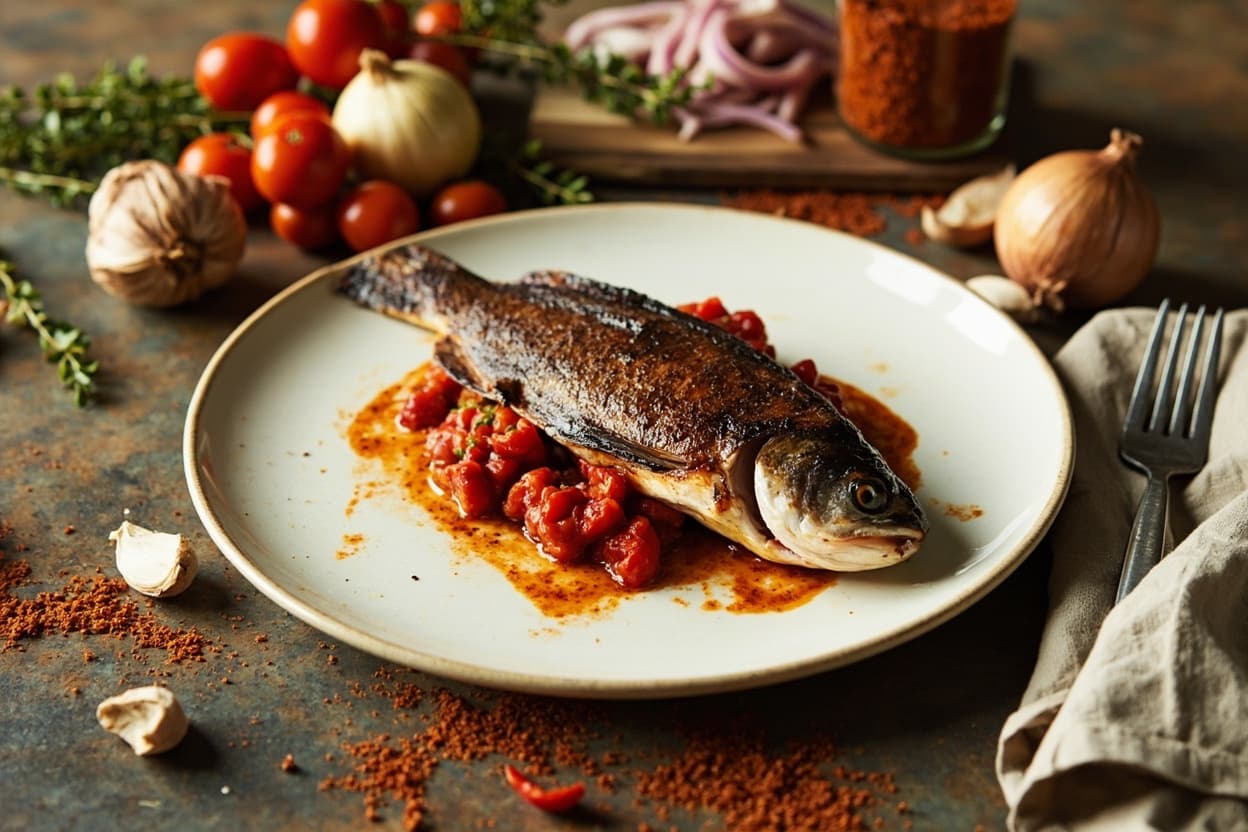
Blackened Trout with Cajun Spice Rub
The cast iron has to be smoking hot before the trout goes in — that's the whole secret, and there's no shortcut around it. Smoked paprika, cayenne, and thyme form a crust that sears into the butter-brushed fish almost instantly, sealing in the flaky interior while the outside chars to a deep, fragrant bark. Garlic in the butter at the finish line brings everything home.
Prep
10 min
Cook
12 min
Total
22 min
Method
Prepare Spice Rub
1
Combine paprika, smoked paprika, cayenne, cumin, minced garlic, salt, black pepper, and dried thyme in a small bowl. Mix until evenly distributed. The smell alone will remind you why cast iron and soul food go hand in hand.
Season and Blacken the Trout
2
Pat the trout fillets completely dry with paper towels — moisture is the enemy of a good blackened crust. Generously coat both sides of each fillet with the Cajun spice rub, pressing firmly so it adheres.
3
Heat your cast iron skillet over high heat for at least 3-4 minutes until it's screaming hot. Add the butter and let it melt and begin to turn golden-brown with flecks of brown bits — we're looking for that nutty, fragrant stage just before it burns. This is the moment Grandma always called 'the point of no return.'
4
Carefully place the seasoned trout fillets skin-side down in the hot skillet. Do not move them. Let them sear undisturbed for 3-4 minutes until you see the edges turning dark and caramelized. The spices will blacken slightly — that's not burning, that's flavor.
5
Flip each fillet using a sturdy spatula. Cook another 3-4 minutes on the second side until the flesh flakes easily when pressed with a fork. The internal temperature should reach 145°F at the thickest part.
C
Nutri-Score
Fair balance
A–E · lower is better · score 3
Calories
426
per serving
High in saturated fat · 14gHigh in protein · 34gLow sugar · 2g
Protein
34g
Carbs
10g
Fat
30g
Sat. fat
14g
Fiber
4g
Sugar
2g
Sodium
687mg
Gluten FreeLow CarbKeto FriendlyPescatarianDairy FreeHeart HealthyAnti InflammatoryBlood Pressure FriendlyHigh ProteinOmega 3 Rich
Nutri-Score is a general nutritional-balance guide, not medical or dietary advice.
E
Environmental impact
Very high impact
A–E · lower is better · includes estimates
kg CO2e
3.4
per serving
ECarbonBEU all-round· carbon sets the grade
Water
8.4m³
Land
38Pt
Runoff
4.5g P
Trout Fillets, Skin-On drives 93% of this recipe’s estimated footprint.
Carbon from Poore & Nemecek 2018; water, land & runoff from Agribalyse — modelled averages for comparing recipes, not a measurement of your groceries.
Flavor Profile
7
Umami
3
Sweet
5
Salty
3
Sour
2
Bitter
6
Spicy
Textures
CrispyFlakyTender
Aromas
SmokyHerbalPepperyButteryGarlicky
Kitchen Equipment
Primary Tool
Cast Iron SkilletCounter FootprintMedium
Techniques
Safety & Storage
Cooking Temperature
Fish must reach an internal temperature of 145°F at the thickest part. Use a calibrated meat thermometer to verify doneness before serving.
Cast iron skillet must be preheated until screaming hot before adding butter and fish to achieve proper blackening without burning.
Handling
Pat trout fillets completely dry before seasoning. Moisture prevents proper sear and can cause sticking.
Cross Contamination
Use separate cutting boards and utensils for raw fish to prevent cross-contamination with other foods, especially if serving with raw lemon wedges.
High Risk Population
Elderly, pregnant, immunocompromised individuals, and young children should only consume fish cooked to proper temperature. Ensure no raw or undercooked portions remain.
Equipment Safety
Cast iron skillet retains heat for long periods after cooking. Allow to cool completely before washing to prevent burns. Never plunge hot cast iron into cold water.
Storage
Leftover blackened trout should be refrigerated within 2 hours in airtight containers and consumed within 3 days. Reheat to 165°F before eating.
Allergen Warning
Butter contains milk allergens. Guests with milk allergies should be informed that butter is essential to the cooking process and cannot be omitted without changing the dish's character.
Pro Tips
Technique
Your cast iron has to be genuinely hot enough to make the butter brown in seconds — patience gets you that mahogany crust, rushing gets you a mess. And rule number one: don't touch those fillets once they hit the skillet. Let them cook. The fish will release when it's ready.
Substitution
Nothin' wrong with catfish if you can't find fresh trout — it's firm enough to handle the heat and soaks up that Cajun rub like it was made for it. Same goes for red snapper or tilapia if you need to work with what's available.
From the chef
The cast iron has to be smoking hot before the trout goes in — that is the whole secret, and there is no shortcut around it. Smoked paprika, cayenne, cumin, and thyme go onto butter-brushed skin-on fillets and hit that blazing-hot surface in a single searing moment, building a dark, fragrant bark while the inside stays clean and flaky. Three to four minutes per side, no moving them around. Finish with garlic butter and a hard squeeze of lemon to cut through all that heat. This is why you own a cast iron.
TagsCajunBlackenedCast IronSpicyQuickHigh ProteinSouthern
AllergensFishMilk
Source: generated · May 30, 2026