 Portuguese
Medium · Hot
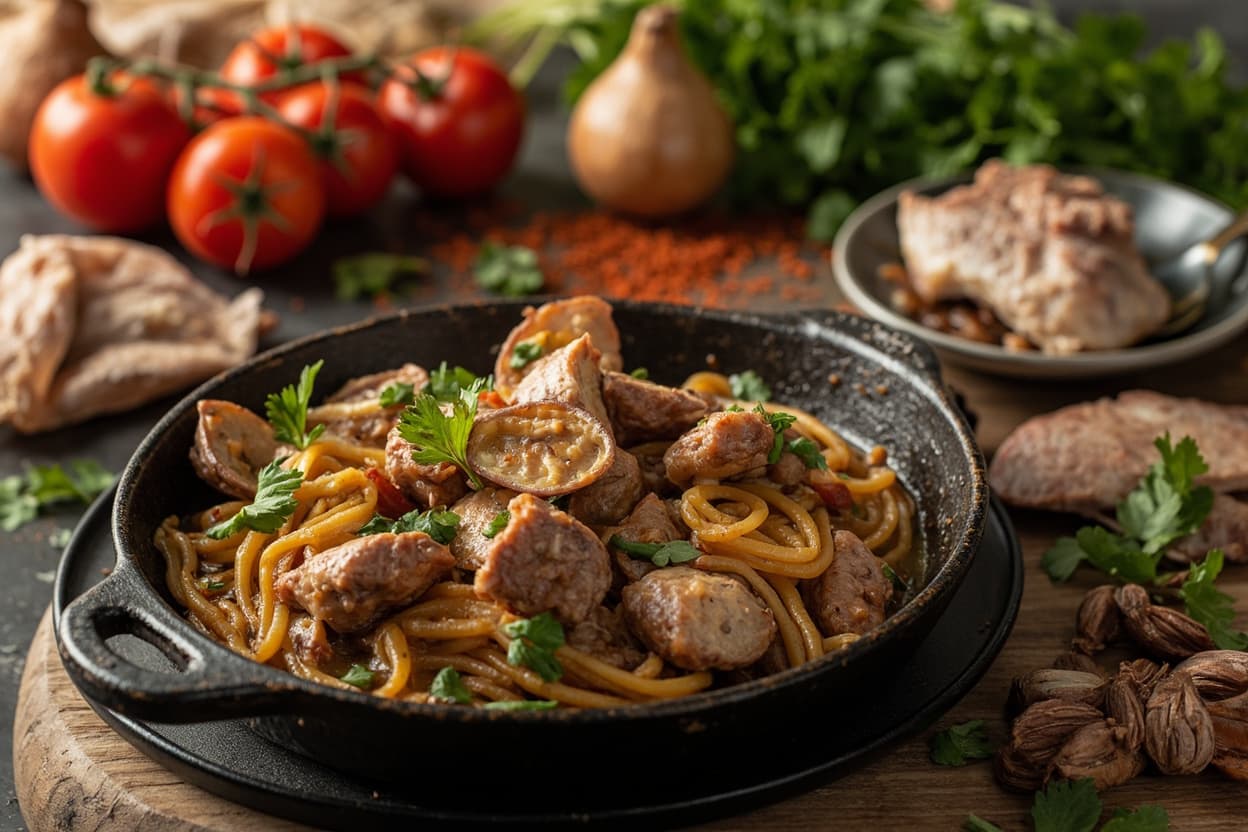
Pork and Clams Alentejana Skillet
Pork loin browned until it has real color, then the clams go in with garlic and smoked paprika in olive oil, and everything comes together in the steam the clams release as they open. Cilantro is a requirement, not a garnish — it's what lifts this dish out of heaviness and into something that tastes like the Alentejo. The broth left in the pan is worth a piece of bread.
Prep
15 min
Cook
35 min
Rest
2 min
Total
52 min
Method
Brown the Pork and Sausage
1
Season pork belly cubes with salt and cracked black pepper. Heat a large skillet (cast iron works beautifully here) over medium-high heat and add 2 tablespoons of olive oil.
2
Lay the pork belly cubes in a single layer and cook undisturbed for 4-5 minutes until deeply golden on one side. Flip and cook another 3-4 minutes. Remove to a plate and pour off most of the rendered fat, leaving about 1 tablespoon.
3
Add the sliced sausage rounds to the same skillet and brown for 3-4 minutes until lightly caramelized. Remove and set aside with the pork.
Build the Aromatic Base
4
Reduce heat to medium. Add the remaining 2 tablespoons of olive oil to the skillet. Sauté the diced yellow onion for 5-6 minutes, stirring occasionally, until softened and translucent.
5
Add the sliced garlic and cook for 2 minutes until fragrant and just turning golden. Do not let it burn.
6
Toss in the cubed potatoes and stir to coat in the oil and aromatics. Cook for 3-4 minutes, letting them take on a little color at the edges.
Season and Braise
7
Sprinkle the smoked paprika and cayenne over the potatoes. Stir well to distribute the spices evenly throughout the pan.
8
Return the browned pork belly and sausage to the skillet. Stir to combine everything, then spread into an even layer.
Steam the Clams and Finish
10
Uncover the skillet and scatter the scrubbed clams over the top. Cover again and steam for 5-7 minutes, until all the clams have opened. Discard any that remain closed.
11
12
Let the skillet sit uncovered for 2 minutes — the residual heat will reduce the sauce slightly and let the flavors settle. Serve directly from the skillet with crusty bread to mop up the juices.
C
Nutri-Score
Fair balance
A–E · lower is better · score 4
Calories
1085
per serving
High in saturated fat · 25gSource of protein · 38gLow sugar · 5g
Protein
38g
Carbs
26g
Fat
92g
Sat. fat
25g
Fiber
4g
Sugar
5g
Sodium
1527mg
Omega 3
Nutri-Score is a general nutritional-balance guide, not medical or dietary advice.
Grade pending
Environmental impact
Estimated footprint
Grade pending · 73% ingredient coverage
kg CO2e
≥2.2
per serving
Pork Belly, cut into 2cm cubes drives 71% of this recipe’s estimated footprint.
Carbon from Poore & Nemecek 2018; water, land & runoff from Agribalyse — modelled averages for comparing recipes, not a measurement of your groceries.
Flavor Profile
7
Umami
3
Sweet
5
Salty
3
Sour
1
Bitter
4
Spicy
Textures
CrispyTenderChewy
Aromas
SmokyHerbalBrinyPungent
Kitchen Equipment
Primary Tool
Large SkilletCounter FootprintMedium
Safety & Storage
Cooking Temperature
Clams must be cooked until they open completely, approximately 5-7 minutes covered. Discard any clams that remain closed after cooking as they may contain harmful bacteria.
Pork belly should reach an internal temperature of 145°F (63°C) for medium doneness. The 12-15 minute braise at medium-low should achieve this, but use a meat thermometer to verify.
Handling
Scrub clams thoroughly under cold running water and remove any barnacles or debris from shells. Soak in salted cold water for 20-30 minutes to expel sand before cooking.
High Risk Population
Children, elderly individuals, pregnant women, and immunocompromised persons should only consume clams that have been fully cooked to optimal temperature. Raw or undercooked mollusks pose significant foodborne illness risk.
Cross Contamination
Use separate cutting boards and utensils for raw pork and clams. Never return cooked pork to the plate that held raw meat. Wash all surfaces and tools with hot soapy water between uses.
Storage
Refrigerate leftovers within 2 hours of cooking. Clam and pork dishes are best consumed within 1-2 days when stored at 40°F (4°C) or below. Reheat to 165°F (74°C) before consuming.
Allergen Warning
Verify that linguiça or smoked sausage does not contain allergen-containing ingredients such as wheat, milk, soy, or eggs by checking product labels or consulting with the manufacturer.
Equipment Safety
Cast iron skillets retain heat and can cause burns. Use oven mitts when handling and allow the skillet to cool before washing. Never add cold liquid to a hot cast iron pan to prevent thermal shock.
Pro Tips
Technique
Do not agitate those pork belly cubes too early — let them sit undisturbed in the pan until they release naturally. Forcing them too soon breaks the sear and the crust carries the flavor through the whole braise.
Substitution
If linguiça is hard to find, chouriço alentejano works beautifully, or even a good Spanish chorizo — just look for the smoky, paprika-forward ones that behave like Portuguese sausage should.
Equipment
A cast iron skillet is your best friend here — it holds heat evenly, builds the fond you need for the braise, and goes straight from stove to table looking like it belongs there.
From the chef
The Alentejana is built in stages — pork belly cubed and browned until it has real color on one side before you touch it again, sausage rendered alongside until the fat carries the smoked paprika and garlic into the whole pan. Potatoes go in next and take on that color before the clams arrive last, steaming open in the broth the pork has made. Cilantro is not a garnish here; it lifts the whole dish away from heaviness and into something coastal. The broth left in the pan when you serve is worth a piece of bread. A lemon squeezed over everything at the end, and not a thing wasted.
TagsAlentejo
AllergensMollusksGlutenSoy
Source: generated · May 30, 2026