 American
Medium · Hot
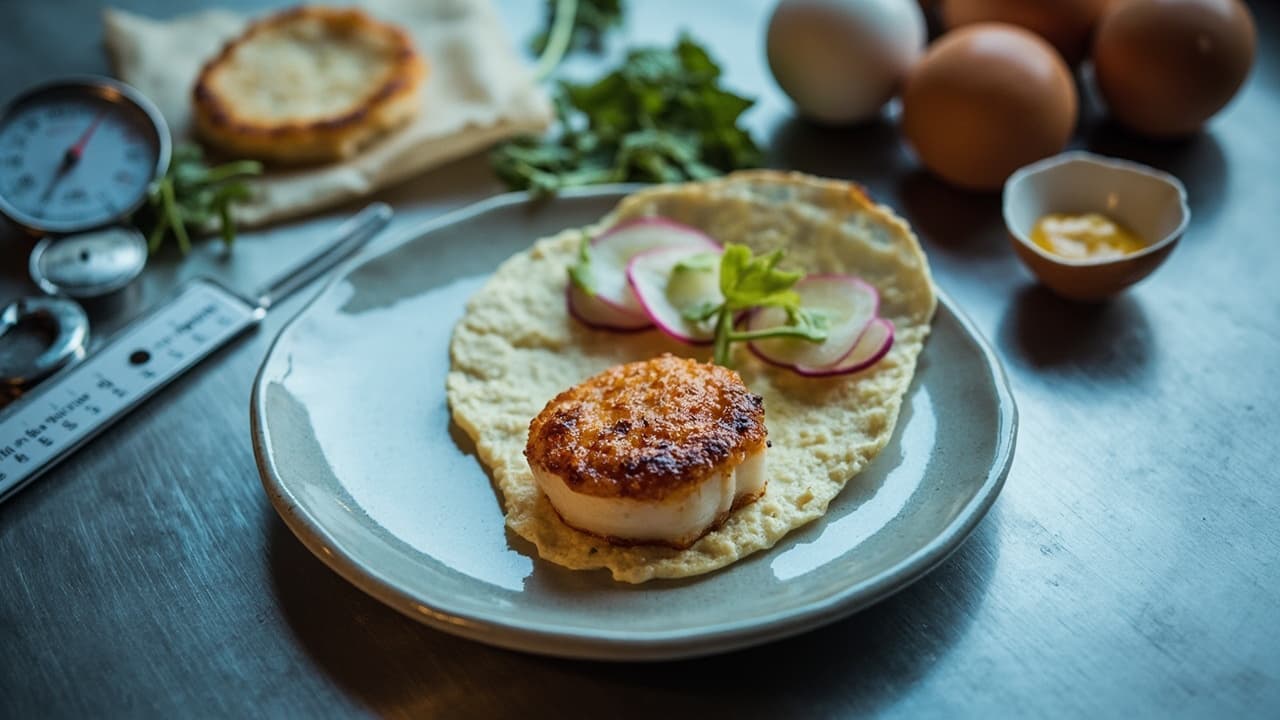
Precision-Seared Scallop with Almond Flour Pancake and Radish
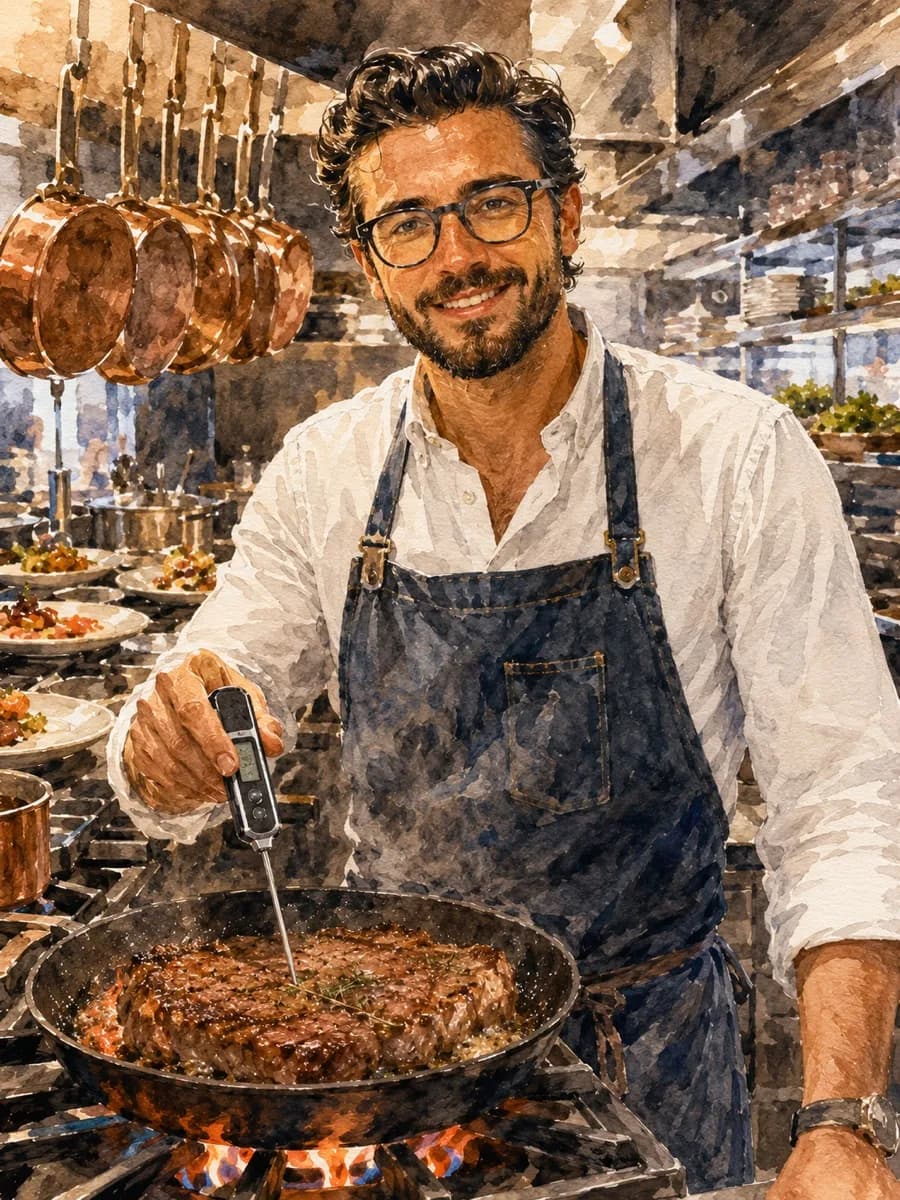
Chef Jordan Weiss applies precise thermal control to achieve the ideal Maillard crust on scallops, pairing them with a delicate almond flour pancake and crisp radish for textural contrast.
Prep
15 min
Cook
20 min
Total
35 min
Method
1
Pat scallops completely dry with paper towels; any surface moisture prevents browning. Season evenly with salt and black-pepper. Allow to rest at room temperature for 10 minutes.
2
Trim radish tops and roots; slice each radish into thin rounds (2mm) using a mandoline or sharp knife. Set aside.
3
In a bowl, whisk egg into almond-flour, almond-flour, baking-powder, and salt until a thick batter forms (consistency of pancake batter). Stir in melted butter.
4
Place a stainless steel skillet over high heat for 3 minutes until smoking point. Add olive-oil and swirl to coat.
5
Lay scallops in pan without crowding (work in batches if needed). Set timer for 90 seconds. Do not move them.
6
At 90 seconds, check underside: should be deeply golden with a caramelized crust. Flip each scallop.
7
8
Remove scallops to a warm plate; rest 2 minutes. Target: 2 scallops per serving.
9
Reduce heat to medium; place a non-stick or cast-iron pan over medium heat for 2 minutes.
10
Pour almond-flour batter into pan, spreading into a thin round (6-inch diameter). Cook 2-3 minutes until edges set and bottom is light golden.
11
Flip pancake carefully; cook another 2 minutes until firm and cooked through. Transfer to a wire rack to maintain crispness.
12
Place warm almond-flour pancake on each plate. Arrange 2 seared scallops on top.
13
Fan radish slices alongside or over the scallops. Drizzle olive-oil over radishes; season with salt and black-pepper.
14
Serve immediately while scallops are at peak crust temperature.
A
Nutri-Score
Excellent balance
A–E · lower is better · score -1
Calories
711
per serving
High in protein · 56gSource of fibre · 15gLow sugar · 6g
Protein
56g
Carbs
22g
Fat
47g
Sat. fat
12g
Fiber
15g
Sugar
6g
Sodium
1594mg
Dairy Free OptionalGluten FreeGrain FreeKetoLow CarbDiabetesHeart ConditionalWeight ManagementHigh Protein
Nutri-Score is a general nutritional-balance guide, not medical or dietary advice.
Grade pending
Environmental impact
Estimated footprint
Grade pending · 80% ingredient coverage
kg CO2e
≥0.2
per serving
butter drives 27% of this recipe’s estimated footprint.
Carbon from Poore & Nemecek 2018; water, land & runoff from Agribalyse — modelled averages for comparing recipes, not a measurement of your groceries.
Flavor Profile
6
Umami
3
Sweet
5
Salty
2
Sour
1
Bitter
4
Spicy
Textures
CrispyCrunchyTender
Aromas
DairyNuttyPepperySmoky
Kitchen Equipment
Primary Tool
Stainless Steel Frying PanNon Stick Frying PanStainless Steel Frying PanDigital ThermometerMandoline SlicerMixing BowlPaper TowelsPlateSpatulaTimerWhiskWire RackPaper Towels
Techniques
Safety & Storage
Cooking Temperature
Scallops must reach 63°C internally (per recipe specification). Use a digital thermometer inserted sideways into the thickest scallop to verify doneness. Undercooked mollusks pose significant foodborne illness risk.
Heat stainless steel skillet until smoking point before adding oil for scallop sear. Insufficient pan temperature causes steaming rather than Maillard browning, resulting in rubbery texture.
Cross Contamination
Designate separate cutting boards and utensils for raw scallops. Cross-contact between raw shellfish and ready-to-eat foods can cause histamine poisoning and bacterial transmission.
Clean and sanitize all contact surfaces after handling raw scallops before preparing the allergen-free pancake component. Butter and egg residues require thorough wash cycles.
Use dedicated, sanitized equipment (mixing bowl, whisk, spatula) for the almond flour pancake when preparing for guests with egg allergies. Clean utensils with hot soapy water between uses to prevent allergen cross-contact.
Allergen Warning
This dish contains multiple priority allergens: mollusks (scallops), eggs, milk (butter), and tree nuts (almonds). Communicate all four allergens to guests with sensitivities before service.
Handling
Pat scallops completely dry before searing. Surface moisture creates steam barrier, preventing crust formation and reducing textural quality. Moisture also increases oil splatter risk.
Do not crowd scallops in pan during searing. Overcrowding drops oil temperature below 300°F, causing scallops to steam rather than sear and increasing handling injury risk from prolonged cook times.
Storage
Scallops are highly perishable. If purchased day-prior, store on ice or coldest refrigerator section (33-38°F). Do not hold at room temperature for more than 10 minutes (recipe rest period) before cooking.
High Risk Population
Pregnant individuals, immunocompromised guests, and young children face elevated risk from undercooked mollusks. Scallops must reach 63°C throughout with no raw or translucent centers.
Remove scallops to warm plate immediately after reaching 63°C. Allow 2-minute rest period before service. Overcooked scallops (beyond 65°C) become tough and release excess moisture, compromising the precision-seared crust.
Pro Tips
Technique
Insert your thermometer sideways into the thickest part of the scallop—end-to-end reading gives you core temperature, not surface heat.
Substitution
Swap almond flour for coconut flour, but reduce quantity by 75 percent since it absorbs significantly more liquid.
From the chef
I ran seventeen trials on scallop sear times before landing on 90 seconds as the optimal point for Maillard crust development without overcooking the interior. The almond flour pancake emerged from testing gluten-free binders—egg and baking powder create the same structure as wheat flour but with better browning characteristics. This dish is pure data.
TagsPrecision CookingGluten FreeSearedSeafoodLow CarbElegantTechnique Focused
AllergensMollusksEggsMilkTree Nuts
Source: generated · June 13, 2026