 Filipino
Medium · Hot
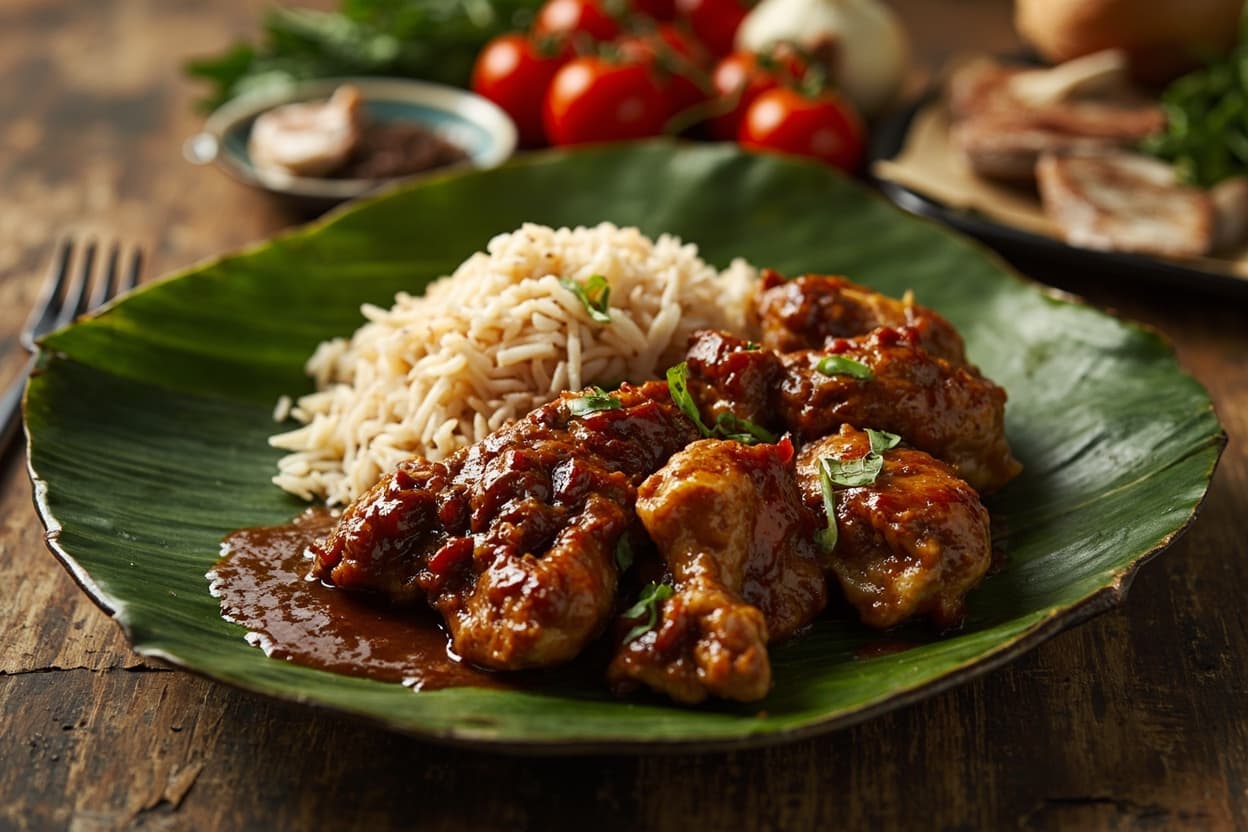
Classic Chicken Adobo with Garlic Rice
Chicken thighs braise low and slow in the holy trinity of soy sauce, white vinegar, and whole garlic until the meat is fall-apart tender and the sauce reduces to a dark, lacquered glaze. The rendered fat gets poured over white rice with extra garlic fried in — sinangag the way it was meant to be made, fragrant and golden. This is the dish that explains everything about Filipino cooking.

Prep
15 min
Cook
45 min
Rest
30 min
Total
1h 30m
Method
Marinate the Chicken
1
In a large bowl, combine soy sauce, white vinegar, crushed garlic, and black pepper. Add chicken thighs and toss to coat. Marinate for at least 30 minutes, or overnight in the fridge for extra flavor.
Cook the Adobo
2
Heat olive oil in a Dutch oven over medium-high heat. Lift chicken from marinade andReserve the marinade liquid. Sear chicken thighs skin-side down for 5 minutes until golden. Flip and cook 3 more minutes.
3
Add sliced yellow onion to the pot and sauté until softened, about 3 minutes.
4
Pour in the reserved marinade and water. Bring to aboil, then reduce heat to low. Cover and simmer for 30-35 minutes until chicken is tender and cooked through.
5
Remove lid and increase heat to medium. Cook uncovered for 10-15 minutes, spooning sauce over chicken until it reduces and coats the meat. Season with salt to taste.
Make the Garlic Rice
6
Rinse white rice until water runs clear. Cook rice in a rice cooker or pot with 2.5 cups water.
7
Plate and Serve
9
Spoon a generous mound of garlic rice onto each plate. Arrange a chicken thigh on top and ladle extra adobo sauce over the rice. Serve immediately with extra soy sauce and vinegar on the side if desired.
B
Nutri-Score
Good balance
A–E · lower is better · score 1
Calories
1367
per serving
High in protein · 108gLow sugar · 5g
Protein
108g
Carbs
107g
Fat
53g
Sat. fat
11g
Fiber
3g
Sugar
5g
Sodium
1722mg
High ProteinDairy FreeHeart Healthy
Nutri-Score is a general nutritional-balance guide, not medical or dietary advice.
E
Environmental impact
Very high impact
A–E · lower is better · includes estimates
kg CO2e
4.3
per serving
ECarbonBEU all-round· carbon sets the grade
Water
2.6m³
Land
144Pt
Runoff
0.4g P
Chicken Thighs, bone-in drives 87% of this recipe’s estimated footprint.
Carbon from Poore & Nemecek 2018; water, land & runoff from Agribalyse — modelled averages for comparing recipes, not a measurement of your groceries.
Flavor Profile
8
Umami
3
Sweet
7
Salty
8
Sour
2
Bitter
3
Spicy
Textures
TenderCrispySilkySoft
Aromas
PungentTangySavorySmoky
Kitchen Equipment
Primary Tool
Dutch OvenDutch OvenRice CookerWokChef KnifeCutting BoardLarge BowlMeasuring CupMeasuring SpoonsLadlePlastic WrapMixing Bowl
Counter FootprintMedium
Safety & Storage
Cooking Temperature
Chicken must reach internal temperature of 165°F (74°C) throughout. Simmering at low heat for 30-35 minutes achieves this, but use a meat thermometer to verify doneness, especially near the bone.
Cross Contamination
Raw chicken marinade should not be used as sauce without boiling. Reserve only the liquid portion for cooking. Use separate utensils for raw chicken and ready-to-eat components like garlic rice.
Storage
Cool adobo to room temperature within 2 hours, then refrigerate in airtight containers for up to 3-4 days. Freeze for up to 2 months. Reheat leftovers to 165°F (74°C) before serving.
Handling
Marinate chicken in the refrigerator at 40°F (4°C) or below. Never leave marinating chicken on the counter. Wash hands thoroughly with soap for 20 seconds after handling raw poultry.
Allergen Warning
This dish contains soy. To make soy-free, substitute coconut aminos or tamari made without soy. Verify all condiments and sauces are soy-free if serving to individuals with soy allergies.
Pro Tips
Technique
Don't rush the marination — even 30 minutes gives flavor, but overnight in the fridge makes the chicken really drink in that tangy-salty goodness. Your patience will be rewarded with every bite.
Substitution
No cane vinegar? White vinegar works, but if you can find palm or coconut vinegar, your adobo will taste even more authentic. It's what my lola always used.
From the chef
Adobo is the dish that explains Filipino cooking in one pot — soy sauce, white vinegar, and whole crushed garlic braised together until the chicken is fall-apart tender and the sauce reduces into a dark, sticky glaze that coats the back of a spoon. The vinegar sharpens, the soy deepens, and the fat that renders off the thighs gets spooned over garlic rice so fragrant it perfumes the whole kitchen. Bone-in thighs are non-negotiable here; they give the braise its body. Make enough for leftovers — the flavor only gets better the next day when the sauce has had time to settle into the meat.
TagsFilipinoAdoboBraised ChickenGarlic RiceFamily StyleComfort FoodWeeknight DinnerSoy Vinegar
AllergensSoy
Source: generated · May 30, 2026