 Japanese
Medium · Warm
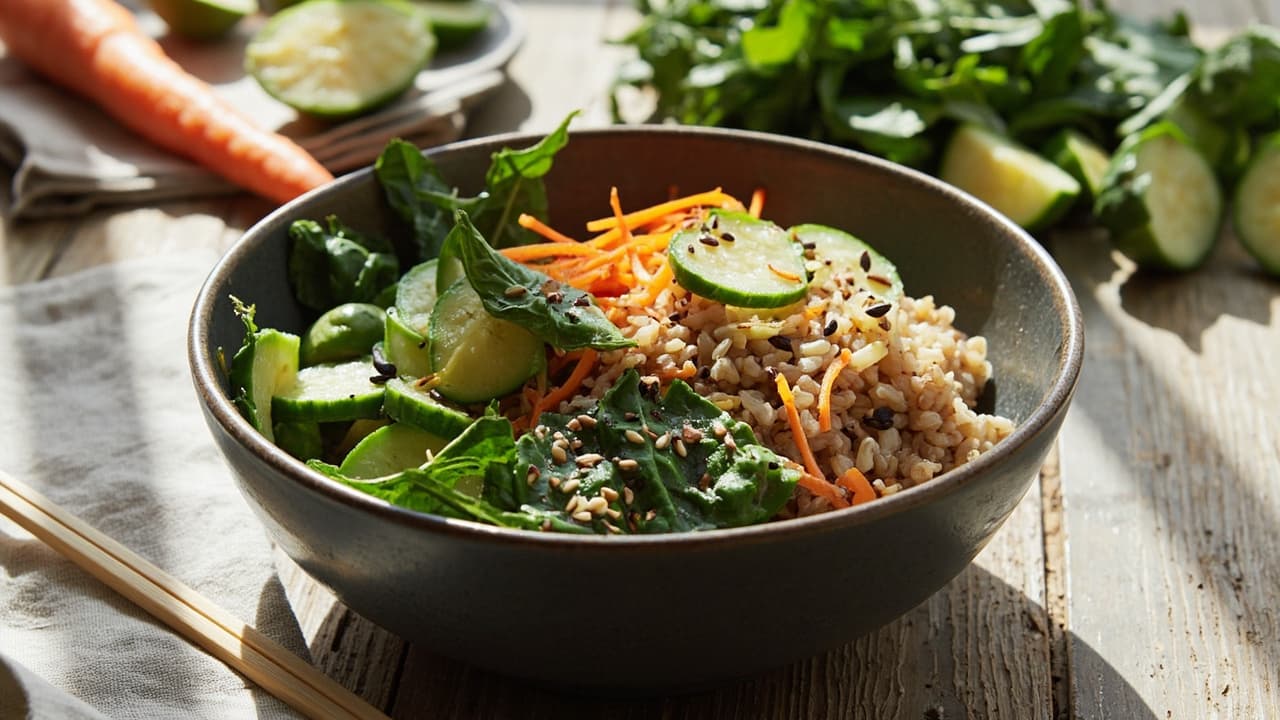
Japanese Seven-Grain Bowl with Edamame & Sesame
A nourishing bowl of mixed grains topped with tender edamame, crisp vegetables, and toasted sesame seeds, finished with a light soy-sesame dressing in the spirit of simple, honest Japanese cooking.

Prep
15 min
Cook
35 min
Total
50 min
Method
1
Rinse quinoa under cold running water for 30 seconds to remove bitter saponins. Drain well.
2
Combine quinoa, brown rice, and rolled oats in a medium pot with 4 cups cold water. Bring to a rolling boil over high heat, then reduce to a bare simmer. Cover tightly and cook 25 minutes until grains are tender and liquid is absorbed. Remove from heat and rest covered 5 minutes.
3
4
5
6
Warm 1 tsp olive oil in a small skillet over medium heat. Add sesame seeds and stir constantly 2-3 minutes until golden and fragrant. Transfer to a bowl immediately to stop cooking.
7
8
9
Divide warm or room temperature grains evenly among four bowls, mounding slightly in the center.
11
Drizzle soy-sesame dressing over each bowl, then scatter toasted sesame seeds generously across the top. Finish with remaining salt and black pepper. Serve immediately.
A
Nutri-Score
Excellent balance
A–E · lower is better · score -5
Calories
775
per serving
Source of protein · 32gSource of fibre · 23gLow sugar · 10gLow saturated fat · 4g
Protein
32g
Carbs
121g
Fat
20g
Sat. fat
4g
Fiber
23g
Sugar
10g
Sodium
1242mg
Dairy FreeEgg FreeGluten FreeVeganVegetarianDiabetesHeart HealthyHigh FiberLow Saturated FatBalanced MealHigh ProteinPlant Forward
Nutri-Score is a general nutritional-balance guide, not medical or dietary advice.
B
Environmental impact
Low impact
A–E · lower is better · includes estimates
kg CO2e
0.5
per serving
BCarbonAEU all-round· carbon sets the grade
Water
2.2m³
Runoff
0.06g P
Brown Rice drives 40% of this recipe’s estimated footprint.
Carbon from Poore & Nemecek 2018; water, land & runoff from Agribalyse — modelled averages for comparing recipes, not a measurement of your groceries.
Flavor Profile
7
Umami
3
Sweet
5
Salty
1
Sour
2
Bitter
3
Spicy
Textures
ChewyCrispTender
Aromas
EarthyHerbalNuttyPungent
Kitchen Equipment
Primary Tool
Medium PotSafety & Storage
Cross Contamination
Use separate cutting boards for raw grains and fresh vegetables. Sanitize surfaces between handling edamame blanching and vegetable prep.
Cooking Temperature
Blanch edamame at rolling boil (212°F) for 3-4 minutes until bright green. Cool immediately in ice bath to halt pathogen growth.
Storage
Refrigerate assembled bowls within 2 hours if not served immediately. Cooked grains are perishable and require prompt cooling.
Handling
Toast sesame seeds in dry skillet over medium heat, stirring constantly to prevent burning. Remove immediately when golden to avoid char.
Allergen Warning
Soy sauce contains wheat and soy. For gluten-free requirements, substitute with tamari or coconut aminos.
High Risk Population
Soy is a major allergen affecting children and adults. Ensure sesame seeds are fully visible as garnish to prevent accidental ingestion for those with sesame allergies.
Shelf Life
Prepared grains last 3-4 days refrigerated. Vegetables should be prepared same day for optimal freshness and food safety.
Pro Tips
Technique
Treat your grains like you would binchōtan—let them cook undisturbed. Resist the urge to lift the lid or stir during those 25 minutes. The steam inside is doing quiet work, binding the quinoa, rice, and oats into something greater than their parts. When the liquid is fully absorbed, spread the grains on a sheet pan to cool. This prevents clumping and lets each grain maintain its integrity, much like allowing coals to breathe rather than suffocating them.
Substitution
If you cannot find fresh edamame in their pods, quality frozen shelled edamame works well—just reduce blanching time by one minute. The carrots can be replaced with daikon radish shaved into ribbons for a more traditional Japanese texture, or omit entirely and add more cucumber for a lighter, cooler bowl.
From the chef
In Kagoshima, we learned that the finest ingredients need only the gentlest encouragement to reveal themselves. This bowl carries that same philosophy—the grains rest together like coals in the brazier, each lending its character to the whole without one dominating. The edamame bring a quiet sweetness, the sesame whispers its ancient fragrance, and the soy sauce ties everything with the same honest salinity we use to finish yakitori from the binchōtan. This is nourishment without ceremony, sustenance without complexity—food that asks only that you eat slowly and taste what is already there.
TagsJapaneseGrain BowlHealthyVegetarianMeal PrepWeeknight DinnerSoy Sesame
AllergensSoySesameGlutenWheat
Source: generated · June 12, 2026