 Cajun
CajunMedium · Hot
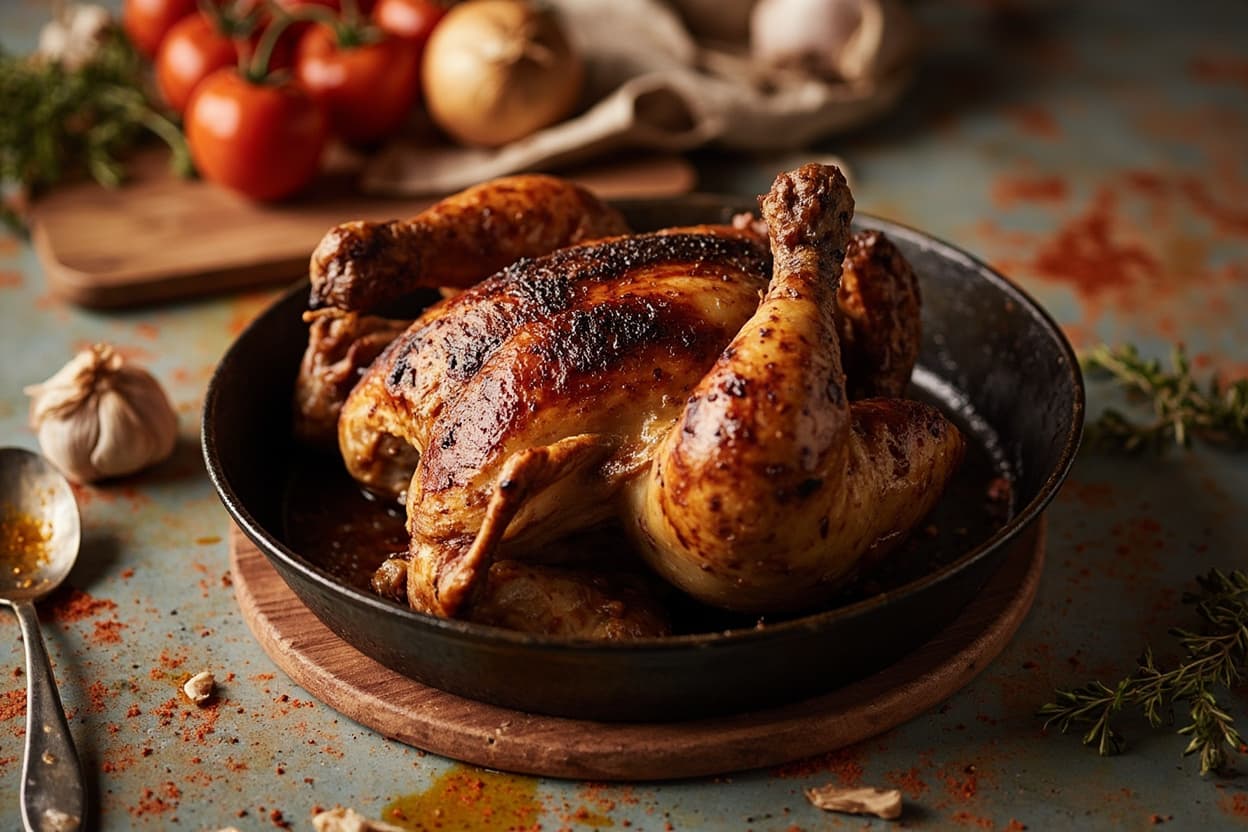
Cajun Roast Whole Chicken with Smoked Paprika
Butter pushed under the skin carries smoked paprika, cayenne, and thyme directly onto the meat, so the heat and smokiness season every bite from the inside out while the skin crisps up a deep, burnished red. Garlic roasts in the cavity and in the pan, growing sweet and mellow against the assertive spice rub. This is the bird you cook when you want the whole house to smell like a celebration.

Prep
20 min
Cook
1h 15m
Rest
10 min
Total
1h 45m
Method
Season the Chicken
1
Mix the smoked paprika, paprika, cayenne, salt, black pepper, thyme, and minced garlic together in a small bowl to form a bold Cajun spice rub.
2
Pat the whole chicken very dry with paper towels — this is critical for crispy skin. Lift the skin over the breast and rub about half the spice blend directly onto the meat, then massage the remaining blend all over the outside of the bird, getting it into every fold and under the wings.
Roast the Chicken
3
Preheat your oven to 425°F (220°C). Slice the yellow onion, celery stalks, and bell pepper and scatter them in a cast iron skillet or roasting pan as the aromatic bed for the chicken.
4
Place the seasoned chicken directly on top of the vegetables, breast side up. Dot the top of the chicken with 4 tablespoons of butter, letting it melt down over the skin.
5
Roast for 1 hour to 1 hour 15 minutes, until a meat thermometer inserted into the thickest part of the thigh (without touching bone) reads 165°F (74°C) and the juices run clear. Baste once halfway through with the pan drippings.
6
Remove the chicken from the oven and tent loosely with foil. Rest for 10 minutes — never skip the rest, or the juices will run all over your cutting board instead of staying in the meat.
Finish and Serve
7
While the chicken rests, melt the remaining 2 tablespoons of butter in a small skillet and whisk in 1 teaspoon of smoked paprika and a pinch of thyme. Spoon this golden finishing drizzle over the carved chicken and serve immediately alongside the roasted vegetables and pan juices.
B
Nutri-Score
Good balance
A–E · lower is better · score 2
Calories
1203
per serving
High in protein · 85gLow sugar · 8g
Protein
85g
Carbs
14g
Fat
88g
Sat. fat
29g
Fiber
5g
Sugar
8g
Sodium
1585mg
Gluten FreeNut FreeHypertensionHypercholesterolemiaHigh ProteinLow Carb
Nutri-Score is a general nutritional-balance guide, not medical or dietary advice.
E
Environmental impact
Very high impact
A–E · lower is better · includes estimates
kg CO2e
4.8
per serving
ECarbonBEU all-round· carbon sets the grade
Water
1.0m³
Land
137Pt
Runoff
0.4g P
Whole Chicken drives 94% of this recipe’s estimated footprint.
Carbon from Poore & Nemecek 2018; water, land & runoff from Agribalyse — modelled averages for comparing recipes, not a measurement of your groceries.
Flavor Profile
7
Umami
4
Sweet
6
Salty
2
Sour
1
Bitter
6
Spicy
Textures
CrispyTenderJuicy
Aromas
SmokyHerbalEarthy
Kitchen Equipment
Primary Tool
Cast Iron SkilletCast Iron SkilletRoasting PanMeat ThermometerSmall SkilletChef KnifeCutting BoardTongsMeasuring SpoonsSmall BowlAluminum FoilPaper Towels
Counter FootprintMedium
Safety & Storage
Cooking Temperature
Roast the chicken at 425°F (220°C) until the internal thigh temperature reaches exactly 165°F (74°C), measured without touching bone, and juices run clear. This is the USDA minimum safe internal temperature for whole poultry.
Handling
Pat the whole chicken completely dry with paper towels before seasoning. Washing raw poultry is discouraged — it disperses bacteria into the sink and surrounding surfaces.
Use separate, dedicated utensils and cutting boards for raw chicken preparation versus vegetable prep to prevent bacterial transfer.
High Risk Population
This dish contains common allergens (milk/butter and celery). Individuals with milk allergies or celery allergies (celery is a recognized EU allergen) must be informed before service. For populations at high risk (immunocompromised, elderly, young children, pregnant persons), fully verify internal temperature compliance.
Cross Contamination
After handling raw whole chicken, wash hands, utensils, the cast iron skillet, and all prep surfaces thoroughly with hot soapy water before contact with any other ingredients or cooked food items.
Rest Time
Allow the roasted chicken to rest tented loosely under foil for a full 10 minutes before carving. Skipping the rest causes juices to run out, resulting in dry meat and potential handling burns from hot drippings.
Storage
Refrigerate leftover roasted chicken and vegetables within 2 hours of cooking. Store in airtight containers at 40°F (4°C) or below. Use within 3–4 days. Reheat leftovers to 165°F (74°C) before consumption.
Equipment Safety
Use a reliable, calibrated meat thermometer to verify doneness. Do not rely on visual cues alone (juice color, skin browning) to determine safety.
Pro Tips
Technique
Always pat your chicken bone-dry with paper towels before seasoning — moisture is the enemy of crispy skin. Take your time here, especially under the wings and around the cavity.
Equipment
No cast iron? A heavy-bottomed roasting pan works, but you'll miss that deep sear. If you've got a dutch oven, brown the bird breast-down first on the stovetop for 5 minutes before roasting.
Substitution
No fresh thyme? Dried works perfectly fine — just use half the amount. And if you're watching the heat, reduce the cayenne to half a teaspoon. Your guests will still get plenty of flavor from the smoked paprika.
From the chef
Grandma used to say every family needs a roasting day — a Sunday ritual when the whole house filled with smoke and savory promises. This Cajun chicken is my tribute to that tradition: a cast iron full of caramelized vegetables, a bird lacquered in two kinds of paprika and a kiss of cayenne, slow-roasted until the skin crackles like Memphis autumn leaves. It's simple, it's soulful, and it feeds more than just your stomach.
TagsRoastedSpicedSmokyCast IronSouthern Inspired
AllergensMilkCelery
Source: generated · May 30, 2026