Prep & Assembly
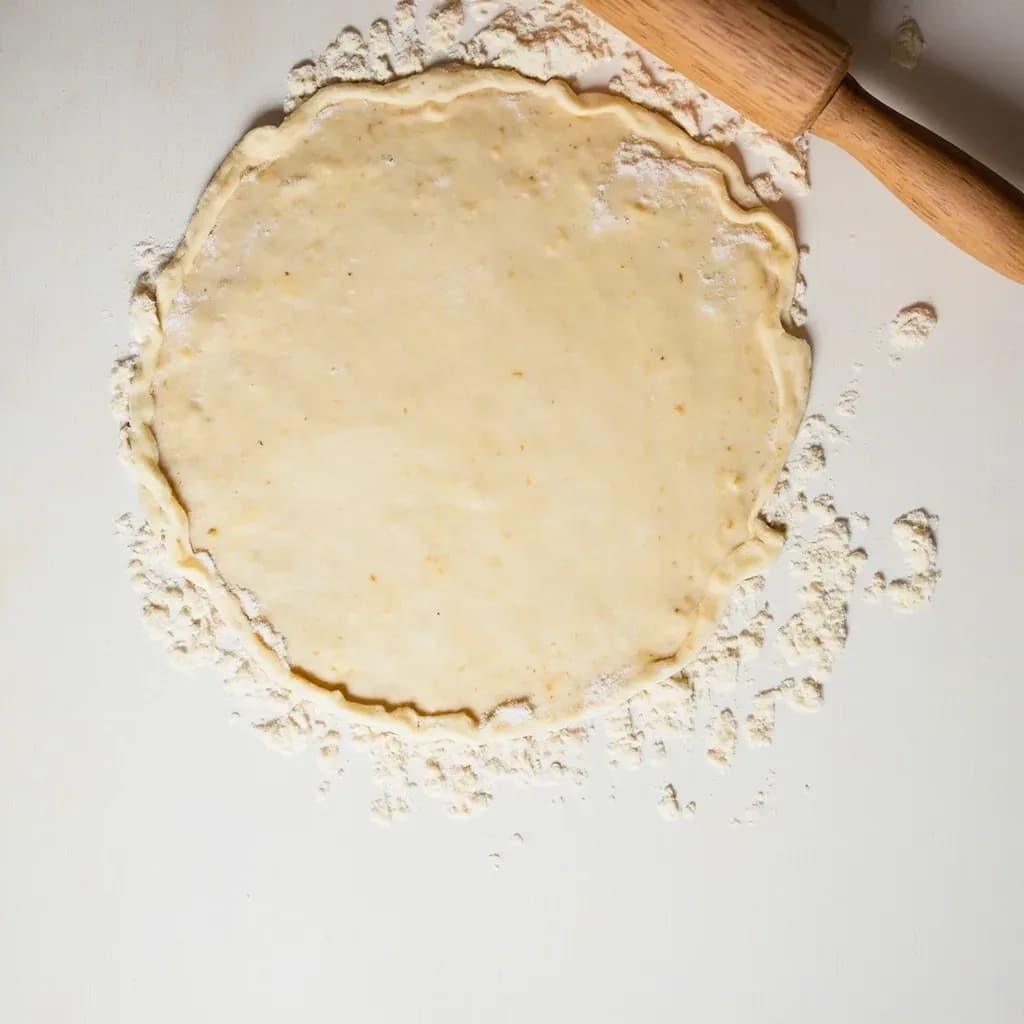
Rolling Flatbread
Rolling or pressing dough into thin rounds for flatbreads and tortillas.
Rolling flatbread flattens portioned dough into thin even rounds, by rolling pin for roti and chapati or by hand-pressing and patting for tortillas. Even thickness is what lets a flatbread puff and cook through uniformly on a hot griddle or comal. Lightly flouring the surface and turning the dough as you roll keeps it from sticking and produces a true circle.
Rolling flatbread is the act of taking a portioned ball of lean or lightly leavened dough and shaping it into a thin, even round — by hand, with a rolling pin, or with a press — before it hits a hot, dry cooking surface. The technique underlies nearly every flatbread tradition: Mexican tortillas, Indian chapati and naan, Levantine pita and markook, Italian piadina, Norwegian lefse, and Armenian and Iranian lavash all begin with a ball of dough and end with a cooked round. What looks like a simple act of flattening is really a balance of dough hydration, gluten relaxation, and even pressure; the cook's job is to coax the dough into a uniform circle without tearing, sticking, or overworking it.
The craft lives less in the rolling stroke than in what happens before and after. A well-mixed, well-rested dough wants to roll thin and round; a tight, under-rested dough fights every pass, which tempts the cook to over-flour the bench and press harder — the single most common cause of tough, crack-edged flatbreads. Thickness is diagnostic: unleavened breads (matzo, lavash, markook, yufka) are rolled paper-thin to dry quickly and crisp; leavened breads (pita, naan) need 4–6 mm of thickness to trap steam and inflate a pocket or support wet toppings. The right tool — pin, dowel, press, or hand — matters less than consistent thickness and a properly preheated cooking surface.
- Difficulty
- Medium
Types & varieties
Wheat-based, North Mexican origin; rolled thin and cooked on a hot comal; stays flexible for wraps.
Nixtamalized masa; typically pressed in a tortilla press rather than rolled with a pin; cooked very thin.
Whole-wheat Indian flatbread; rolled thin, dry-cooked on a tawa, often puffed by a final pass over open flame.
Same family as chapati — whole wheat, rolled, puffed over flame, served alongside curries and dals.
Leavened with yogurt and/or yeast; rolled thicker than chapati and baked in a tandoor or hot cast-iron skillet.
Levened wheat dough rolled into rounds; high-heat bake inflates an internal steam pocket.
Armenian and Iranian thin flatbread; rolled very thin and either kept soft or dried into large cracker-like sheets.
Unleavened Jewish flatbread rolled thin, pricked, and baked quickly; the unleavened bread of Passover.
Norwegian potato flatbread made from cooked potato and flour, rolled paper-thin on a cloth-covered board and griddled.
Italian Romagna flatbread; rolled into rounds and griddled, traditionally enriched with lard in the dough.
Levantine paper-thin bread stretched and cooked briefly on a saj or domed griddle, used to wrap cheese and greens.
Turkish thin flatbread used as the base for börek and gözleme; rolled very thin and briefly cooked before filling.
How to do it
- 1
Mix and rest the dough
Combine flour, water, salt, and any fat or leavening to a soft, cohesive dough. Knead just until smooth — 3 to 5 minutes for wheat doughs, less for corn masa. Cover and rest 20 to 45 minutes at room temperature so the gluten relaxes and the dough rolls without snapping back.
- 2
Divide into equal portions
Pinch or weigh the dough into uniform balls, typically 30 to 60 g each for 15 to 20 cm flatbreads. Equal portions are the single biggest factor in even cooking. Keep the balls covered with a damp towel so the surface does not skin over while you work.
- 3
Flatten and pre-shape
On a lightly floured surface (very lightly oiled for corn masa), press each ball flat with the palm of your hand to roughly a 1 cm disc. This gives the rolling pin a head start and prevents the dough from sliding into a lopsided oval.
- 4
Roll from center outward
With a rolling pin, push from the center outward in smooth strokes, rotating the dough a quarter turn every two or three passes to keep the round even. Avoid running the pin back and forth over the same line, which builds thick edges. Stop when the dough is 2 to 6 mm thick, depending on the flatbread.
- 5
Maintain shape and recover
Trim the edge with a knife or bench scraper into a true circle if desired, or leave the shape rustic. Stack raw rounds on parchment or a lightly floured tray and cover with a towel while you roll the rest so they do not dry out.
- 6
Preheat the cooking surface
Heat a cast-iron comal, carbon-steel tawa, or heavy skillet over medium-high until a drop of water skitters and evaporates in under a second. For tandoor-style breads, preheat an oven or pizza stone to its maximum, typically 250 °C (480 °F) or higher.
- 7
Cook the first side
Lay a round on the hot surface. Thin unleavened breads will start to bubble in 20 to 40 seconds; leavened breads take 60 to 90 seconds. Do not move the bread — let it set and dry on top while the underside spots with color.
- 8
Flip and finish
Flip once when small bubbles form and the underside shows golden spotting, then cook the second side 30 to 90 seconds. For chapati and roti, finish directly over an open flame for a few seconds to puff. For pita, bake long enough for the trapped steam to inflate the pocket.
- 9
Stack and keep warm
Transfer each cooked bread directly into a clean kitchen towel or a covered basket. Trapping the steam keeps flatbreads soft and pliable for folding. Brush with butter or ghee at this point if the style calls for it.
- 10
Store or reheat leftovers
Layer cooked breads with parchment in a zip bag and freeze for up to two months. Reheat straight from frozen on a hot dry pan for about 30 seconds per side. Unused dough balls can be re-covered and rested again; raw flatbreads hold for a couple of hours under a towel before cooking.
Why rest matters more than rolling strength
Dough that has just been mixed is in a state of high tension: gluten strands are aligned and elastic, so the moment a pin lands on the ball it springs back. A 20–45 minute rest lets those strands relax and absorb water evenly, and that relaxation is what turns a frustrating, fight-the-dough session into something a rolling pin can do in a handful of strokes. Skipping the rest is the root cause of most home flatbread problems, because the natural response to a springy dough is to press harder and dust more flour — both of which toughen the final bread. Treat the rest as part of the recipe, not a pause.
Matching thickness to the bread
Thickness is not a stylistic choice; it controls how the bread behaves on the heat. Unleavened doughs (matzo, lavash, markook, yufka, lefse) are rolled very thin — under 2 mm — so they cook in seconds and either dry crisp or stay pliable without toughness. Leavened doughs (pita, naan) need enough body, generally 4–6 mm, to trap steam as the interior heats; that steam is what lifts the dough into a pocket or allows a chapati to balloon over a flame. Rolling a leavened dough too thin tears the gluten net before steam can build; rolling an unleavened dough too thick leaves it gummy in the center. Use the recipe's thickness as a target, not a suggestion.
Choosing a tool
For wheat doughs a rolling pin is the default, and a heavy steel dowel or straight-bar pin is faster and more even than a tapered wooden pin because the contact surface is constant across the dough. For corn masa a tortilla press is faster and more uniform than pinning, and it is what most Mexican kitchens use. Hand-stretching — the markook and pizza method of draping the dough over the backs of the hands and letting gravity thin it — works for high-hydration, well-developed doughs and produces an irregular, very thin round. For most cooks, a pin plus a quarter-turn every few strokes is the most reliable path to an even circle.
Common uses
Tips & pitfalls
- Rest the dough at least 20 to 30 minutes after mixing — gluten relaxation is what makes rolling easy, not the strength of your hand.
- Use the minimum dusting flour possible on the work surface; too much flour dries the dough and produces flatbreads that crack at the edges.
- If the dough springs back under the pin, give it another 5 to 10 minutes of rest rather than pressing harder, which overworks the gluten.
- Roll from the center outward and rotate the dough a quarter turn every few passes for an even, round shape.
- Preheat the cooking surface thoroughly before the first round — the first flatbread is effectively a temperature test.
- Use medium-high, dry heat for most flatbreads; oil belongs on the dough or on the finished bread, not in the pan for traditional styles.
- Common mistake: rolling leavened dough too thin — it tears and will not puff. Reserve very thin rolling (under 2 mm) for unleavened doughs like matzo, lavash, markook, and yufka.
- Common mistake: skipping the rest and then over-flouring the bench to compensate, which produces dense, dry flatbreads that crack at the edges.
Good to know
- Technique family
- Sheeted flatbread shaping — hand-rolled or pressed dough rounds
- Primary tools
- Rolling pin (wooden, marble, or steel), tortilla press, heavy dowel, or hands; board or counter for the work surface
- Dough hydration range
- Roughly 45–65% for lean wheat doughs; corn masa is wetter and is usually pressed, not pinned
- Rest time before rolling
- 20–45 minutes to relax gluten and stop the dough from snapping back
- Target thickness
- Tortillas and chapati 2–3 mm; lavash and matzo 1.5–2 mm; naan and pita 4–6 mm for a pocket
- Cook time per side
- 30 seconds to 2 minutes on a dry hot surface, depending on thickness and hydration
- Portion size
- A 30–60 g ball makes one 15–25 cm round; roughly 8–12 rounds per 500 g of flour
- Storage of finished breads
- Stack wrapped in a clean kitchen towel; refrigerate 2–3 days or freeze up to 2 months with parchment between
Also called
Hand-Pressing Tortillas · Pressing Tortillas by Hand · Tortear · Warming Tortillas on the Comal
Related

Whisk
Beat ingredients smooth and aerated with a looping wire motion

Sift
Pass dry ingredients through mesh to aerate and remove lumps

Strain
Pour through mesh to separate solids from liquid for a smooth result

Filter
Pass liquid through fine material to clarify out the smallest particles

Rice
Press cooked potatoes through small holes for fluffy, lump-free texture

Mash
Crush soft cooked food into a rustic, creamy purée

Grind
Crush food into a coarse to fine texture, from spices to meat

Grate
Shred food into fine bits against a sharp-toothed surface