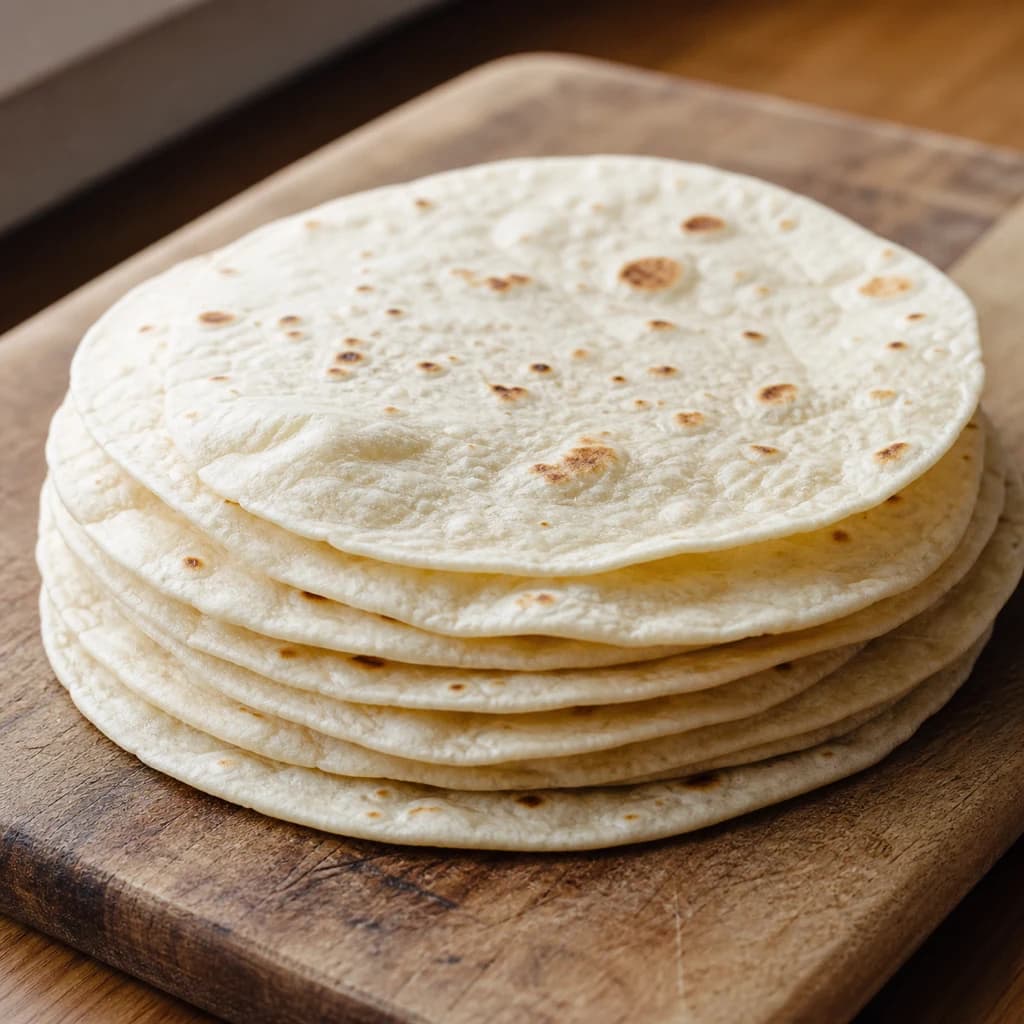
Natural form
A stack of freshly made flour tortillas showing their soft, pale, lightly charred surface.
Teaches the reader the defining visual appearance of a flour tortilla: round, pale wheat color, with characteristic small brown char spots from the griddle.
Baking
Flour Tortilla
Soft, pliable wheat flatbread for burritos, wraps, quesadillas, and tacos.
Flour tortillas are soft, pliable flatbreads made from wheat flour, fat, water, and a little leavening, cooked on a hot griddle. Popular in northern Mexico and the US Southwest, they wrap burritos and fajitas, fold into quesadillas, and serve as soft tacos. They are stretchier and chewier than corn tortillas.
Flour tortillas are thin, pliable wheat flatbreads that form the foundation of northern Mexican and Tex-Mex cuisine. They emerged in regions where wheat cultivation was more viable than the corn that dominates central and southern Mexican cooking—a geographic and agricultural distinction that created two parallel traditions in Mexican bread culture. The addition of fat, traditionally lard, distinguishes tortilla dough from simple wheat bread, creating the characteristic tender, extensible texture that allows the bread to fold without cracking around substantial fillings.
The texture of a well-made flour tortilla is its defining quality: soft and pliable when warm, with a subtle wheat flavor that carries bold fillings without competing with them. This neutrality makes flour tortillas extraordinarily versatile—they function as delivery vehicles for everything from slow-braised barbacoa to scrambled eggs. The fat content and gluten development in the dough determine whether a tortilla tears when folded or stretches smoothly around a burrito's contents. Commercial production has standardized the product, but homemade versions made with quality lard and proper technique consistently outperform store-bought in both taste and flexibility.
The choice between flour and corn tortillas in Mexican cooking is regional and functional, not arbitrary. Flour tortillas dominate northern Mexican and Tex-Mex cuisine, preferred for heartier preparations like burritos, large fajitas, and breakfast wraps. Corn remains the default throughout most of Mexico for tacos and traditional preparations. Understanding this distinction helps cooks make informed decisions about when flour tortillas serve a dish well and when a corn tortilla would be more authentic.
- Measured in
- piece
- Storage
- Pantry
Allergens
Types & varieties
Made with pork lard; produces the most authentic texture—tender with good pliability and subtle richness that commercial versions rarely match
Vegan-friendly, most common in commercial production; slightly different tenderness than lard versions but widely accessible
Uses liquid oil; result tends to be slightly softer but less extensible; easier to make but less traditional
Larger diameter (10 to 12 inches), thicker; designed to encase substantial fillings without tearing or splitting
Smaller (6 to 8 inches), thinner; ideal for individual portions, quesadillas, and quicker cooking applications
Substitutes part or all white flour with whole wheat; nuttier flavor, slightly denser texture, and better nutrition
Contains leavening; produces a slightly puffier, more tender tortilla; common in commercial and some regional styles
Colored and lightly flavored with fresh herbs or spinach puree; primarily visual variety, functions identically to plain flour tortillas
Larger, thicker; associated with Tex-Mex cuisine; often contains lard for authentic richness
Thinner, smaller; associated with California and Mission-style burritos; designed to disappear into the filling
Common uses
Tips & pitfalls
- Warm tortillas before serving: heat in a dry skillet, directly over a gas flame, or wrapped in foil in a 350°F oven for 5 minutes—this restores pliability lost during cooling and prevents cracking when folded
- Do not overmix the dough: work it just until smooth; excessive kneading develops too much gluten, resulting in tough, rubbery tortillas
- Rest the dough: let it cover and relax for at least 30 minutes after mixing; this allows gluten to relax, reducing shrinkage and making rolling much easier
- Use hot water (about 110°F/43°C) when making dough: this produces a softer, more pliable finished tortilla than cold water
- Roll thin and evenly: inconsistent thickness leads to uneven cooking, where some spots burn while others remain undercooked
- Cook over medium-high heat: too low produces a rubbery tortilla; too high burns the exterior before the interior cooks through
- Press lightly with a spatula while cooking: this ensures even contact with the skillet and promotes uniform browning
- Store properly: keep sealed in an airtight bag or container at room temperature to prevent drying out and becoming brittle
- Freeze successfully: stack with parchment paper between tortillas; thaw at room temperature or microwave wrapped in a damp paper towel for 30 seconds
- Commercial tortillas benefit from a brief dry heat even when not required for safety—it significantly improves texture and pliability
Nutrition
Energy
1155 kJ · per 100 g
Where the calories come from
Protein
7.8g
16% DV
Carbs
58.1g
21% DV
Fat
1.4g
2% DV
Fiber
3.4g
12% DV
Sugars
3g
of which
Sodium
663mg
29% DV
Source · USDA FoodData Central · Tortilla, blue corn, Sakwavikaviki (Hopi)
View on FDC →In the shops
Matched grocery products
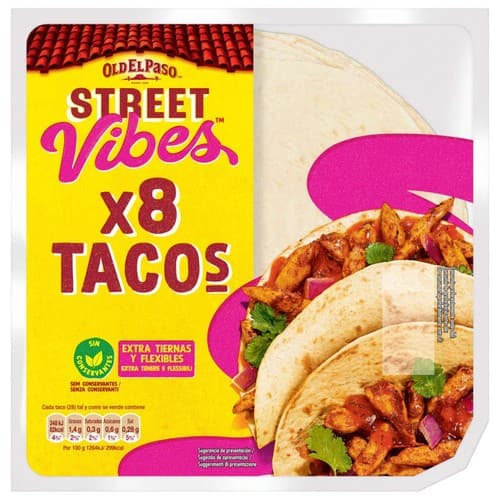 €1.99
€1.99Mini Taco Tortillas
OLD EL PASO · kg · Bonpreu
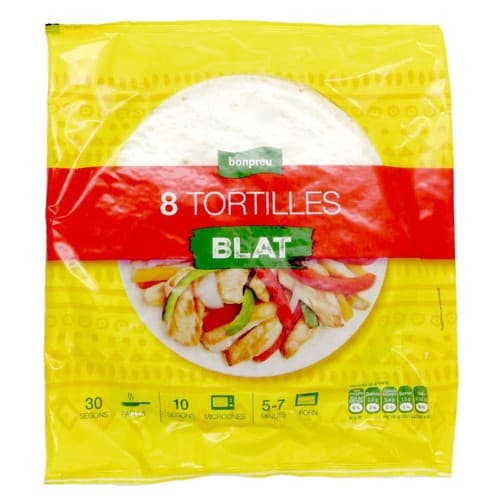 €0.99
€0.99Bonpreu Wheat Tortillas
BONPREU · kg · Bonpreu
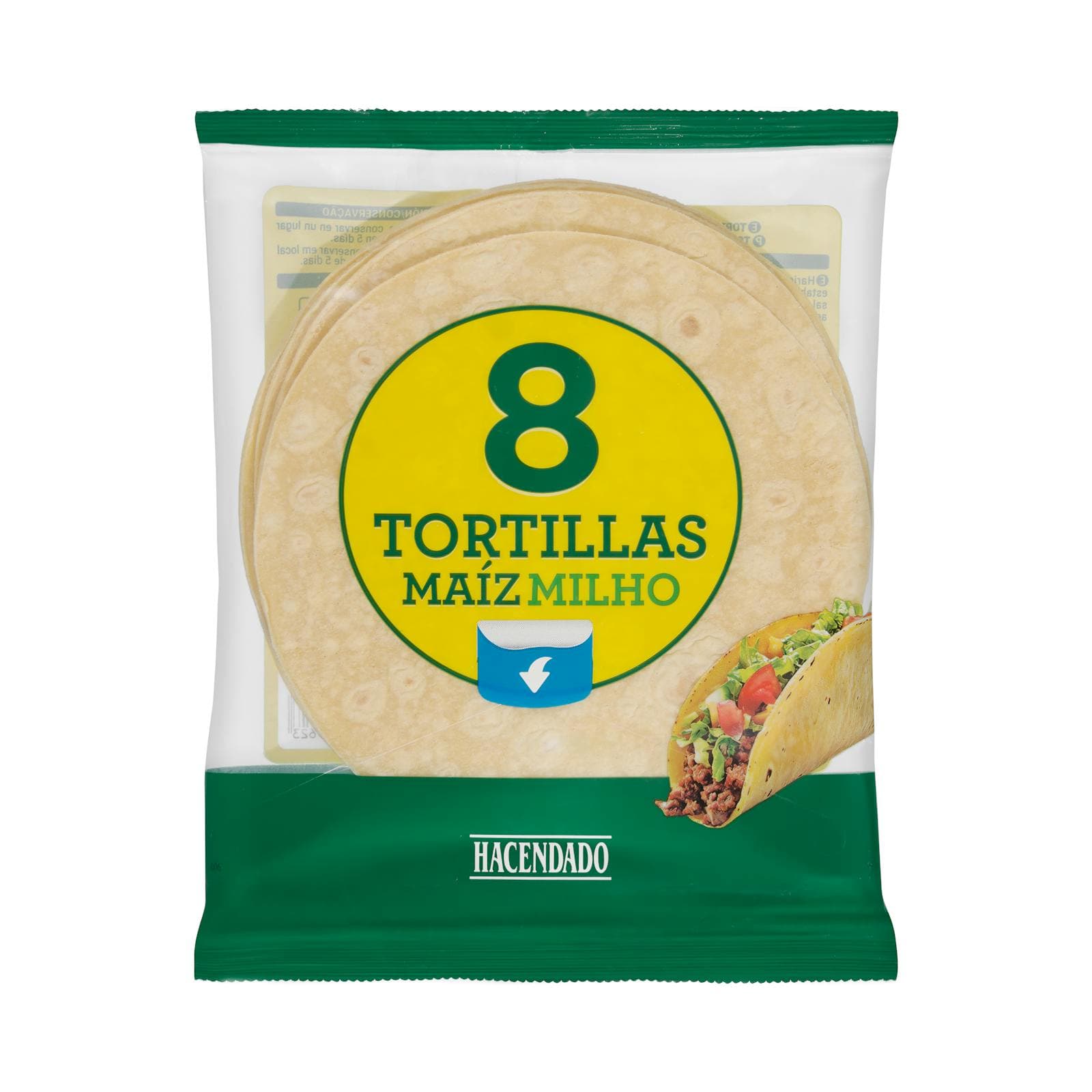 €1.85
€1.85Corn Tortillas
Hacendado · 208 g · Mercadona
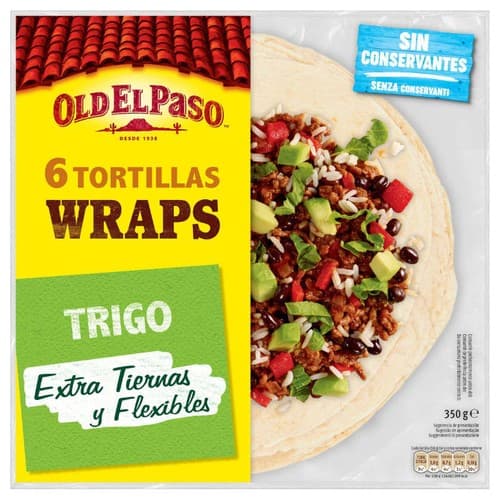 €2.59
€2.59Old El Paso Wheat Tortillas
OLD EL PASO · kg · Bonpreu
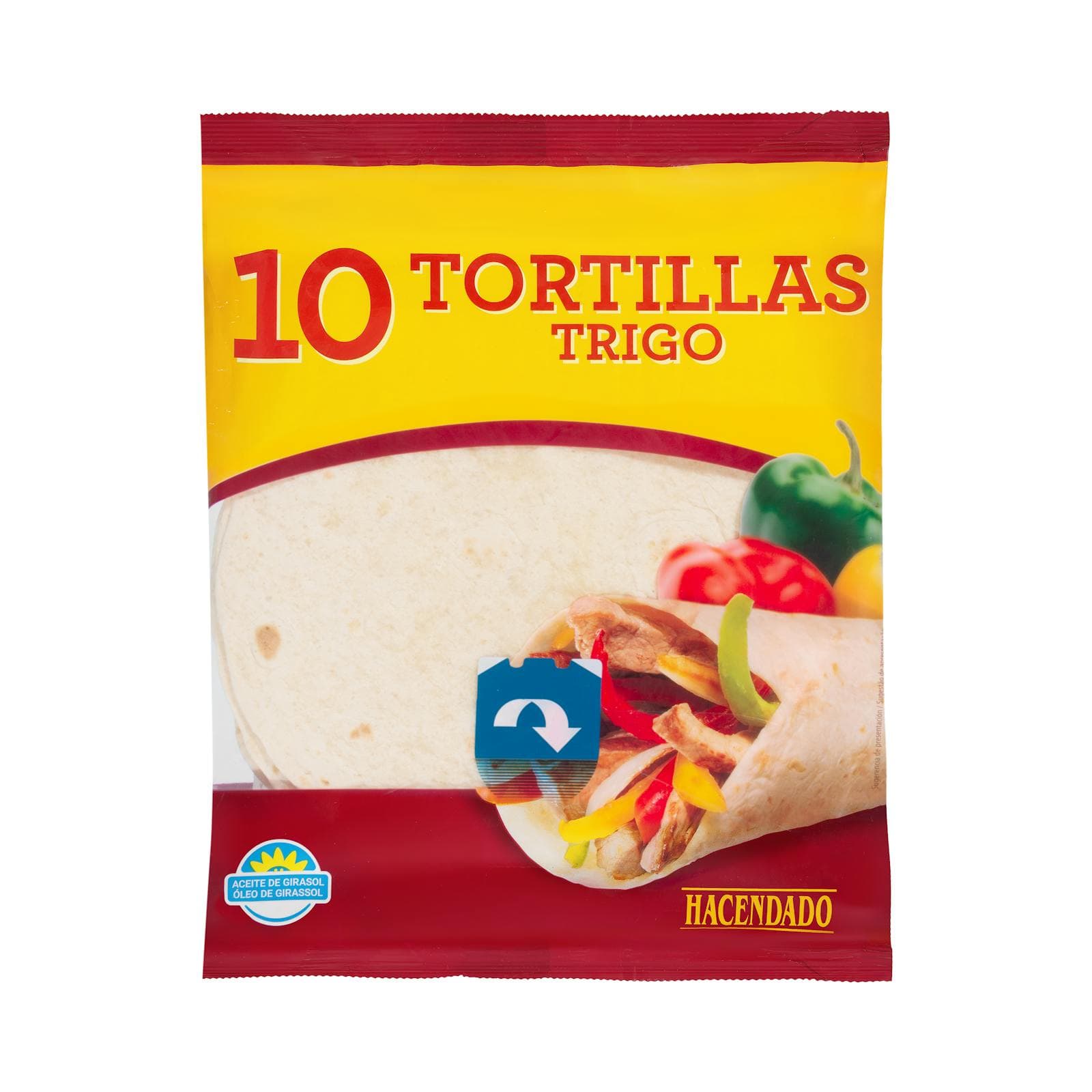 €1.15
€1.15Wheat Tortillas
Hacendado · 360 g · Mercadona
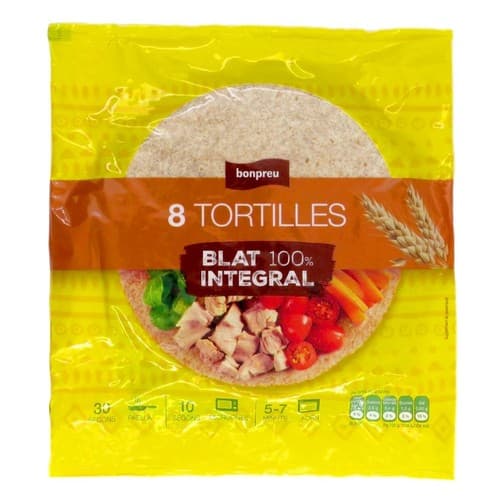 €1.39
€1.39Bonpreu Whole Wheat Tortillas
BONPREU · kg · Bonpreu
Good to know
- Primary ingredients
- Wheat flour, fat (lard, shortening, or oil), water, salt, optional baking powder
- Origin
- Northern Mexico and Mexican-American border regions, developed where wheat was more available than corn
- Typical diameter
- 6 to 14 inches; burrito-size commonly 10 to 12 inches
- Texture
- Soft, pliable, and slightly chewy when warm; becomes brittle when cooled and dried
- Shelf life
- 5 to 7 days sealed at room temperature; 3 to 6 months frozen
- Common fat used
- Lard (traditional), vegetable shortening, or neutral oil; lard produces the most tender, pliable result
- Gluten content
- Contains gluten (wheat-based); not suitable for celiac or gluten-free diets
- Difficulty
- Beginner-friendly; simple dough, quick cook time
Substitutes
- Corn tortilla — Gluten-free; distinctly corn-flavored and more brittle; not a seamless swap in most recipes but works for tacos; sizes differ, with corn tortillas being smaller
- Lavash — Similar thin, flexible flatbread; slightly different flavor and texture but functional in wraps and roll-ups
- Pita bread — Can function in wraps; not traditionally shaped but acceptable in a pinch; usually thicker with a pocket
- Naan — Thicker and more leavened; not ideal for tacos or burritos but workable for wraps and sandwiches
- Markouk or markook — Thin Middle Eastern flatbread; similar pliable texture when warmed; acceptable alternative for wraps and roll-ups
- Rice paper — Gluten-free; requires softening with water; entirely different texture and preparation method; used for fresh spring rolls, not heated applications
Pairs with
Also called
Tortilla · Tortilla de Harina
Appears in these dishes
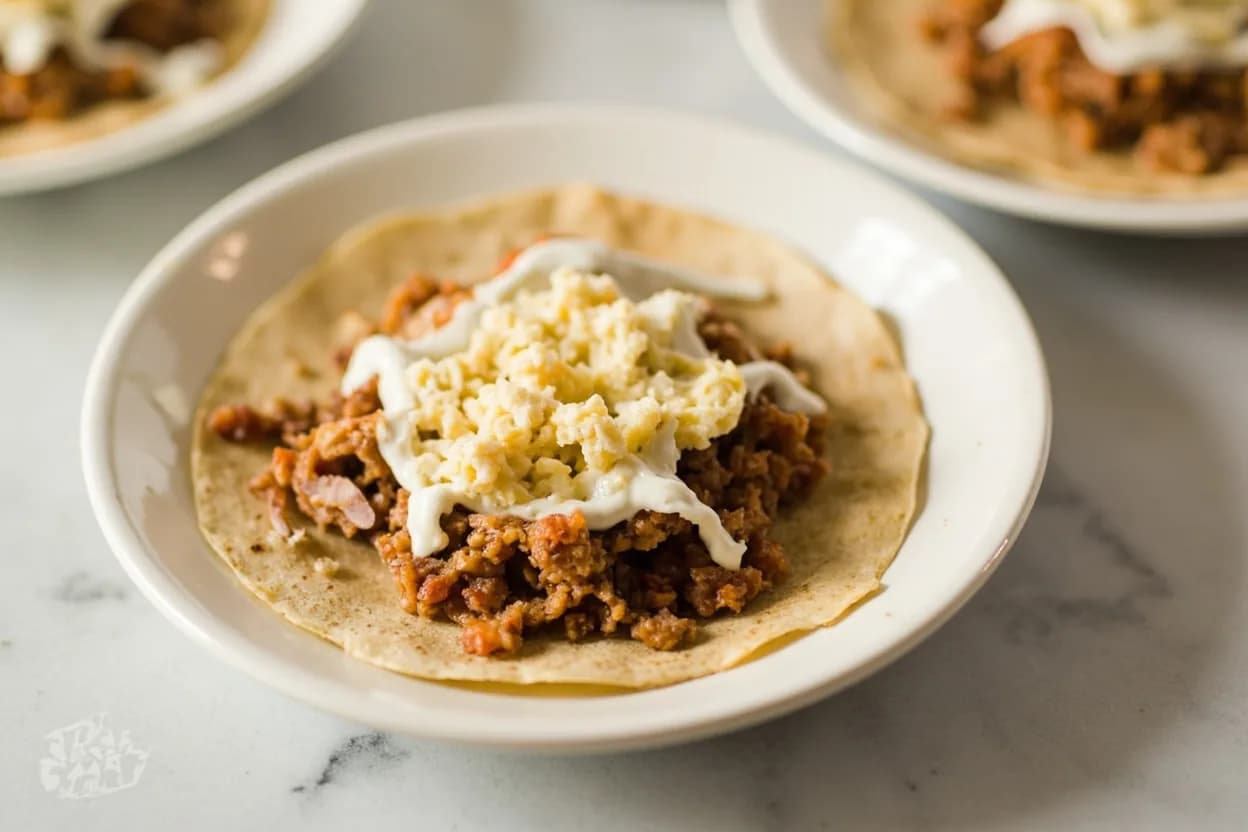
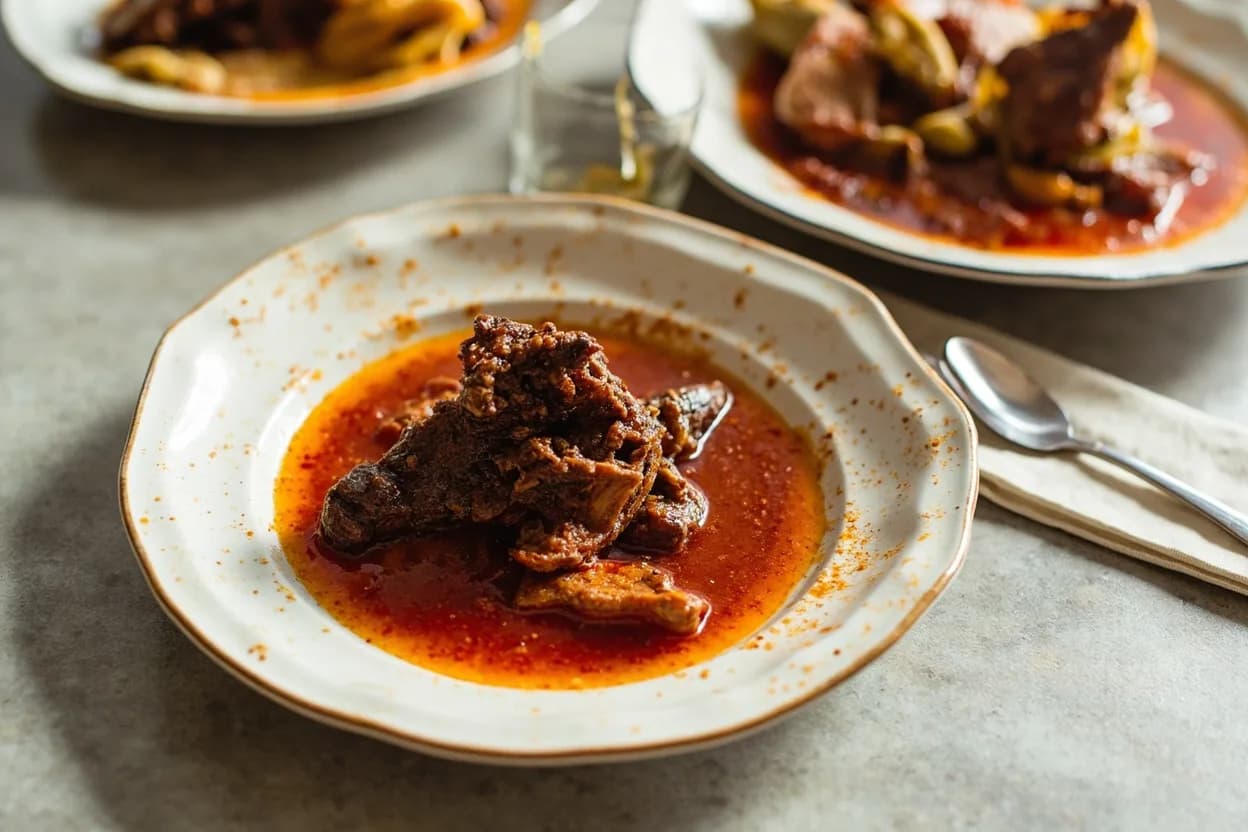
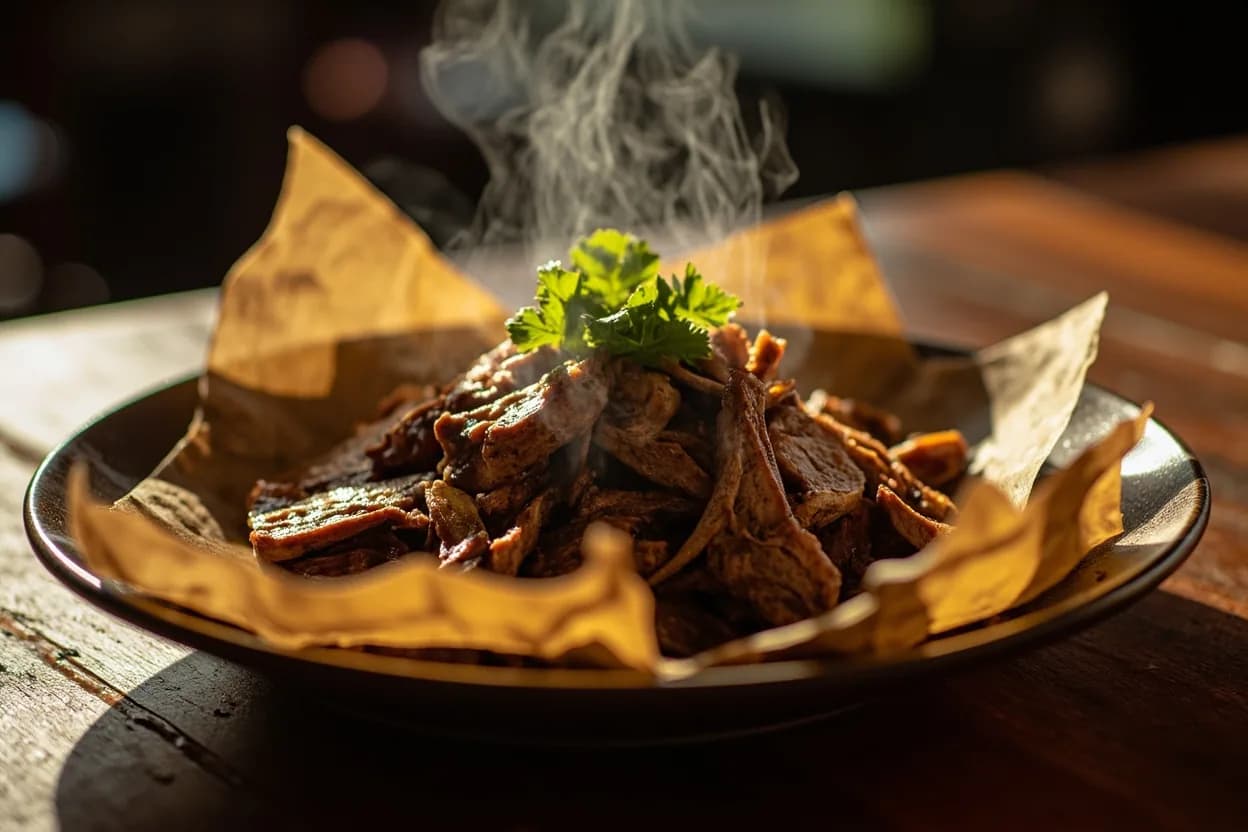
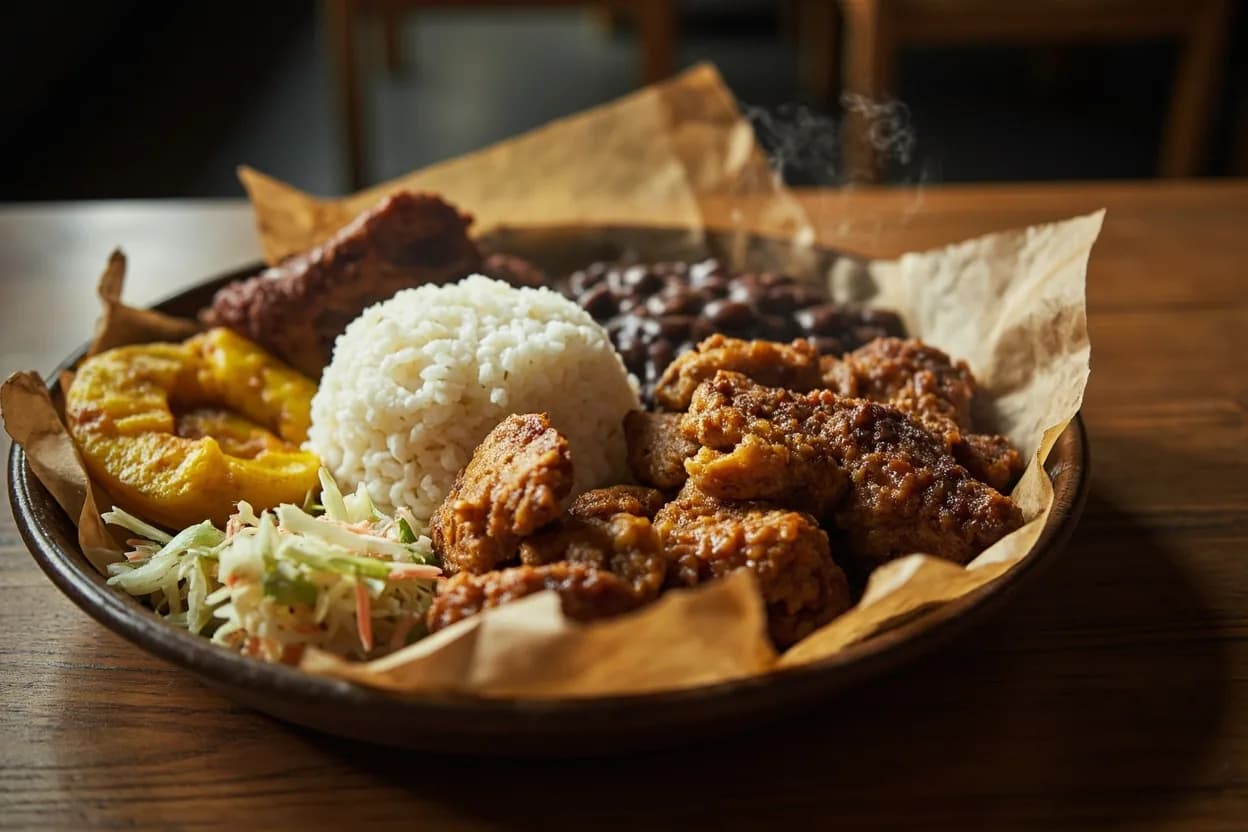
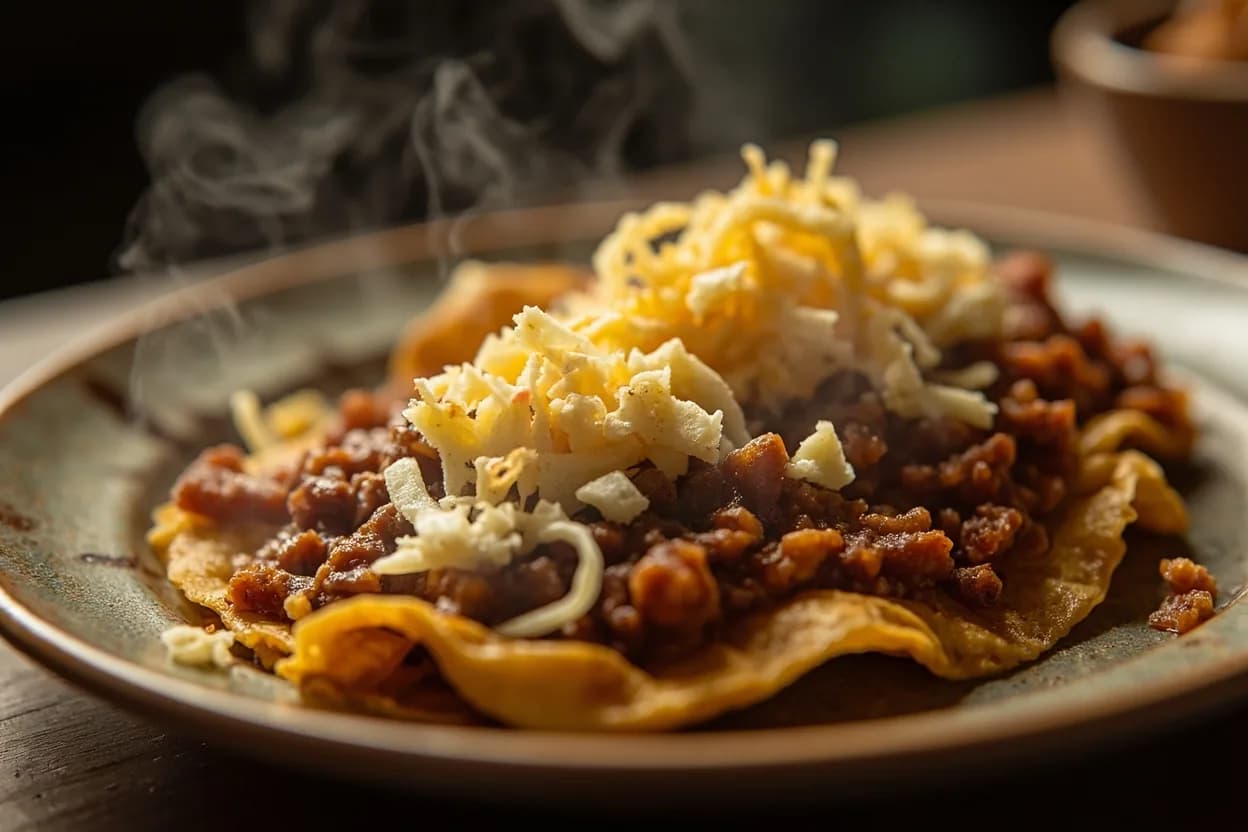
Related

All-Purpose Flour
The do-anything flour for bread, cakes, sauces, and dredging

Bread Flour
High-protein flour for chewy, well-risen breads
Whole Wheat Flour
Nutty, whole-grain flour for hearty breads and bakes
Cake Flour
Fine, low-protein flour for tender, delicate cakes
Almond Flour
Nutty, gluten-free flour for macarons and tender bakes

Baking Powder
All-in-one leavener for fluffy cakes, pancakes, and biscuits

Baking Soda
Pure leavener that needs acid to lift — and tenderize
Yeast
Living leaven that makes bread rise and dough come alive