Proteins
Catla
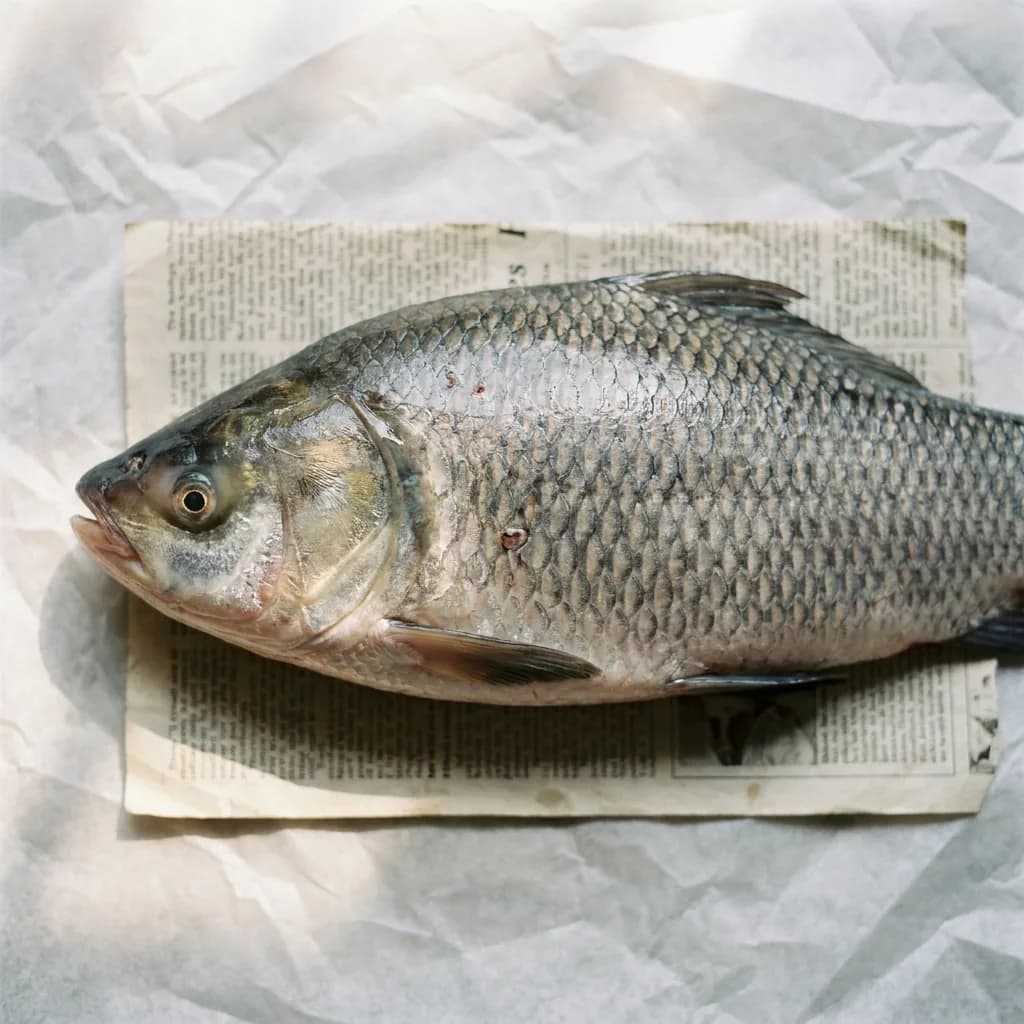
A large South Asian freshwater carp, cut into steaks for Bengali and Indian curries and fries.
Catla (katla) is a large freshwater carp widely farmed and eaten across the Indian subcontinent. Like rohu, it is cut into bone-in steaks, lightly fried, then cooked in spiced gravies, and its prized fatty head goes into dishes like mudo. The flesh is soft and mild, though it carries bones.
Catla (Catla catla) is one of the three Indian Major Carps, a group of freshwater fishes central to South Asian cuisine, particularly in Bengal and Bangladesh. Distinguished by its large, prominent head and characteristically upturned mouth adapted for surface feeding, Catla is the fastest-growing of the three IMCR species and the most affordably priced, making it the workhorse of the Indian carp trio alongside Rohu and Mrigal. The fish yields 55–60% dressed weight and has dense, meaty flesh that holds together admirably in liquid — the quality that places it among the finest fish for Bengali curry preparations. Its mild, sweet flavor absorbs bold spice profiles without becoming muddy, and the high collagen content, while causing flesh to contract during cooking, actually contributes to a satisfyingly firm texture when handled correctly. The many small intermuscular bones — a characteristic of all carp species — soften considerably in curries, making them imperceptible in finished dishes but requiring attention in drier preparations. Whether wild-caught from rivers or pond-reared, Catla remains a staple of Bengali household cooking and restaurant menus alike, prized for its versatility, availability, and the way it anchors the sour-spice foundation of classic machher jhol and kalia.
- Measured in
- piece
- Storage
- Fridge
Allergens
Types & varieties
The three commercially cultivated IMCR species are Catla, Rohu (Labeo rohita), and Mrigal (Cirrhinus mrigala); often marketed together as the Indian carp trio, they share similar cooking characteristics but distinct textures and fat content
Firmer flesh and more pronounced, clean flavor; sourced from major river systems of India, Bangladesh, Pakistan, and Myanmar
More consistently available year-round; quality varies with pond conditions — some specimens can be fatty
Smaller steak cuts ideal for individual servings, quick-cooking preparations, and portion-controlled recipes
Medium-sized whole fish, the most common market form; versatile for grilling, currying, or frying
Thick cross-section steaks cut from large specimens; best suited for slow-cooked curries where extended liquid contact tenderizes the denser flesh
Why Catla Dominates Bengali Fish Cookery
In Bengali food culture, freshwater fish hold an almost religious status, and Catla consistently ranks among the top five most consumed species alongside Hilsa, Rohu, and Pomfret. The preference is not mere tradition — it reflects the fish's exceptional compatibility with the sour-spice matrix that defines Bengali cooking. The flesh maintains structural integrity in liquid for the 8–10 minutes required to build a proper gravy, unlike more delicate fish that fall apart. At the same time, the mild flavor provides a blank canvas that lets turmeric, ginger, green chili, and mustard oil speak clearly. For the home cook, Catla's affordability and wide availability mean that a proper machher jhol is never out of reach; for the professional, its consistency and yield make it reliable at volume.
- High yield (55–60% dressed weight) makes it economical for both household and commercial kitchens
- Fast growth rate keeps farmed specimens affordable and available year-round
- Large head, while not always used, yields excellent stock for rice dishes
Understanding the Intermuscular Bones
The small, pin-bone structure running along the fillet is perhaps the most discussed characteristic of carp — and the most misunderstood. In dry preparations like fries or pan-seared dishes, these bones can be noticeable and distracting. In liquid-based preparations, however, the extended cooking time and gentle heat transform the collagen in and around the bones, making them soft enough to eat without detection. This is the fundamental reason Bengali recipes overwhelmingly favor curry preparations for medium and large Catla, and why attempting a dry-fry with large, bone-in steaks often disappoints. For bone-free eating, request the fishmonger to fillet and pin-bone carefully, or select thick fillets cut against the bone structure.
- Curry preparations: bones soften and become imperceptible after 8–10 minutes in liquid
- Dry preparations: bones remain firm; consider filleting or using smaller fish
- Ask your fishmonger to perform thorough pin-boning if serving bone-averse guests
Common uses
Tips & pitfalls
- Score the flesh deeply before frying or grilling — the high collagen content causes significant contraction, leading to curling and uneven cooking. Incisions every 2–3 cm allow the fish to release tension and lie flat
- For curries, marinate cut pieces with turmeric and salt for 20–30 minutes before cooking. This firms the flesh, improves texture in the gravy, and reduces the characteristic fishy odor associated with freshwater carp
- Do not overcook — Catla flesh turns chalky and dry when subjected to prolonged high heat. Eight to ten minutes in simmering liquid is sufficient for medium-sized steaks; thick pieces may need a few minutes more but should never boil vigorously
- When selecting whole fish, check the gills for bright red coloration and the eyes for clarity and slight bulging. Sunken eyes, cloudiness, or a strong ammonia-like odor indicate the fish is past its prime
- Use a heavy-bottomed pan or karahi for frying to maintain stable oil temperature. Catla's dense flesh cools cooking oil quickly; unstable temperatures produce greasy skin and uneven cooking
- Thaw frozen fish overnight in the refrigerator on a rack set over a tray. Direct contact with surfaces or rapid thawing in water leaches flavor compounds and soluble proteins into the runoff
- The small intermuscular bones soften significantly in liquid — this is why traditional Bengali recipes consistently favor curries over dry preparations for fish over 1 kg
Nutrition
Energy
519 kJ · per 100 g
Where the calories come from
Protein
20g
40% DV
Carbs
0g
0% DV
Fat
4.2g
5% DV
Fiber
0g
0% DV
Sodium
60mg
3% DV
Source · USDA FoodData Central · approx. Fish, bluefish, raw
View on FDC →In the shops
Matched grocery products
No matched grocery products for Catla yet.
Good to know
- Scientific Name
- Catla catla
- Family
- Cyprinidae (Carp family)
- Typical Market Weight
- 1–3 kg; wild specimens can reach 30–40 kg
- Flavor Profile
- Mild, sweet; firm white flesh with relatively low fat content
- Texture
- Dense, meaty; flakes well; contains many small intermuscular bones
- Shelf Life
- 2–3 days refrigerated; 3–6 months frozen at -18°C or below
- Nutritional Highlights
- High protein, omega-3 fatty acids, vitamin B12, selenium, phosphorus
- Primary Seasoning Profile
- Mustard oil, turmeric, cumin, ginger, garlic, green chili, coriander
Substitutes
- Rohu — The most direct substitute; shares the mild flavor and firm texture. Slightly higher fat content makes it better suited for richer gravies; use 1:1 in any Catla recipe
- Mrigal — Leaner than both Catla and Rohu; acceptable in all preparations but slightly less forgiving of overcooking — reduce liquid cooking time by 1–2 minutes
- Pangasius (Pangas) — Commercially farmed Vietnamese catfish; similar bone structure but milder flavor and softer texture. It absorbs spice profiles less readily — not ideal for traditional Bengali preparations
- Common Carp — Use fillets rather than steaks; the flesh is softer and more delicately flavored than Indian major carp. Reduce cooking time to prevent mushiness
- Sea Bass (Barramundi) — Better for grilled, pan-seared, or baked preparations where neutral flavor and firm flesh are assets. Not suitable for traditional Bengali curries — the flavor profile and cooking behavior differ substantially
Pairs with
Also called
Catla (Katla) · Katla · Catla Carp
Related

Egg
The kitchen's everything ingredient — bind, leaven, enrich, or fry

Chicken Breast
Lean, quick-cooking white meat for everyday dinners

Ground Beef
Versatile minced beef for burgers, ragù, tacos, and meatballs

Pork Loin
Lean, tender roasting cut that stays juicy with care

Salmon
Rich, rosy fish that roasts, grills, or cures beautifully

Egg White
Pure protein that whips to airy peaks for meringue and more

Egg Yolk
Rich, golden yolk for custards, mayonnaise, and pasta

Quail Egg
Tiny, speckled eggs for garnishing and elegant bites