Produce
Choricero Pepper
Sweet dried Spanish pepper whose soaked flesh flavors and colors Basque sauces and stews.
The choricero is a sweet, mild dried red pepper essential to Basque and northern Spanish cooking. Cooks rehydrate the pepper and scrape out the soft pulp, which deepens the color and rounds out the flavor of sauces, bean stews, and the classic bacalao al pil-pil and Vizcaina sauce. It is fruity and earthy rather than spicy, prized for body more than heat.
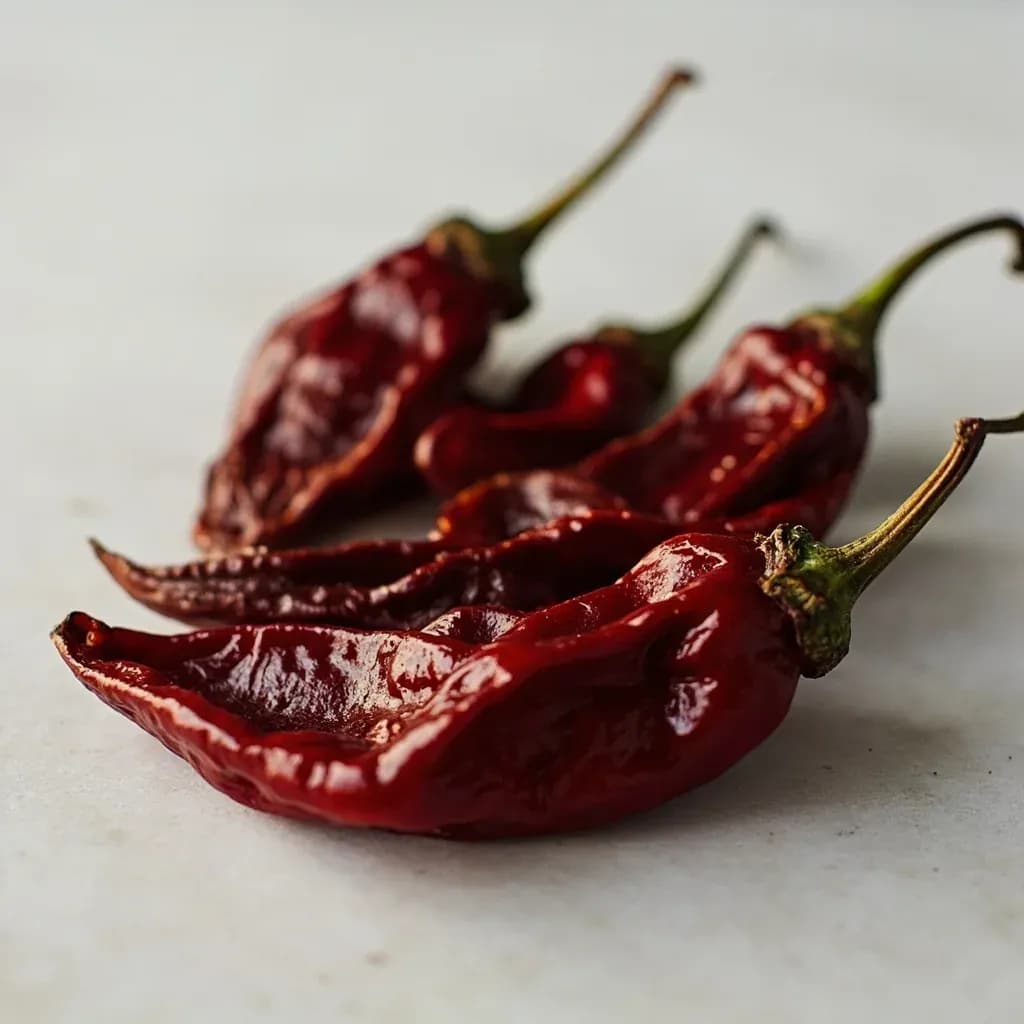
The choricero pepper is a dried Capsicum annuum cultivar that forms the crimson backbone of Basque cooking. Native to the Basque Country, these elongated, slightly curved peppers (8–15 cm) are harvested in late summer to early autumn, then traditionally threaded on strings and hung in kitchens to air-dry for months—a sight as emblematic of the region as the Guggenheim. The dried pods deepen to a brick-red to burgundy-brown; when rehydrated, the flesh yields a vivid orange-red paste prized as both flavoring and natural colorant. At 500–1,000 Scoville units, the heat is negligible; what defines the choricero is its sweet, faintly fruity, tobacco-like depth that no fresh pepper replicates. The flesh is always scraped from the tough skin and used, never the skin itself. In professional Basque kitchens, cooks routinely prepare large batches of piperrada base to keep in the walk-in, ready to finish dishes at speed.
- Measured in
- piece
- Storage
- Pantry
Types & varieties
The traditional Basque landrace; the canonical variety for piperrada and vizcaína sauces
Aromatic variety specifically dried for culinary use, grown in Navarra and La Rioja
Understanding Dried vs. Fresh Peppers
The choricero cannot be approximated by fresh peppers. Drying concentrates sugars and develops the tobacco-like, almost umami depth that fresh bell peppers lack entirely. This transformation is why the choricero functions as both a flavoring and a colorant—fresh choricero or bell peppers will not deliver the same result. In Basque cooking, the dried pepper is not a convenience but a deliberate choice that defines the character of piperrada and vizcaína sauces.
The Piperrada Base
Piperrada is the foundational sauce of Basque cuisine: choricero flesh cooked slowly with white onion, green pepper (pimiento verde), and tomato, often finished with a splash of cooking liquid from the main dish. Professional cooks make large batches and refrigerate it for days or freeze portioned cubes. A tablespoon or two of piperrada stirred into any white sauce, rice, or braising liquid instantly Basque-ifies it with color and subtle sweet pepper flavor.
- Classic ratio: 3–4 dried choriceros per 2 medium onions, 1 green pepper, 2 tomatoes
- Cook slowly over medium-low heat until onions are translucent and jammy, 20–25 minutes
- Season only after the choricero has fully incorporated—the sauce carries its own saltiness
Common uses
Tips & pitfalls
- Rehydrate in just-boiled water off the heat for 15–30 minutes; boiling water makes the flesh mushy and harder to scrape cleanly.
- Always scrape the flesh from the leathery skin—discard the skin entirely. It will not break down during cooking.
- Make piperrada in large batches. It keeps refrigerated for a week and freezes perfectly in ice cube trays for months.
- Toast dried choriceros briefly in a dry skillet before soaking to deepen the flavor before rehydrating.
- The seeds and inner membrane are minimal heat contributors but can add bitterness; scrape them out with the flesh or leave them out entirely.
- Store dried choriceros in an airtight container in a cool, dark pantry. Light and humidity cause them to lose color and flavor rapidly.
- Season the piperrada only after the choricero has fully cooked in—the paste carries its own subtle saltiness that can overwhelm if added early.
Nutrition
Energy
121 kJ · per 100 g
Where the calories come from
Protein
0.9g
2% DV
Carbs
6.5g
2% DV
Fat
0.4g
0% DV
Fiber
2.8g
10% DV
Sugars
4.1g
of which
Sodium
3mg
0% DV
Source · USDA FoodData Central · approx. Peppers, jalapeno, raw
View on FDC →In the shops
Matched grocery products
No matched grocery products for Choricero Pepper yet.
Good to know
- Species
- Capsicum annuum
- Origin
- Basque Country, Spain
- Shape
- Elongated, slightly curved, tapered tip; typically 8–15 cm long
- Color (dried)
- Deep brick-red to burgundy-brown
- Color (rehydrated)
- Vivid orange-red; used as a natural food colorant
- Heat Level
- Very mild, 500–1,000 Scoville Heat Units
- Flavor
- Sweet, faintly fruity, with tobacco-like depth; not spicy
- Preparation
- Soaked in hot water 15–30 minutes; flesh scraped from skin
- Yield
- 1 dried pepper yields 2–3 tablespoons rehydrated flesh
Substitutes
- Ñora pepper — Murcian dried round pepper; slightly thicker flesh, similar sweetness; 1:1 substitute in most preparations
- Ancho chile — Mexican dried poblano; sweeter and a touch spicier; good for color but not identical in flavor
- New Mexico chile — Mild, fruity dried chile; widely available in the US; use in similar proportion
- Guajillo chile — Common Mexican dried chile; brighter acidity, less sweetness; not ideal for traditional Basque recipes
Pairs with
Also called
Pimiento Choricero · Dried Choricero
Appears in these dishes
Related

Tomato
Juicy, sun-sweet fruit for sauces, salads, and slow-cooked depth

Yellow Onion
The aromatic backbone of soups, sofritos, and braises

Garlic
Pungent cloves that perfume nearly every savory dish

Lemon
Bright, acidic citrus that wakes up almost any dish

Potato
Humble, hearty staple — roast, mash, fry, or boil

Carrot
Sweet, crunchy root — raw, roasted, or the base of a sofrito

Cucumber
Cool, crisp, and watery — for salads, pickles, and tzatziki

Lettuce
Crisp leaves for salads, wraps, and a fresh crunch