
Stored
Dried basil stored in a small open glass jar, showing crumbled dark olive-green flakes.
Shows the typical retail and pantry form readers will encounter, including color and texture of the dried product.
Herbs
Dried Basil
Shelf-stable basil for tomato sauces and pizza
Concentrated and convenient, dried basil stirs into tomato sauces, pizza, and dressings when fresh isn't on hand. Add it early so it rehydrates. Keep it airtight and dark.
Dried basil is shelf-stable, concentrated, and convenient — a pantry stand-in that stirs into tomato sauces, pizza, soups, and dressings when fresh basil isn't on hand. Drying transforms basil's flavor: the bright, floral, anise-clove top notes of the fresh leaf largely vanish, leaving a deeper, muskier, hay-tinged herb that's milder per pinch but more stable in cooking. Add it early so it rehydrates and blooms in the simmering liquid. It's no substitute for fresh basil's perfume in pesto or caprese, but it earns its place in long-cooked savory dishes.
- Measured in
- g
- Storage
- Airtight
- Shelf life
- 540 days
Find it in
Types & varieties
Crumbled leaf; crush to release more aroma.
Blended with oregano, thyme, and rosemary for sauces.
How to use
Add dried basil at the start of a simmered dish so it has liquid and time to soften and release flavor. Crush it between your fingers first to wake up the oils. It works in cooked sauces, not as a finishing herb.
- Crush between fingers to release aroma
- Add early to sauces and soups
- Roughly 1 tsp dried ≈ 1 tbsp fresh
Fresh vs dried
Fresh basil is a finishing herb prized for its perfume; dried is a cooking herb that gives a milder, background note. Don't swap one for the other in raw dishes like pesto or caprese — use dried where heat and time are involved.
Common uses
Tips & pitfalls
- Crush dried basil between your palms before adding to release its oils.
- Add early in cooking so it rehydrates and blooms.
- Use about a third the amount called for in fresh.
- Reach for fresh, not dried, in pesto, caprese, and garnishes.
- Replace yearly — old dried basil turns brown and flavorless.
Nutrition
Energy
96 kJ · per 100 g
Where the calories come from
Protein
3.2g
6% DV
Carbs
2.7g
1% DV
Fat
0.6g
1% DV
Fiber
1.6g
6% DV
Sugars
0.3g
of which
Sodium
4mg
0% DV
Source · USDA FoodData Central · Basil, fresh
View on FDC →In the shops
Matched grocery products
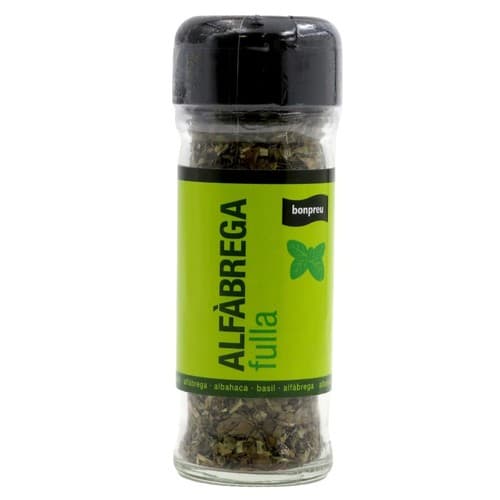 €0.79
€0.79Basil Leaf
BONPREU · Bonpreu
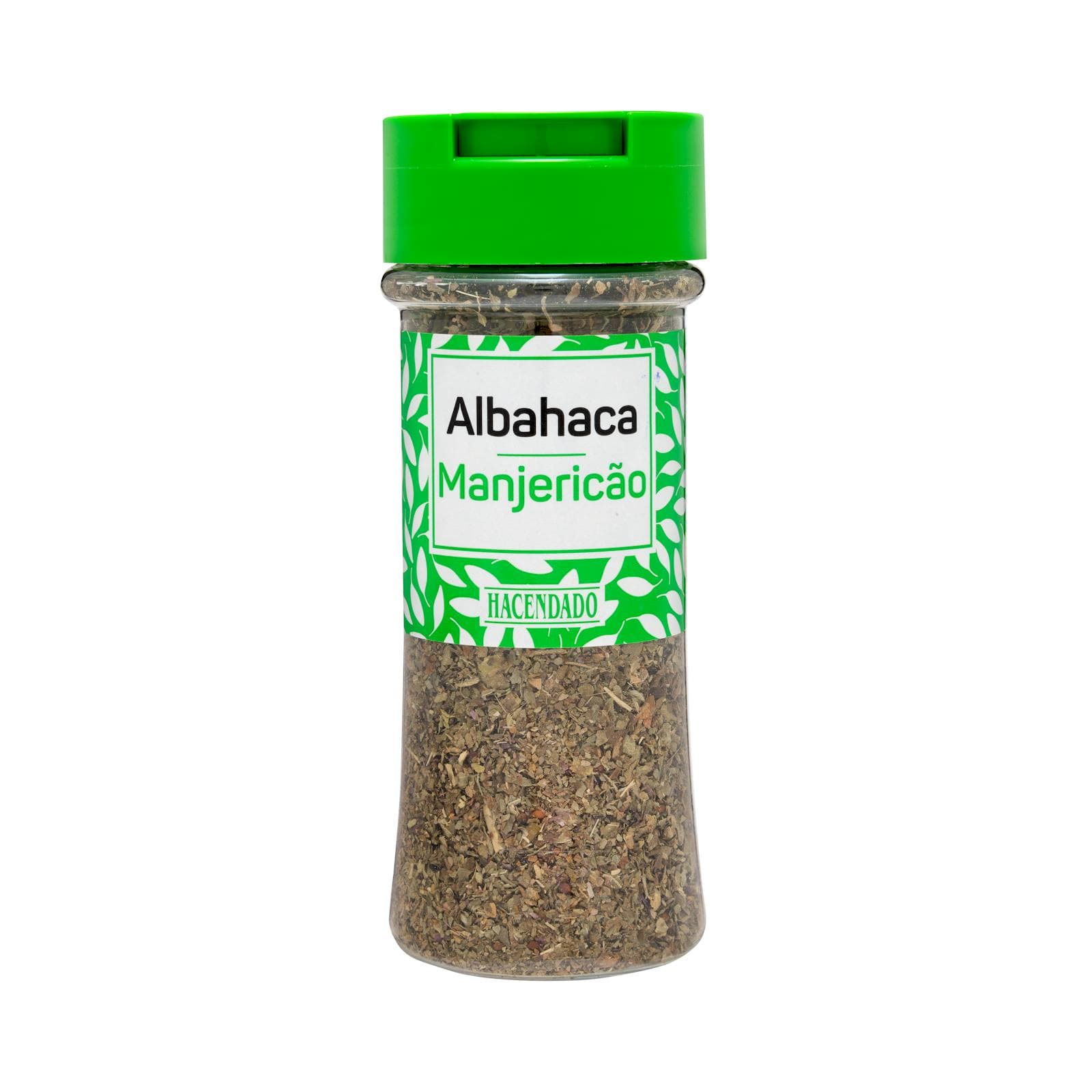 €1.25
€1.25Basil
Hacendado · 0.02 100 g · Mercadona
Good to know
- Flavor
- Muted, musky, lightly sweet — fresh top notes lost
- Form
- Dried, crumbled leaf
- Add when
- Early — needs liquid and time to rehydrate and bloom
- Cuisines
- Italian, Mediterranean, American
- How to buy
- Still green and fragrant; not brown or dusty
- How to store
- Airtight, dark, cool; best within about a year
Substitutes
- Dried oregano — Different but fitting in Italian cooked dishes.
- Italian seasoning — Already contains basil among other dried herbs.
Also called
dried basil · basil · albahaca seca · albahaca · alfàbrega seca
Appears in these dishes
Related

Basil
Sweet, fragrant leaves for pesto, pasta, and caprese

Parsley
Fresh, grassy herb for finishing nearly any savory dish

Cilantro
Bright, citrusy herb for salsas, curries, and tacos

Mint
Cool, fragrant herb for teas, salads, and desserts
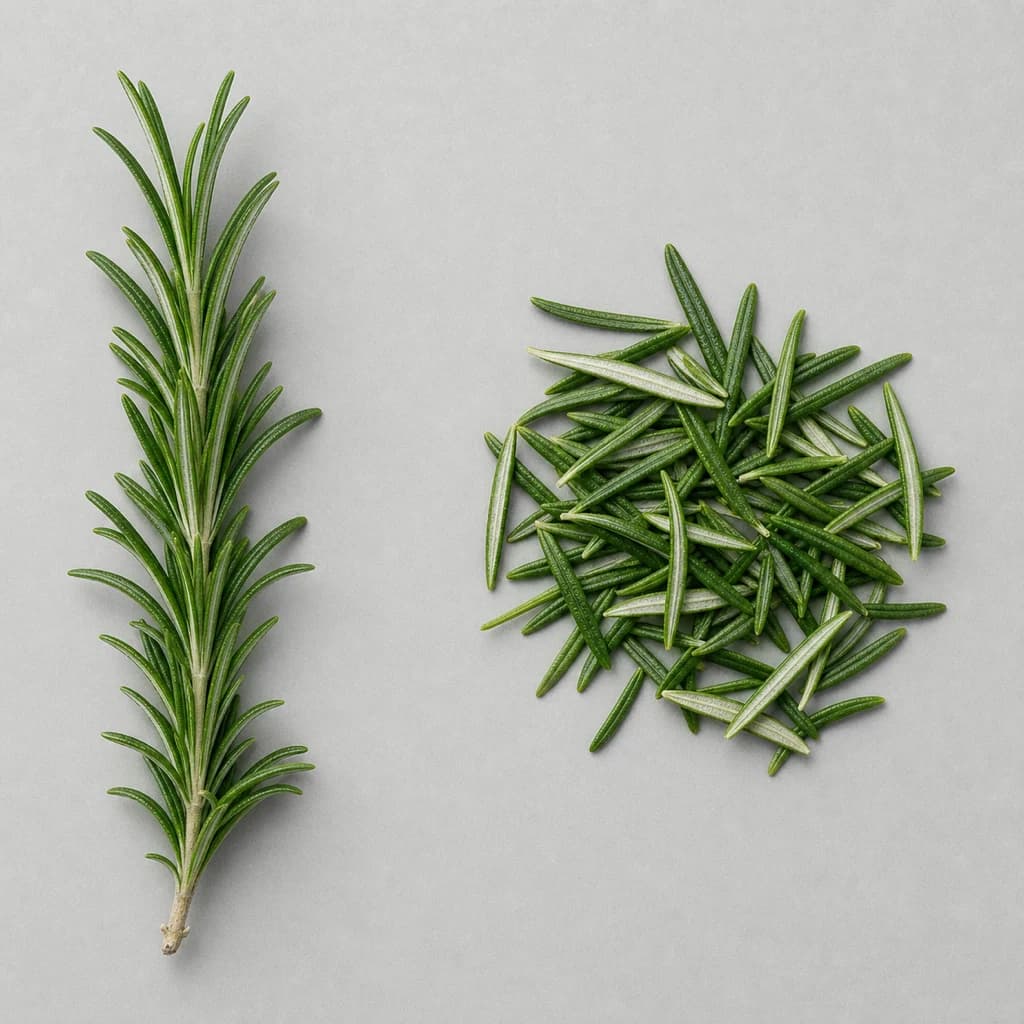
Rosemary
Piney, resinous herb for roasts, breads, and potatoes

Thyme
Earthy, floral herb for braises, roasts, and stocks

Sage
Savory, velvety herb for butter sauces and stuffings

Oregano
Pungent, peppery herb for tomato sauces and grilling