Proteins
Dried Fish Maw
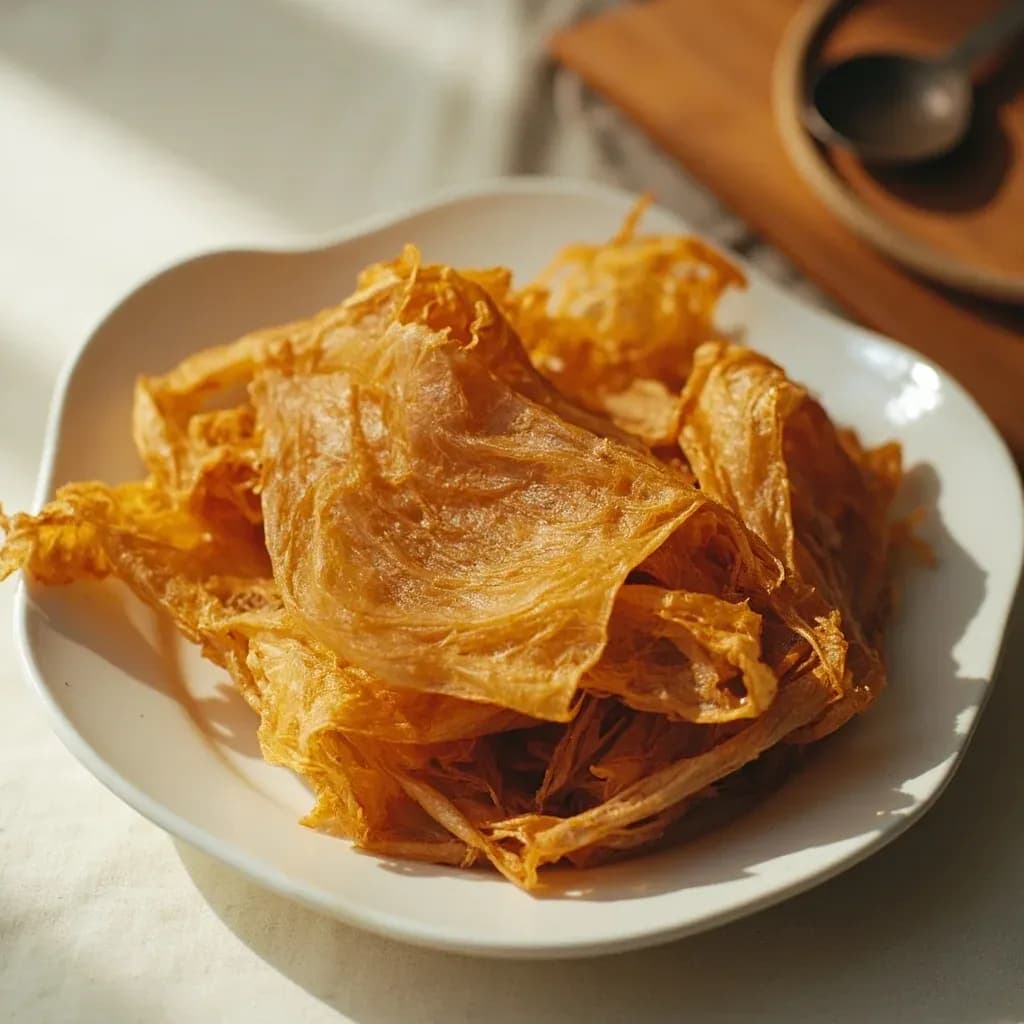
Dried fish swim bladder, a prized gelatinous Chinese banquet delicacy.
Fish maw (花膠) is the dried swim bladder of large fish, valued in Chinese cuisine for its spongy, gelatinous texture and supposed collagen benefits. It is rehydrated and added to braises, soups, and banquet dishes where it soaks up rich stock. It is largely flavor-neutral, prized for mouthfeel and as a luxury ingredient.
Dried fish maw is the processed swim bladder—the internal gas-filled organ that allows bony fish to control their buoyancy—removed from large species such as croaker, drum fish, and shark. In Chinese culinary tradition, the swim bladder is cleaned, stretched flat, and either air-dried or lightly smoked, transforming from a fresh, perishable organ into a shelf-stable ingredient with remarkable culinary potential. The product has been prized for centuries in Cantonese, Teochew, Fujianese, and Taiwanese cuisines, appearing at formal banquets, in medicinal cooking, and in everyday home kitchens across Southeast Asia and Southern China.
What makes fish maw extraordinary in cooking is its transformation of texture. When dry, it is crisp and papery; once rehydrated and cooked, it becomes yielding and slightly chewy, with a velvety, gelatinous quality that coats the palate. This comes from its exceptionally high Type I collagen content—the same protein type found in fish skin and scales, which gives dishes a silky mouthfeel similar to bird's nest but at a fraction of the cost. Unlike fish stomach (鱼肚), which is a different organ with a distinct texture, true fish maw contributes body and silkiness to braised dishes and soups without asserting a strong fishy flavor of its own.
The ingredient occupies an important niche in Chinese food culture: it bridges the gap between everyday cooking and ceremonial dining. Its collagen is believed in traditional Chinese medicine to nourish the kidneys, lungs, and skin, and it has long been included in postpartum and elder-care diets—claims that reflect cultural belief rather than clinical evidence. In practice, fish maw is prized for its ability to absorb and carry flavors, its capacity to enrich broths with body and sheen, and its versatility across cooking methods from braising to deep-frying. It is a genuinely versatile ingredient that rewards understanding of its behavior and careful preparation.
- Measured in
- g
- Storage
- Pantry
Allergens
Types & varieties
Most common commercial variety from Atlantic croaker; golden-yellow color, medium thickness, widely available in Asian markets
From sturgeon or other white-fleshed fish; lighter color, thinner, considered premium with a milder flavor profile
From large drum fish; very large pieces with thick walls and excellent gelatinous quality; the preferred choice for banquet dishes
From tiger croaker; distinctive striped pattern when dried; particularly prized in Taiwan and Fujian cooking
Sometimes lightly smoked during drying; faint smoky flavor, darker color; used in regional dishes
From shark species; much larger pieces with denser texture; used in specialty dishes and as a shark fin alternative in traditional banquet presentations
Common uses
Tips & pitfalls
- Soak in cold water overnight for even, thorough rehydration; warm water speeds the process but produces uneven, mushy texture in the outer layers
- Change the soaking water once midway through, especially in warm climates, to prevent souring and bacterial growth
- After soaking, squeeze gently and inspect for any remaining membrane, darkened veins, or residual fat; remove these with tweezers or kitchen shears for a clean texture
- Blanch rehydrated maw briefly in boiling water for 30 seconds after soaking to set the texture and eliminate any residual fishy odor
- For crispy fried preparations, slice as thin as possible and pat completely dry before high-heat frying—any moisture causes splattering and prevents browning
- Do not overcook after rehydration; 5–10 minutes in liquid is sufficient, or the maw becomes mushy and loses its pleasant chew
- Cut large pieces with kitchen shears while still dry—it is far easier than cutting the slippery, rehydrated product
- Store dried maw with silica gel packets in an airtight container to prevent moisture absorption and mold
- Quality maw should have a slight sheen, uniform color without dark spots, and smell clean and marine without ammonia or sour notes
Nutrition
Nutrition
No USDA FoodData Central match for Dried Fish Maw yet. We surface a per-100 g profile once a generic whole-food entry is matched and verified.
In the shops
Matched grocery products
No matched grocery products for Dried Fish Maw yet.
Good to know
- Source
- Swim bladder of large bony fish—primarily croaker, drum fish, and shark
- Origin
- Southeast Asia and Southern China; major production in Fujian, Guangdong, and Guangxi provinces
- Processing
- Cleaned, stretched, and air-dried or sun-dried; some varieties lightly smoked
- Appearance
- Pale yellow to golden curved sheets or strips; translucent when rehydrated
- Flavor
- Mild, clean seafood taste; virtually no inherent flavor, absorbs sauces well
- Texture
- Crispy-dry raw; soft, slightly chewy, and gelatinous when cooked
- Nutritional value
- High in protein and Type I collagen; low in fat
- Shelf life
- 12–24 months stored airtight in a cool, dry place away from sunlight
- Rehydration time
- 4–12 hours in cold water, or 1–2 hours in warm water
- Yield
- Approximately doubles in size when fully rehydrated
- Grade indicators
- Whiter color, thicker walls, intact shape, and minimal discoloration indicate higher quality
- Typical sizes
- Small (5–10 cm), medium (10–20 cm), large (20–35 cm); price increases with size
Substitutes
- Dried Abalone — Different flavor but similar gelatinous texture; much more expensive; requires significantly longer cooking to achieve softness
- Dried Sea Cucumber (Haishan) — Comparable chewiness and collagen content; different flavor profile; similar soaking and long-cooking requirements
- Dried Shark Fin — Traditional substitute in banquet cooking; similar textural effect but distinct shark flavor; increasingly unavailable and expensive
- Fresh Fish Maw — Clean and blanch immediately; much shorter shelf life; fresher taste but difficult to source outside coastal areas
- Tofu Skin (Fupijian) — Plant-based alternative for vegetarian dishes; different texture but absorbs sauces and braising liquids similarly
- Dried Scallop (Haidai) — Adds strong umami flavor and can contribute body to soups; not a direct texture substitute
Pairs with
Also called
花膠 · Fish Bladder · Isinglass
Related

Egg
The kitchen's everything ingredient — bind, leaven, enrich, or fry

Chicken Breast
Lean, quick-cooking white meat for everyday dinners

Ground Beef
Versatile minced beef for burgers, ragù, tacos, and meatballs

Pork Loin
Lean, tender roasting cut that stays juicy with care

Salmon
Rich, rosy fish that roasts, grills, or cures beautifully

Egg White
Pure protein that whips to airy peaks for meringue and more

Egg Yolk
Rich, golden yolk for custards, mayonnaise, and pasta

Quail Egg
Tiny, speckled eggs for garnishing and elegant bites